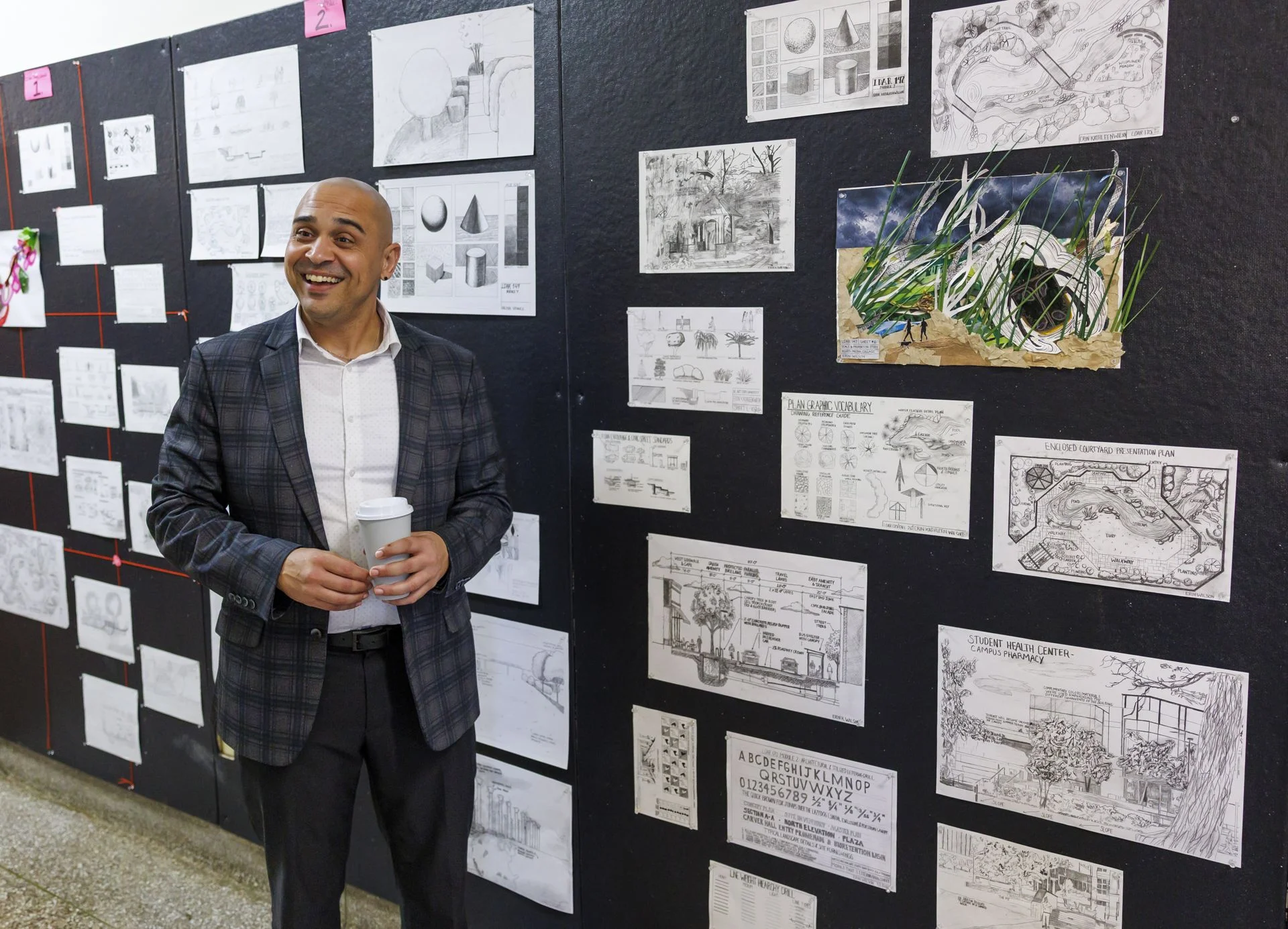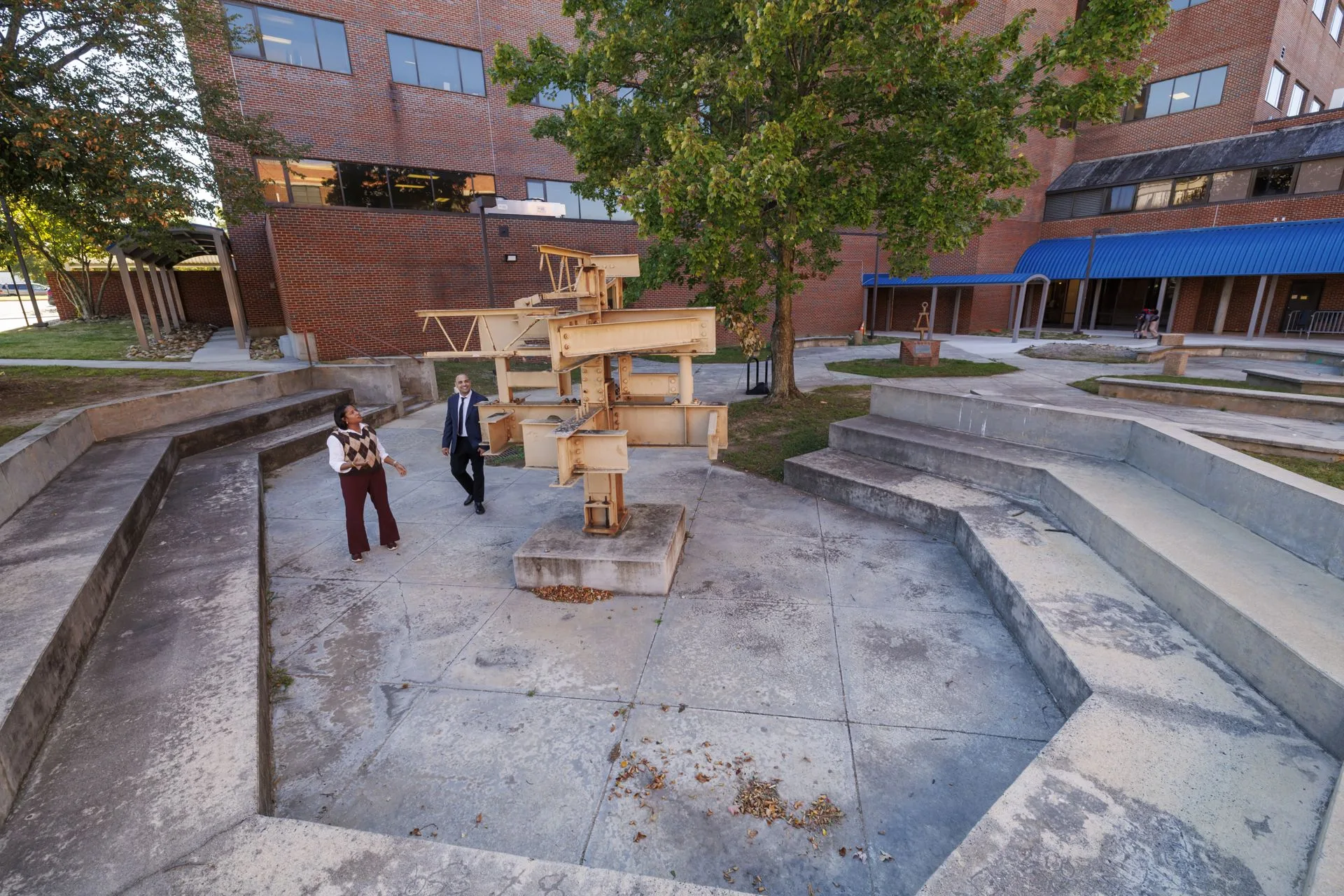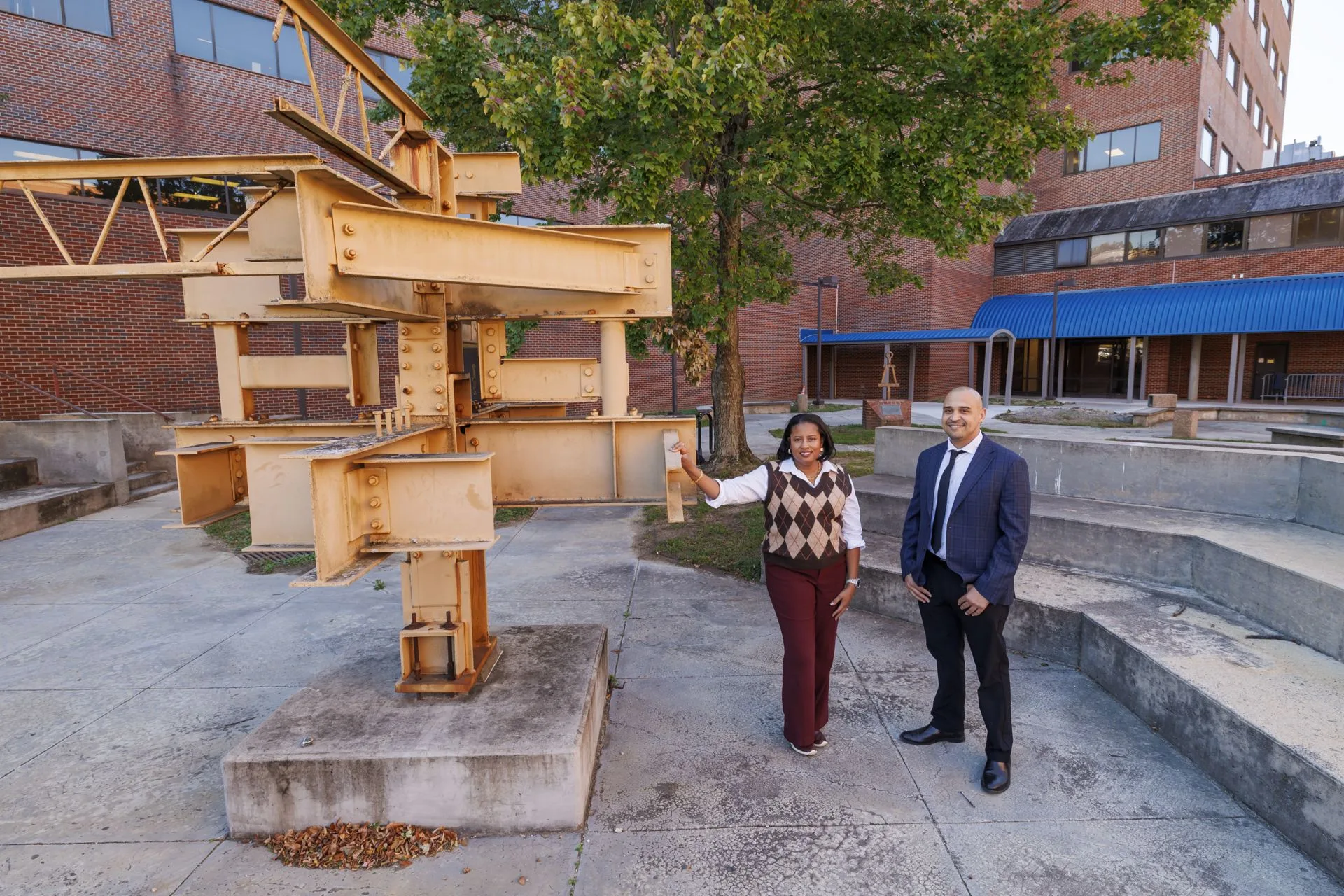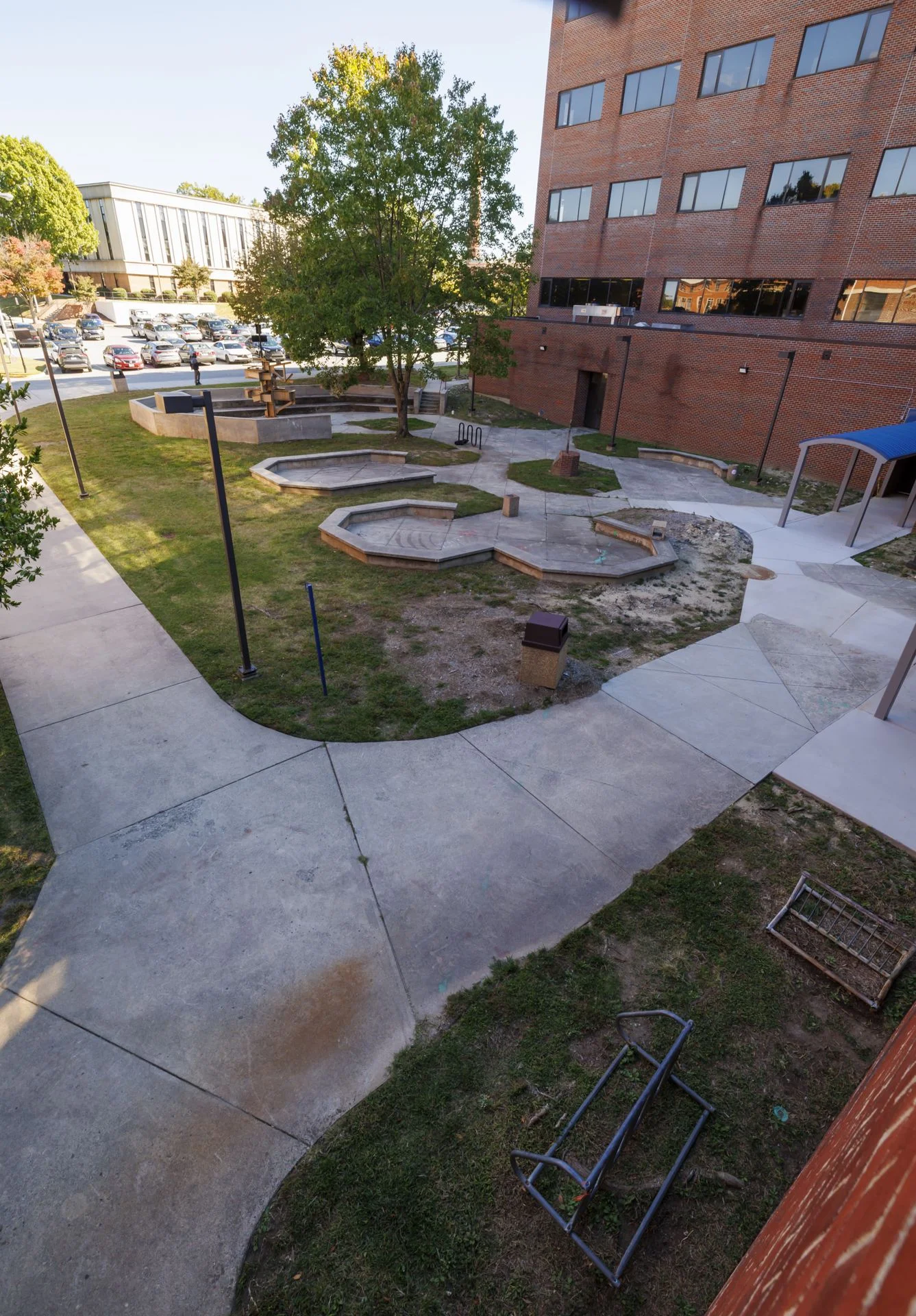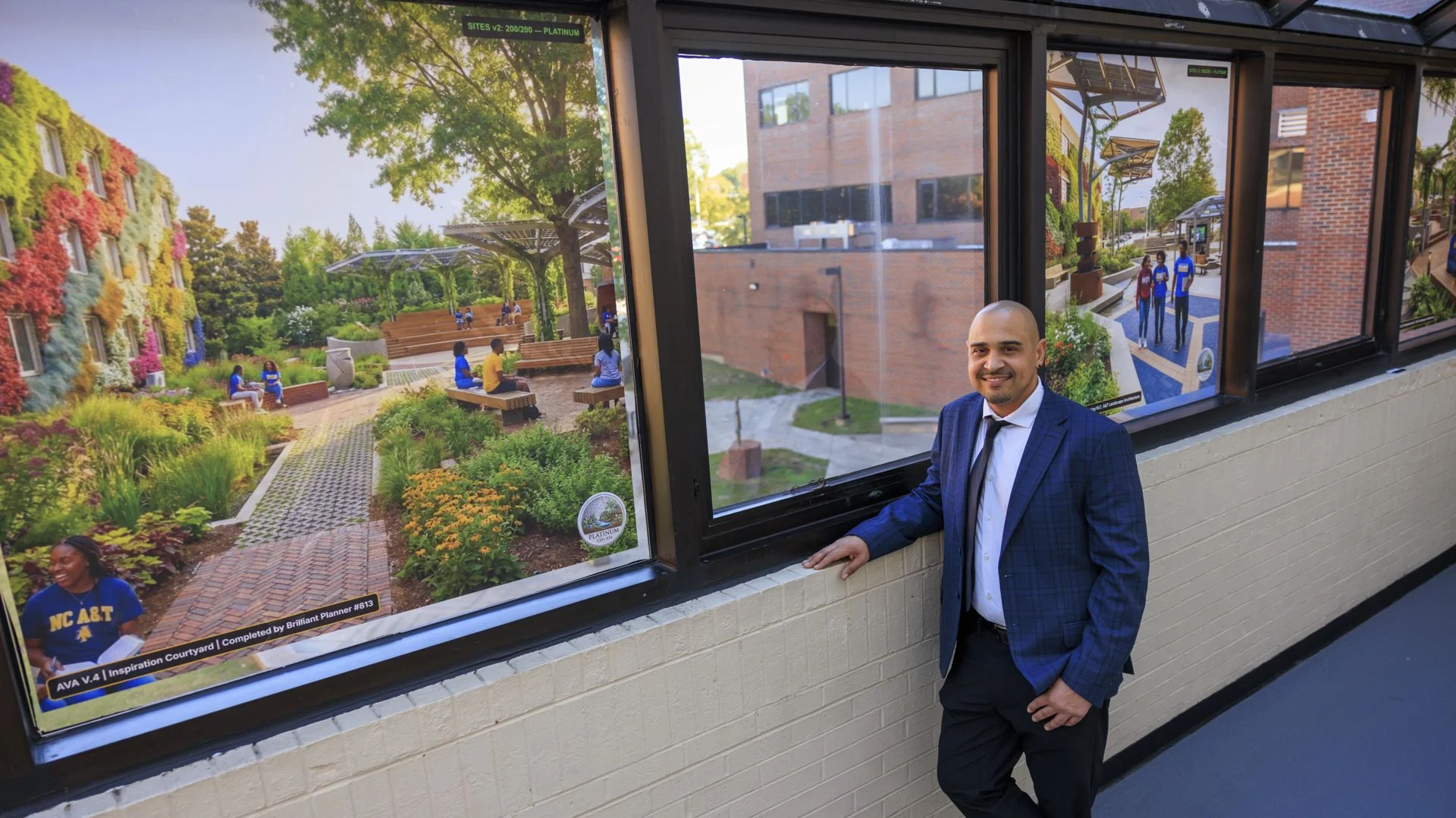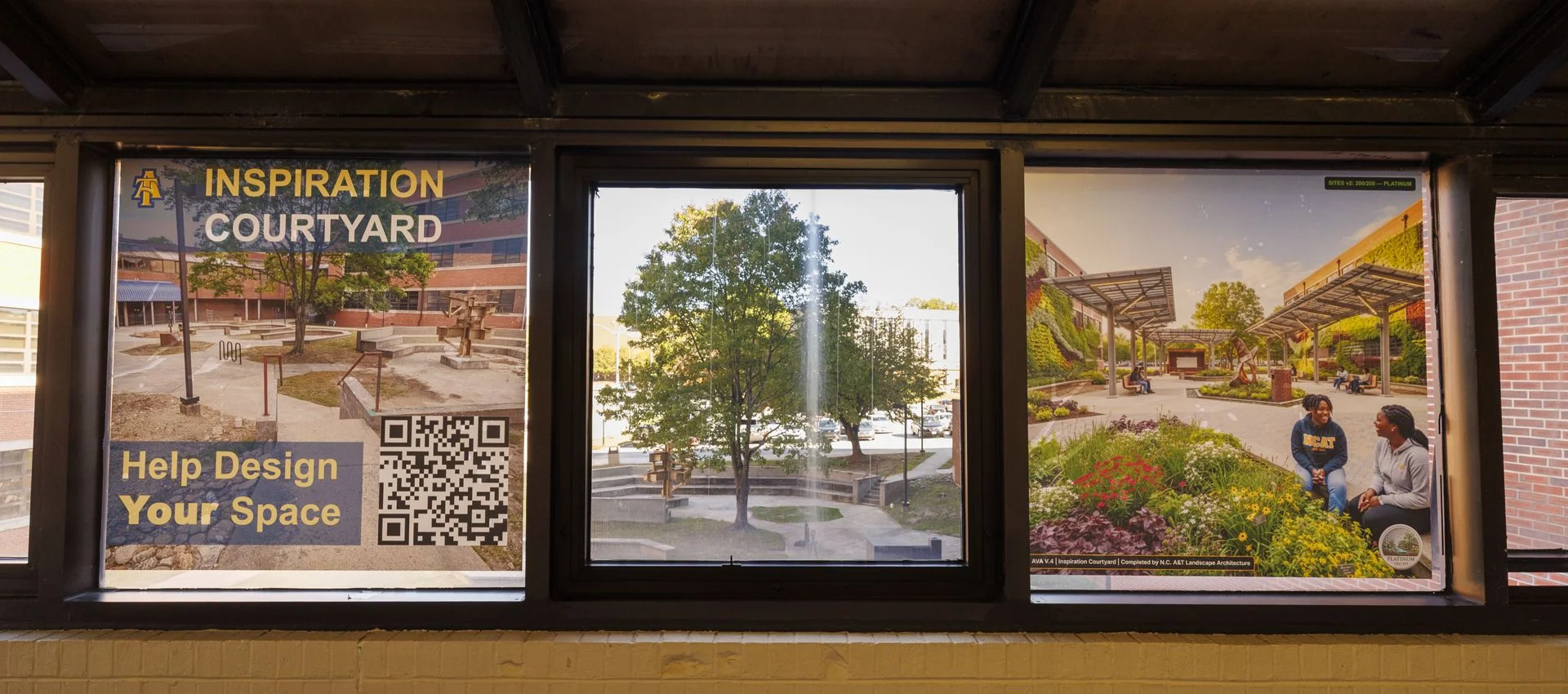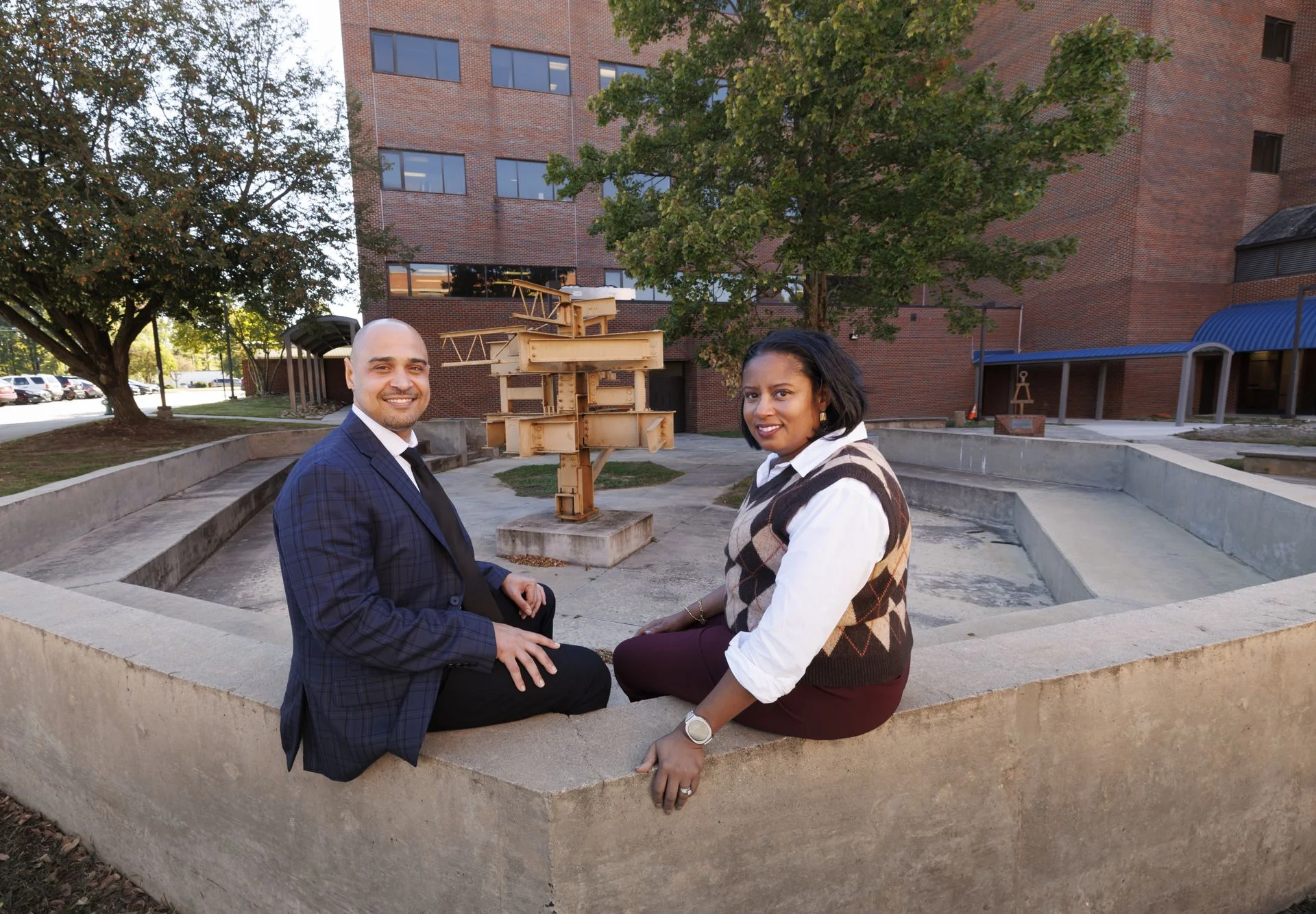
The Landscape Architecture and Design (LDAR) program at N.C. A&T State University is inviting the community to help redesign a campus courtyard.
The College of Agriculture and Environmental Sciences and the College of Engineering are partnering on the project, which coincides with the 50th anniversary celebration of the landscape architecture program.
“As we celebrate 50 years, we aren’t looking backward,” said W. Chris Harrison, assistant professor in the landscape architecture program. “Our students are actively leading stakeholder engagement and community co-design for the Inspiration Courtyard between McNair and Monroe halls.”
By using an artificial intelligence tool called Adaptive Visualization Assistant (AVA), individuals will be able to create their own design for the courtyard. A team of students last summer used drones and LiDAR, a technology that uses pulsed laser light to measure distances, to create highly accurate 3D maps of the courtyard. This “digital twin” allows AVA users to see how their own design for the courtyard would look.
“Natural spaces are essential to our quality of life — providing places where people can connect with one another and with the natural resources that sustain us,” said Gregory Goins, Ph.D., dean of the College of Agriculture and Environmental Sciences. “We proudly celebrate the program’s remarkable achievements and look forward to its continued impact for generations to come.”
Stephanie Luster-Teasley Pass, Ph.D., dean of the College of Engineering, said she looks forward to transforming the courtyard “into a place that inspires connection, creativity and community.”
The project was initiated by Berdenia Stanley, Ph.D., ’87, ‘89, who donated seed money to launch the effort in memory of her late parents, George Walker, Ph.D., ‘56 and Queen Walker. “By engaging our students, faculty, staff and alumni in the design process, we have an opportunity to create a space that belongs to our community and reflects the innovation and sense of possibility that define the College of Engineering,” Luster-Teasley Pass said.
After A&T's Greatest Homecoming on Earth concludes this year — where organizers hope to collect more designs through community engagement and AVA — landscape architecture students will collect the input and begin working on a final design, said Jeff Kuehner, a lecturer in LDAR program. He hopes his students will have that design ready by final exams in December to present to a committee that includes Stanley and Luster-Teasley Pass.
Harrison anticipates a major fundraising effort to pay the full cost of the courtyard project.
"I hope that this space becomes something that we cherish," he said, adding that the project is an example of how the community can get involved in designing public spaces.
Inspiration Courtyard is just one of several community projects in which the college’s architecture program has been involved. Others include redesigning Benbow Park in East Greensboro, where NBA Hall of Famer Bob McAdoo practiced basketball as a child; planning a 300-acre environmental education forest near the Toyota battery plant in Liberty, North Carolina, and creating and installing interpretive benches at Greensboro’s Maplewood Cemetery to honor the hundreds of African Americans buried there in unmarked graves.
A&T’s undergraduate landscape architecture program is the only one housed at a Historically Black College or University that is accredited by the Landscape Architectural Accreditation Board. It was founded in 1976 by Charles Fountain, Ph.D., who mentored notable landscape architects like MacArthur Genius Grant recipient Walter Hood ’81.