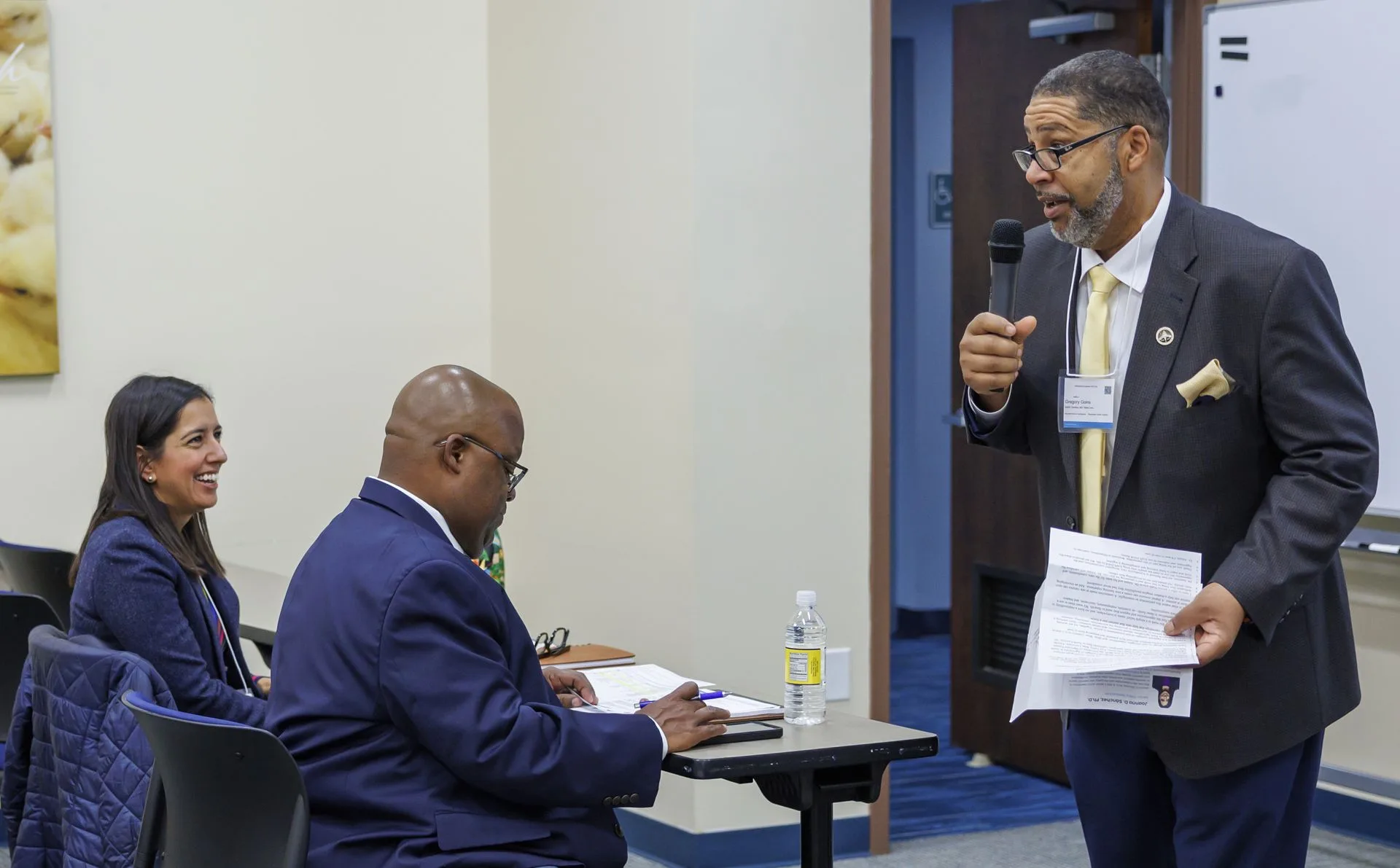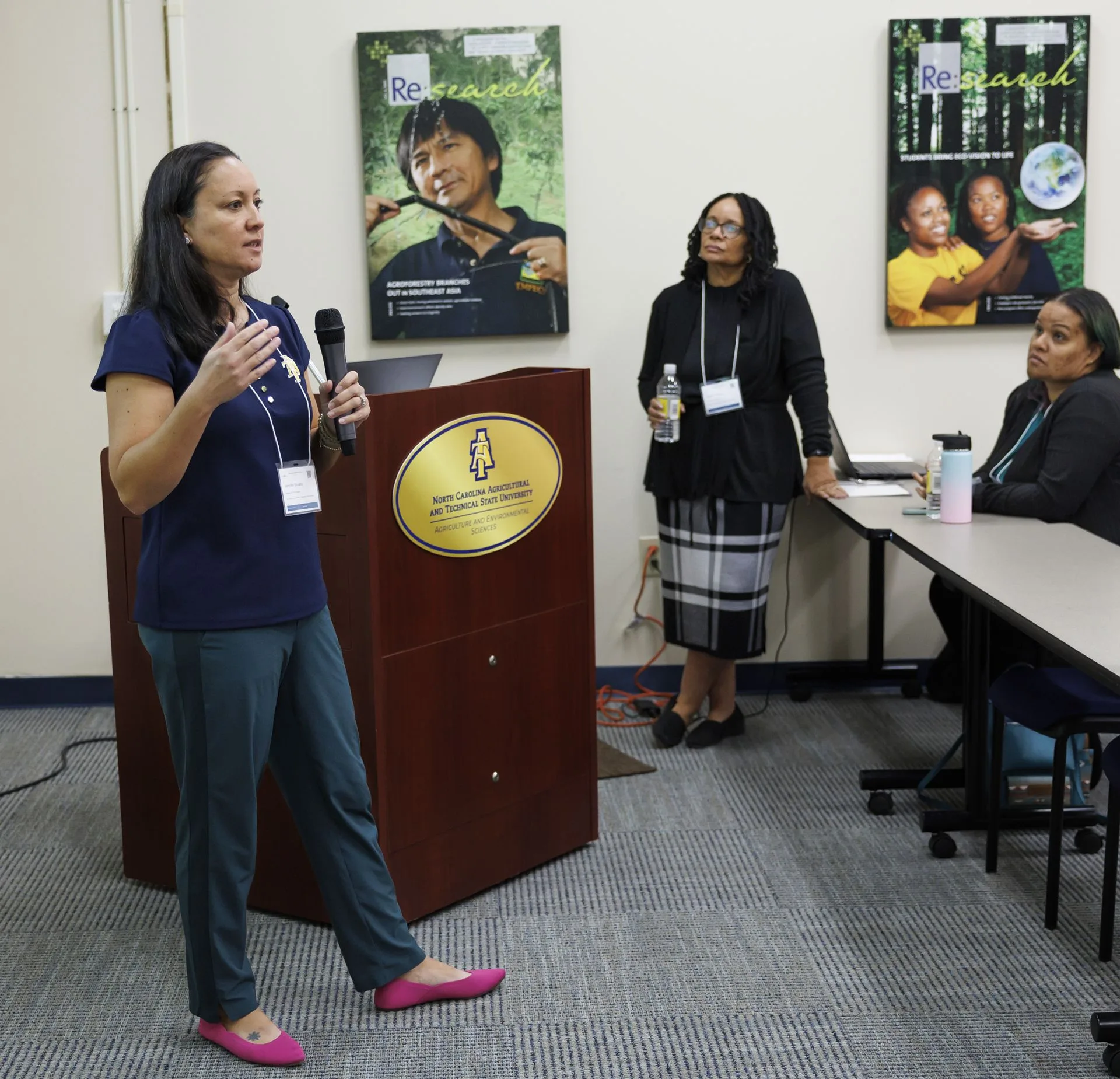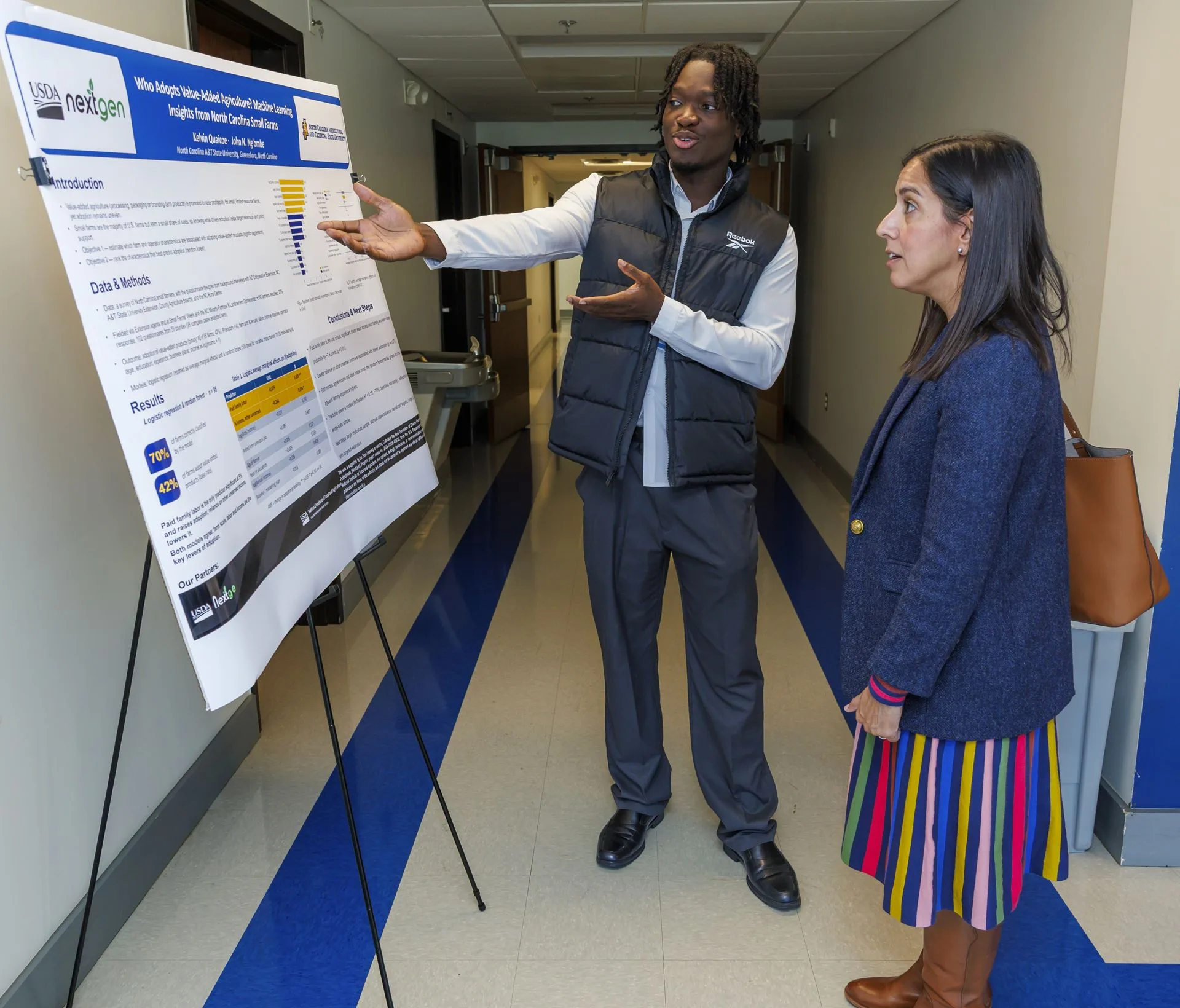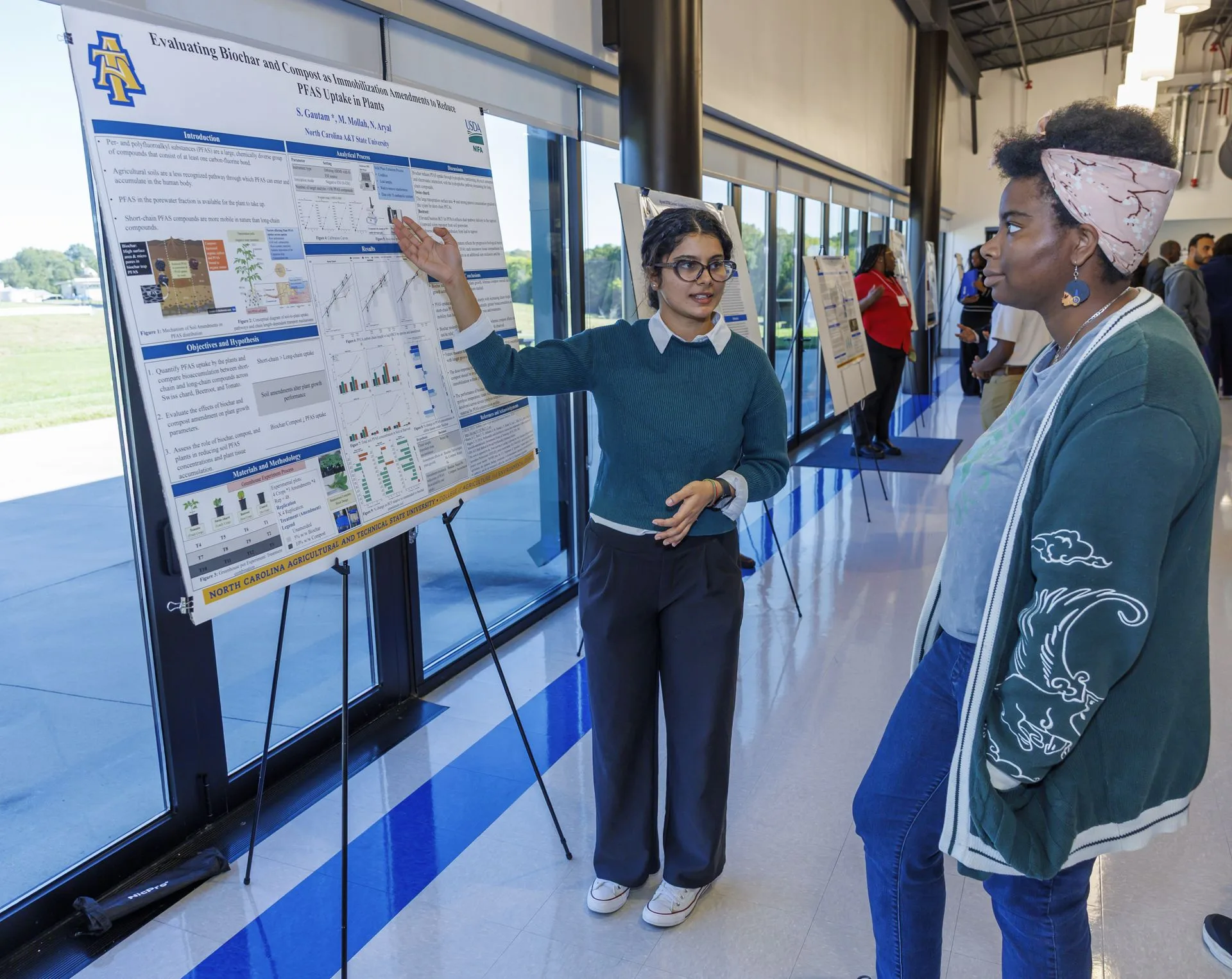
Students and faculty from seven 1890 land-grant universities and 1862 partner universities joined their counterparts from the College of Agriculture and Environmental Sciences (CAES) for a two-day showcase of a unique program to educate the next generations about agriculture.
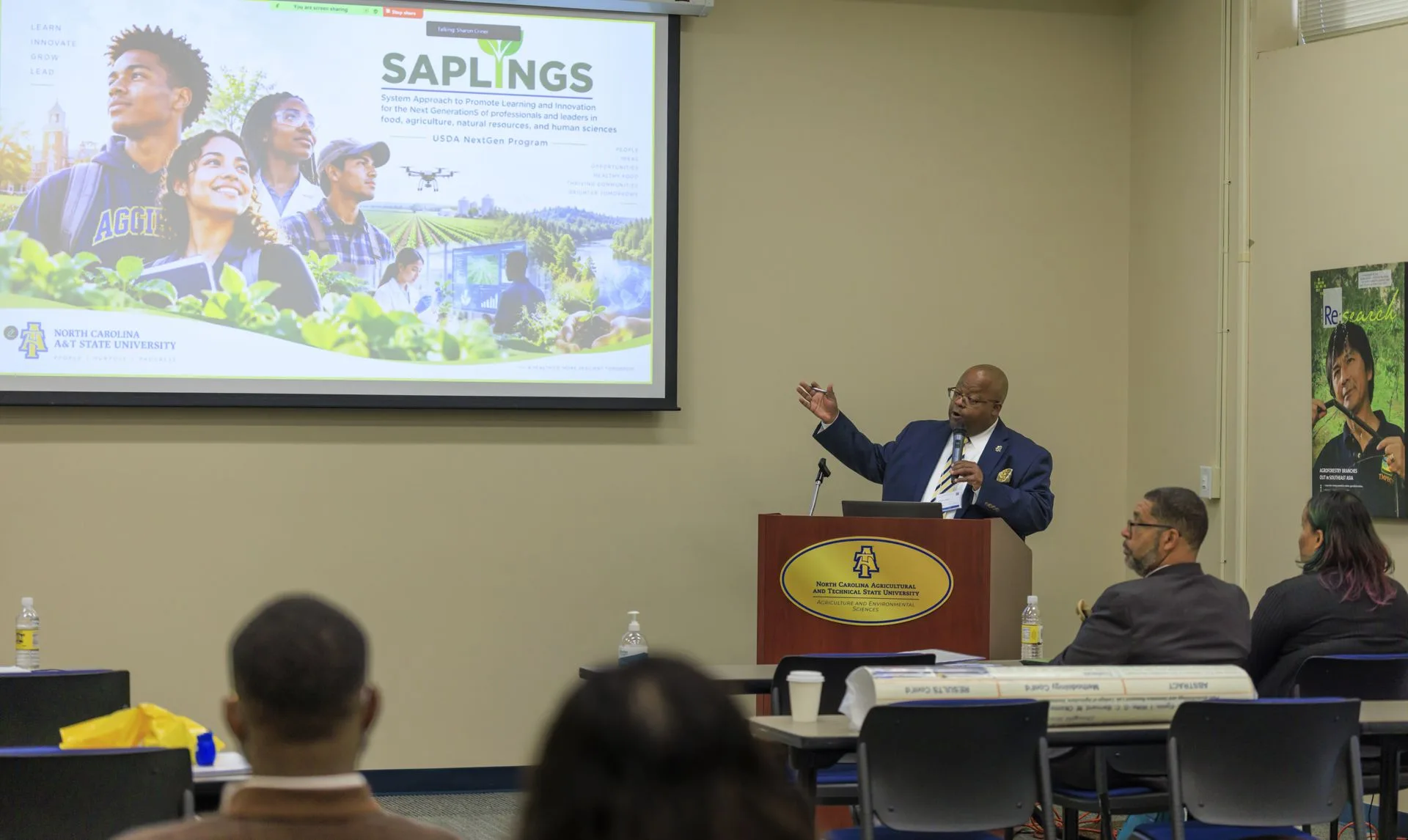
Called "SAPLINGS," or System Approach to Promote Learning and innovation for the Next Generations, and supported by an $18.1 million grant from the U.S. Department of Agriculture (USDA), the program seeks to build K-12 and youth engagement, support student scholarships and internships, and provide cross-training and certificates in agriculture-driven data science and systems-level problem solving.
"Agriculture is more than just land," program coordinator Sharon Criner said. "We have science-based evidence for reducing health disparities, AI labs, and summer workshops. This symposium brings it all together to show the work we've been doing."
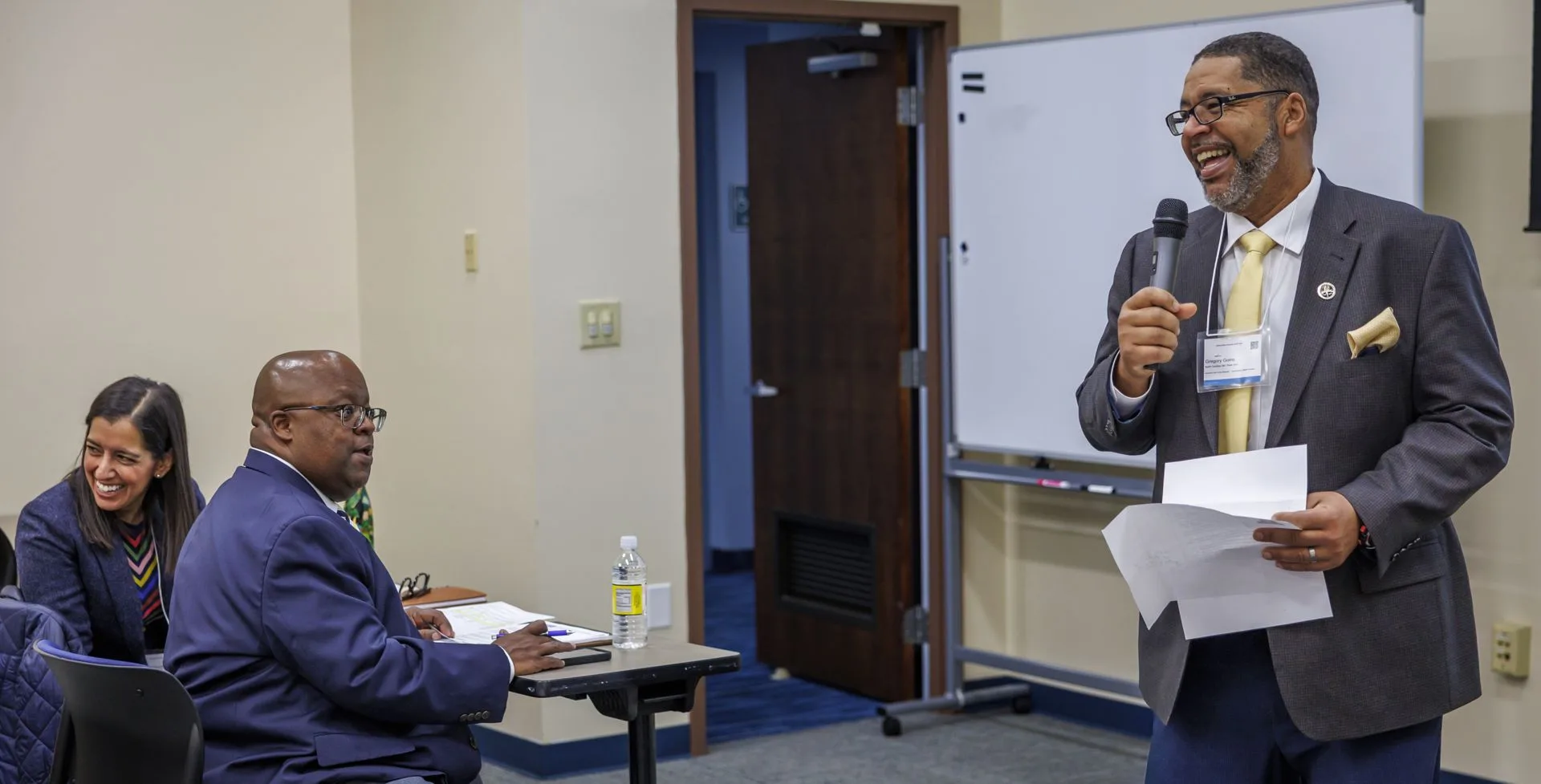
"SAPLINGS represents an investment in 1890 institutions, showcasing the tremendous capacity, talent, and impact we bring to the national agricultural enterprise while strengthening the future of our nation’s food and agricultural system," said Gregory Goins, Ph.D., dean of the college.
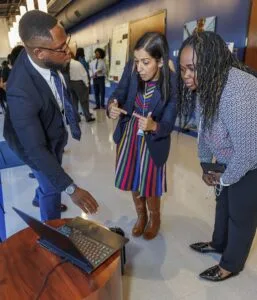
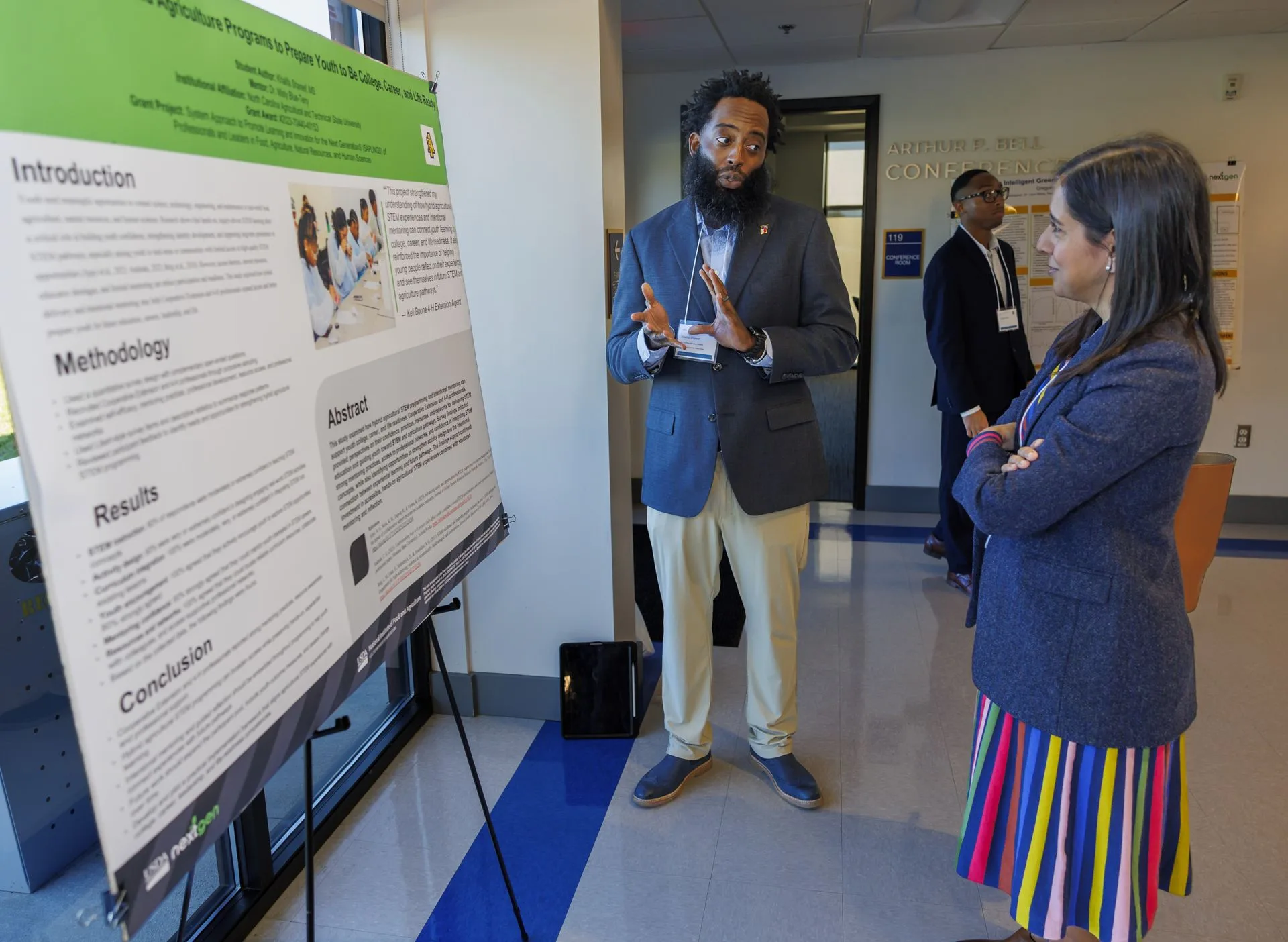
Joanna D. Sanchez, Ph.D., SAPLINGS NextGen site reviewer, center, asks a question of Virginia State University student Alain-Eucher Armoussou, left, who exhibited his research project during a presentation at the N.C. A&T Farm Pavilion. Shecoya White, right, observes.
High school and college students, university faculty and young farmers alike are learning ways that data analytics, artificial intelligence and data science incorporate into food, agriculture, natural resource and health education.
Faculty at all seven partner institutions are receiving training in ways to improve student experiences and improve the educational environment. High school teachers receive professional development in food and agriculture related STEMS while parents are engaged through tailored outreach and marketing programs.
Joanna Sanchez, Ph.D., a senior policy researcher at the Intercultural Development Research Association (IDRA), heard all six presentations and left impressed.
"Seeing your work raises the bar on all of our big grants," said Sanchez, who is a contacted reviewer for USDA. "The modules identify and target different aspects of the project that make it more useable and powerful. The students and relationships really helped this project hit the ground running, and you've made excellent progress. You've really tried to be responsive to the communities you're serving, and to telling their story.
"I spend a lot of time looking at data, but seeing the people and hearing the work makes me a better 'storyteller' for USDA."