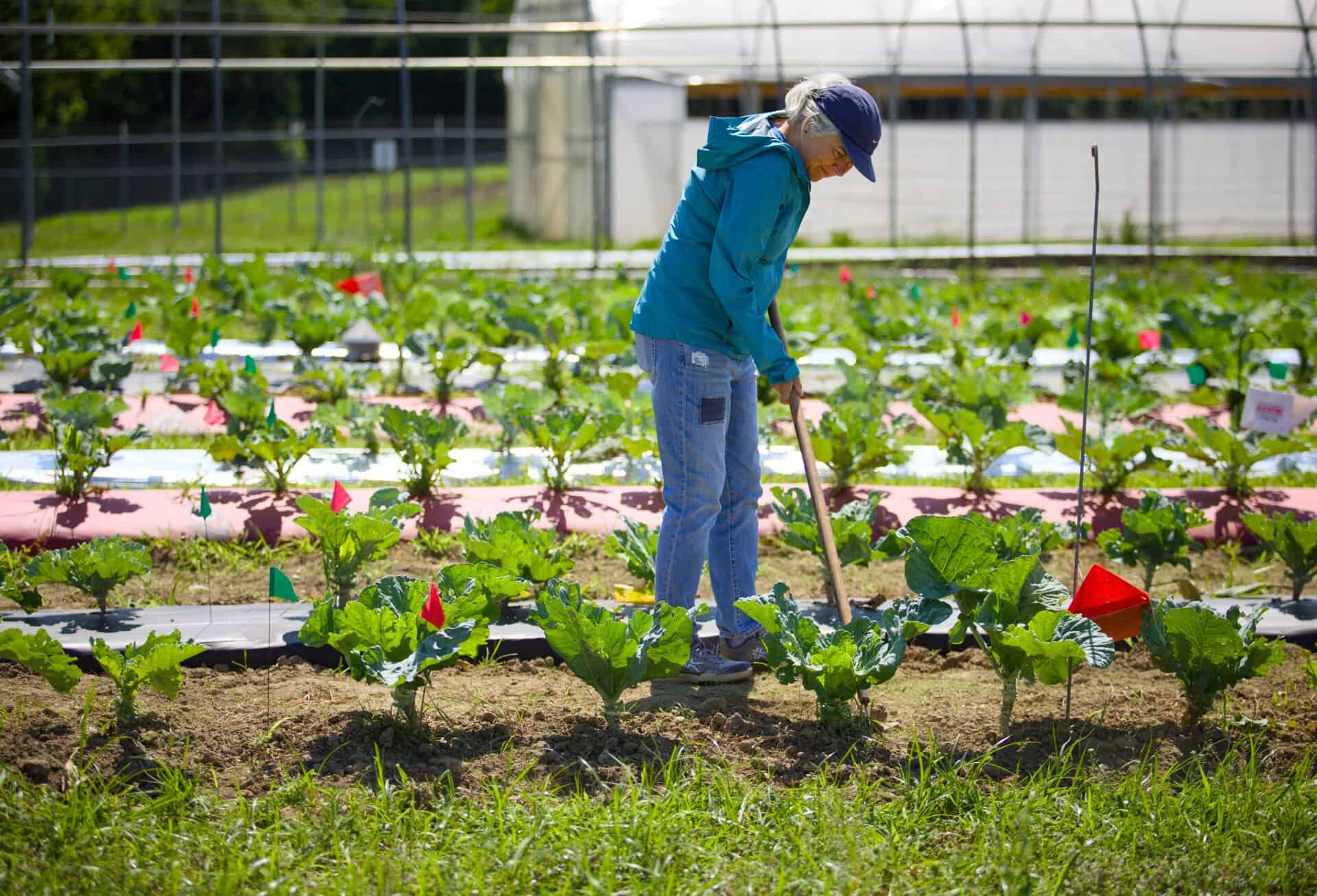
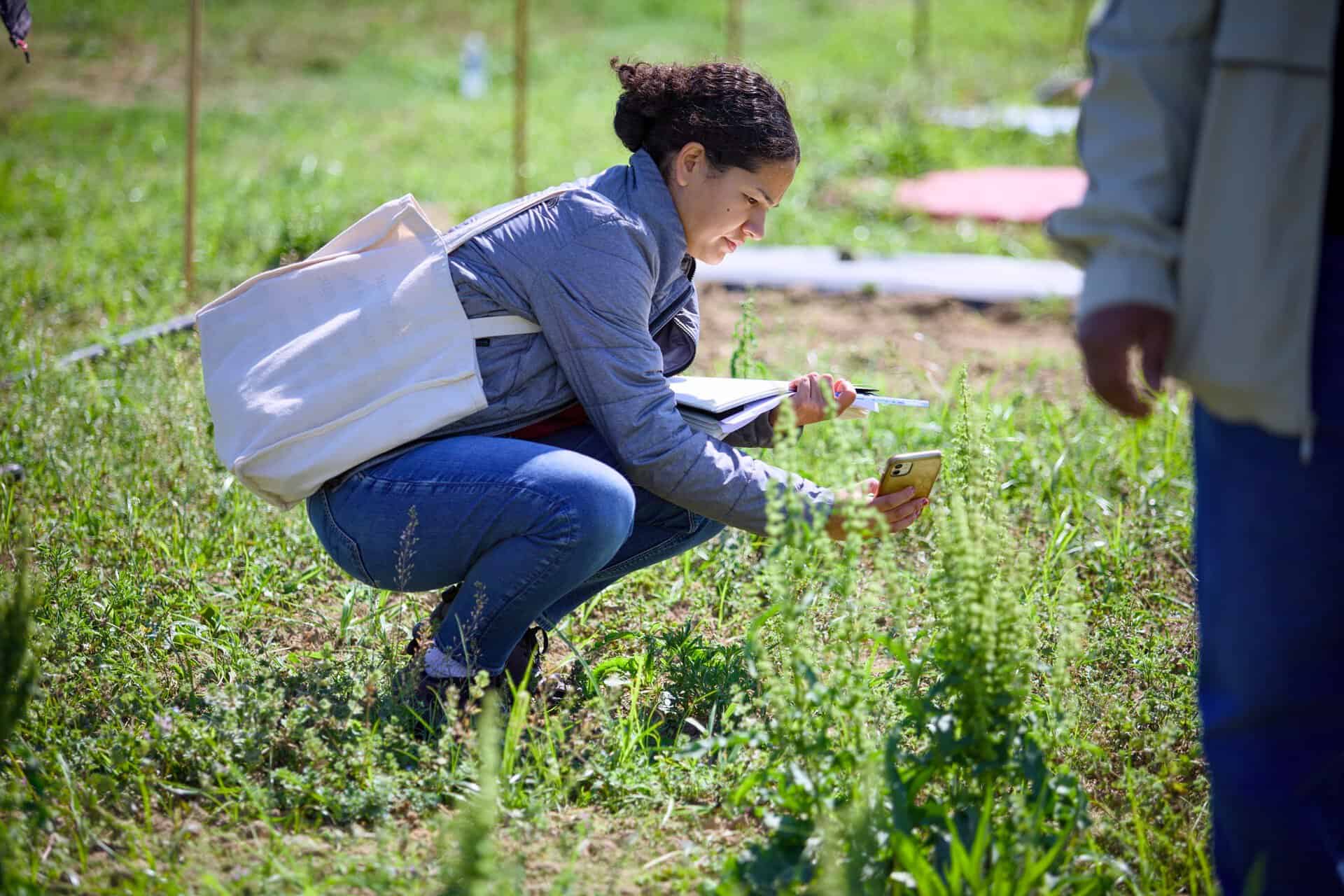
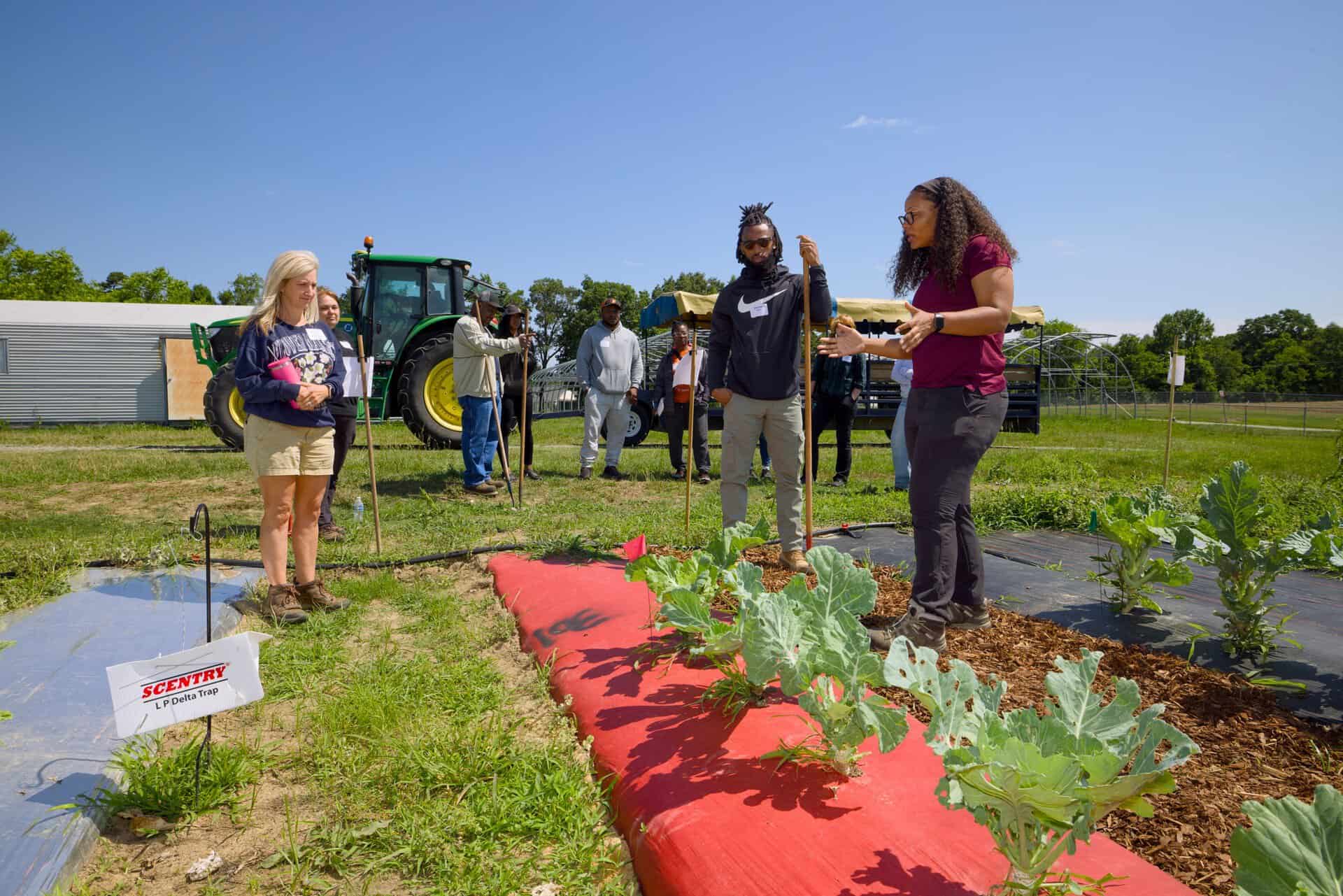
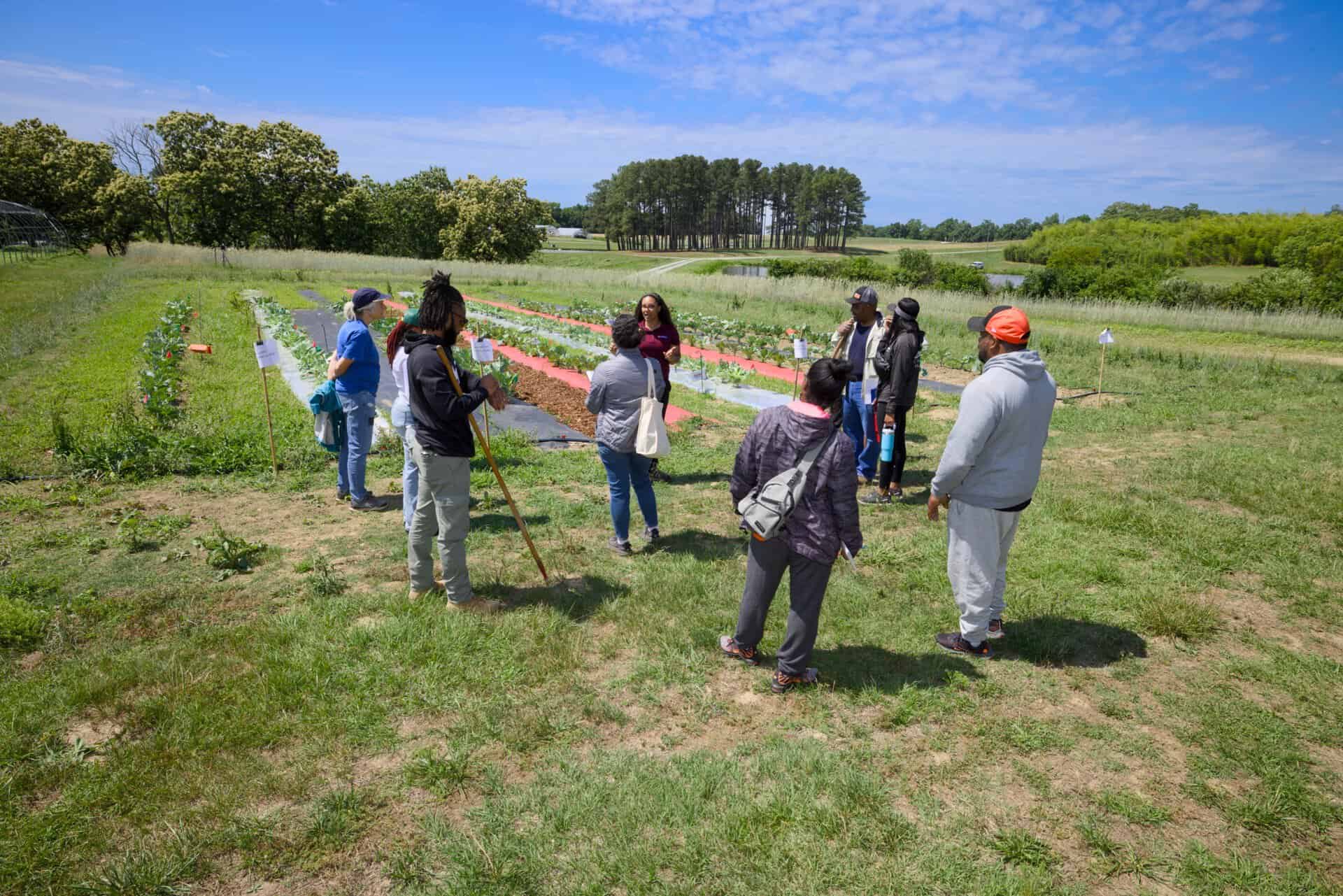
Farming veterans and backyard gardeners alike came to Organic Weed Management Field Day with one thing in mind: Discovering better ways to eradicate weeds without using chemicals.
“The weed is the main problem in growing food,” said Naga Maddisetti of Blooming Farms in Concord, North Carolina. “So that’s what I’m interested in learning, how we can manage them with these tools,” Maddisetti said, referring to a variety of tools demonstrated at the event hosted by Cooperative Extension at N.C. A&T and Carolina Farm Stewardship Association (CFSA).
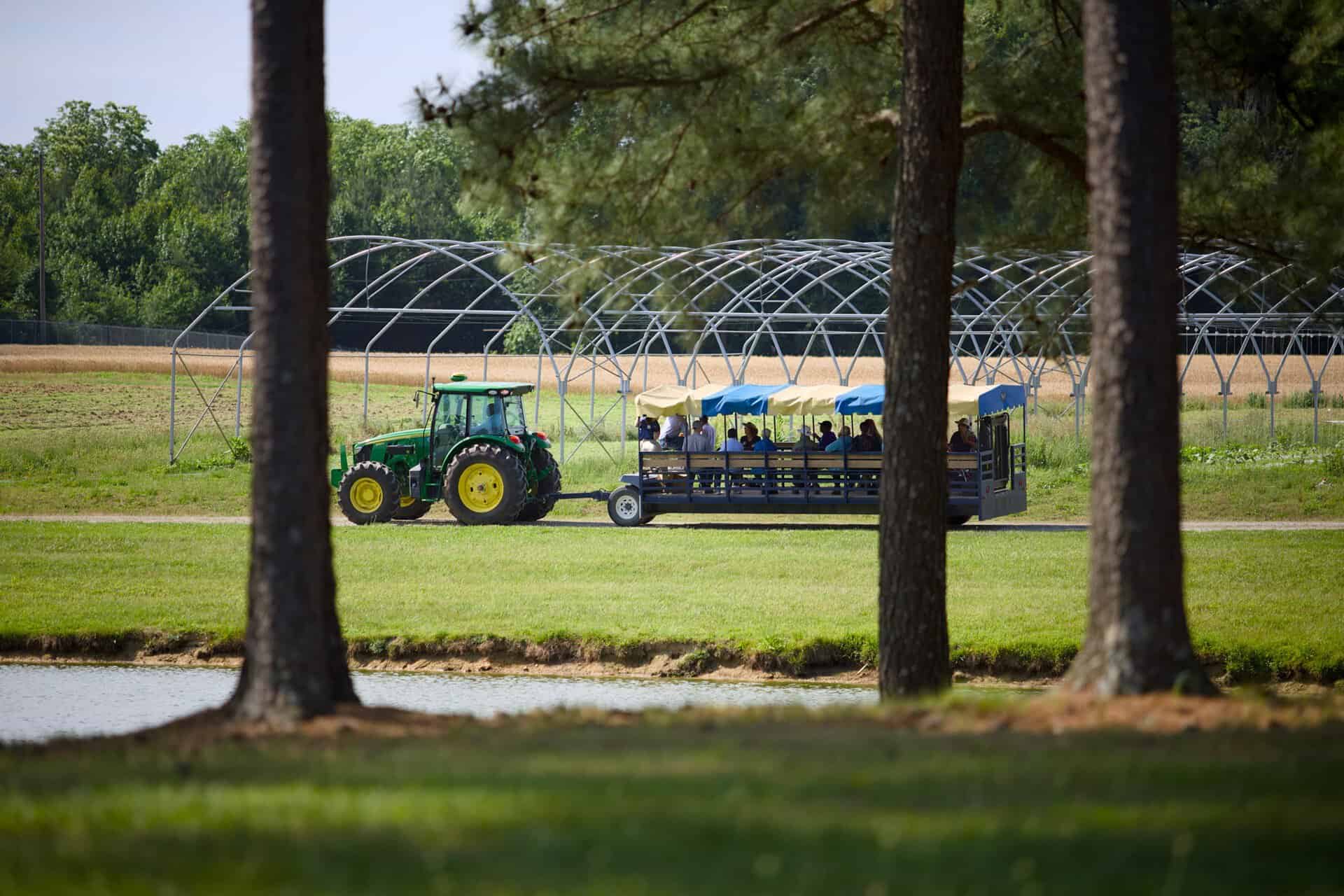
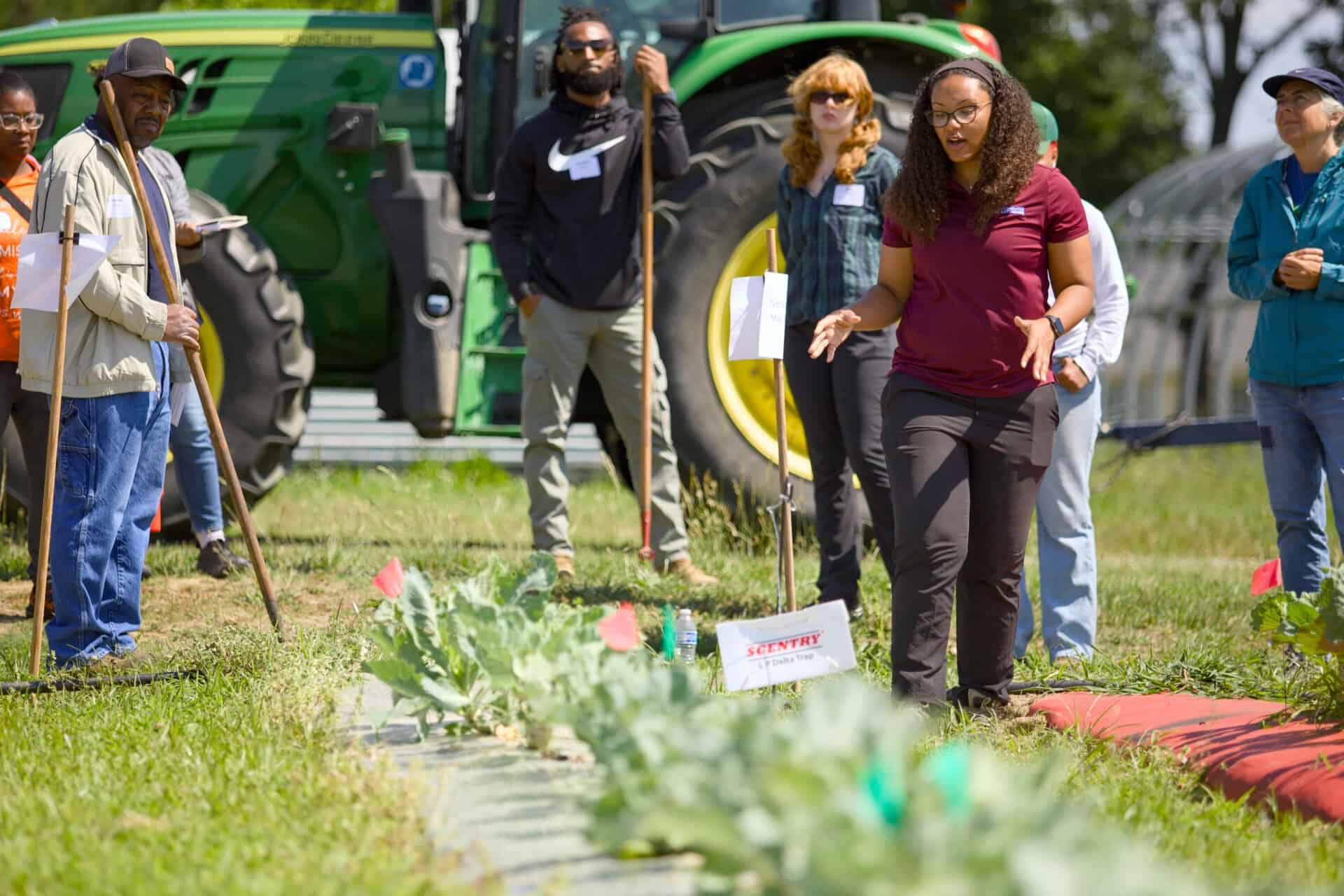
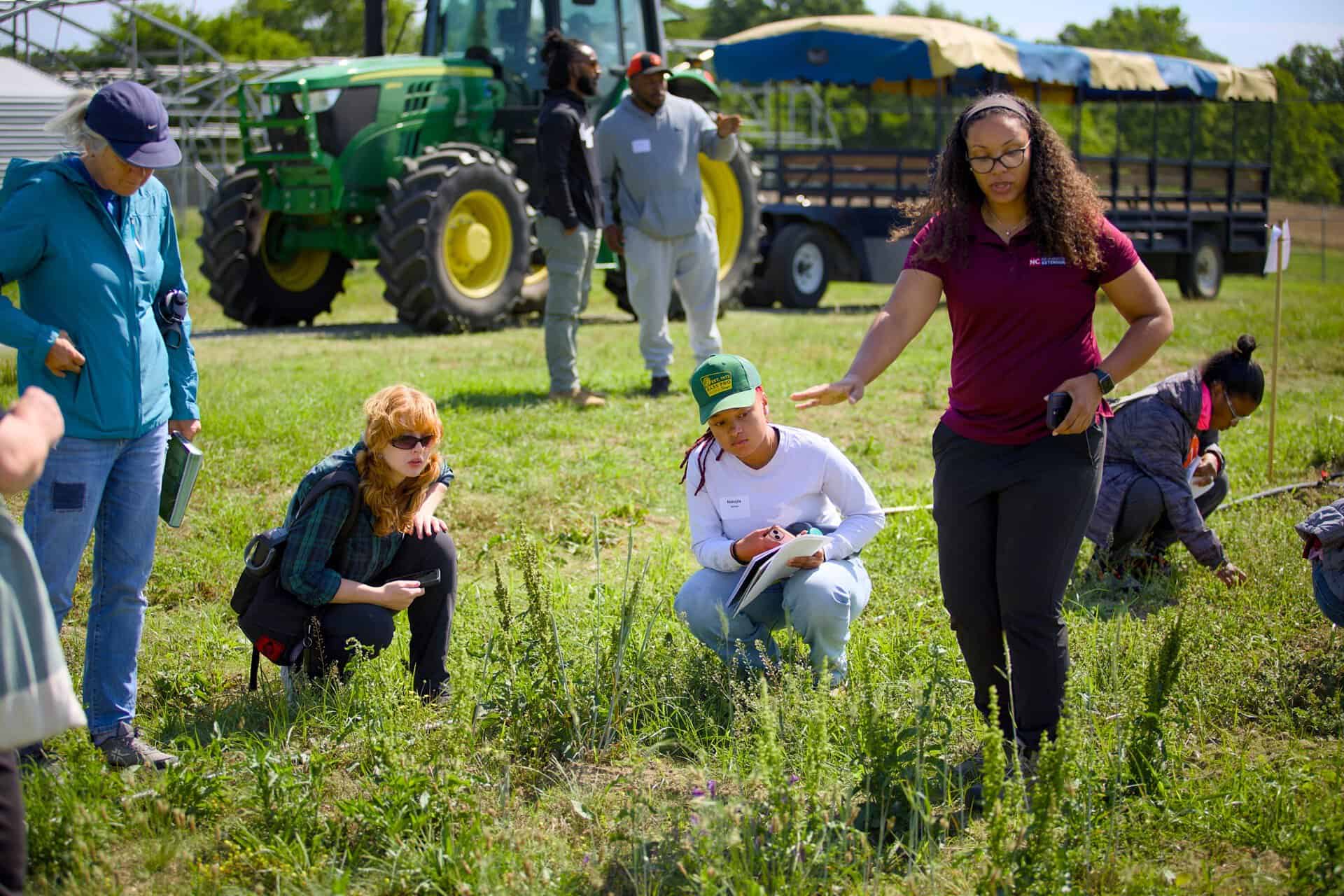
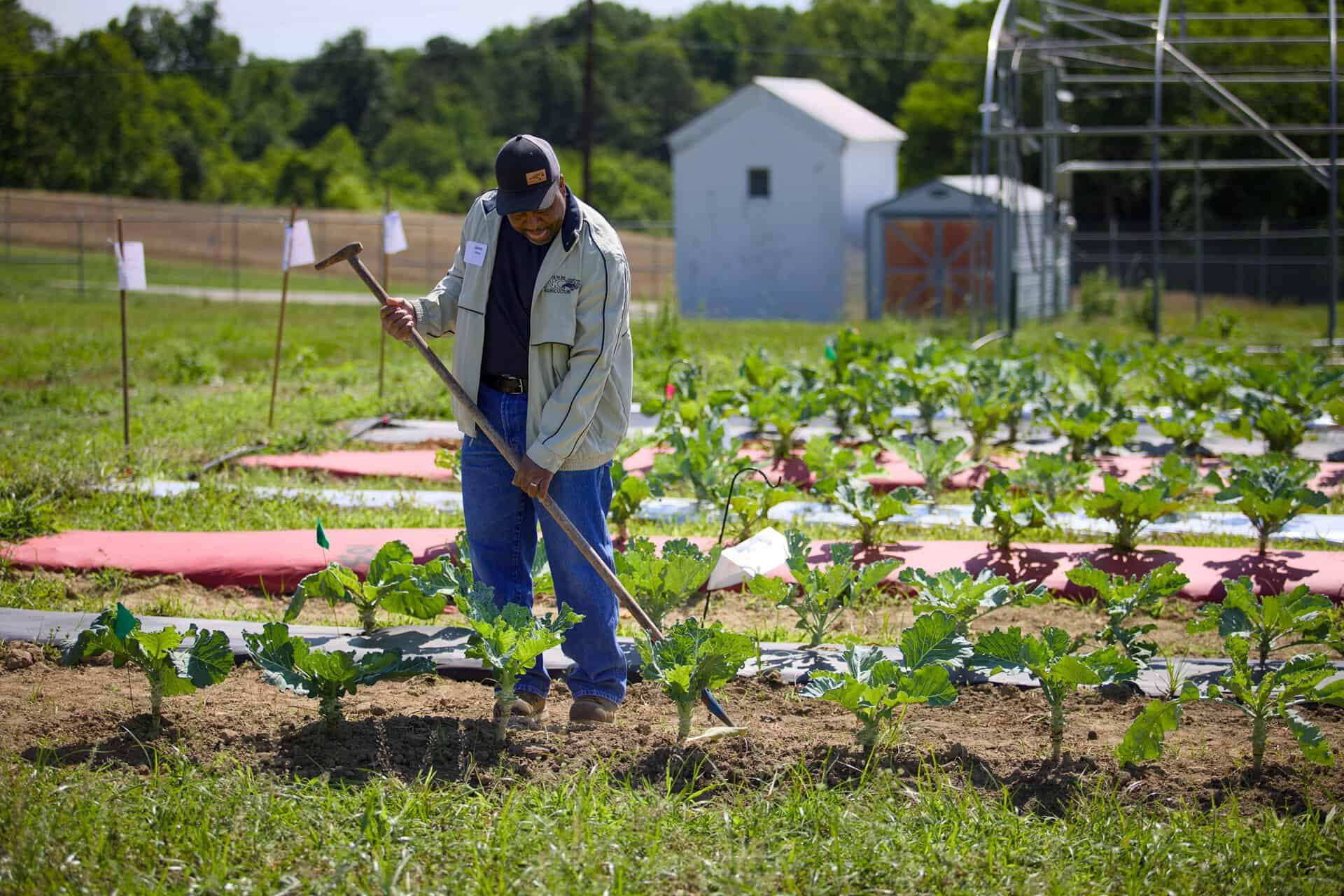
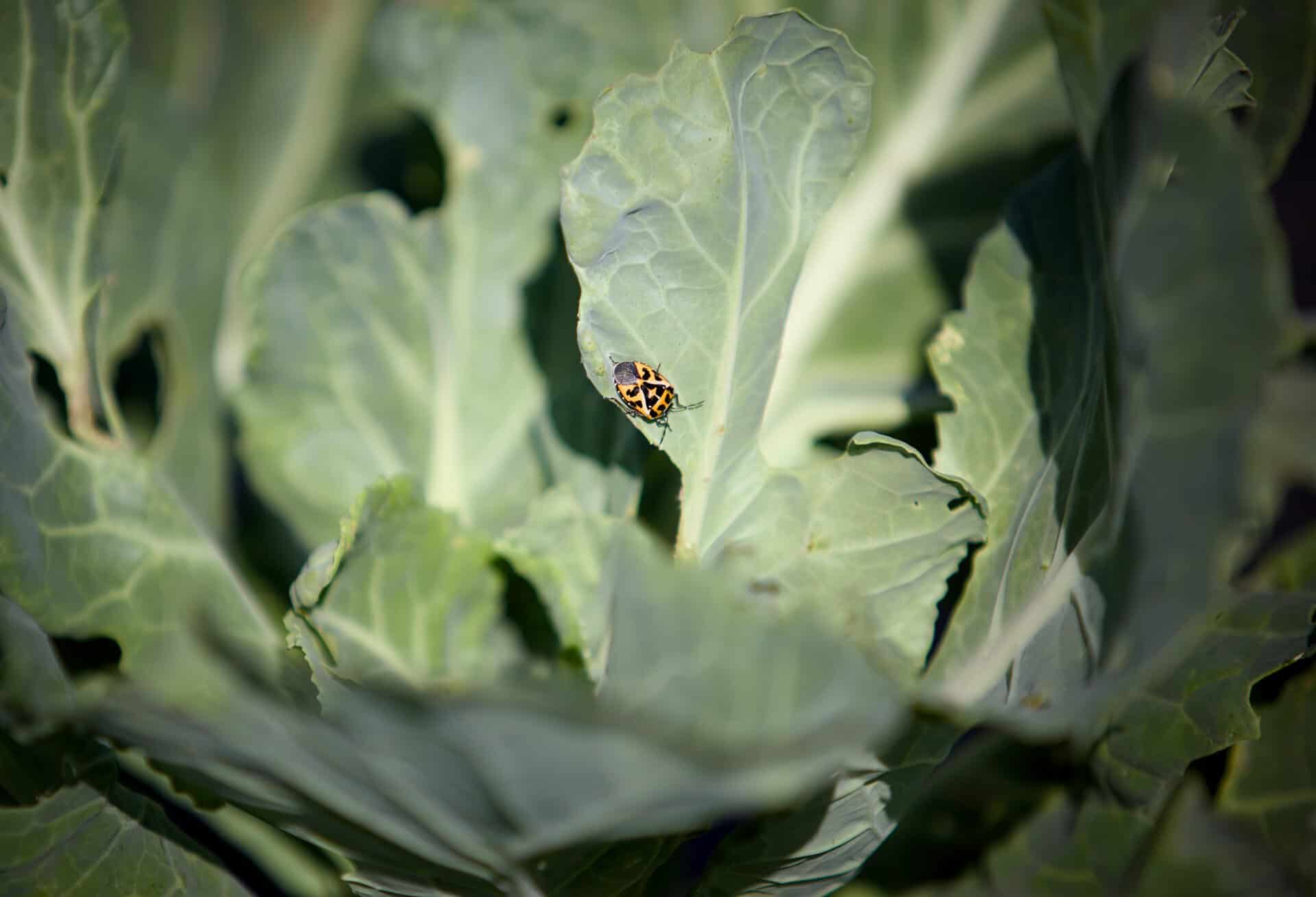
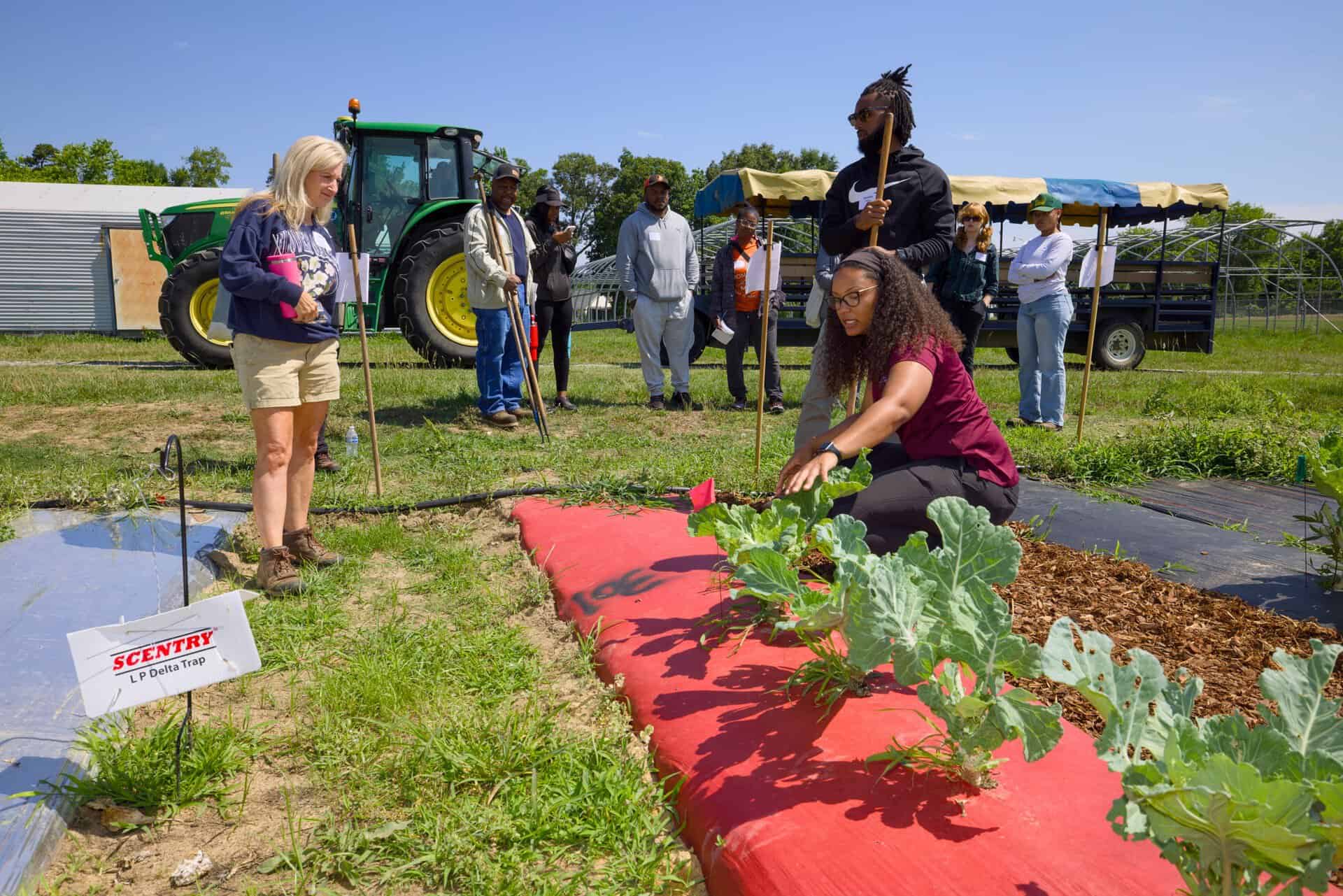
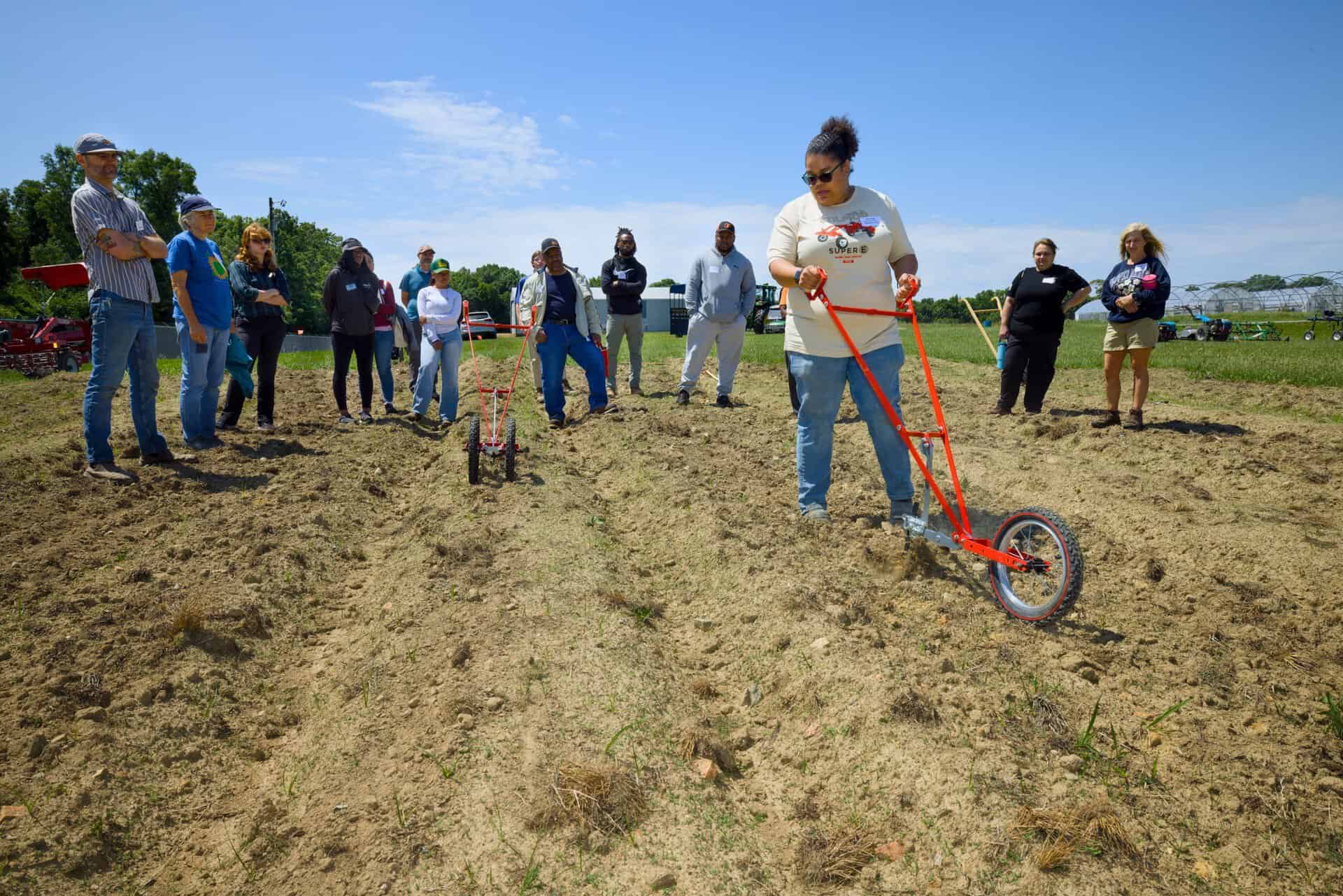
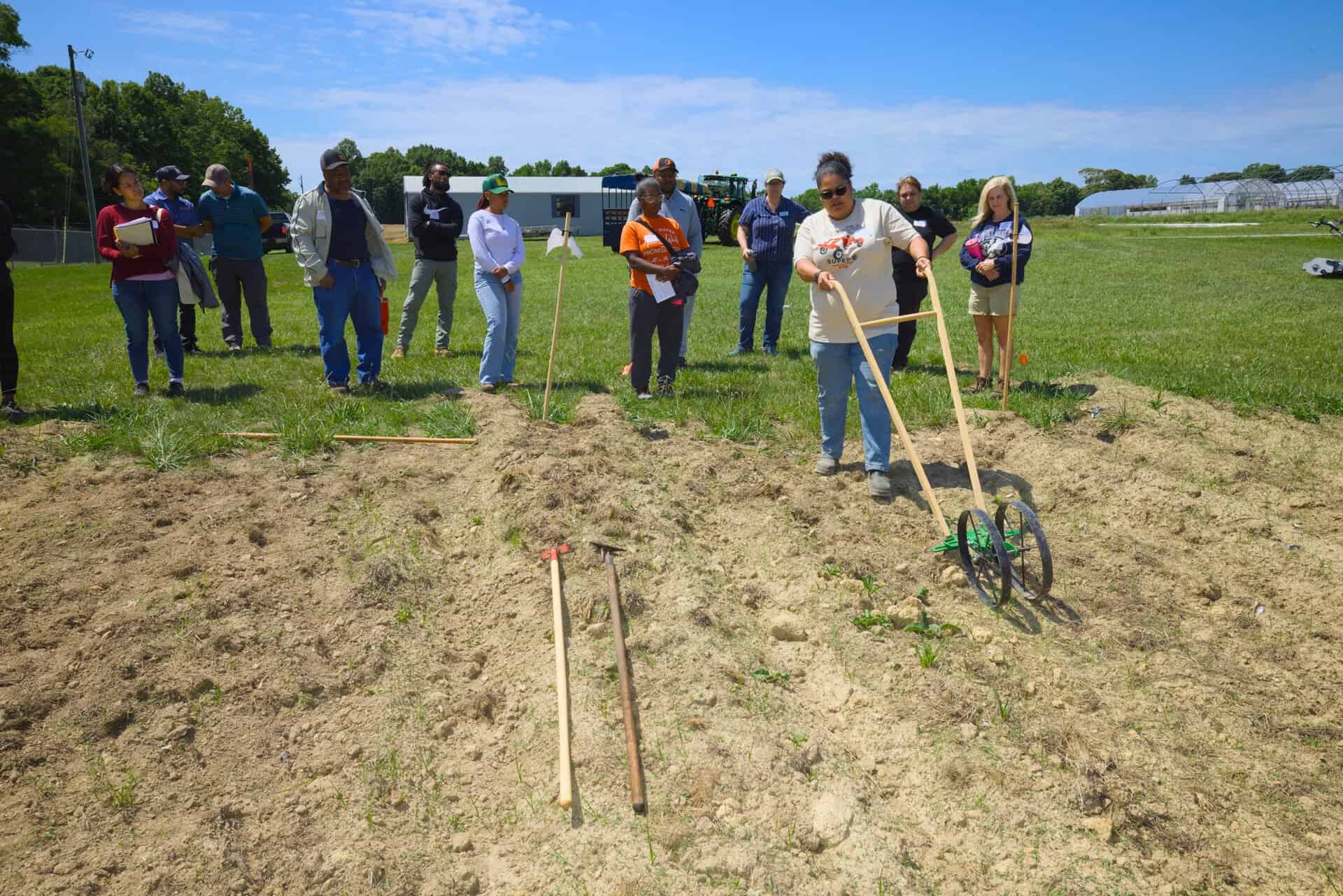
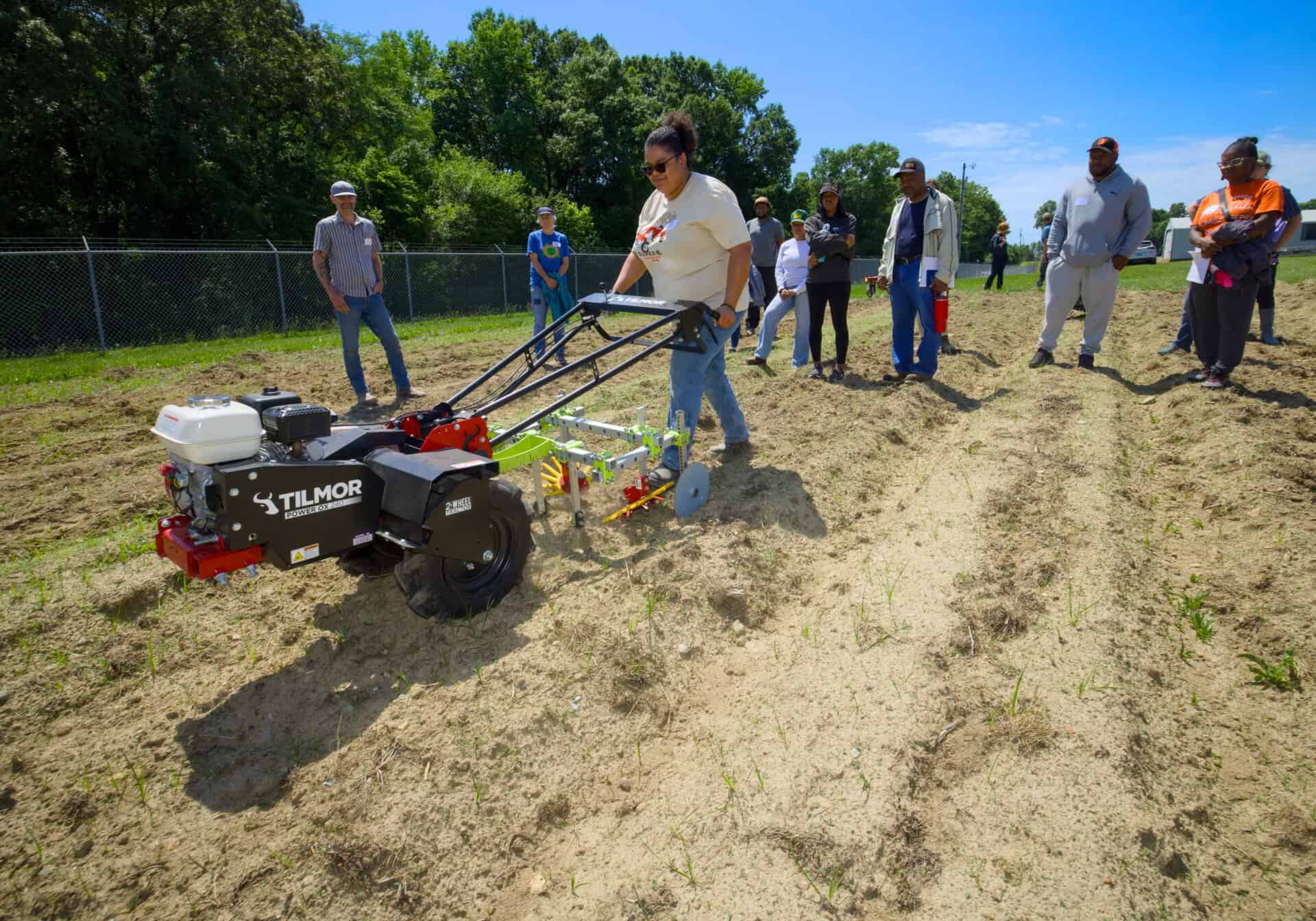
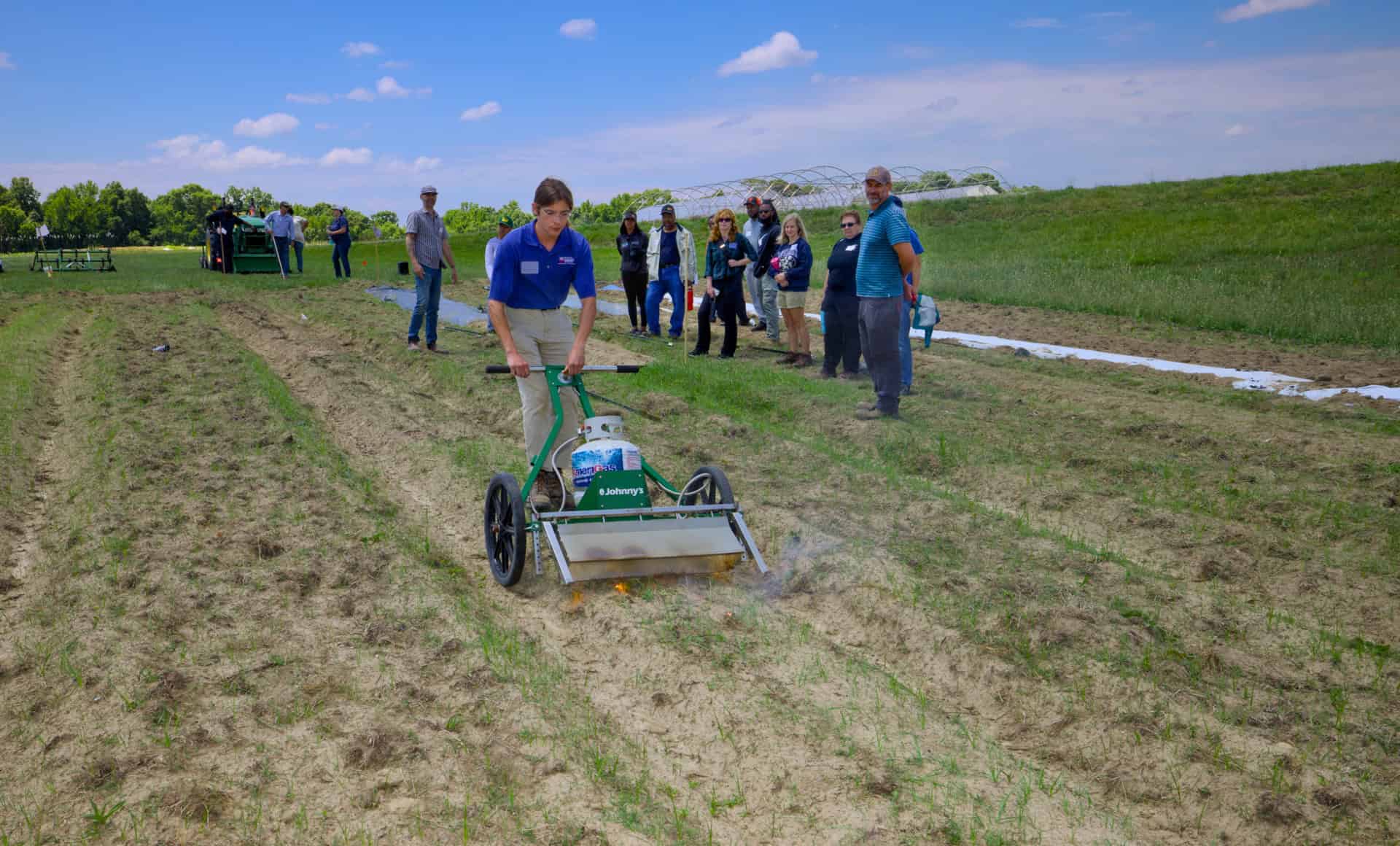
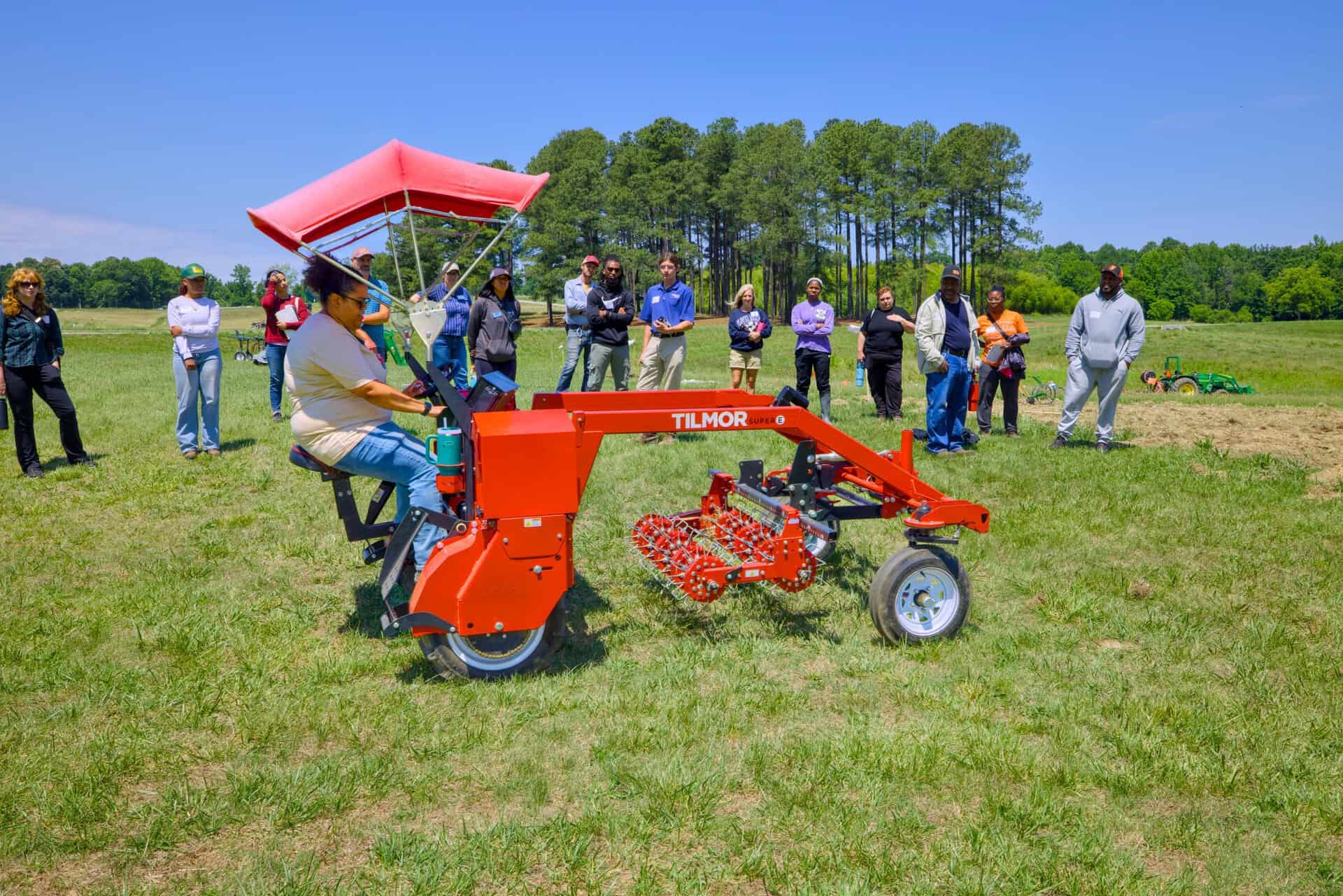
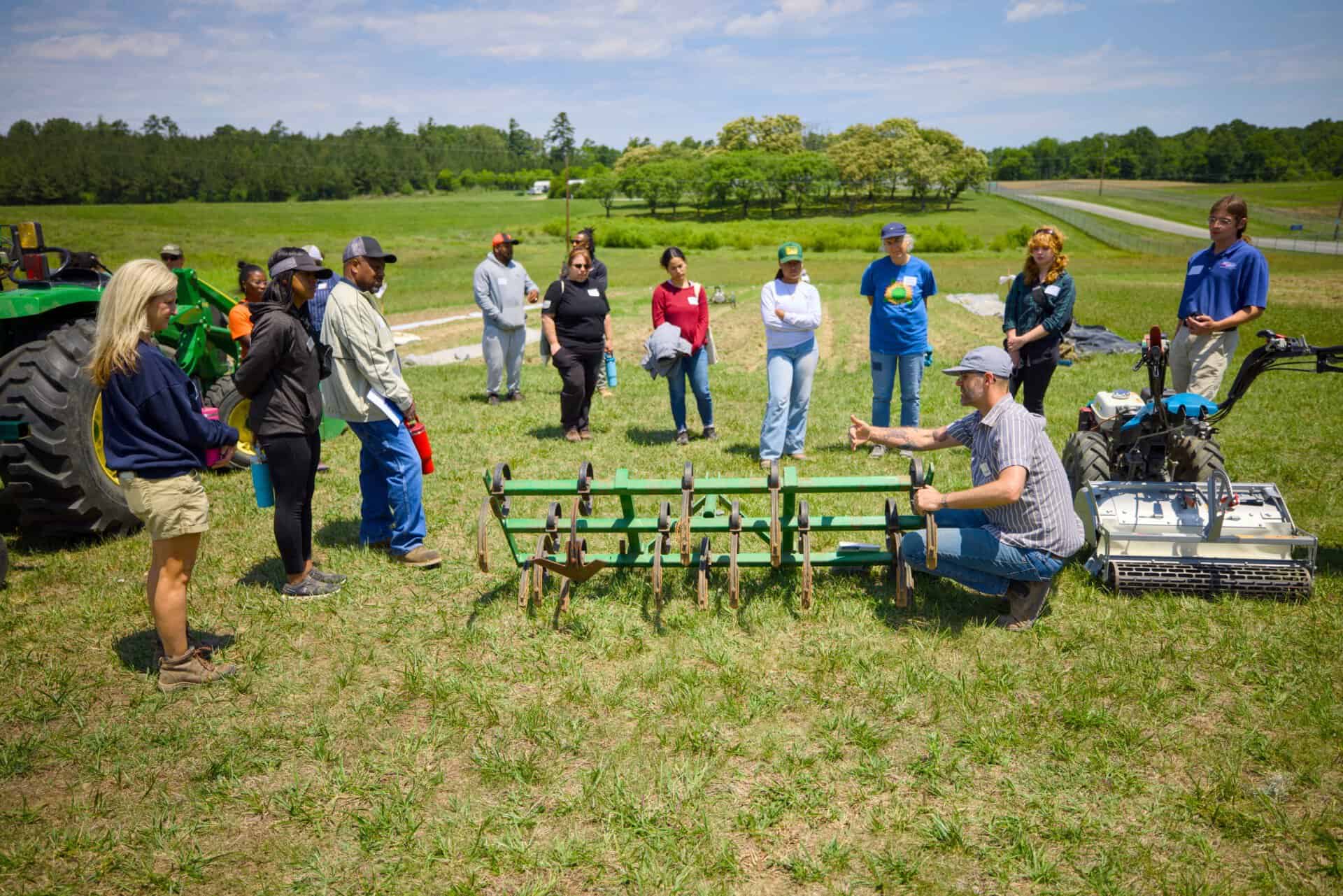
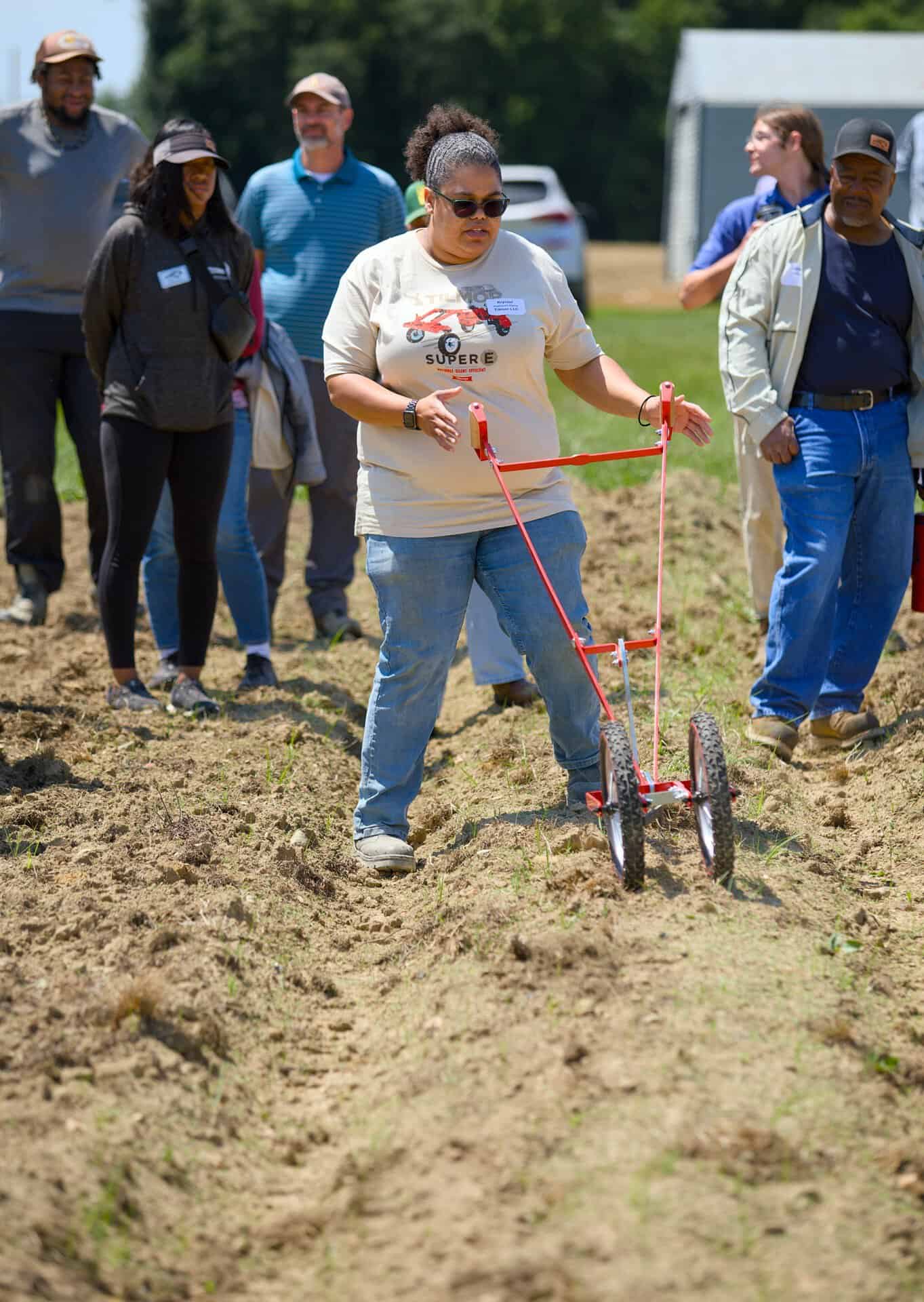
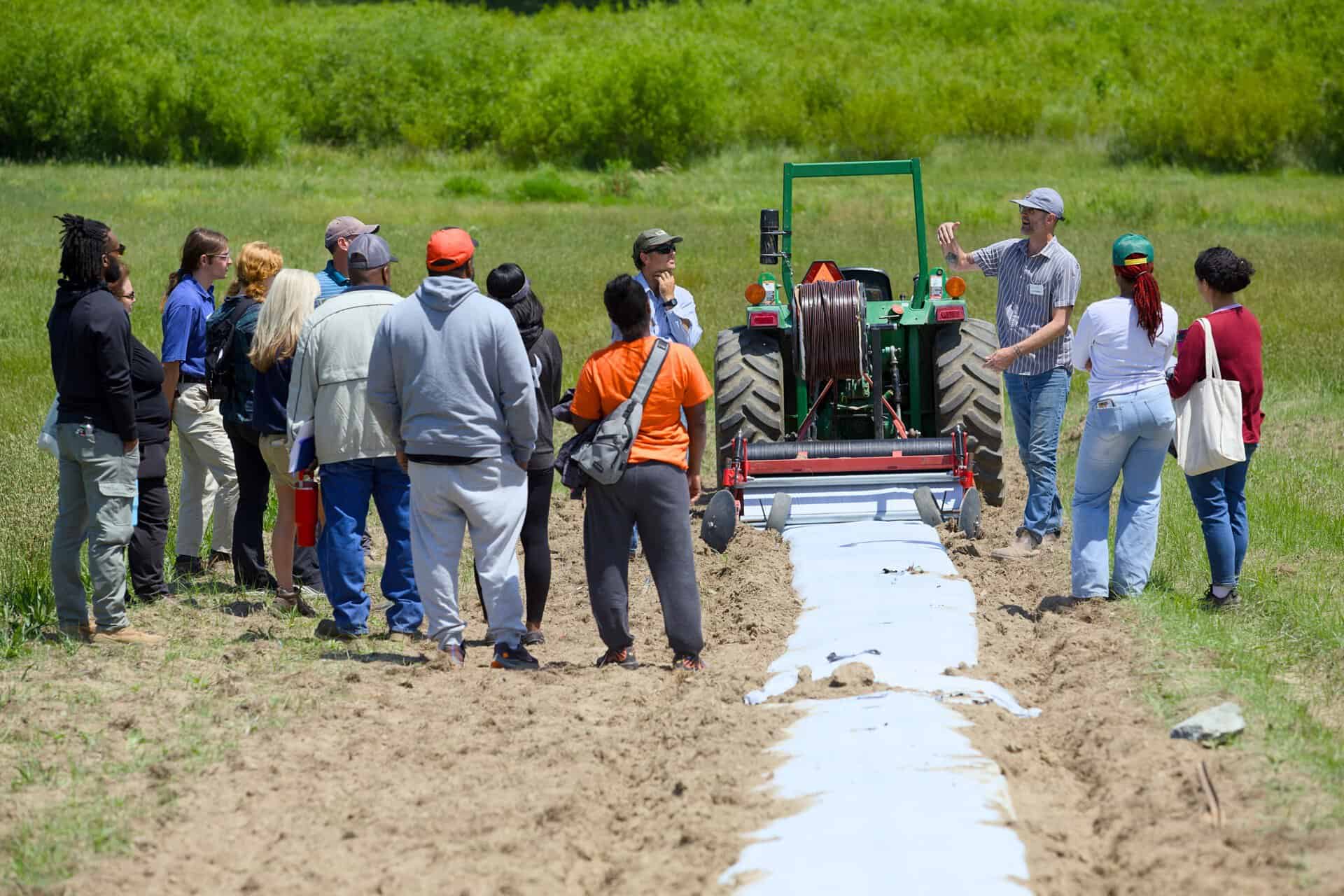
The field day at the N.C. A&T State University Farm attracted 35 people and featured expert advice, equipment demonstrations and various techniques, such as laying down plasticulture to keep weeds at bay. They also learned ways to combat detrimental insects and other pests organically. The event was funded through a grant from the by the U.S. Department of Agriculture’s Southeast Transition to Organic Partnership Program (SE TOPP).
Maddissetti appreciated being able to try out some of the tools. “I keep on looking at Tilmore (equipment), so I know about it, but today is the hands-on experience,” he said. He also enjoyed connecting with other farmers at the event.
That sharing among farmers was one of the goals of the field day, said Hannah Talton, D.P.M., assistant professor and Extension specialist of plant pathology and integrated pest management.
“Farmers learn best from farmers. We want to build that community and that network, so you all can make lasting impacts on your farm and, most importantly, make money,” Talton told the participants. She encouraged them to sign up for a certified organic farmer mentor program by the Sept. 30 deadline.
“We want to get you out of your silos. We want to make sure that you're talking to one another, as well as talking to us as service providers,” Talton said.
Other speakers at the event noted the importance of having an integrated weed management plan— deploying multiple tactics and steps to effectively manage weeds.
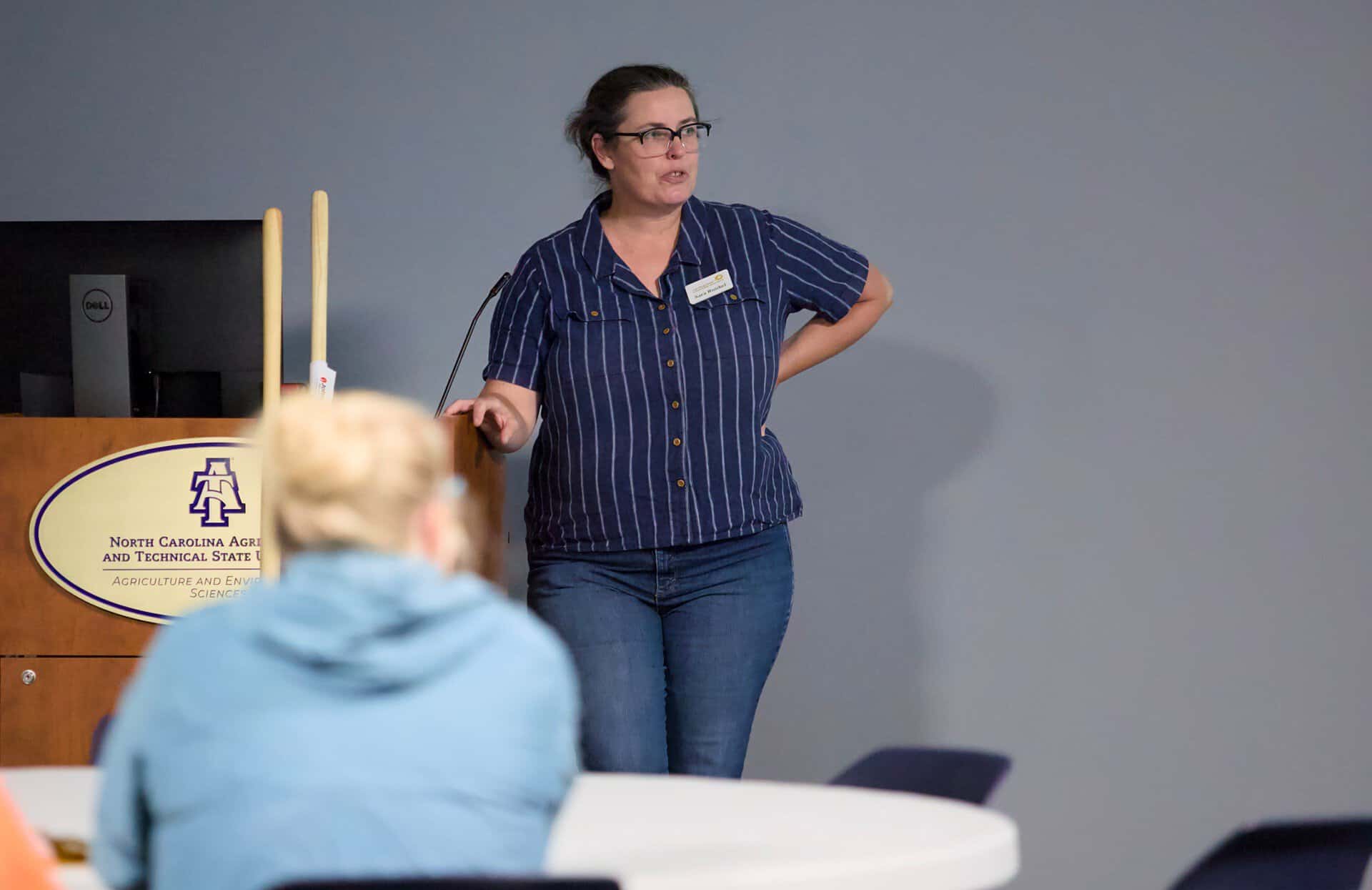
“Some of our annual weeds produce hundreds of thousands of seeds from one plant,” said Sara Runkel, who oversees food safety and market access for CFSA. “So, it might just look like one plant of amaranth (pigweed), but that’s going create a huge problem next year if you let that go to seed.”
Runkel suggested farmers inspect what's coming into their farms, such as manure, compost and mulch, to ensure the material is not going to introduce new weeds. Evaluating and monitoring the effectiveness of the weed strategies also is necessary, she added.
Cheryl Ferguson, of Plum Granny Farm in King, N.C. said she attended the field day to learn what new methods for eliminating weeds might be available for her certified organic farm.
“Any new tips I can learn is great,” said Ferguson, who with her husband, Ray Tuegel, converted her family’s farm from growing tobacco and beef to growing organic fruits and vegetables 17 years ago. “We’re not a large-staff farm. We have one part-time person,” she said. “We’ve got seven acres under cultivation right now, so weeding is a challenge.”