The College of Agriculture and Environmental Sciences celebrated a semester of success this fall, with record enrollment growth, a new double master’s degree pathway, a new dietetics concentration and the college’s first three-time graduate.
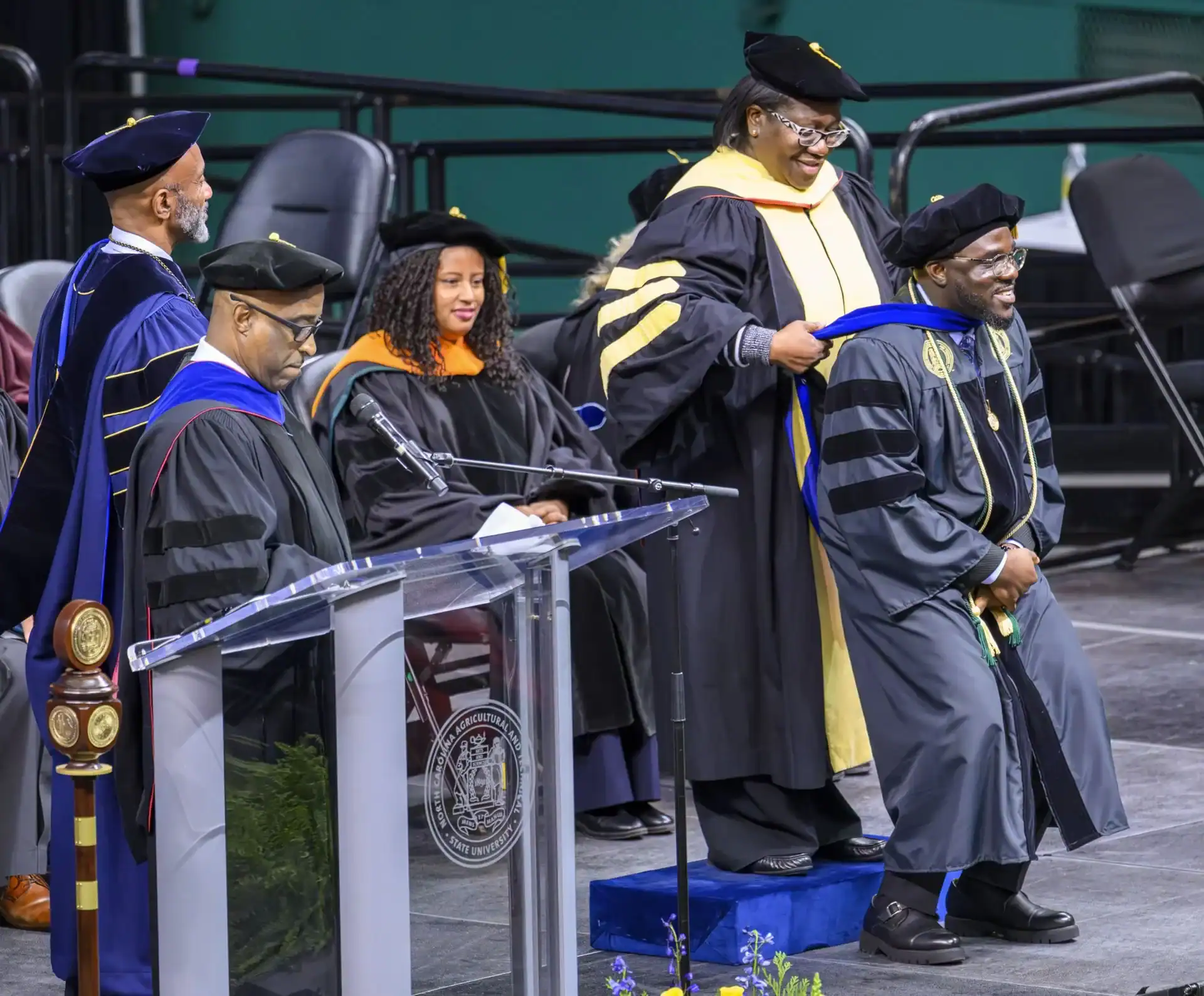
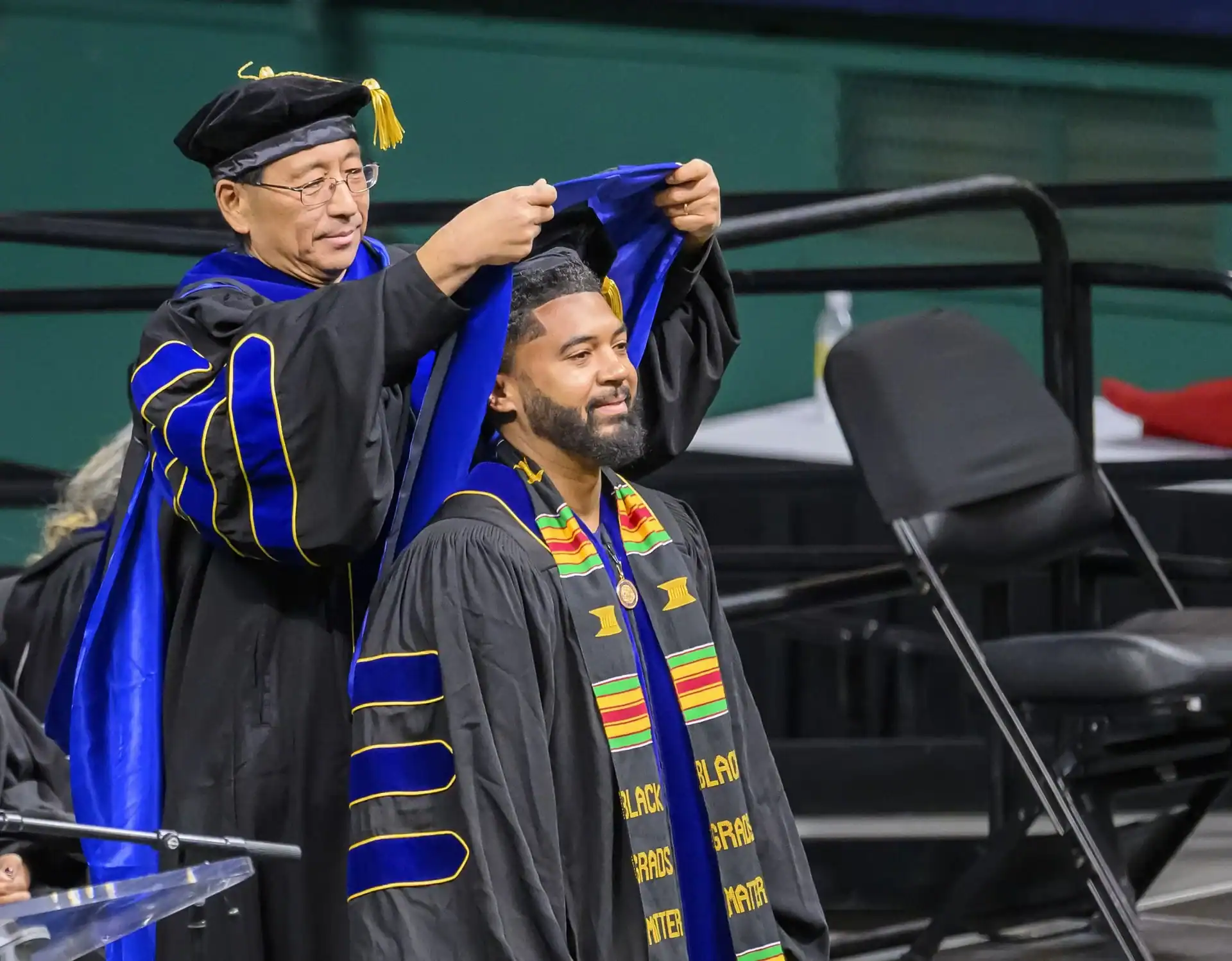
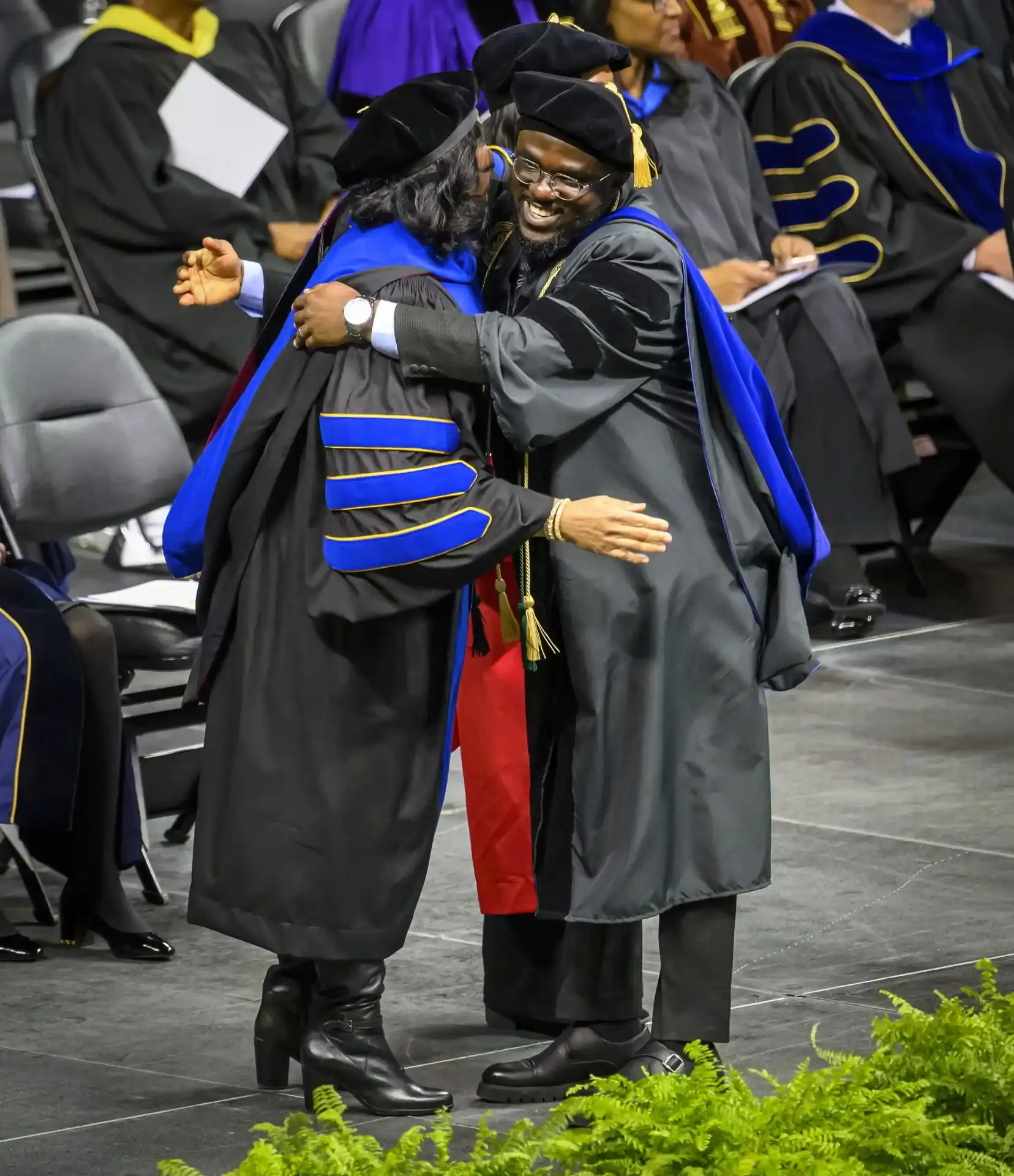
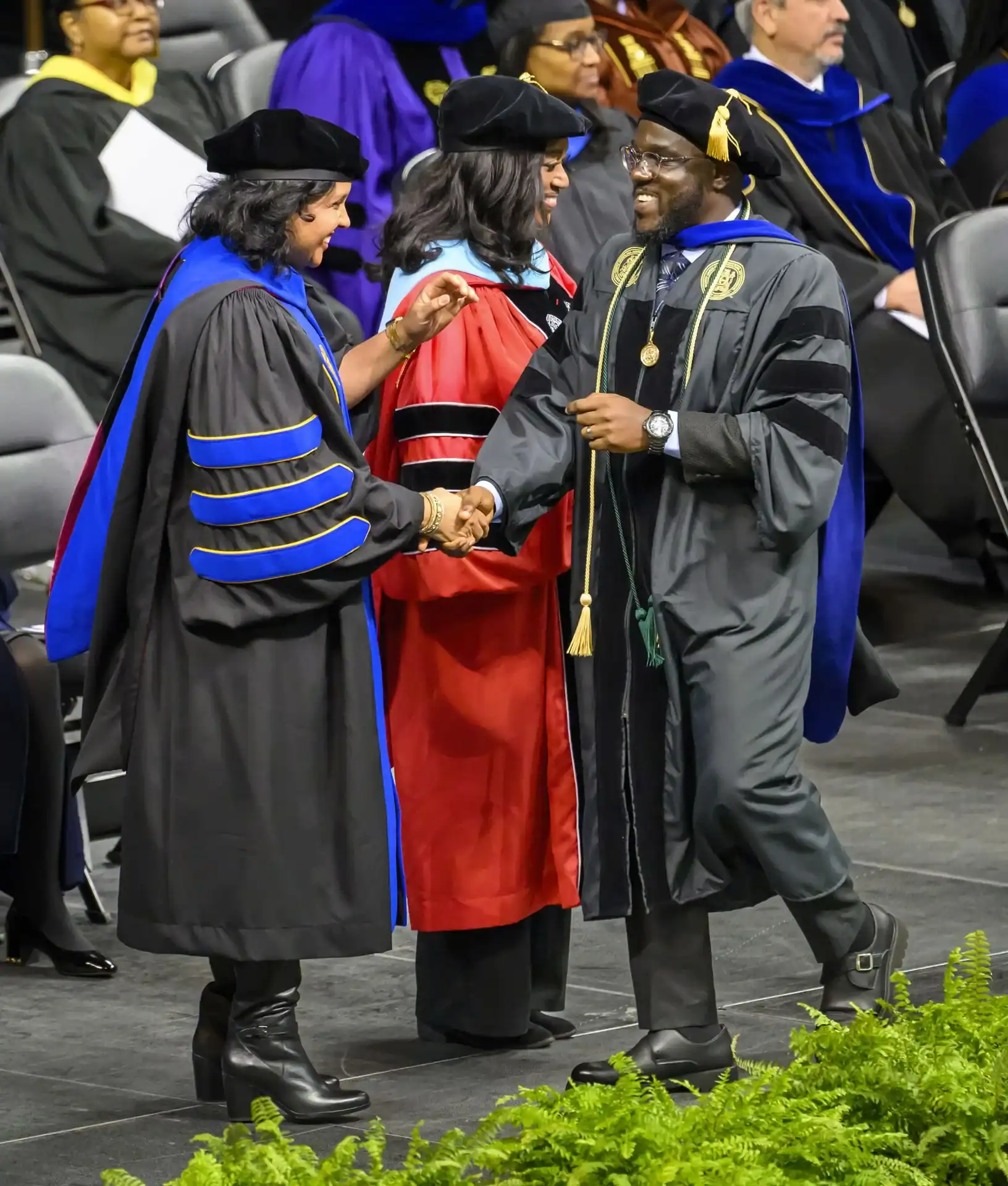
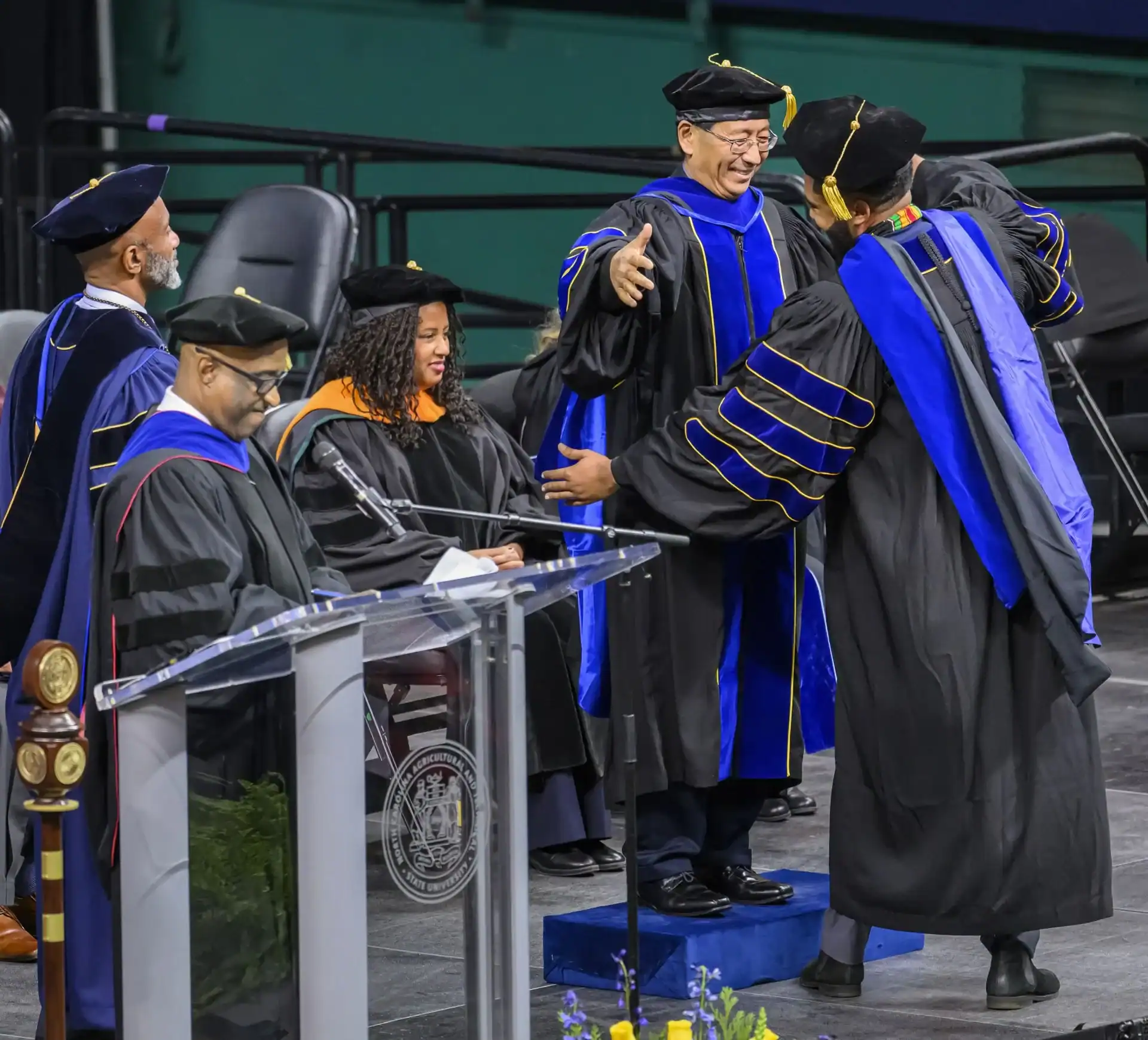
The first two Ph.D. graduates from the agribusiness and applied economics concentration, and first three Ph.D. graduates from the animal science concentration within the Agricultural and Environmental Sciences doctoral program, were among the 97 undergraduates, 34 master’s degree students and seven Ph.D. students who turned their tassels December 12 and 13 at First Horizon Coliseum, and prepared themselves for next steps.
“I’m excited and happy … it’s not easy, but I did it,” said Success Okafor, who graduated from the agribusiness and applied economics concentration in the Department of Agribusiness, Applied Economics and Agriscience Education. “I’m happy for my colleagues as well as we graduate together.”
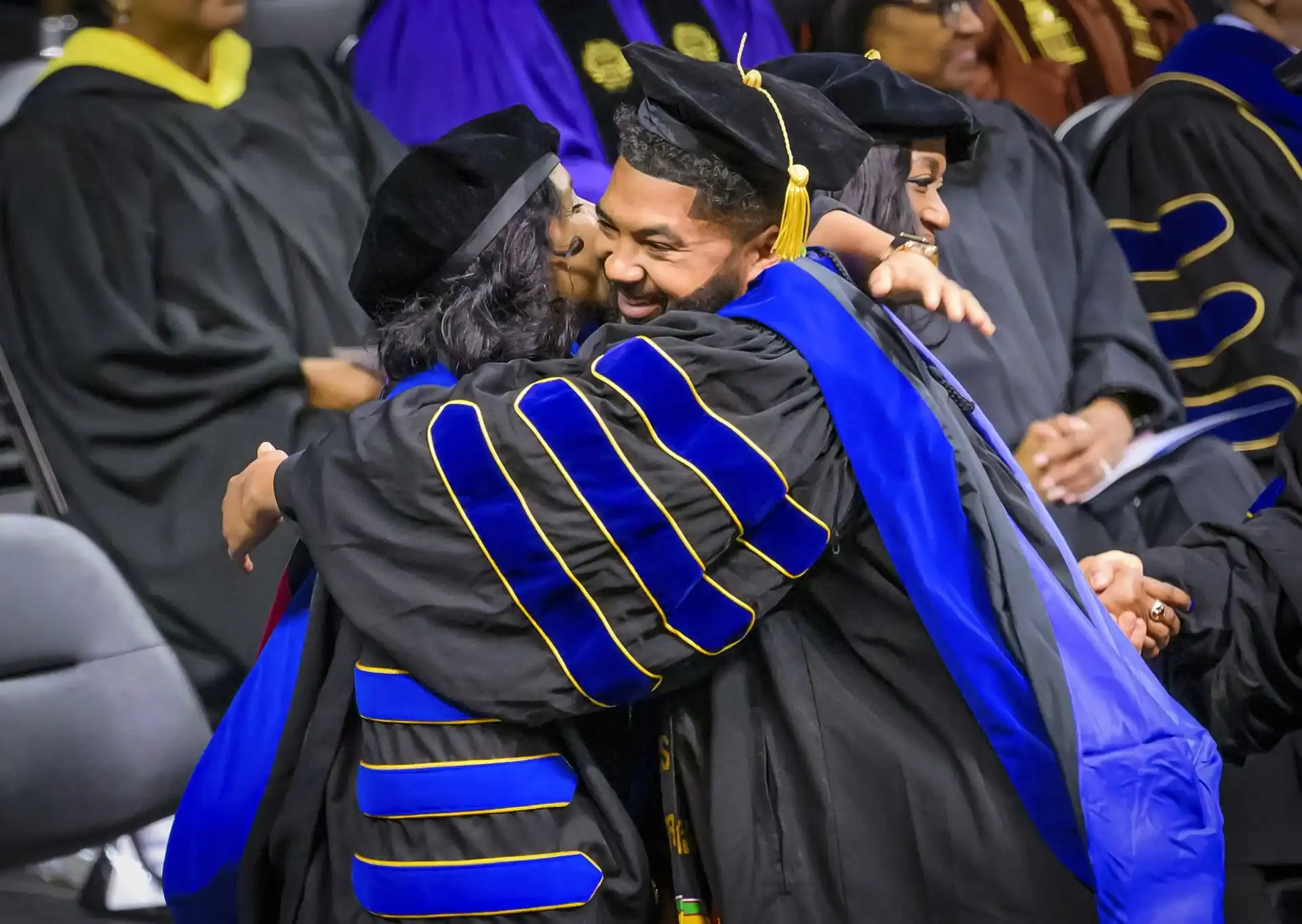
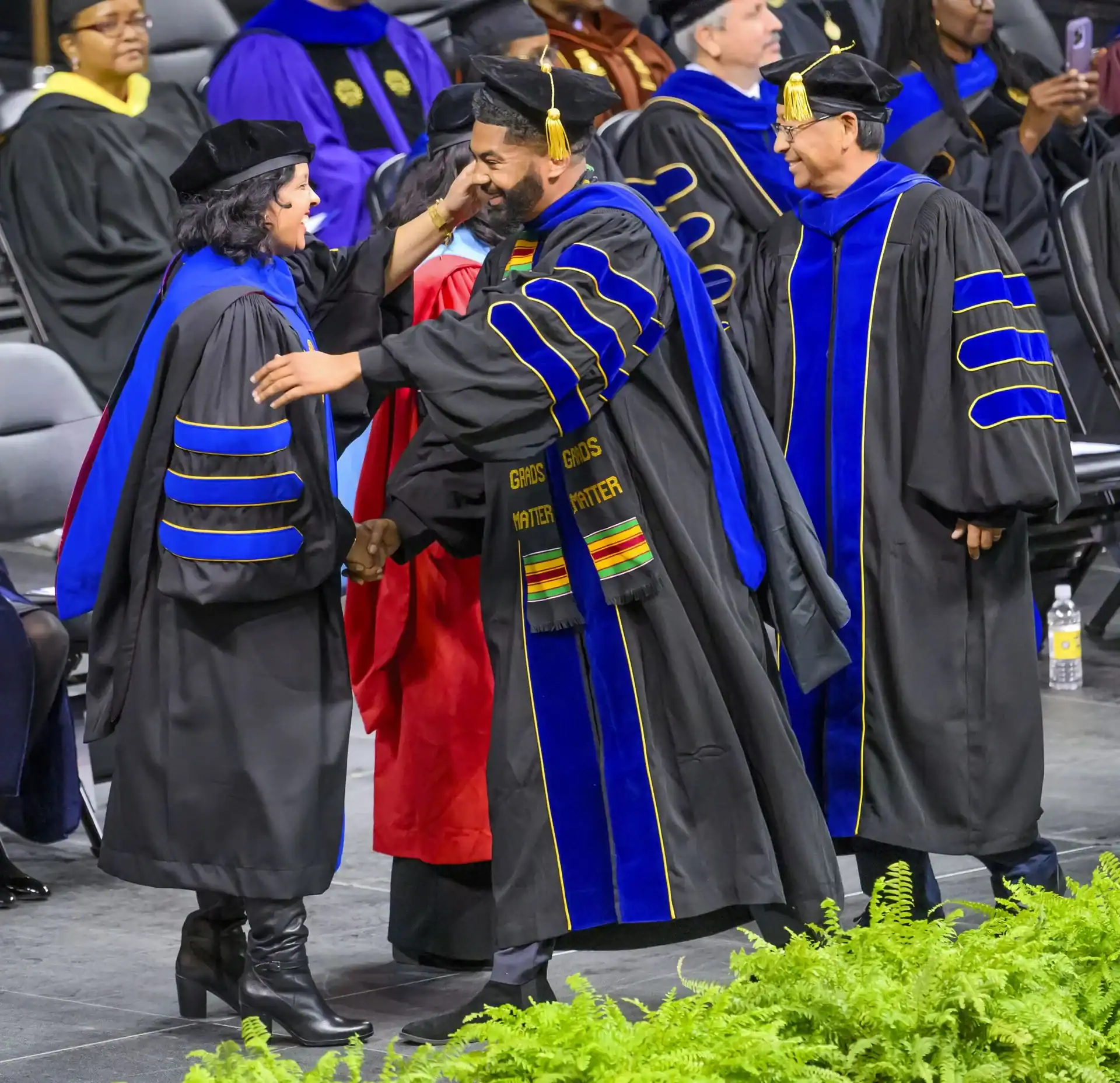
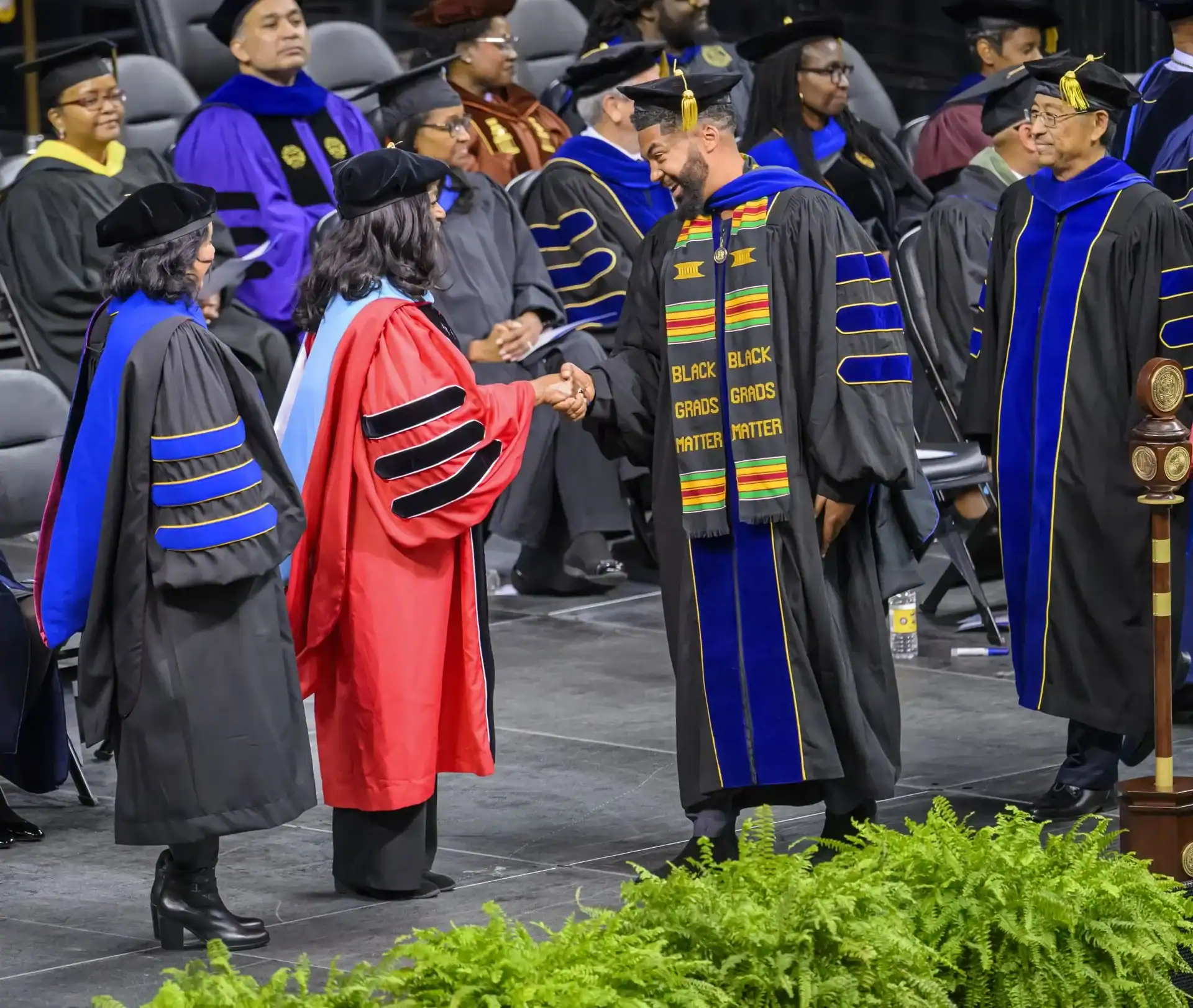
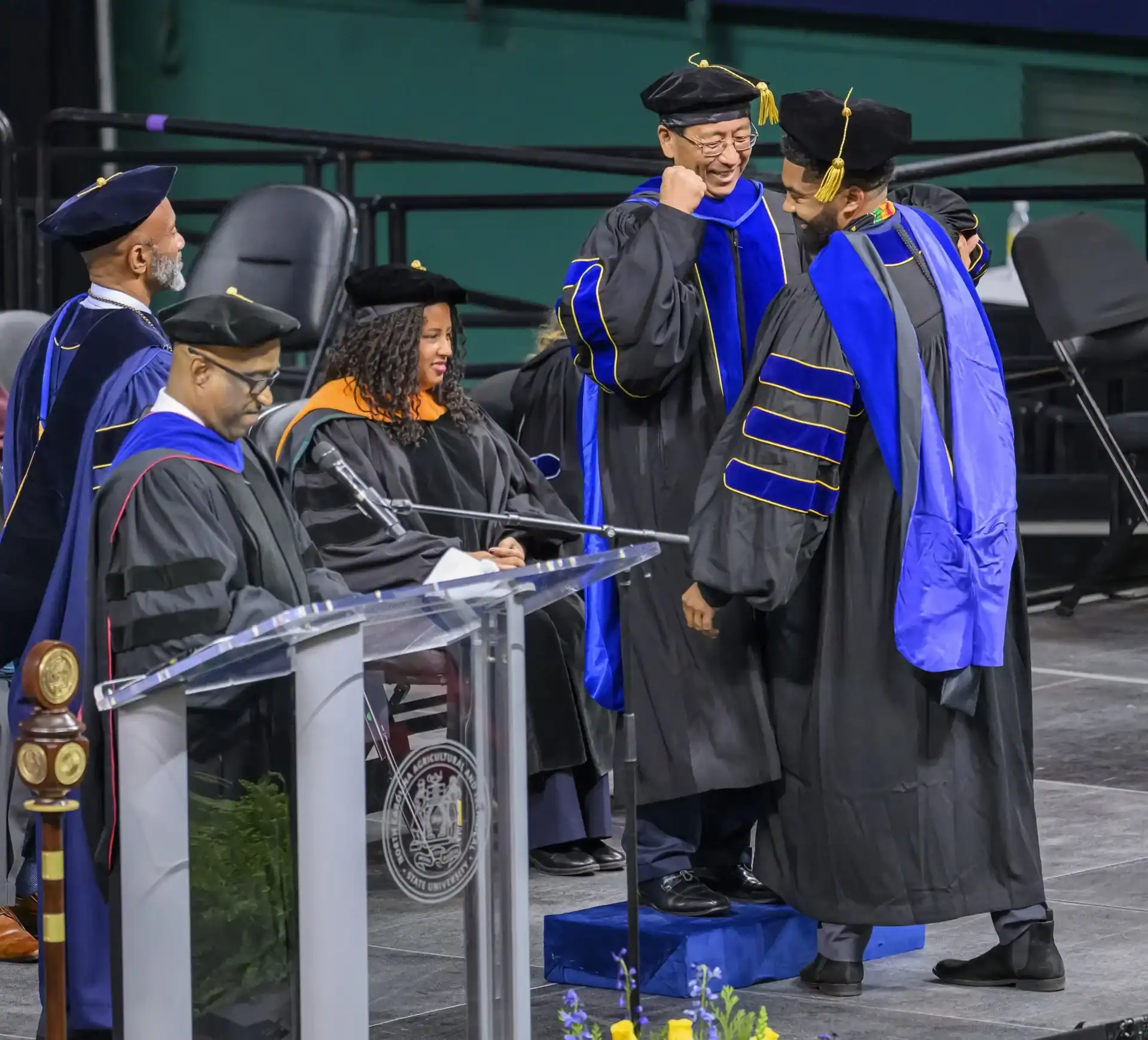
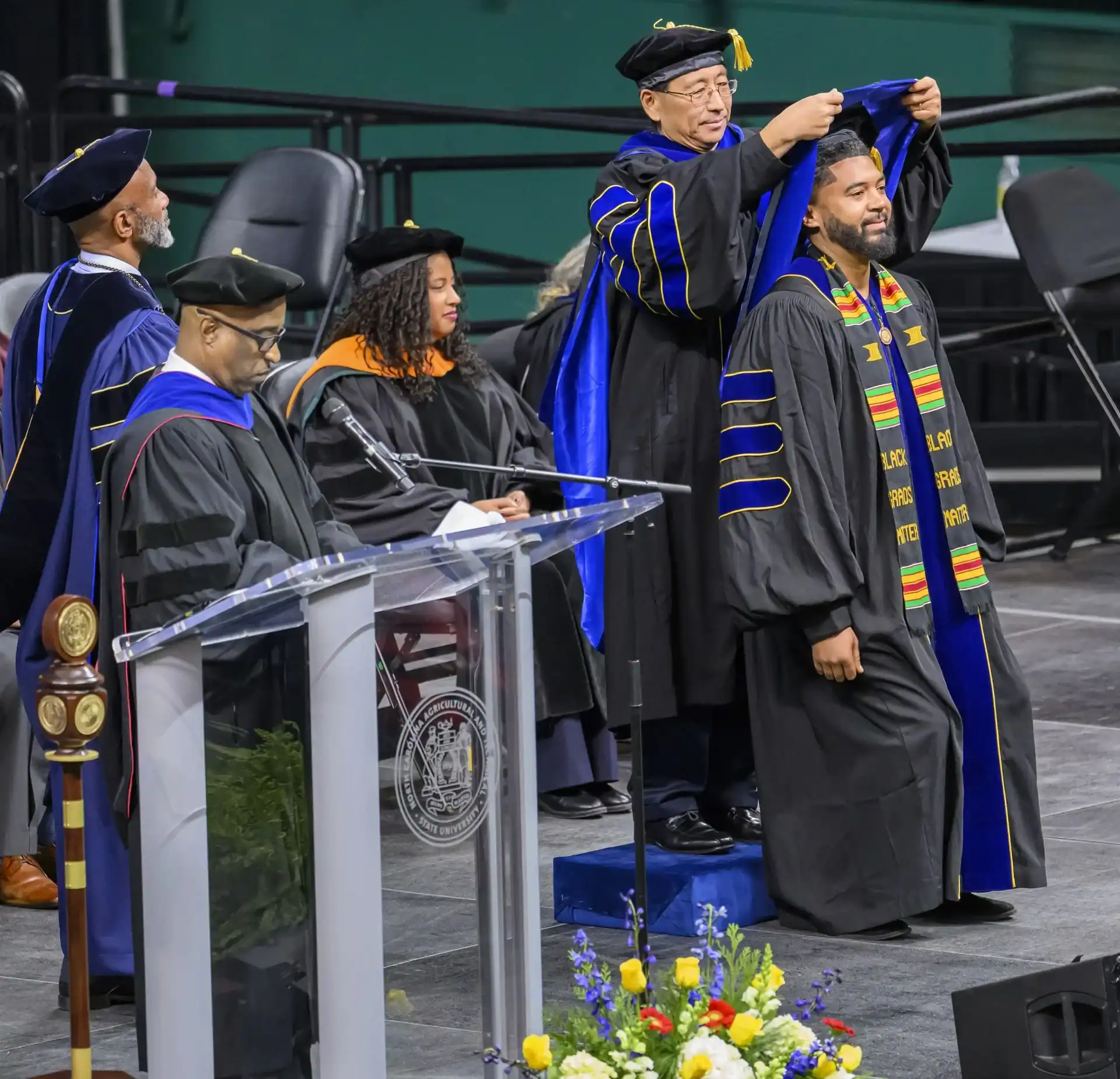
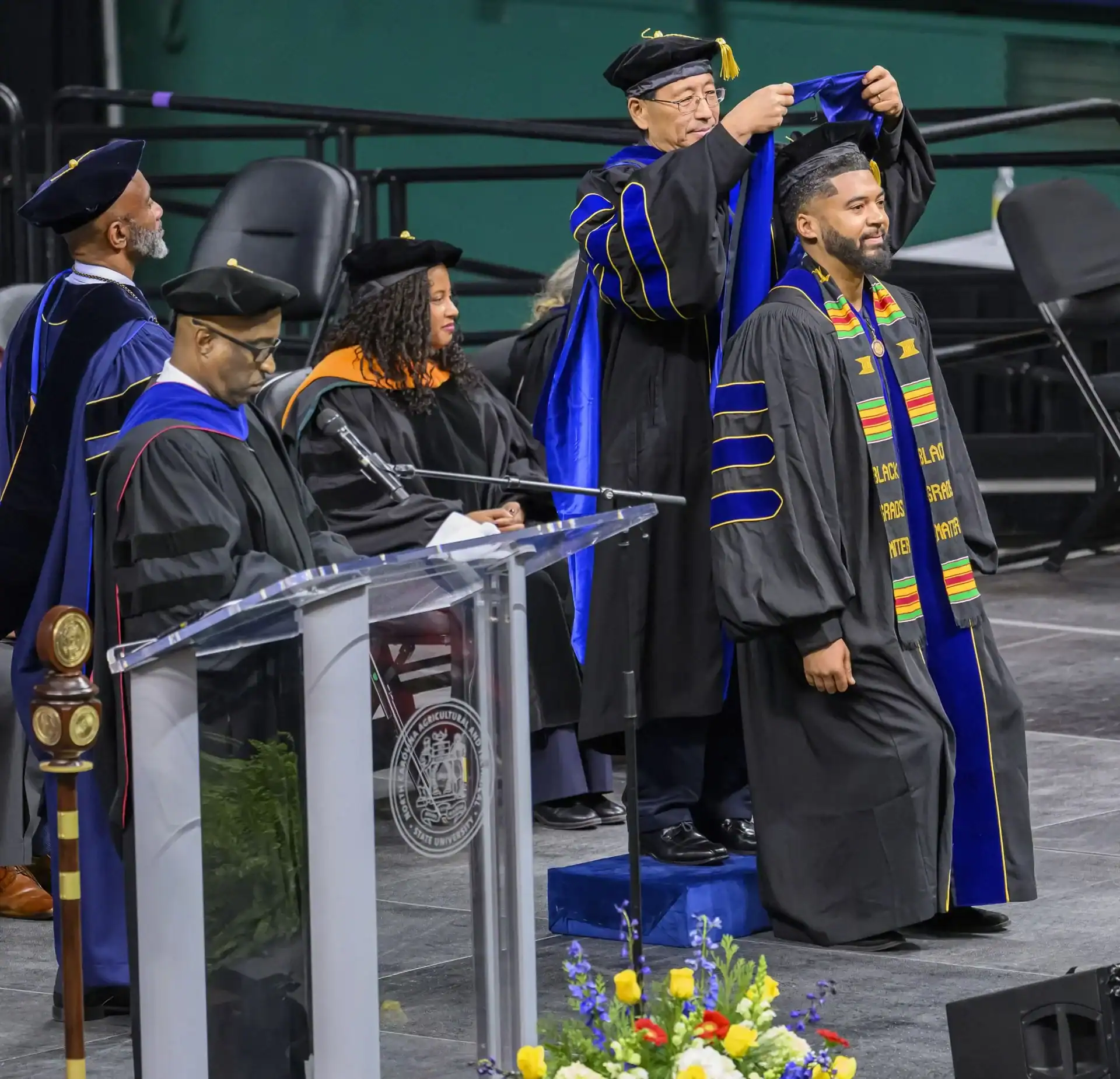
Joining them in earning his Ph.D. is Will Lashley, who made history in the college as its first three-time graduate. His Ph.D. is in agriculture and environmental sciences with a concentration in sustainable agriculture.
“It’s almost a surreal moment,” said Lashley, who previously received his bachelor’s degree in urban and community agriculture and a master’s in natural resources and environmental design. “I’m so grateful and ready to show my gratitude, and pay it forward.”
Lashley was the college’s first Ph.D. student to enroll in 2022. Since its introduction that year, the Ph.D. program has grown from 10 to 56 students, a 460 percent increase in three years.
That program’s growth mirrors the college’s, which enrolled its largest class ever this fall: 1,271 students, an increase of 118 students from Fall ’24. The enrollment gains parallel those of the university, which this semester enrolled 15,275 students for the first time, a record not only for A&T but for historically Black college or universities (HBCUs) nationwide.
This is the 12th consecutive year that A&T has been the nation’s largest public HBCU.
“It’s the Aggie brand,” said Antoine Alston, Ph.D., associate dean for academic studies. “People understand that we represent high quality, innovation and community impact. We have a vision for the future of environmental sciences, food science and agriculture. People see that.”
That growth is fueling the university’s drive to achieve an R1, or very high, research activity status, a coveted classification for doctoral universities, Alston said. The college has intentionally overhauled its curriculum to reflect current issues and need-to-know trends in agriculture, food and nutritional science and other program areas, Alston said.
Chief among those new academic offerings is the “Ag MBA,” a new degree pathway jointly developed by the CAES and the Deese College of Business and Economics which allows students to earn two master’s degrees concurrently, one in business administration and one in agriculture and environmental systems.
The program will enroll its first students in spring 2026.
“This is the only one of its kind in the country with this kind of structure and this curriculum,” said Antoine Alston, Ph.D., CAES associate dean of academic studies. “This is going to allow students to save money and finish their degree at an accelerated pace.”
Another new academic offering is the nutrition and dietetics concentration in the food and nutritional sciences master’s program.
“The demand for dietitians is rising as people realize how important food and nutrition is to their overall health,” said Muditha Senanayake, Ph.D., chair of the Department of Family and Consumer Sciences.
The curriculum has provisionally been accepted for accreditation by the Accreditation Council for Education in Nutrition and Dietetics (ACEND), said interim program director June Thompson, RDN. Academy officials will visit the university next year to review the program in the College of Agriculture and Environmental Sciences for full accreditation.
“These gains show that the college is highly visible and highly committed to student success,” said Radiah C. Minor, Ph.D., interim dean of the college. “We equip our students with the knowledge, skills and dispositions that they need to be leaders and entrepreneurs. We are the college ‘where science meets society,’ we teach them to use that knowledge to go into the world and improve the human condition.”
The college’s student body also reflects a wide array of North Carolina counties, across the country and countries around the world.
“There’s an experiential component to our college,” he said. “We make sure our students get the internships, have the study abroad experiences or community work and are able to create their own networks, making friends with people from across the country and the world. They take an expanded network with them after graduation.”