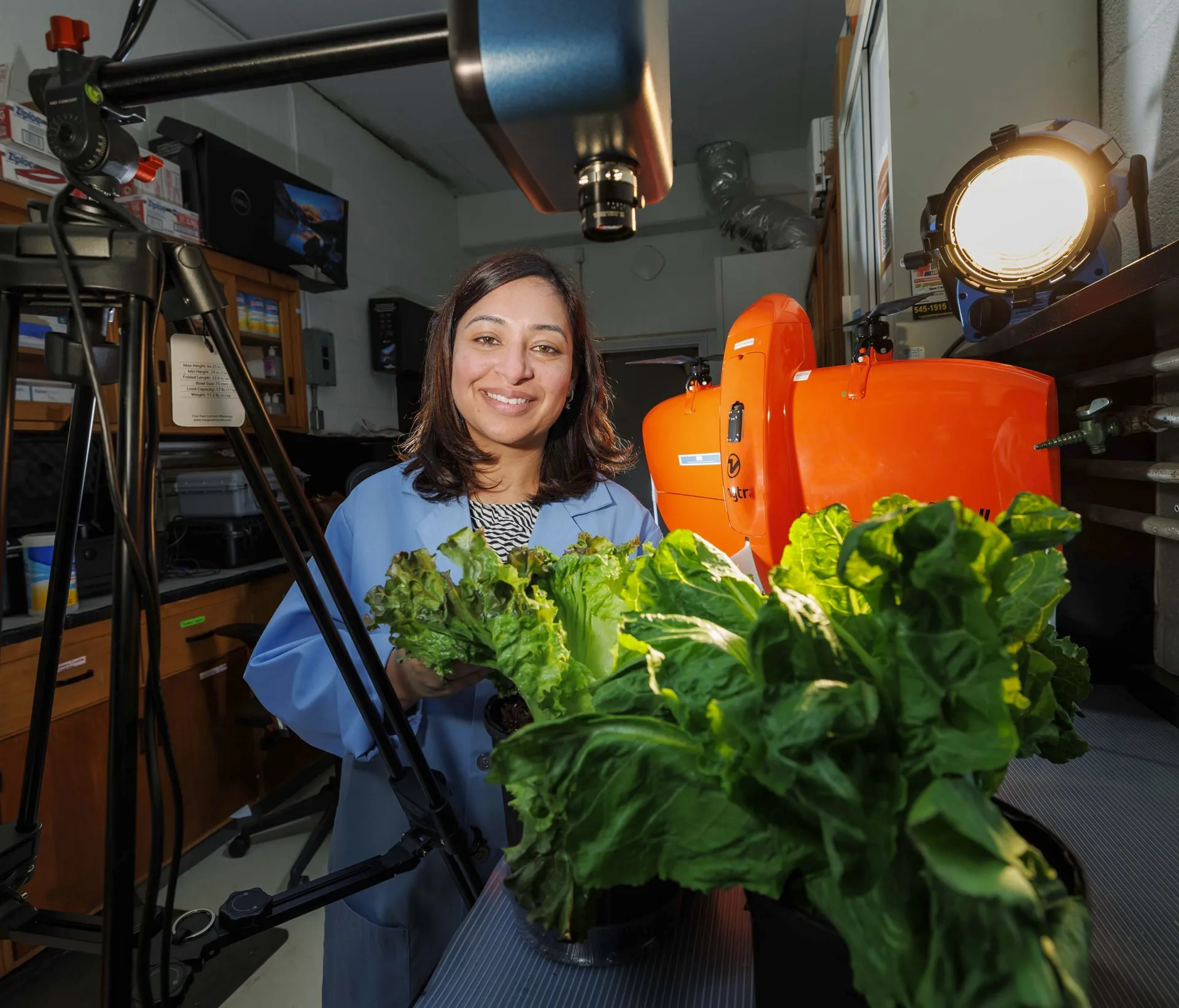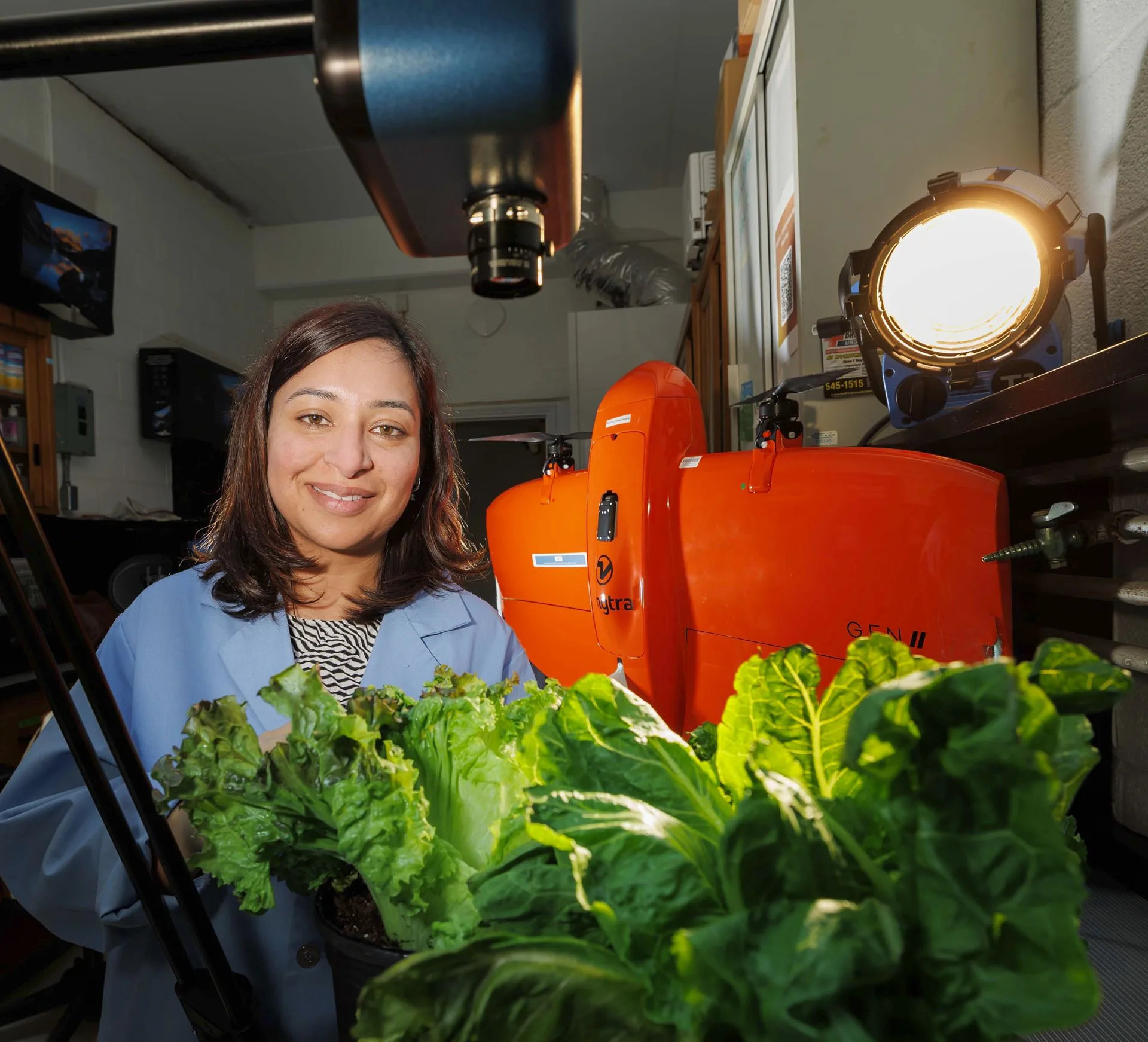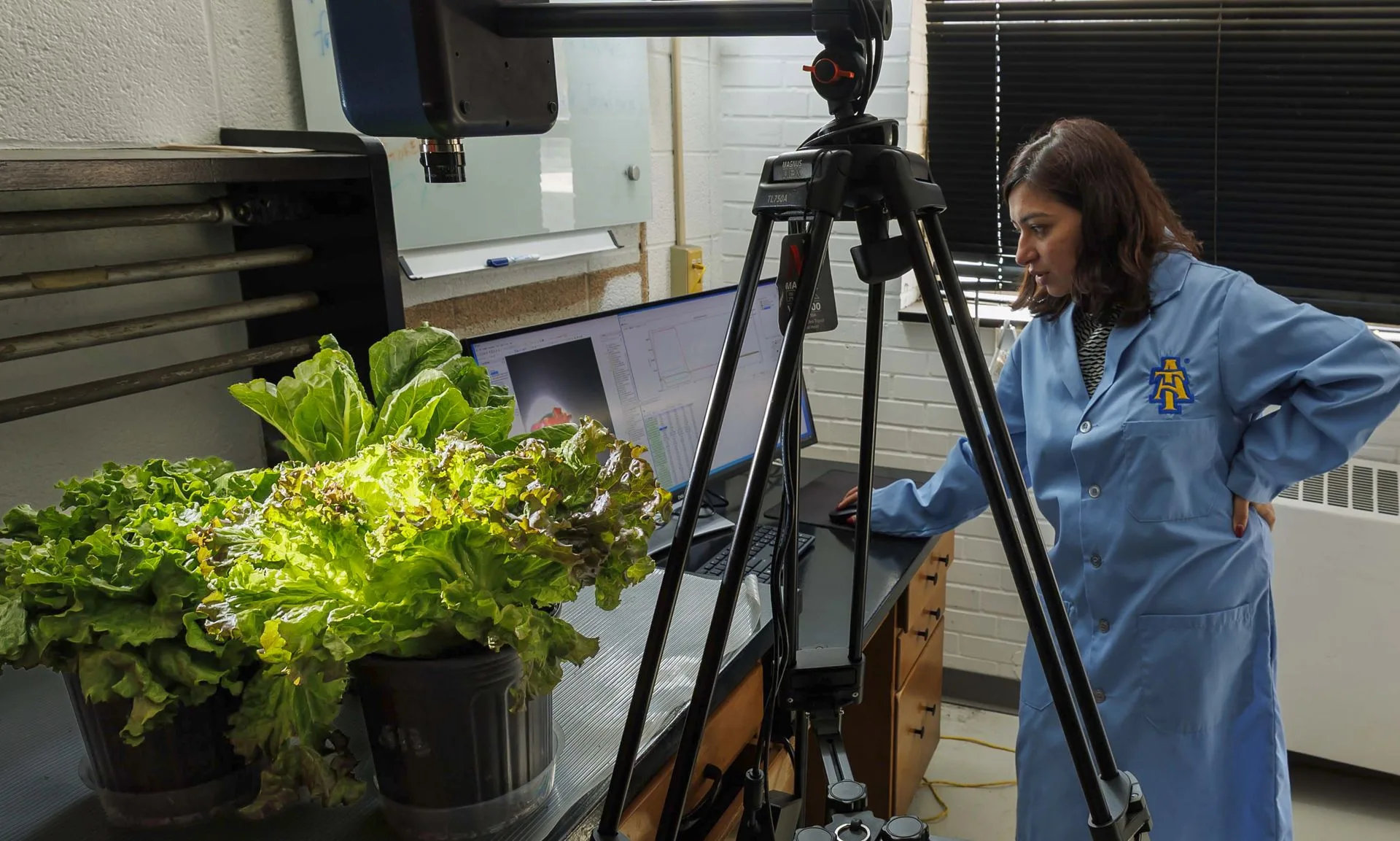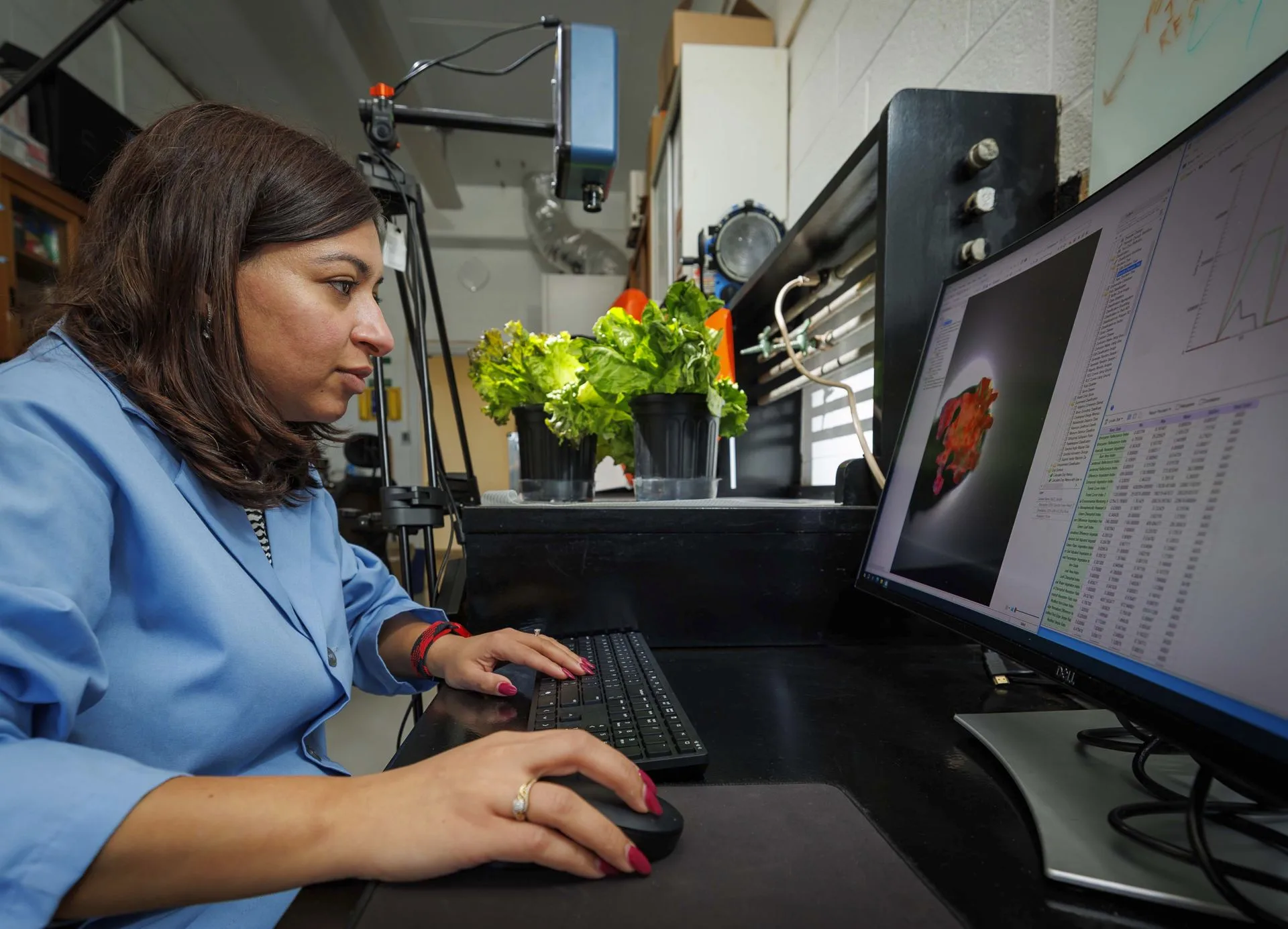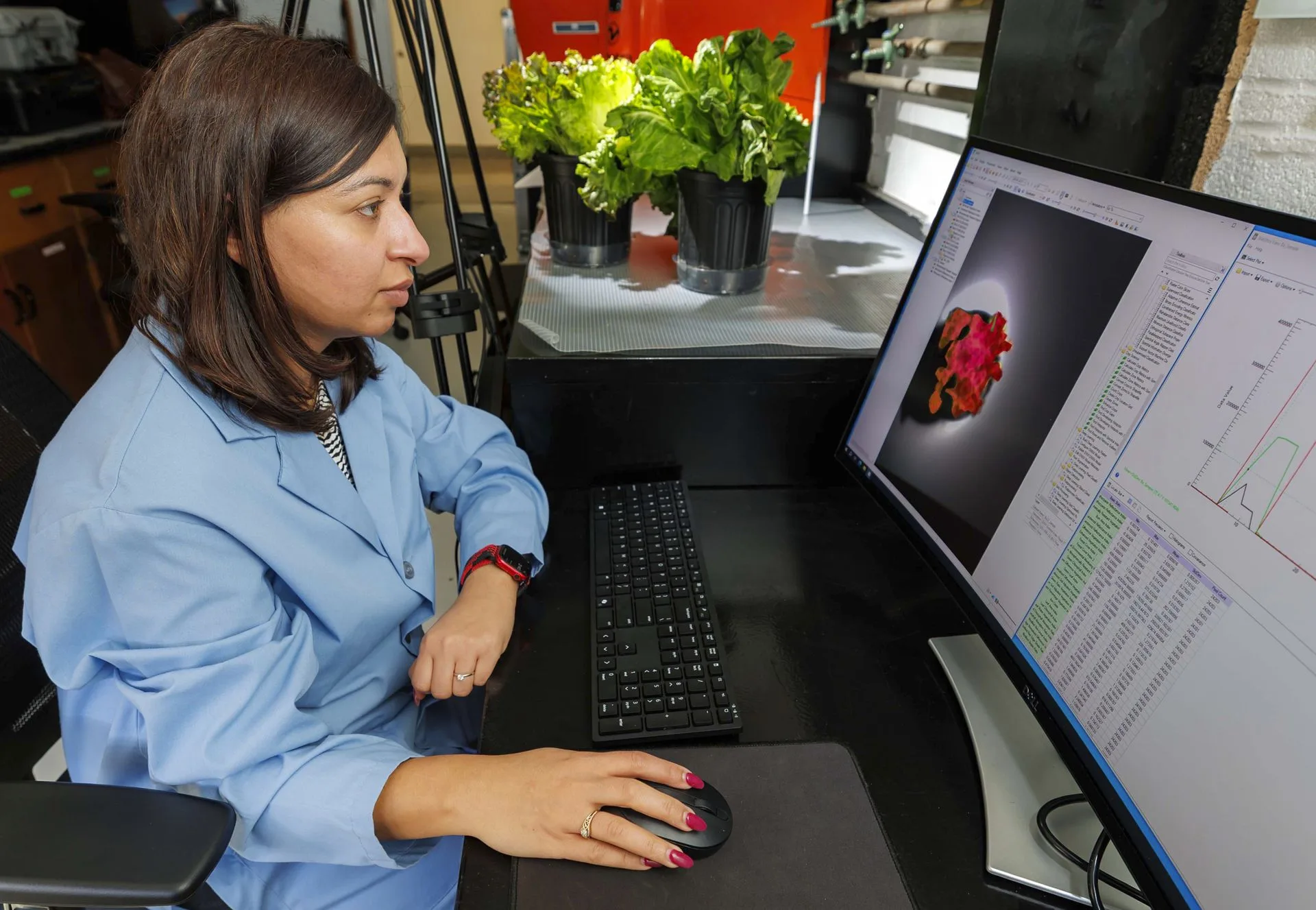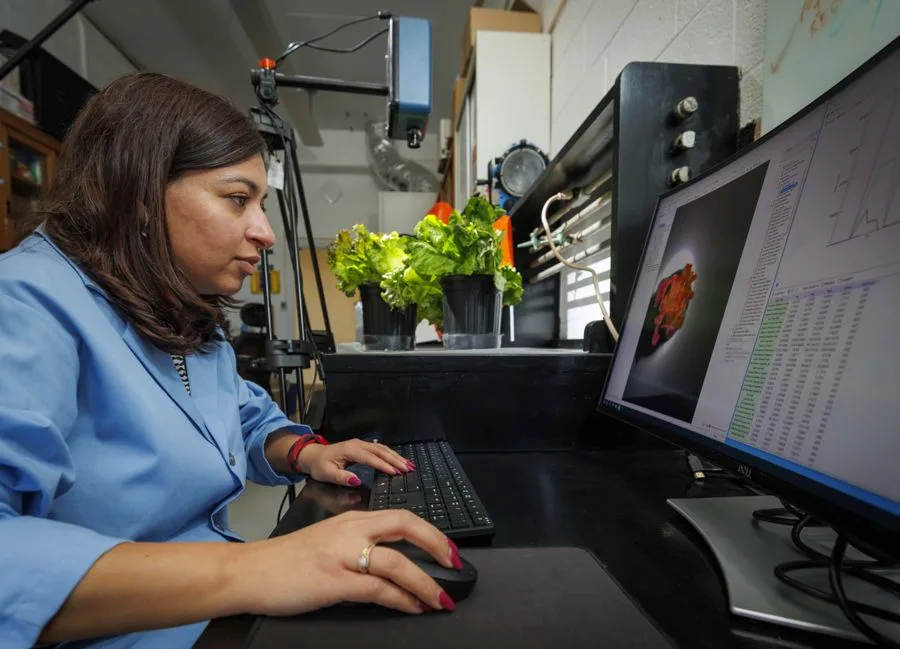
On most sunny days, Harmandeep Sharma, Ph.D., would prefer to be outside, piloting a drone equipped with a high-tech camera above rows of crops to collect virtual acres of data.
But for her latest project, Sharma will deploy her imaging equipment inside her Carver Hall lab. A U.S. Department Agriculture grant will help her create a database to help identify and predict cold-tolerant varieties of looseleaf lettuce.
Sharma’s study is funded by a two-year Agriculture and Food Research Initiative grant of $260,533 from the USDA’s National Institute of Food and Agriculture. She’ll work on this project with N.C. A&T colleague Arnab Bhowmik, Ph.D., an associate professor of soil science and soil microbiology who’s serving as co-principal investigator.
“Looseleaf lettuce is a terrific crop for small-scale farmers, and growers depend on cutting-edge science to help them decide what to grow and when to grow it,” said Sharma, a research assistant professor in crop science and digital agriculture in the College of Agriculture and Environmental Sciences.
“Lettuce has been widely studied for heat and water stress, but there is little research on how looseleaf varieties perform in cold and below-freezing temperatures after germination,” Sharma added. “Because adverse climatic conditions are producing sudden and wide fluctuations in temperatures and unexpected frost conditions, it’s important that we understand how cold stress affects this important crop.”
Found in salads and on burgers and sandwiches, lettuce is a popular, versatile and nutritious staple of the American diet. Not only does lettuce contain several health-promoting bioactive compounds that fight inflammation and oxidative stress, it’s a multi-billion dollar crop, with the United States ranked as the world’s second-leading lettuce producer. In 2022, American farmers sold more than $4.1 billion in Romaine, iceberg and leaf lettuce.
Lettuce — especially the green- and red-leafed varieties considered “looseleaf” — is an ideal crop for small-scale farmers, Sharma said. That’s because it grows quickly and can be harvested multiple times in the same growing season. Looseleaf varieties also require relatively less space than other types of lettuce.
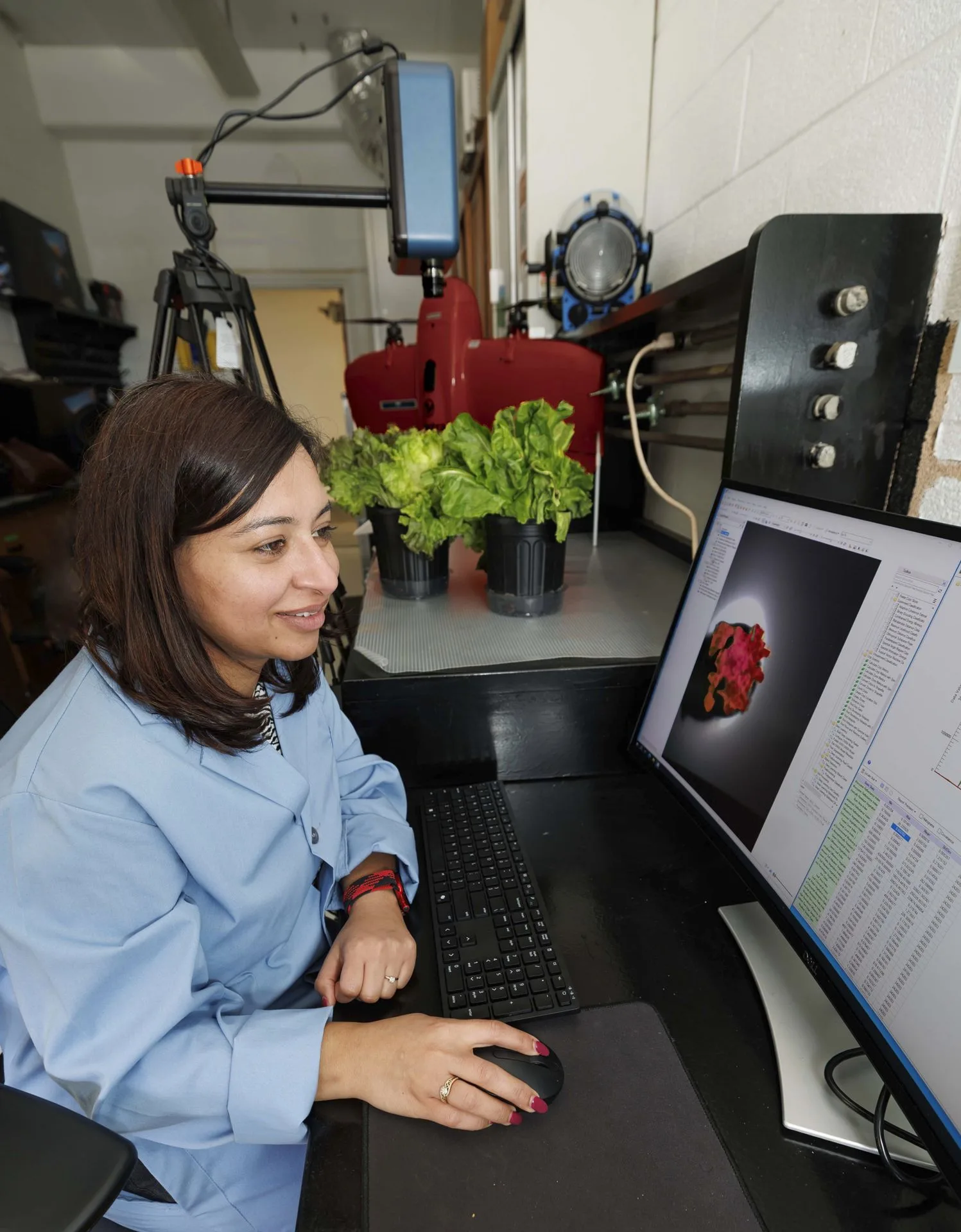
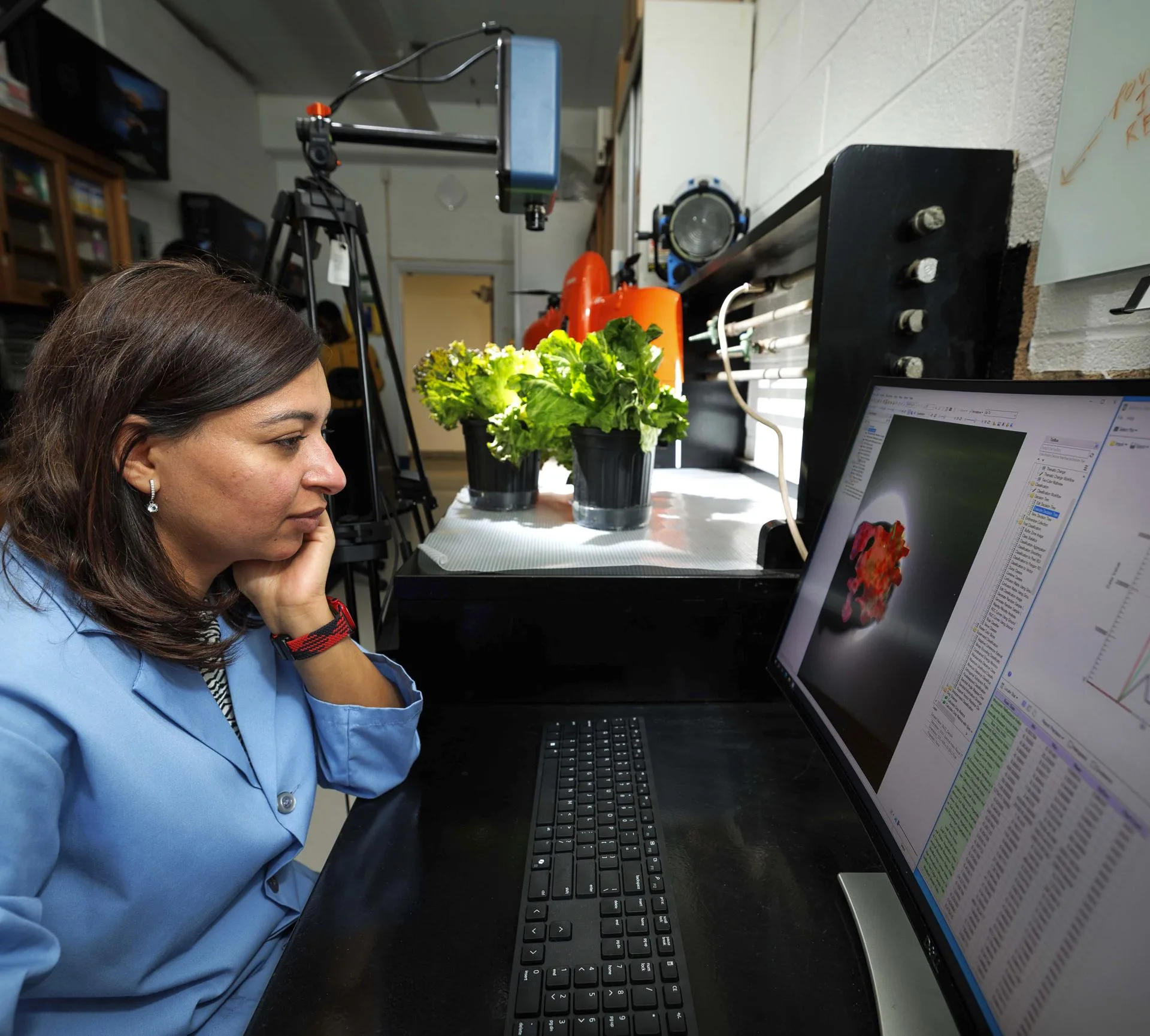
Because lettuce can germinate in cool temperatures, it can be planted in the early spring and fall, but freezing temperatures and unexpected frost can kill lettuce plants. Sharma’s project — which will determine cold-temperature thresholds for multiple looseleaf lettuce varieties — will be the first to use high-throughput hyperspectral imaging along with deep learning to conduct cold-stress screening in lettuce.
Sharma and her project team, which includes Bhowmik and students from both of their labs, will obtain 100 looseleaf varieties of Lactuca sativa L. from the U.S. National Plant Germplasm System. They’ll raise the plants in a controlled growth chamber in Sharma’s Sensors for Sustainable and Efficient Plant Production (SENSE) Lab. Once each plant reaches the four- to six- leaf stage, they’ll expose the plants to temperatures of 4°C (39°F) for six hours, then take readings of the leaves. The project team will repeat the experiment 10 more times, decreasing the temperature by 1 degree each time and eliminating varieties killed by the cold. The goal is to identify 10 that best tolerate cold and freezing temperatures.
Traditionally, Sharma said, cataloging physical, physiological and structural traits of plants is time-consuming, destructive and often inexact. But Sharma is an expert in digital agriculture who uses advanced technology to collect phenotype data, monitor crops in real time and build predictive models that help determine optimal amounts and application times of water and fertilizer.
For this project, Sharma and her team will deploy a faster, more efficient and more comprehensive method: high-throughput hyperspectral imaging. This method can collect data across thousands of light bands and creates a unique spectral signature that pick up signals of subtle physiological changes long before the human eye can see signs of browning and wilting. The project team also will collect physiological data and measure biochemical responses. The project team will then develop a deep-learning model within the SAS Viya data analytics and artificial intelligence platform to predict growth and physiological and biochemical responses within the 10 varieties of looseleaf lettuce that prove to be the most cold-resistant.
Sharma envisions this project helping farmers select optimal looseleaf lettuce varieties for their local climate conditions. With a non-destructive screening method, she said, breeders could more easily and precisely pinpoint cold-tolerant lettuce varieties. The research findings also could serve as a foundation for future molecular and metabolomic analyses that could lead to a more comprehensive profile of cold-stress responses in lettuce and other green leafy vegetables.
“High-throughput hyperspectral imaging gives us an extremely efficient method for determining the best kinds of lettuce for this continuously changing climate, and it will give scientists good data to build on,” Sharma said. “There’s tremendous potential here for farmers and researchers.”