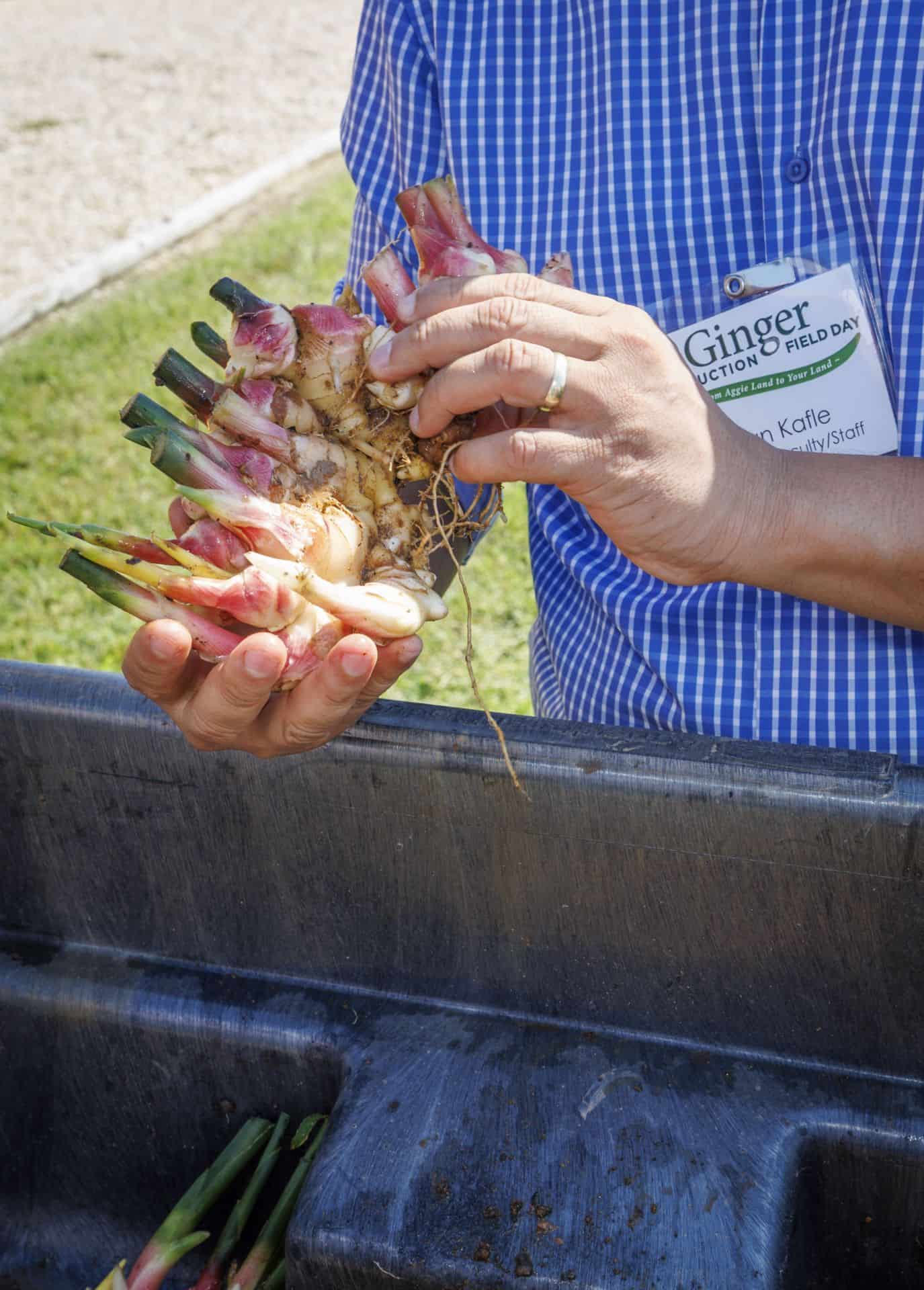
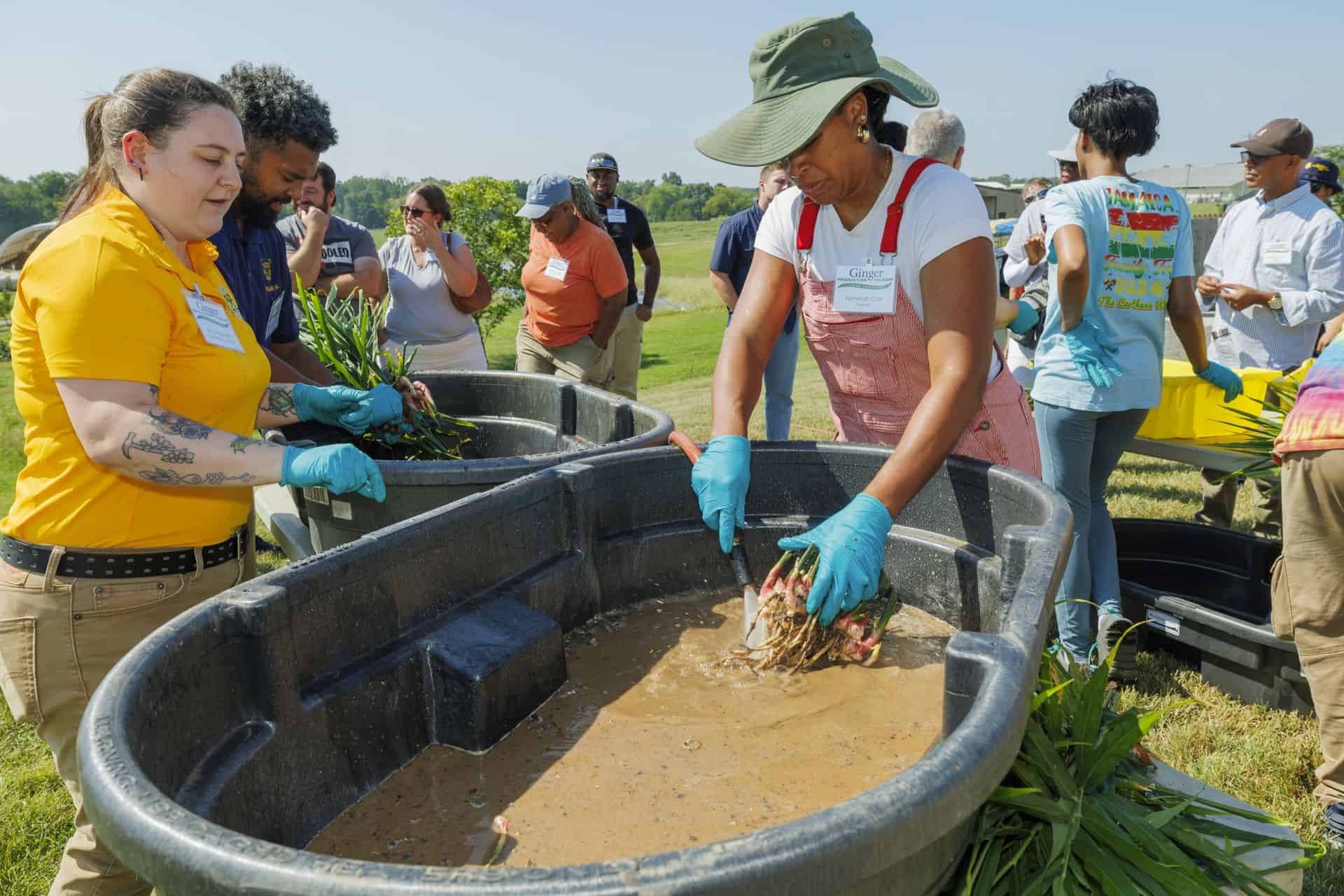
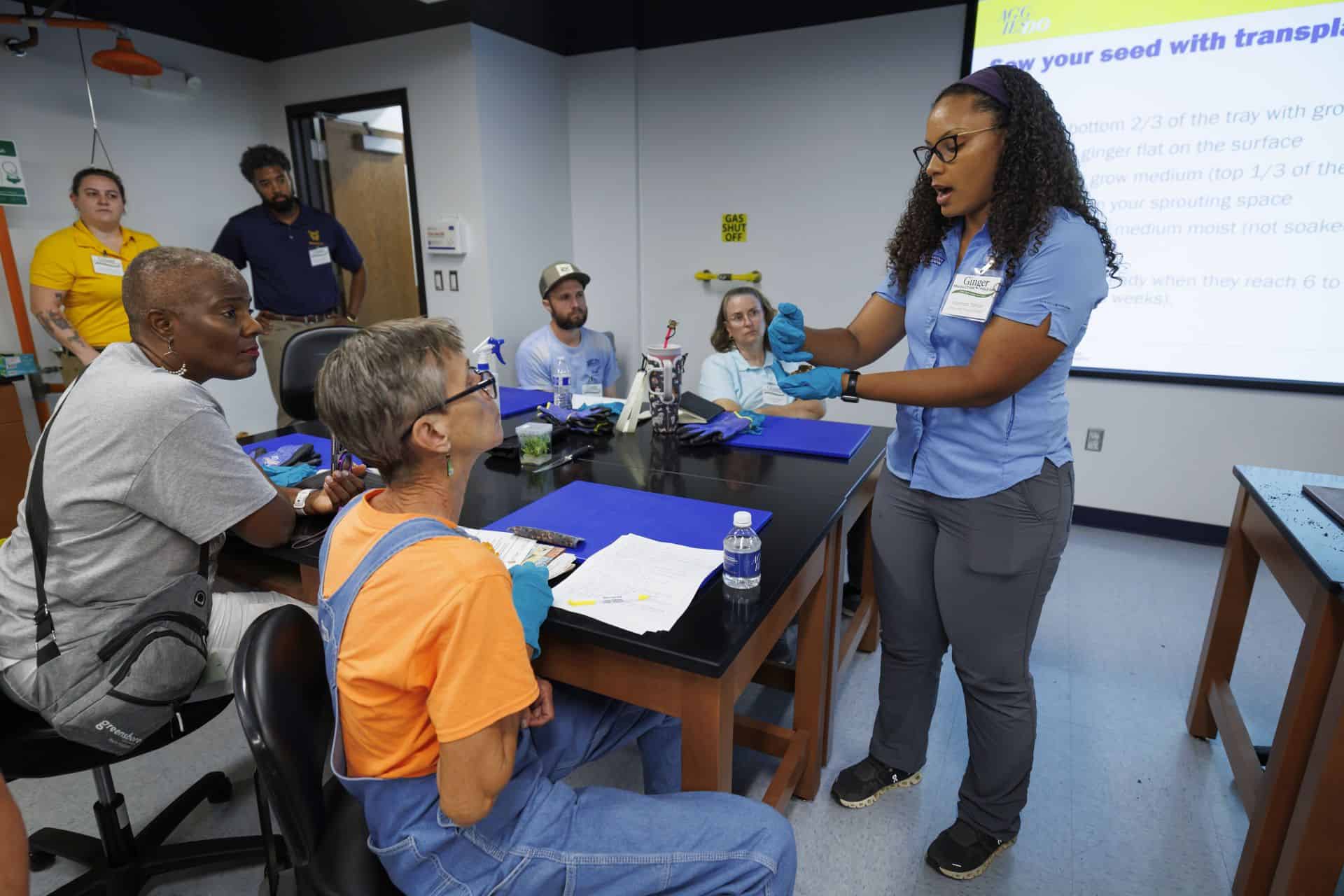
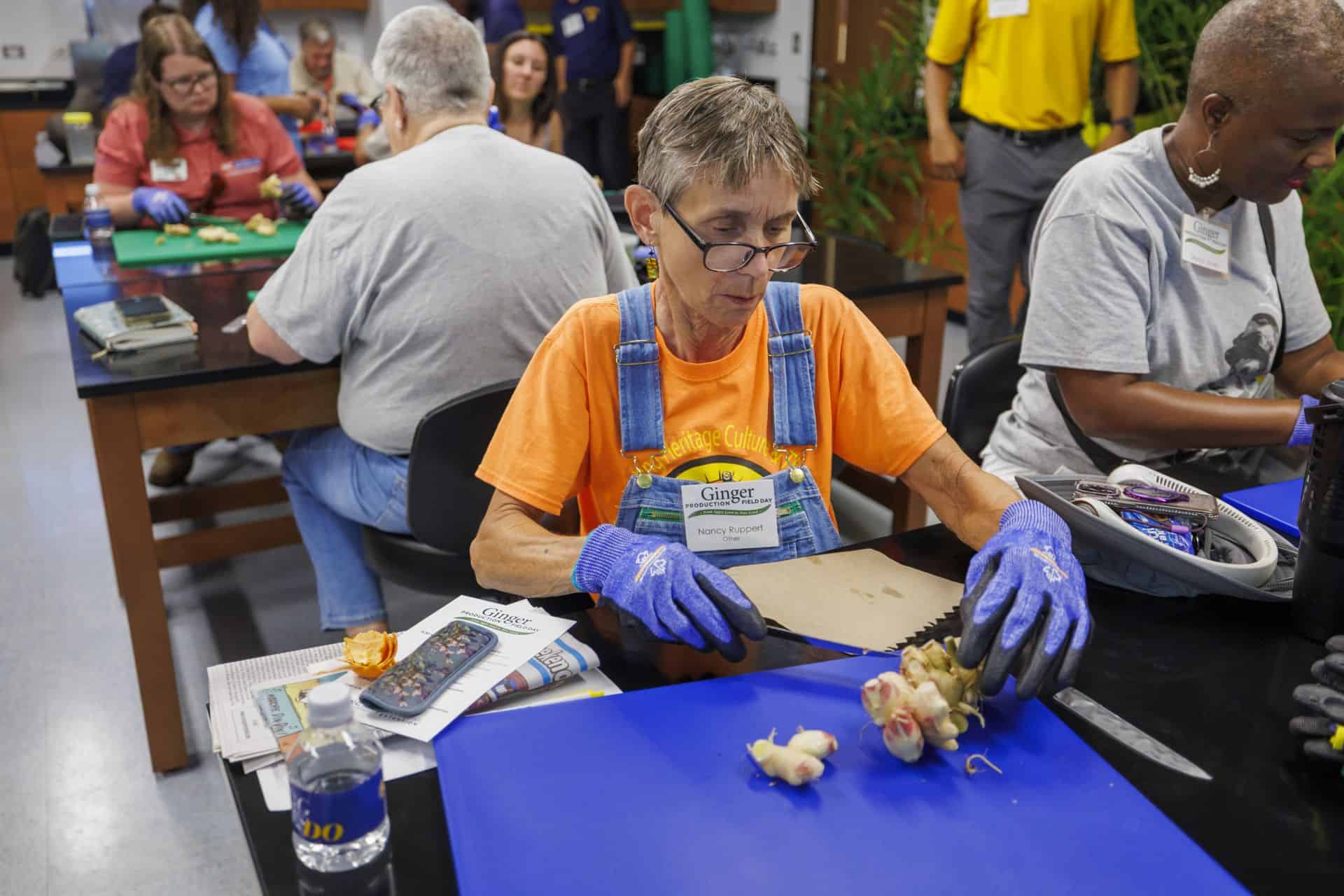
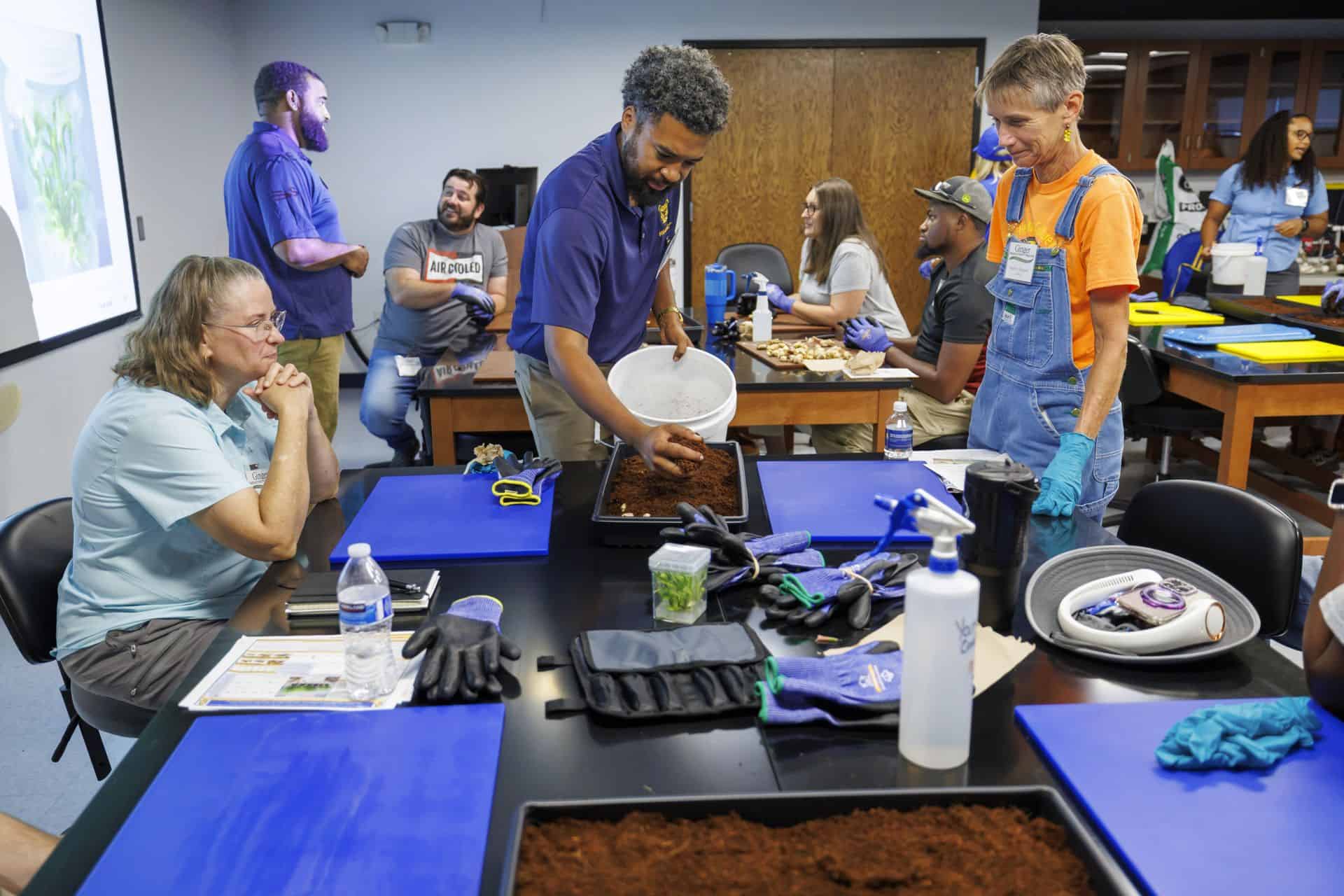
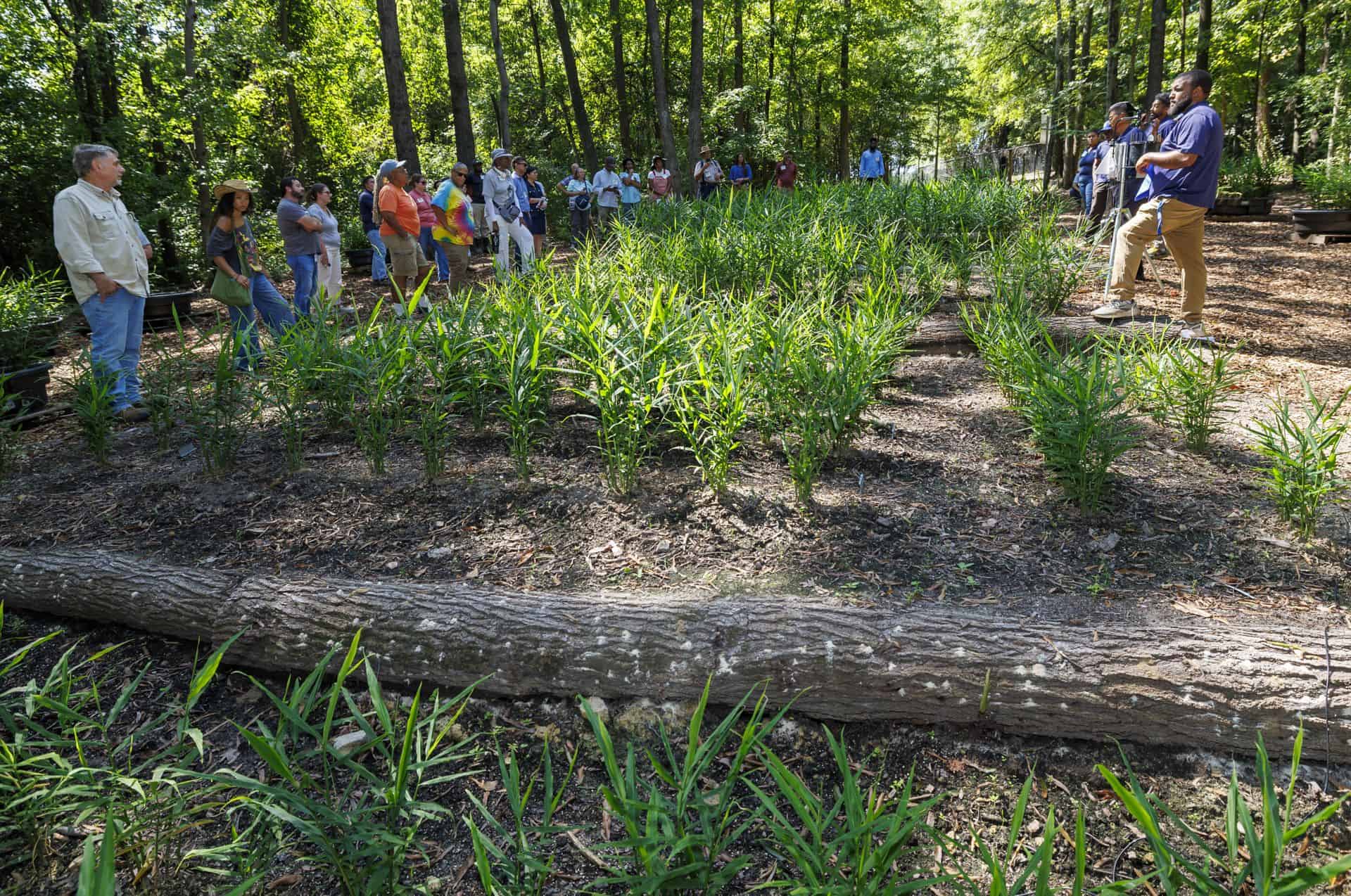
Farmers and enthusiasts from across North Carolina gathered at the University Farm on Sept. 3 to pick up tips and tricks for growing ginger, the tropical crop that is taking root in local soil.
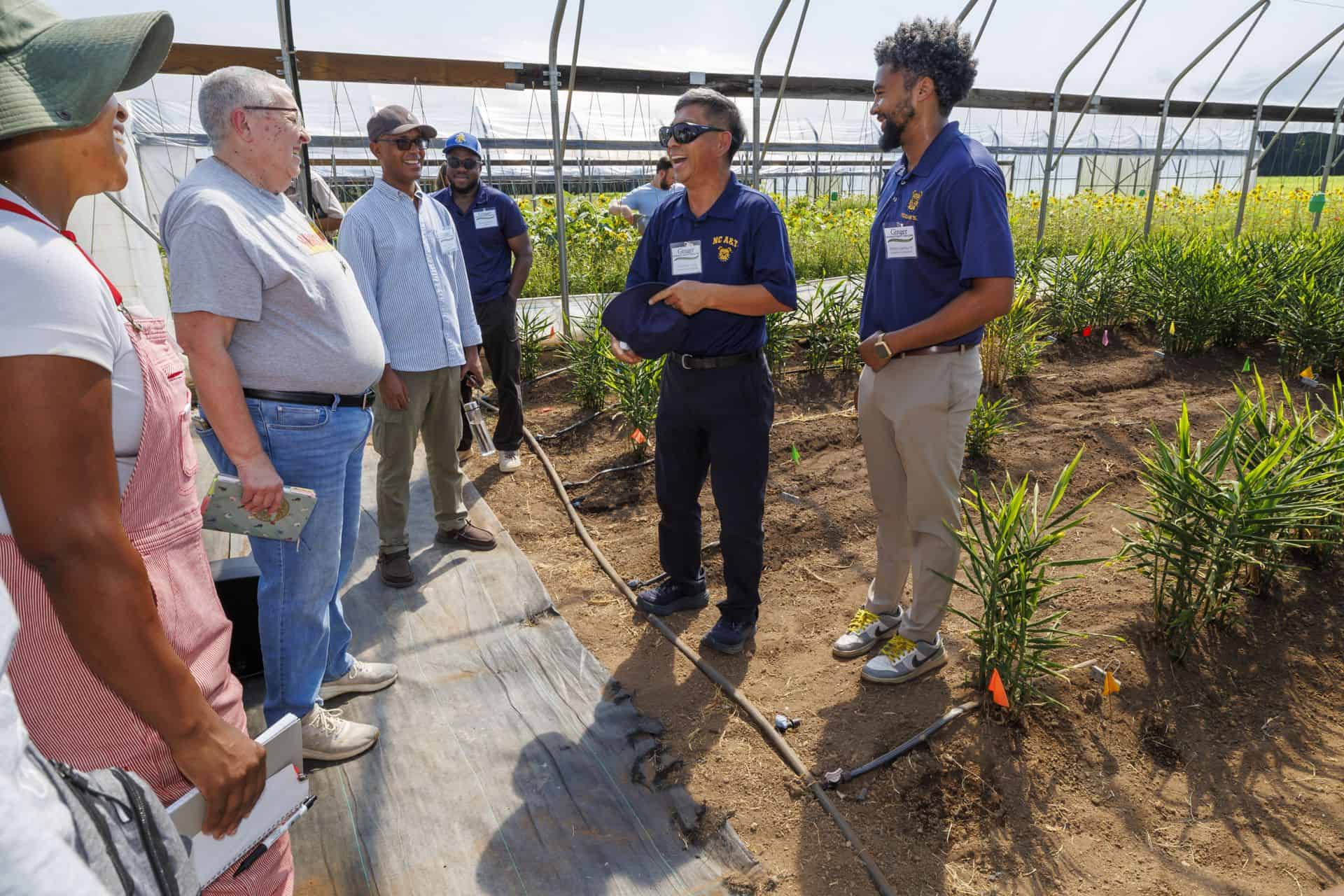
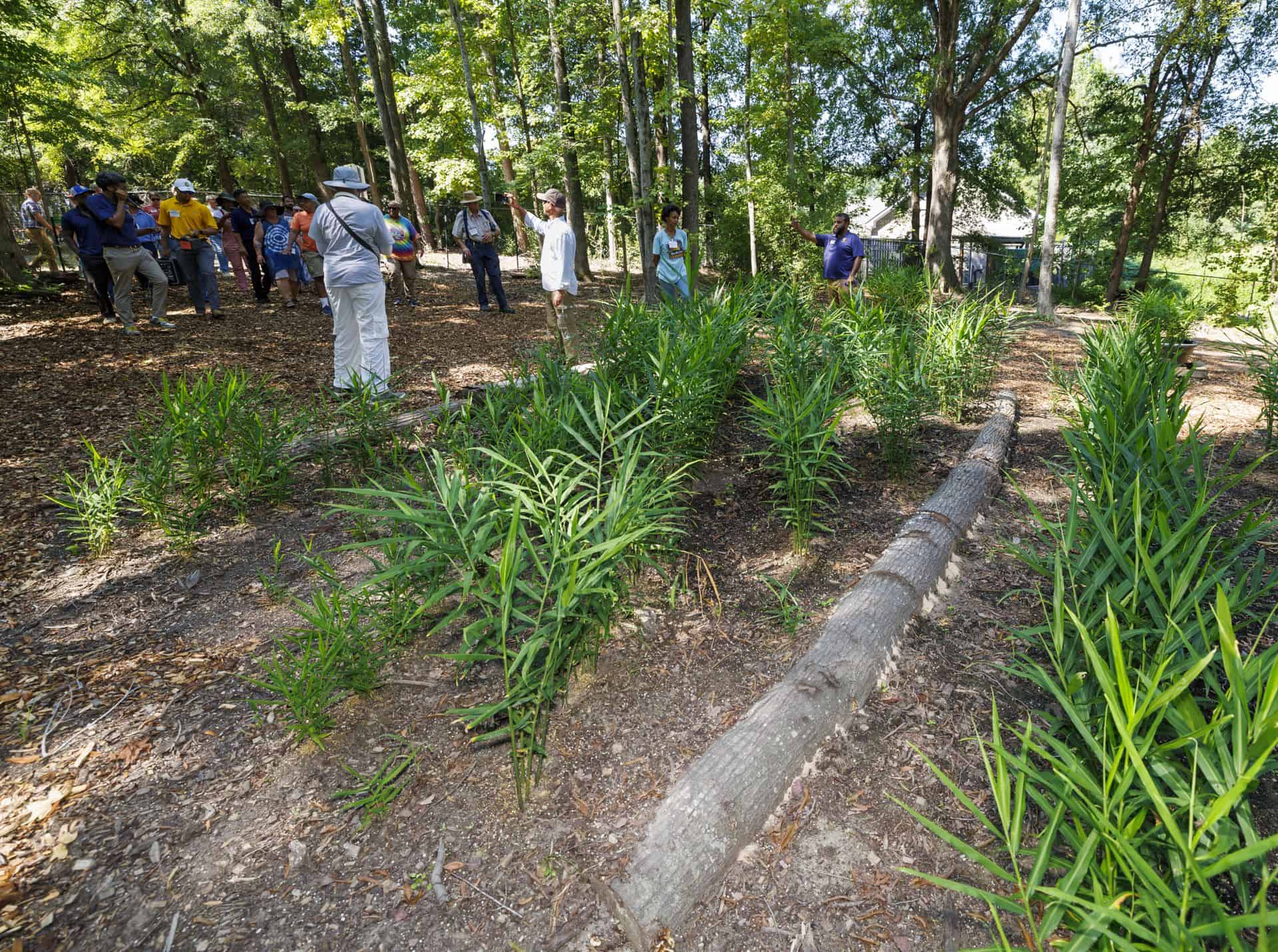
This year's event marked the third annual Ginger Production Field Day and featured a build-out of knowledge about the crop and its preferred growing conditions. In past years, the team has studied different varieties of ginger grown in high tunnels, fields, under shade and in wooded areas. This year's woodland experiments showed that the crop is no hothouse flower; it likes the woods.
"Ginger is a shade-loving crop," Will Lashley, Ph.D. said. "This is ideal for growers in a mountain area, or who have woods on their property and want to use it in some way, requiring minimum input and minimum maintenance."
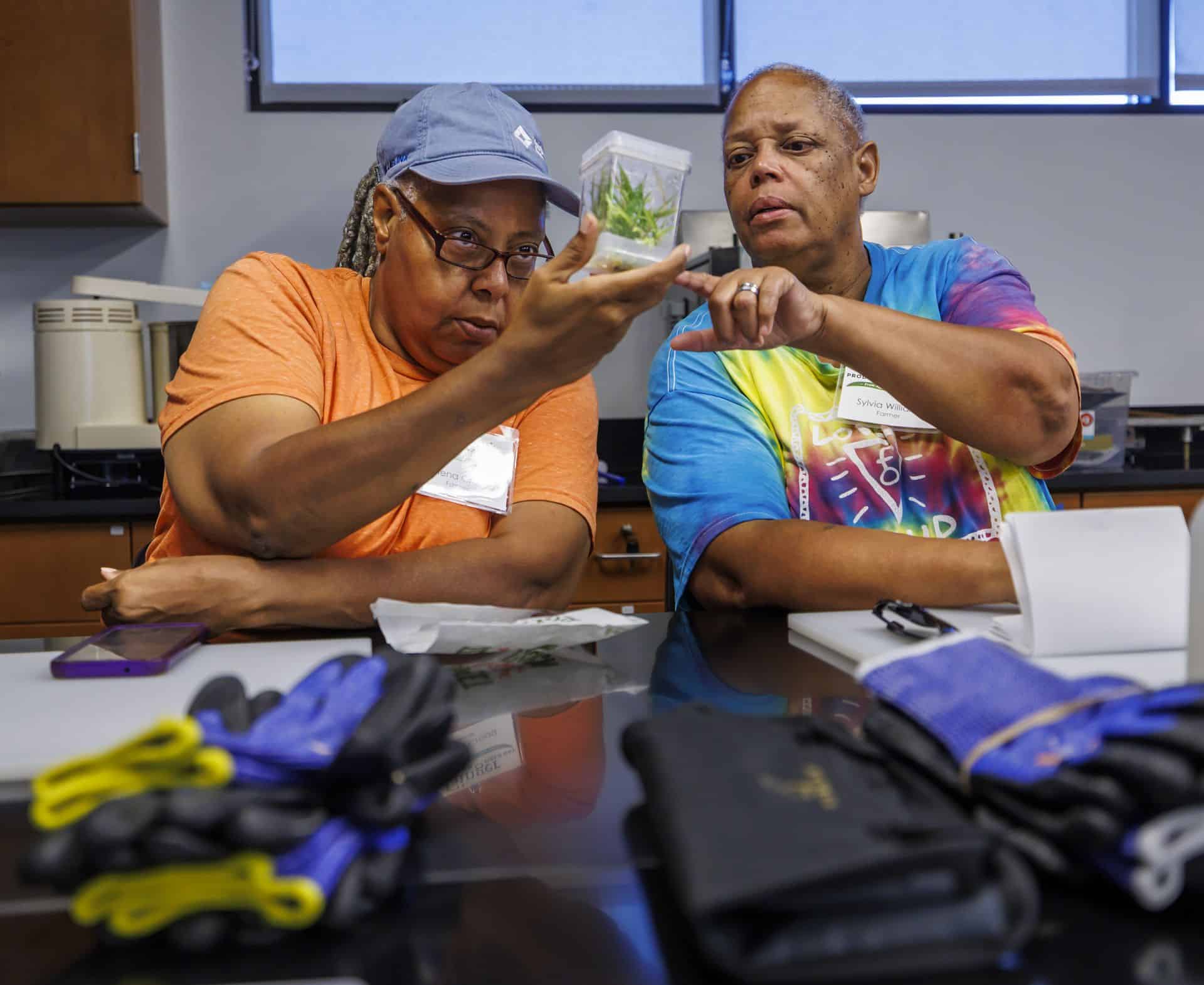
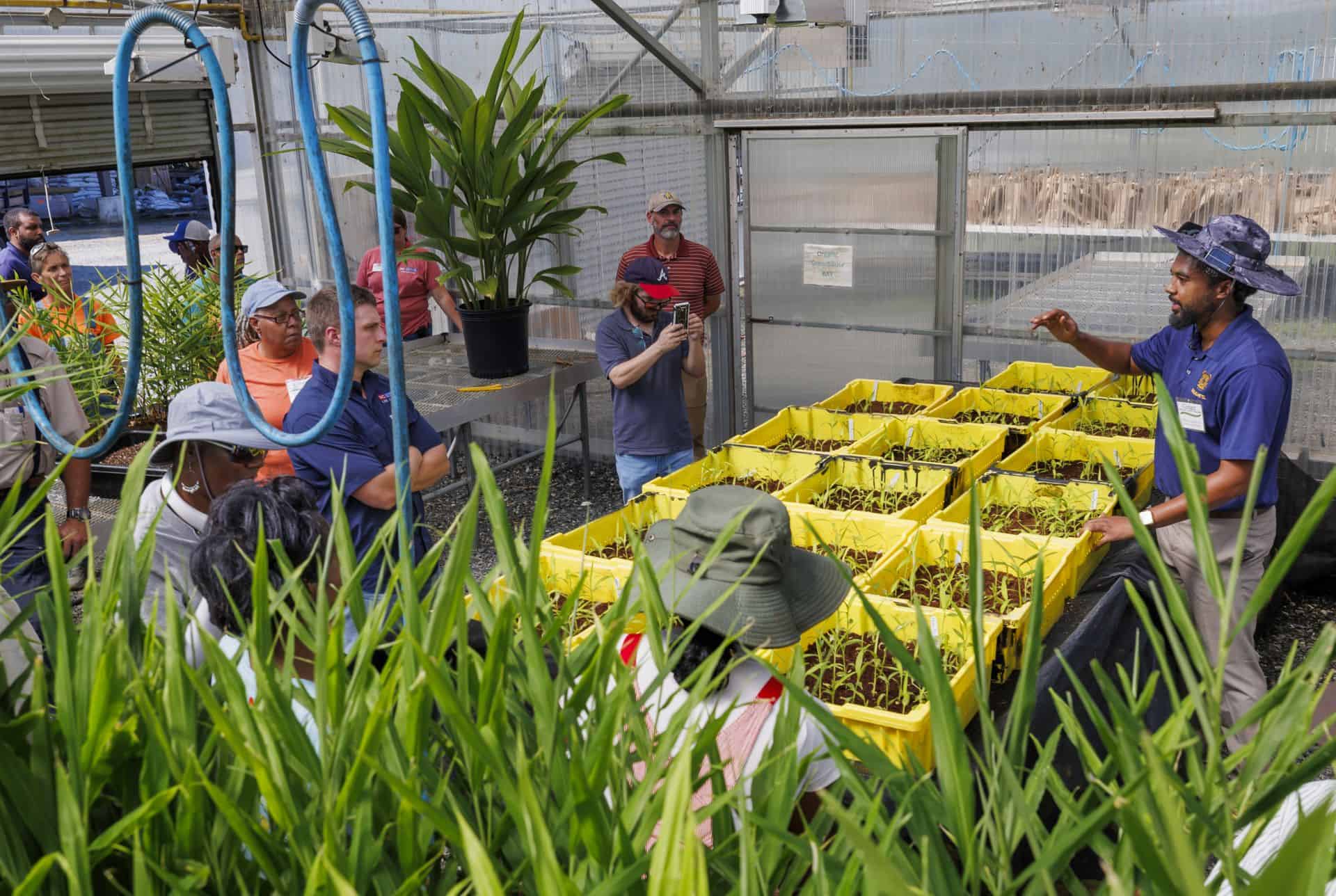
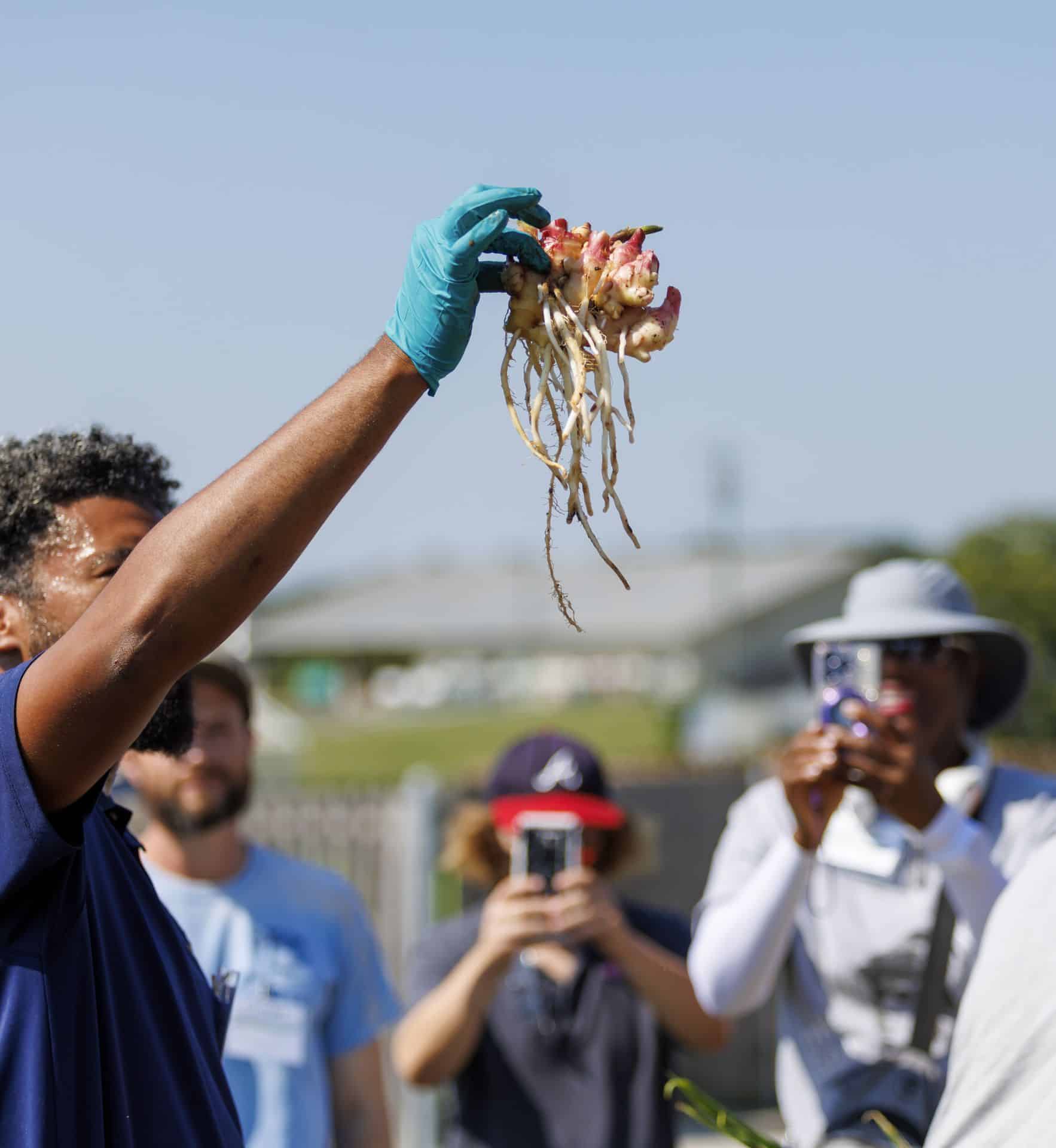
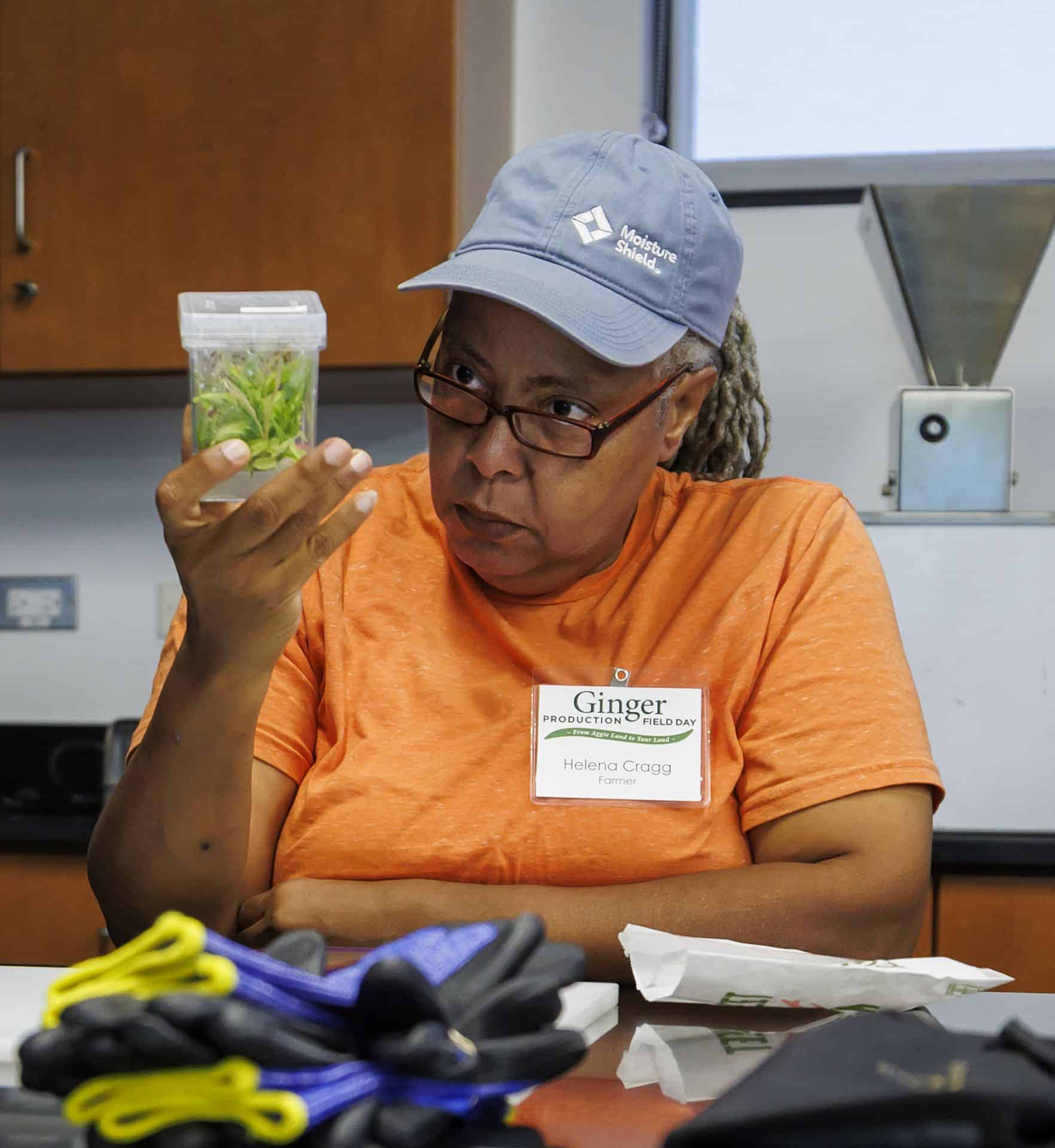
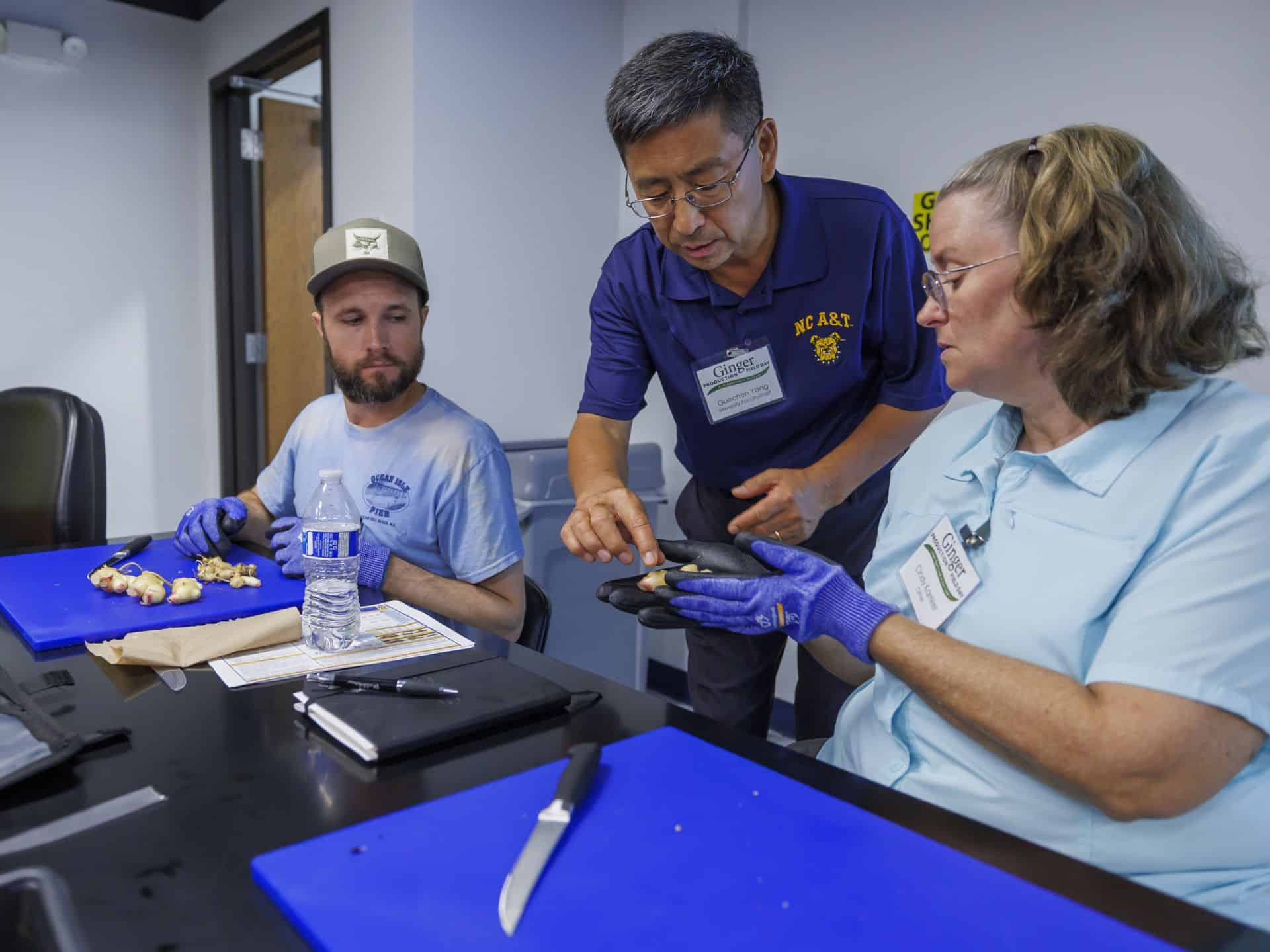
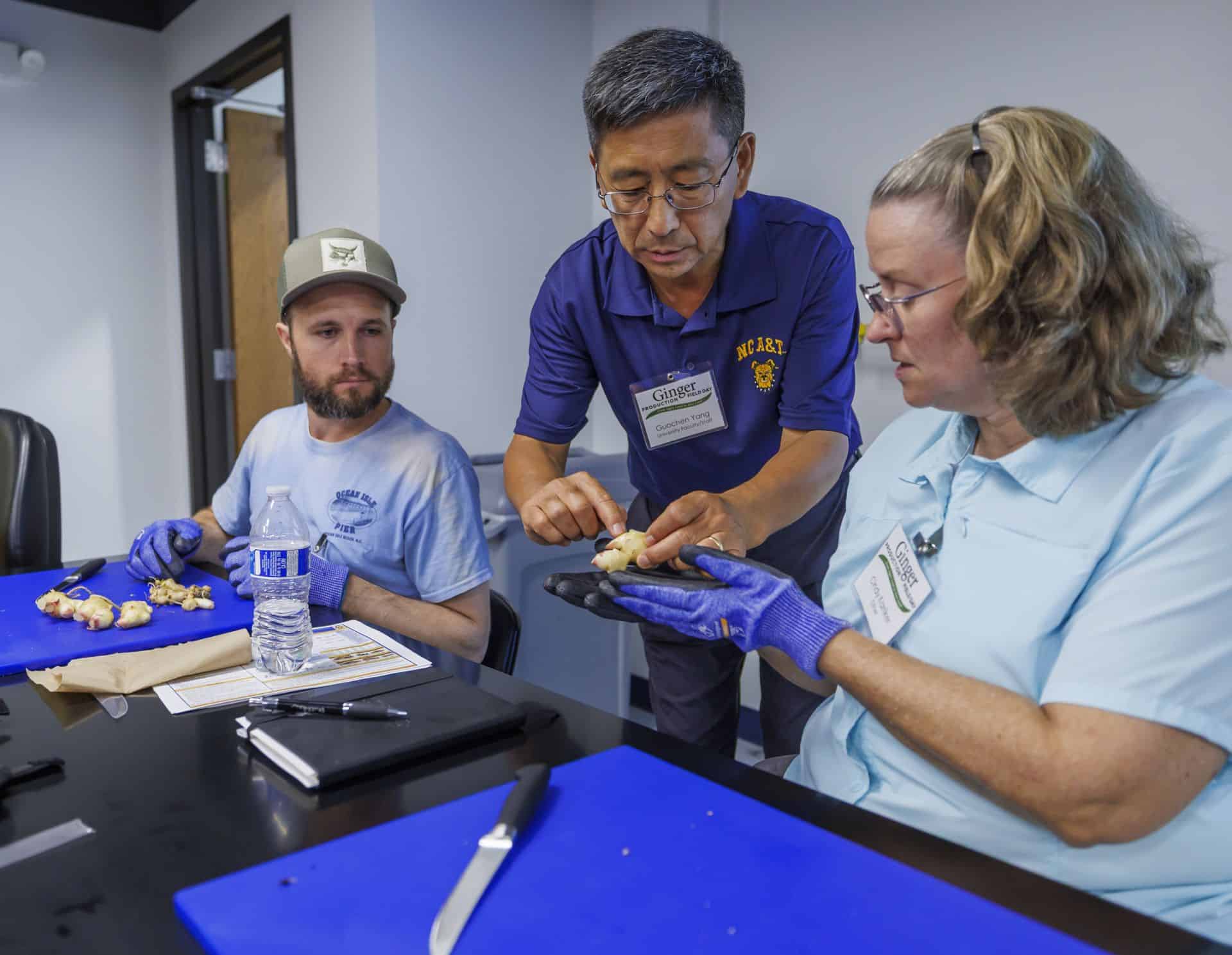
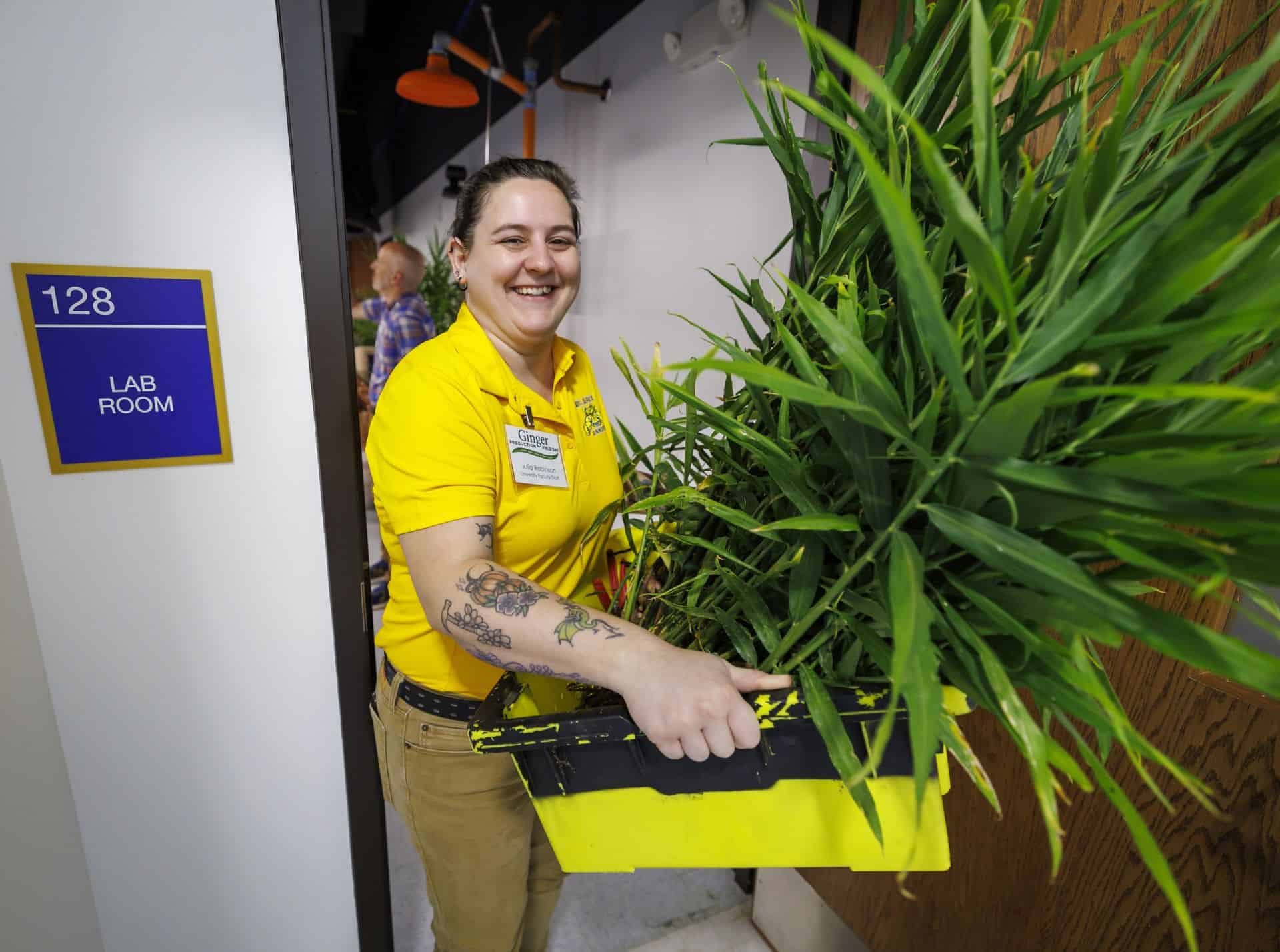
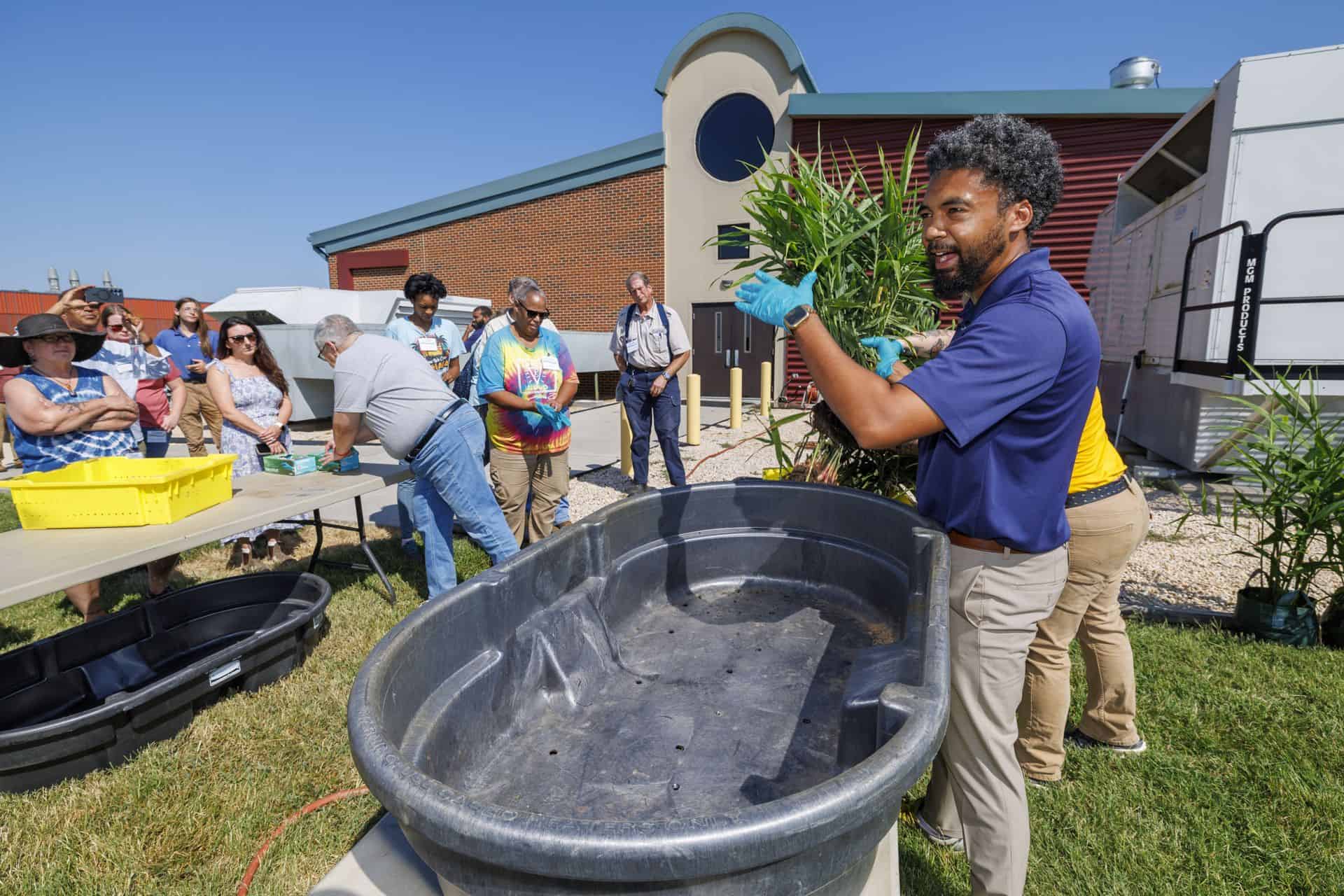
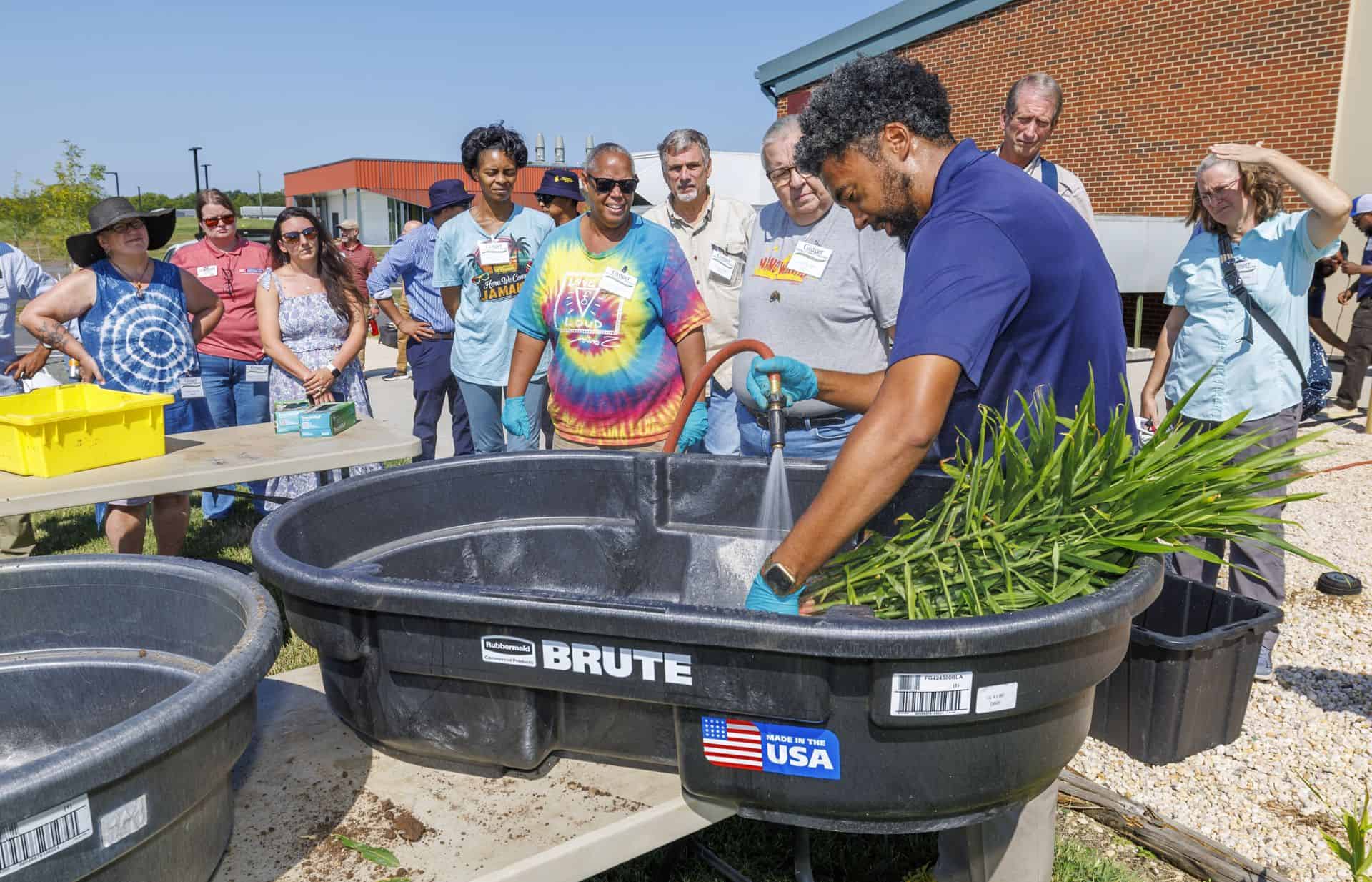
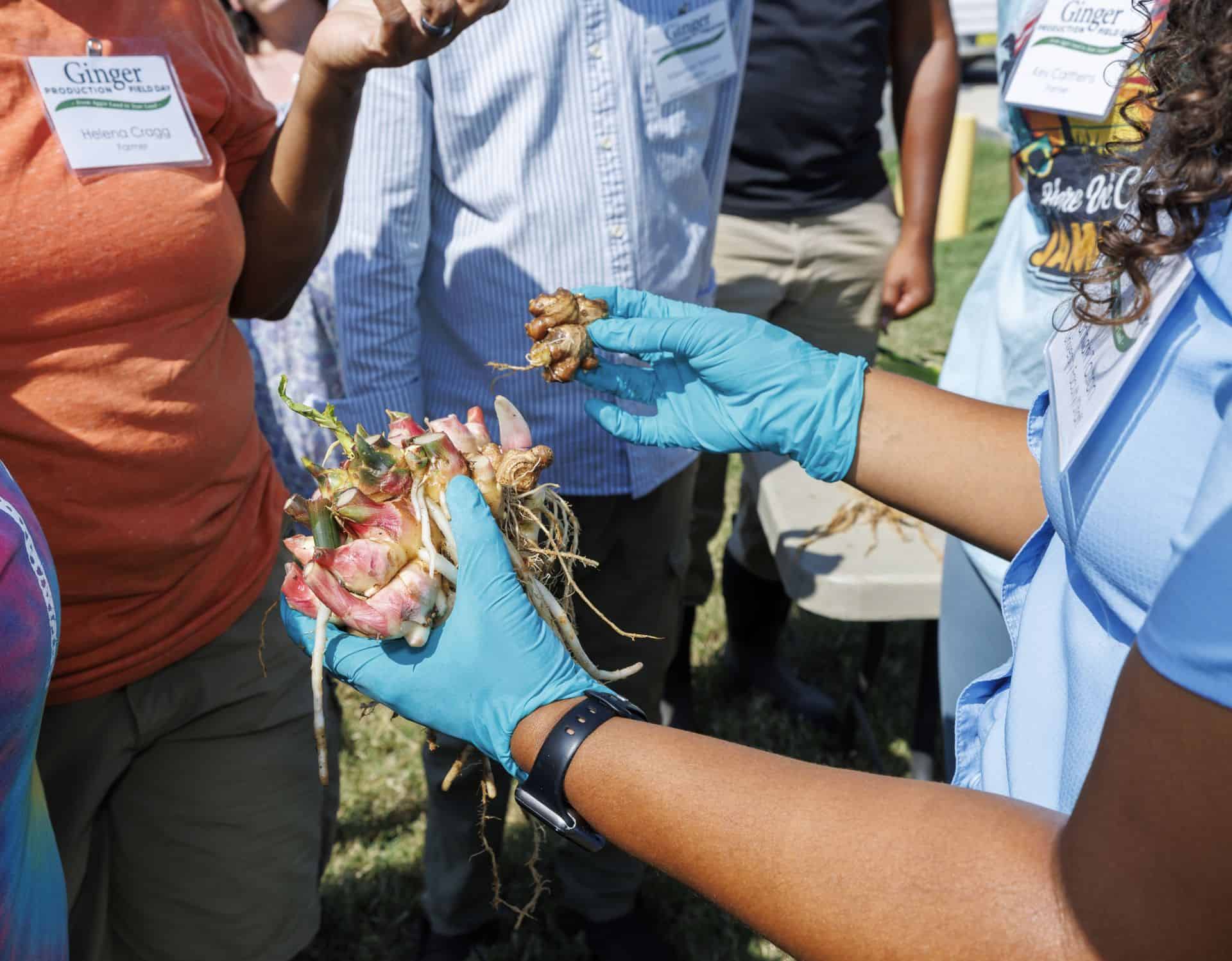
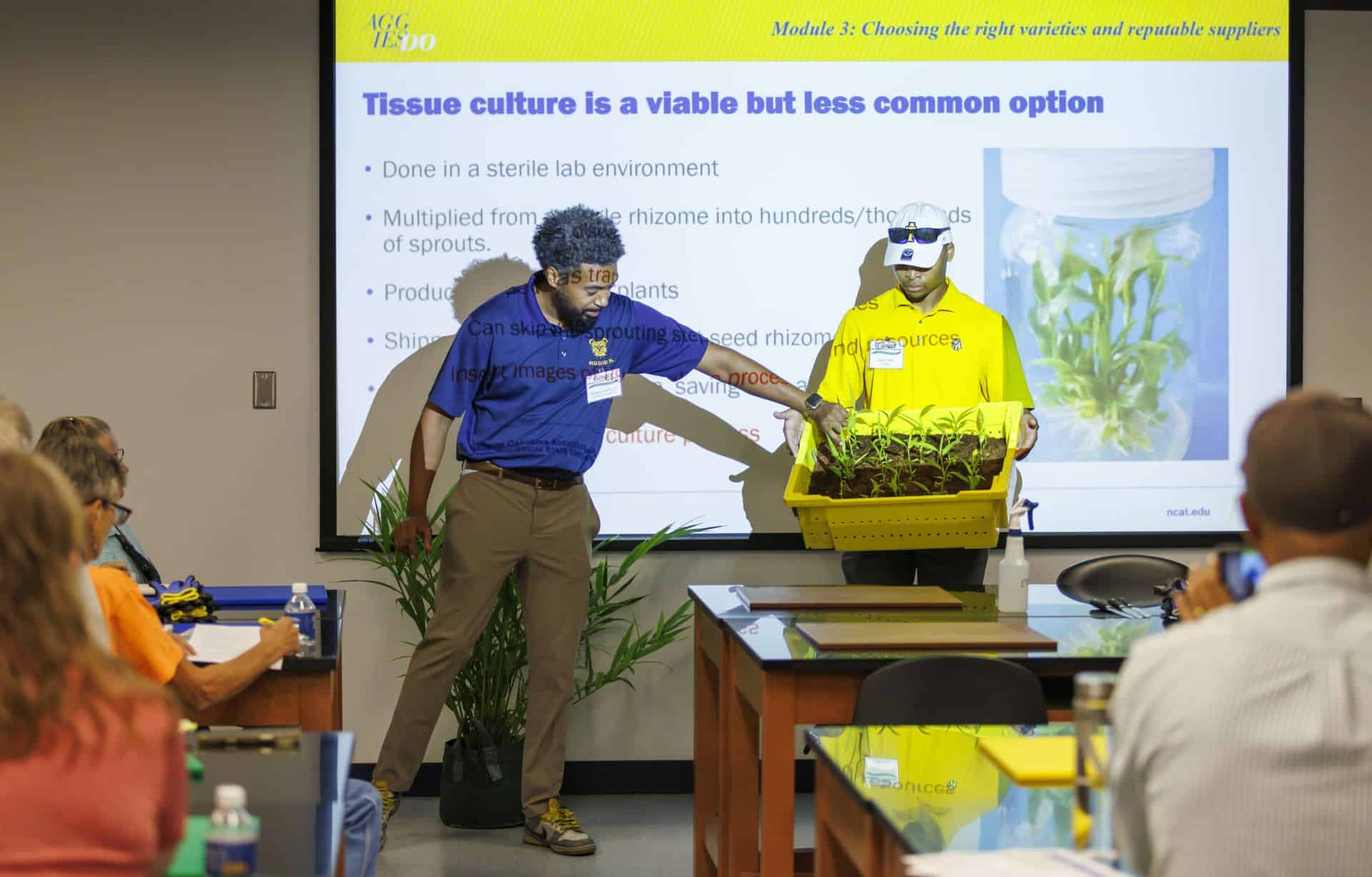
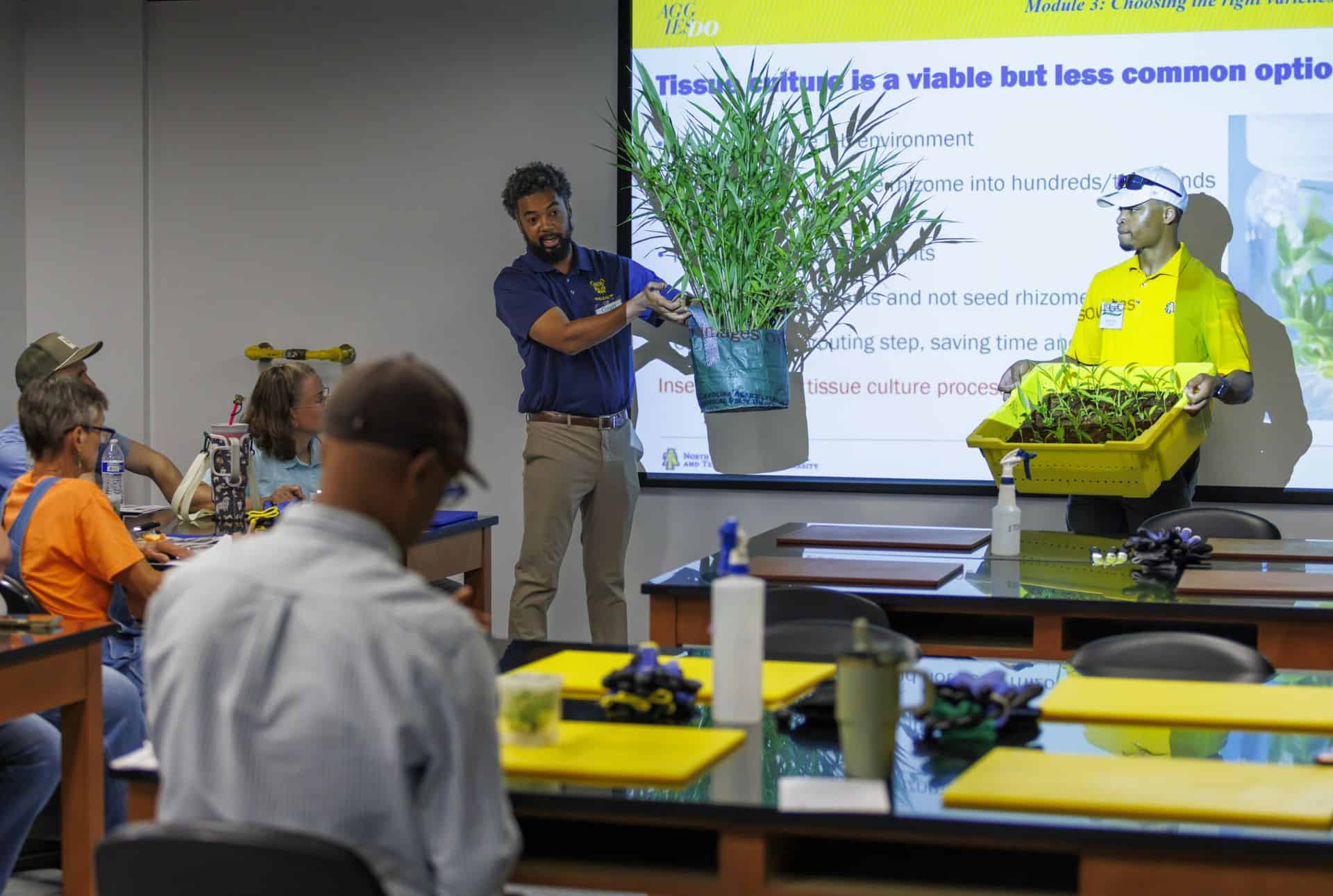
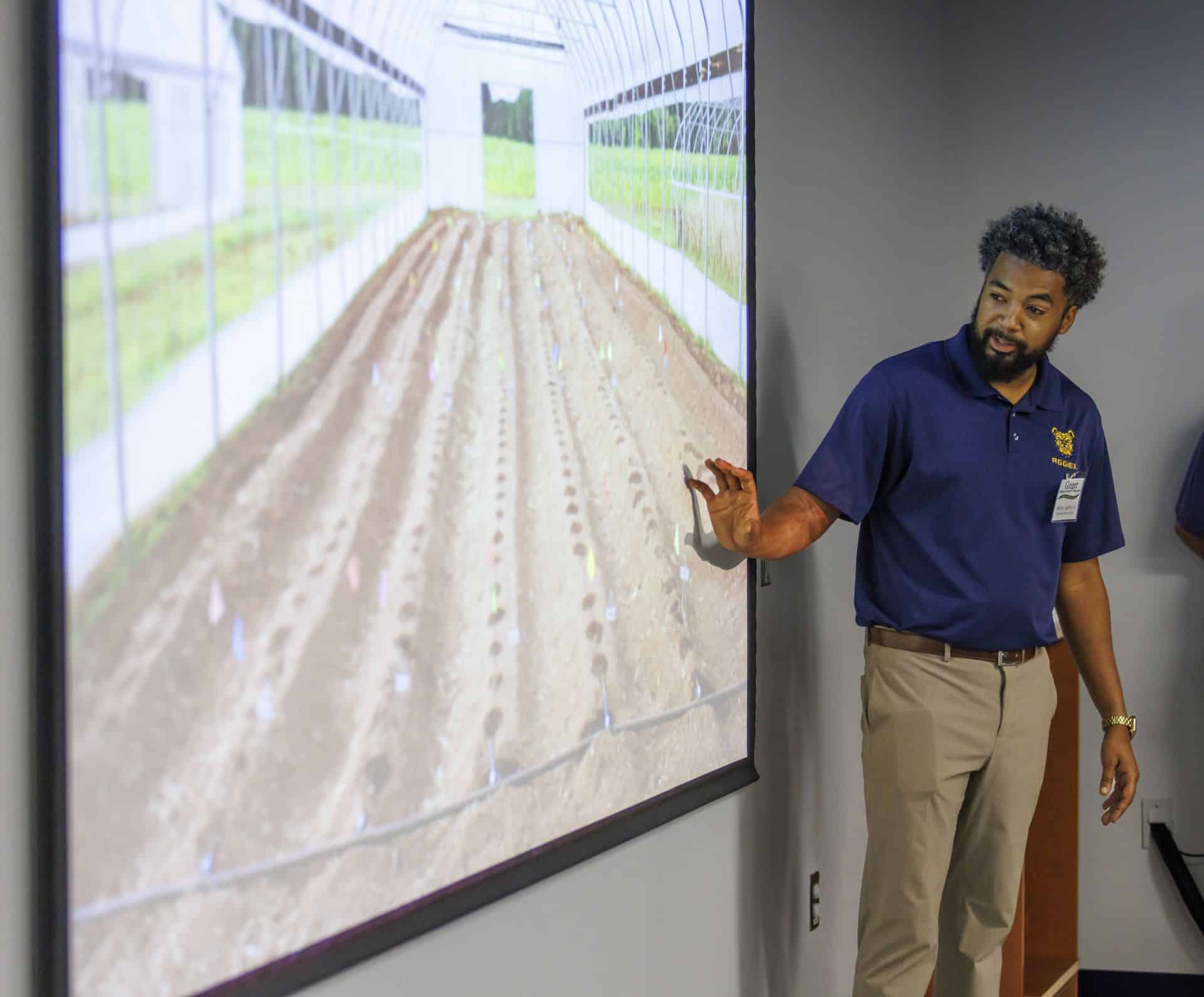
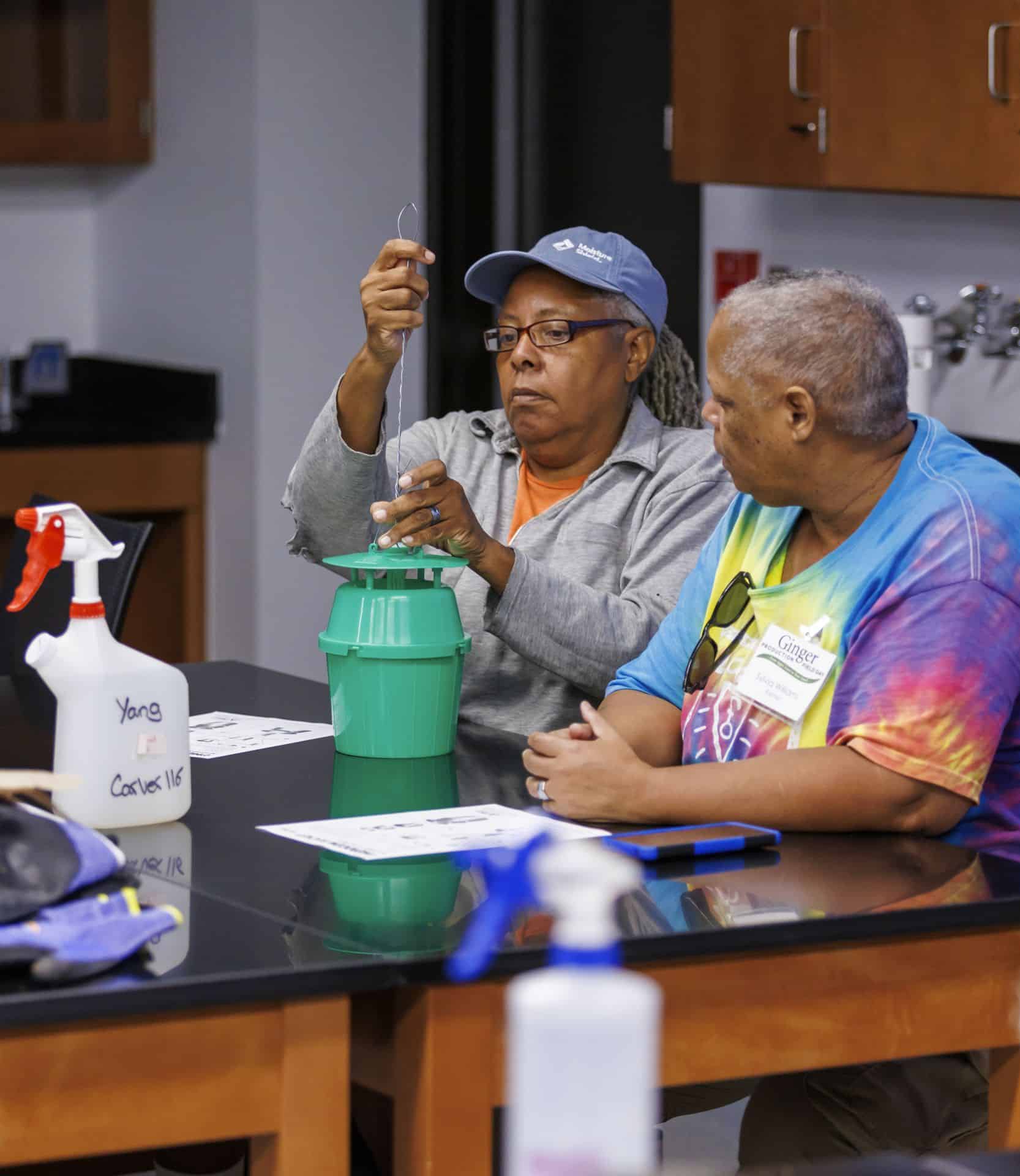
The ginger research team— Lashley, Ph.D.; research technician Julia Robinson, Ph.D.; horticulture specialist Trequan McGee, Ph.D.; extension specialist in plant pathology Hannah Talton, D.P.M.; Guochen Yang, Ph.D.; and graduate research assistant Daniel Tetteh – gave the guests a description of the crop, its medicinal purposes, and the multiple ways it can be grown, including high tunnel production, artificial shading, and in the lab, thanks to Yang’s research into tissue-culture ginger.
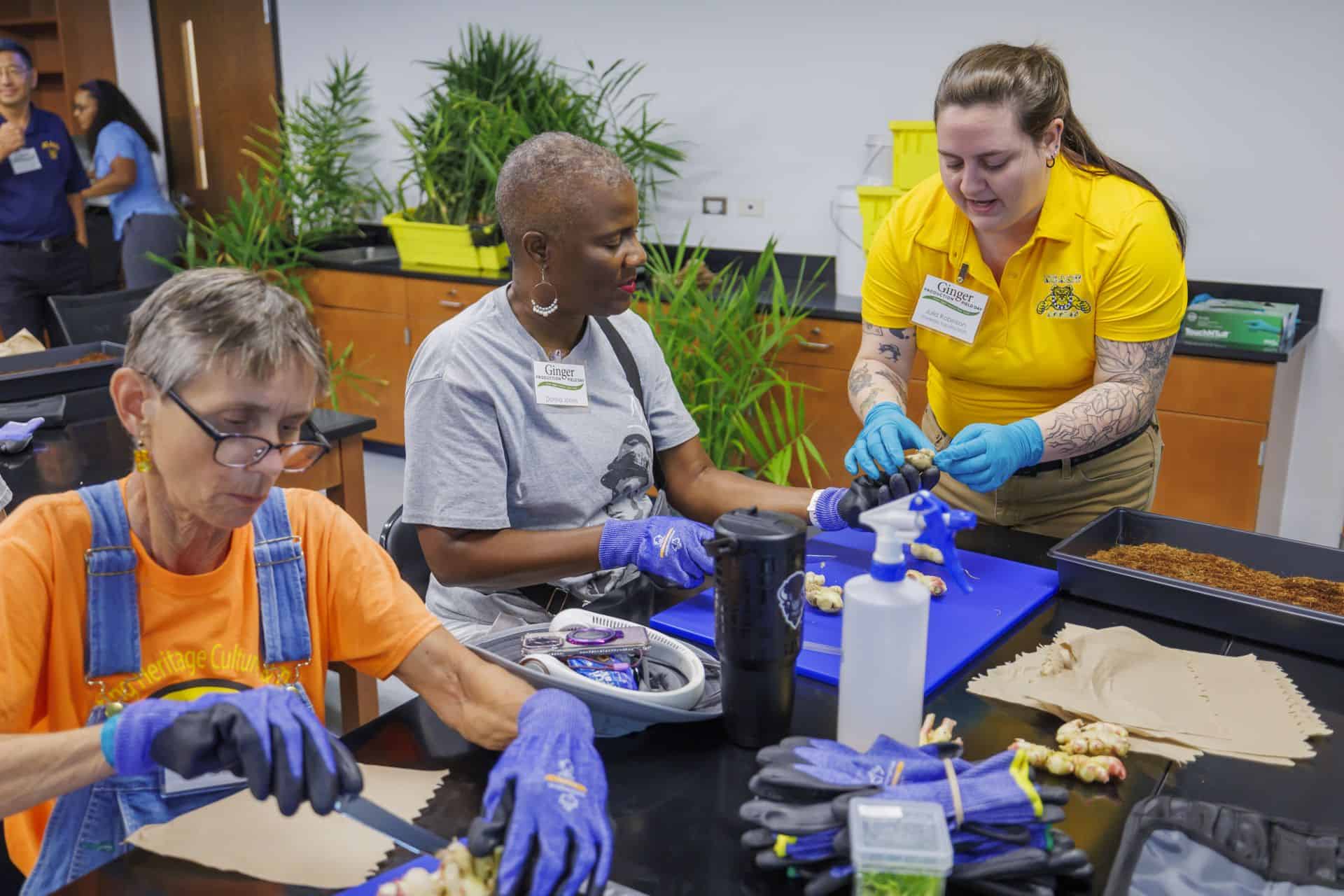
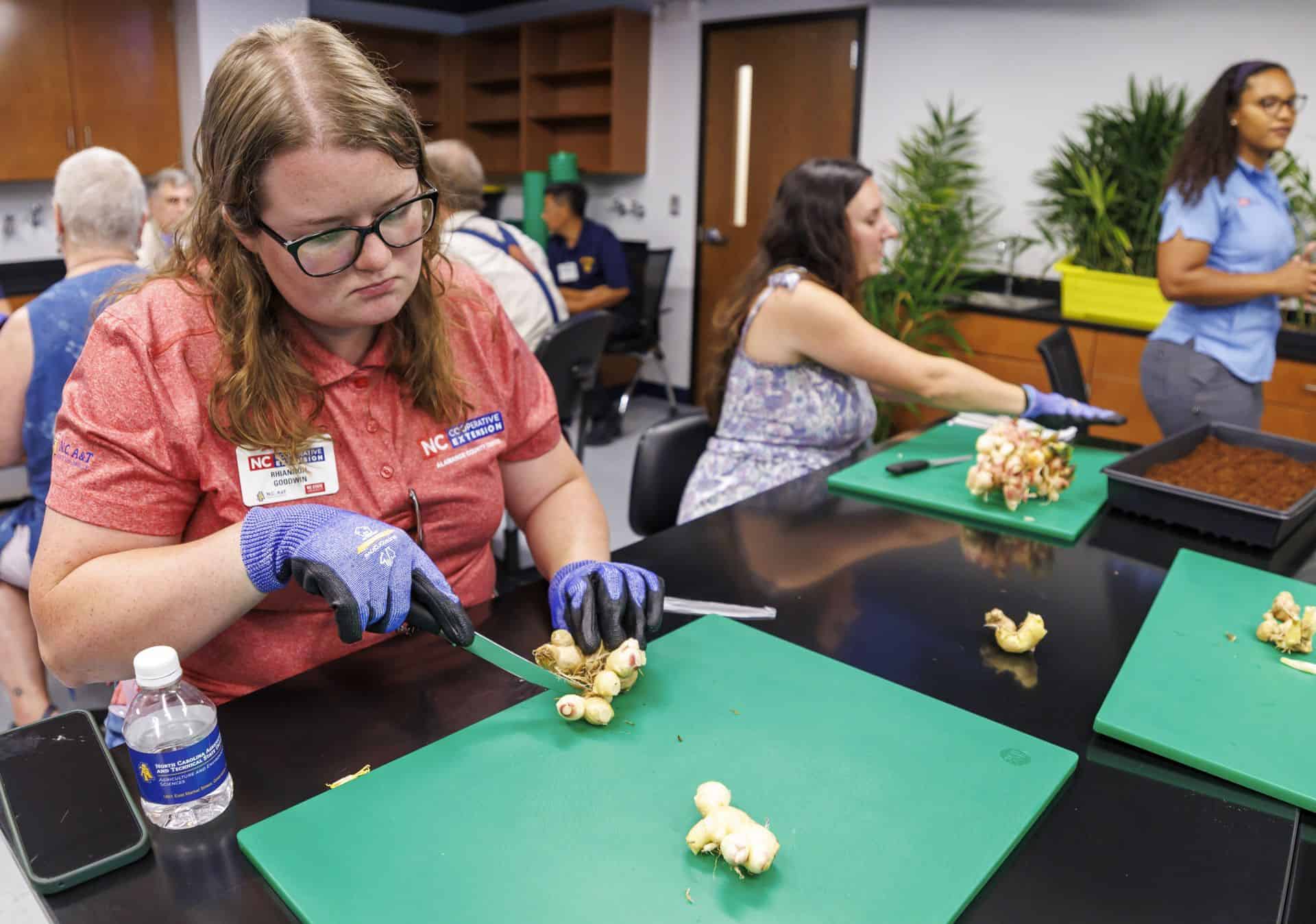
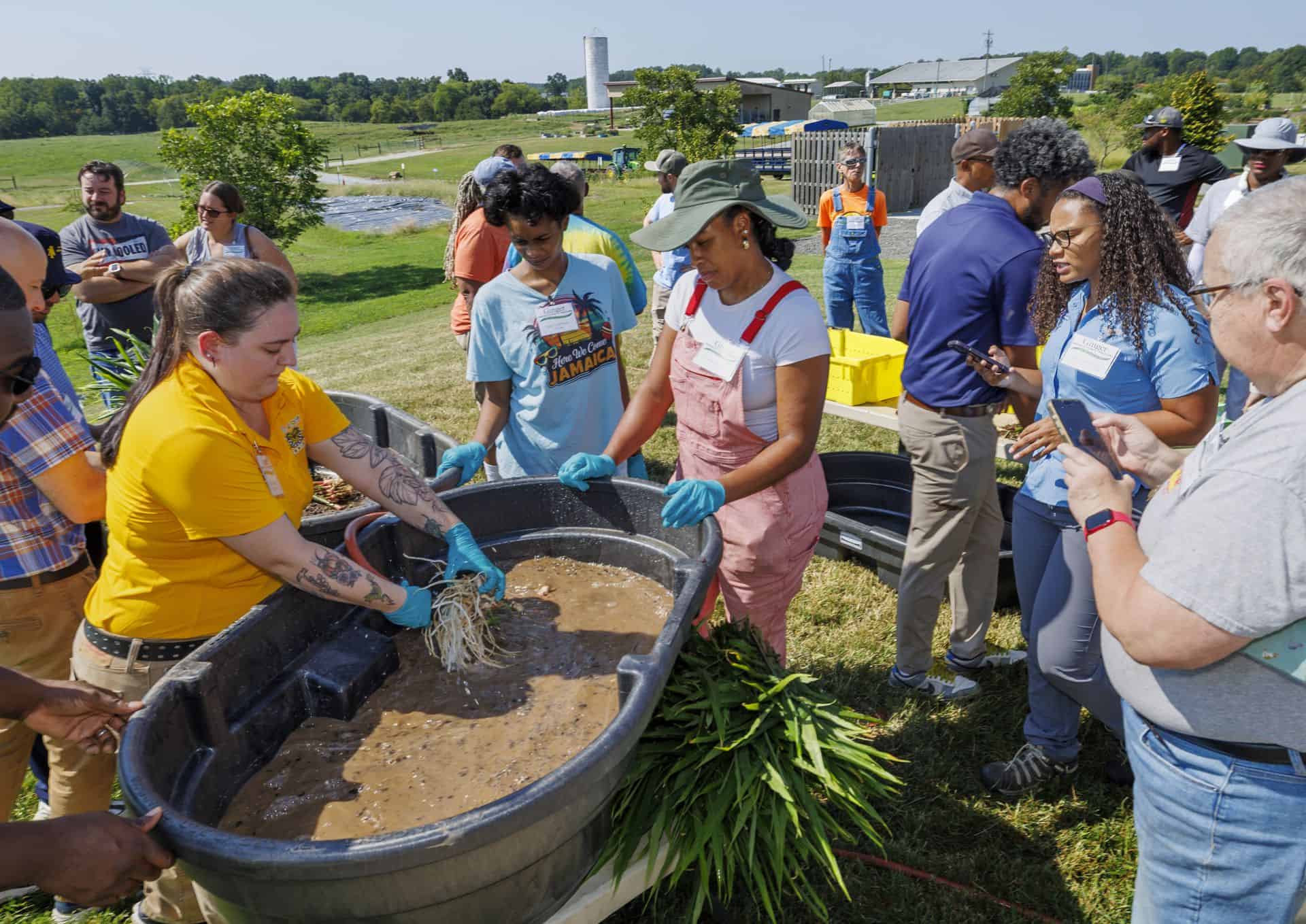
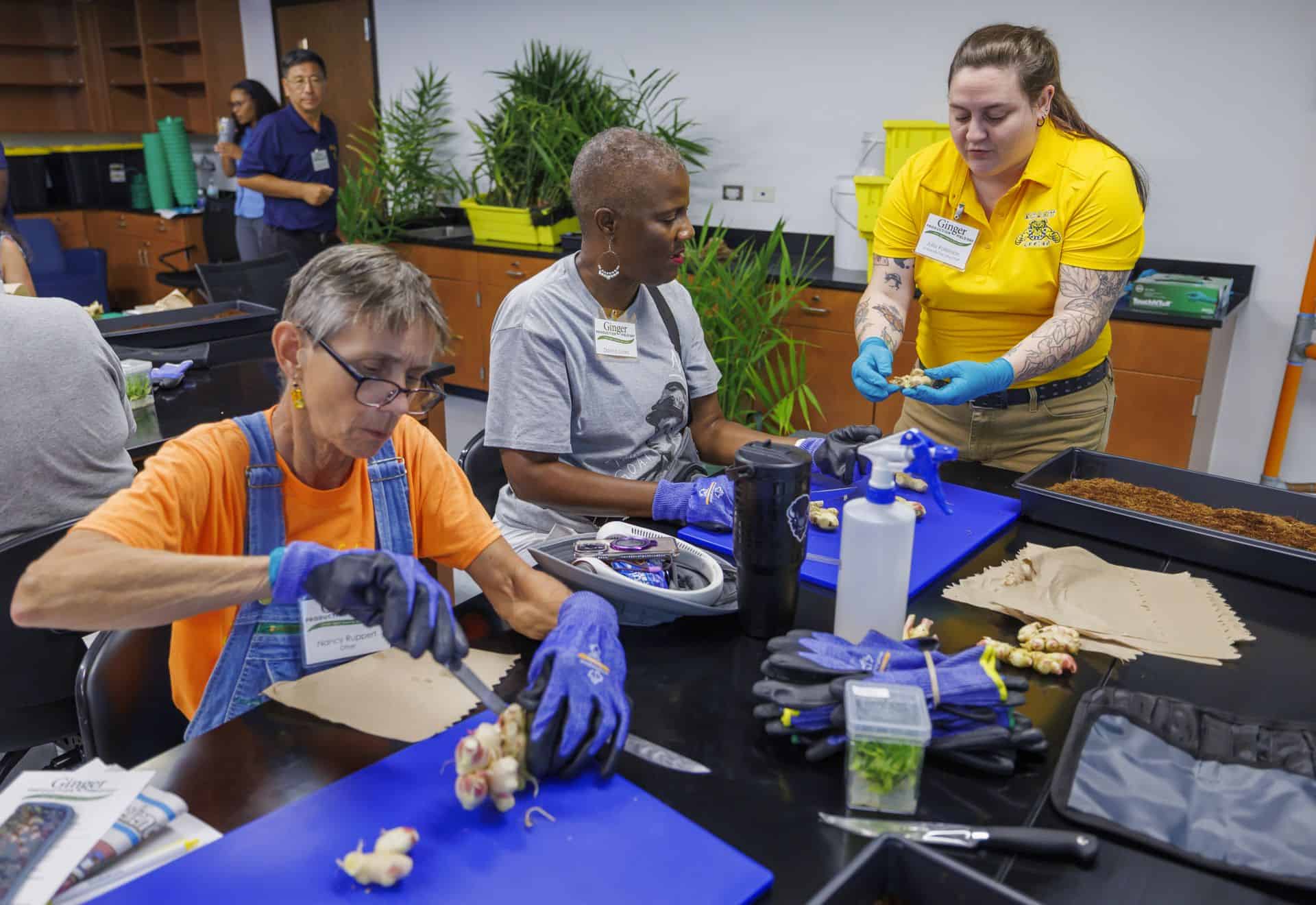
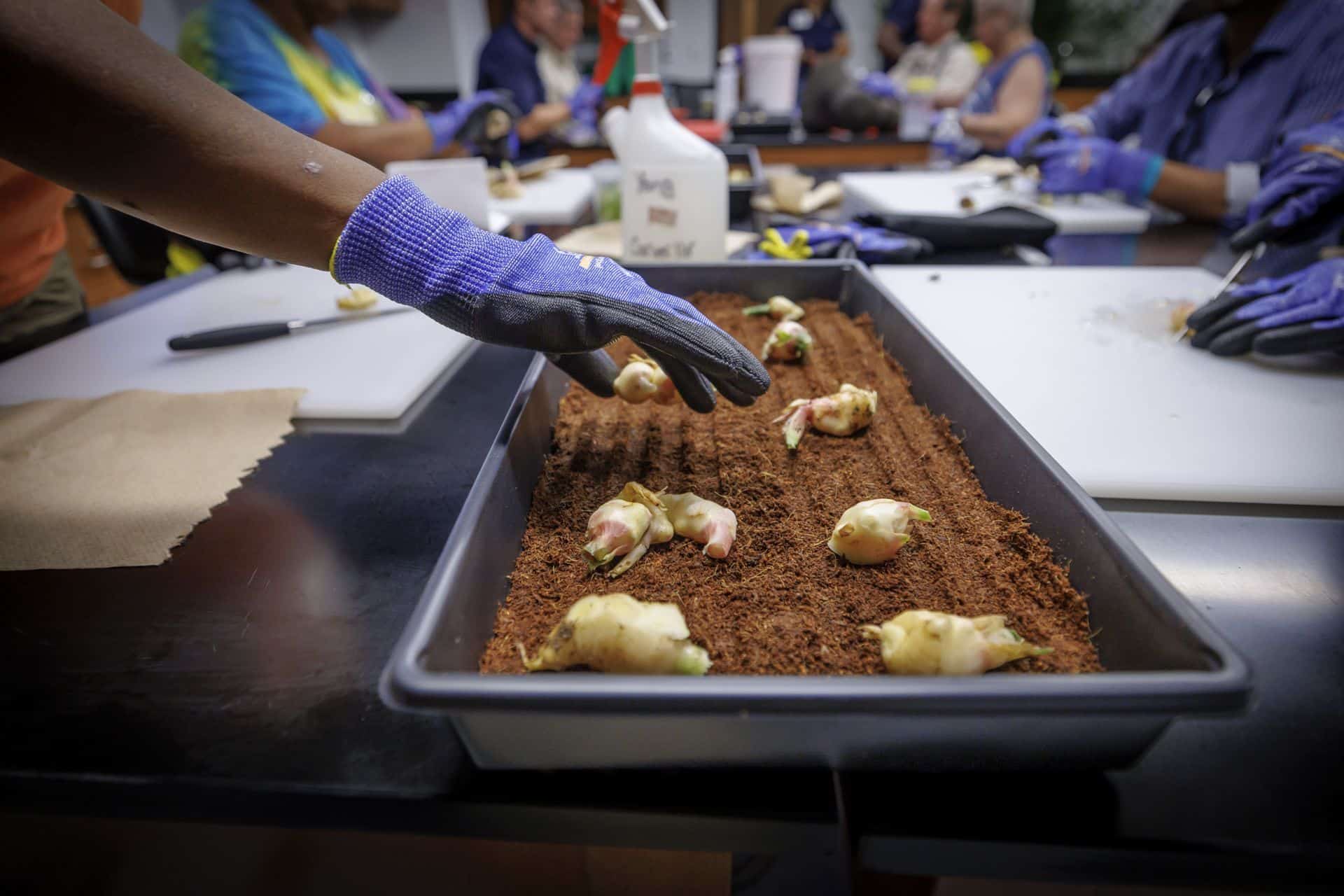
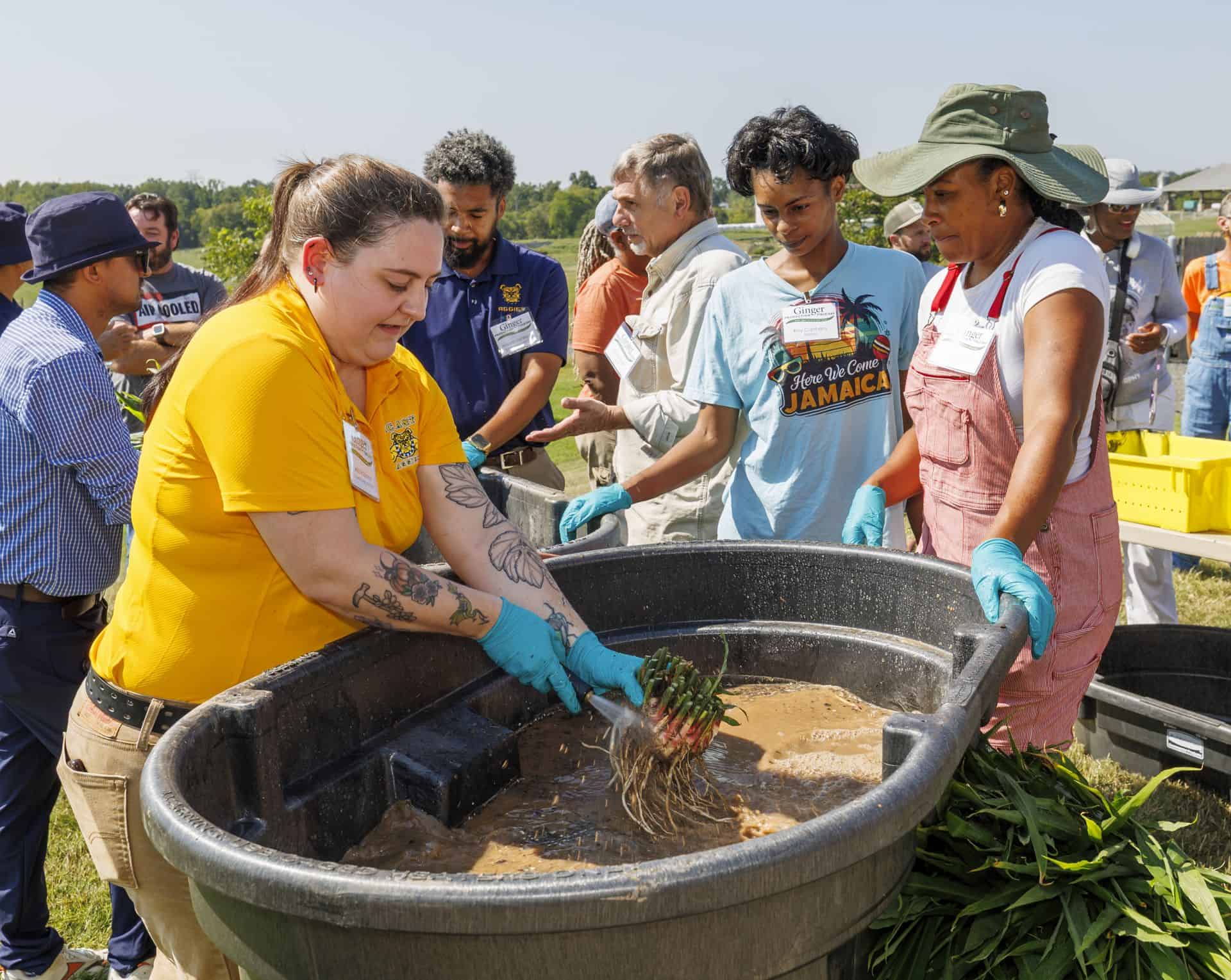
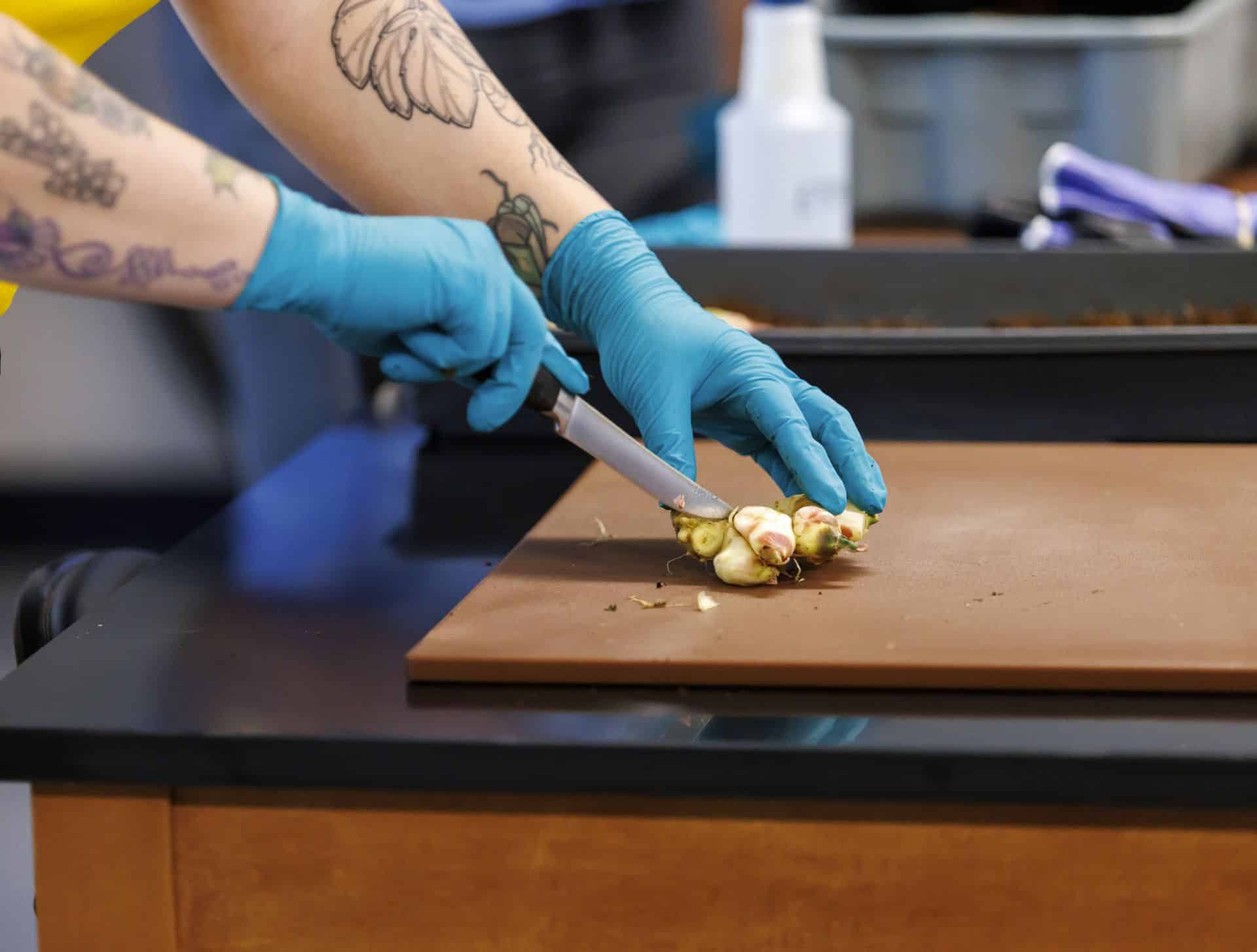
Julia Robinson, Ph.D., right, offers instructions on dividing ginger roots to Donna Jones, center, during a session on sourcing and sprouting at the Ginger Production Field Day. Ginger's taste and health benefits are making it a popular niche crop among growers.
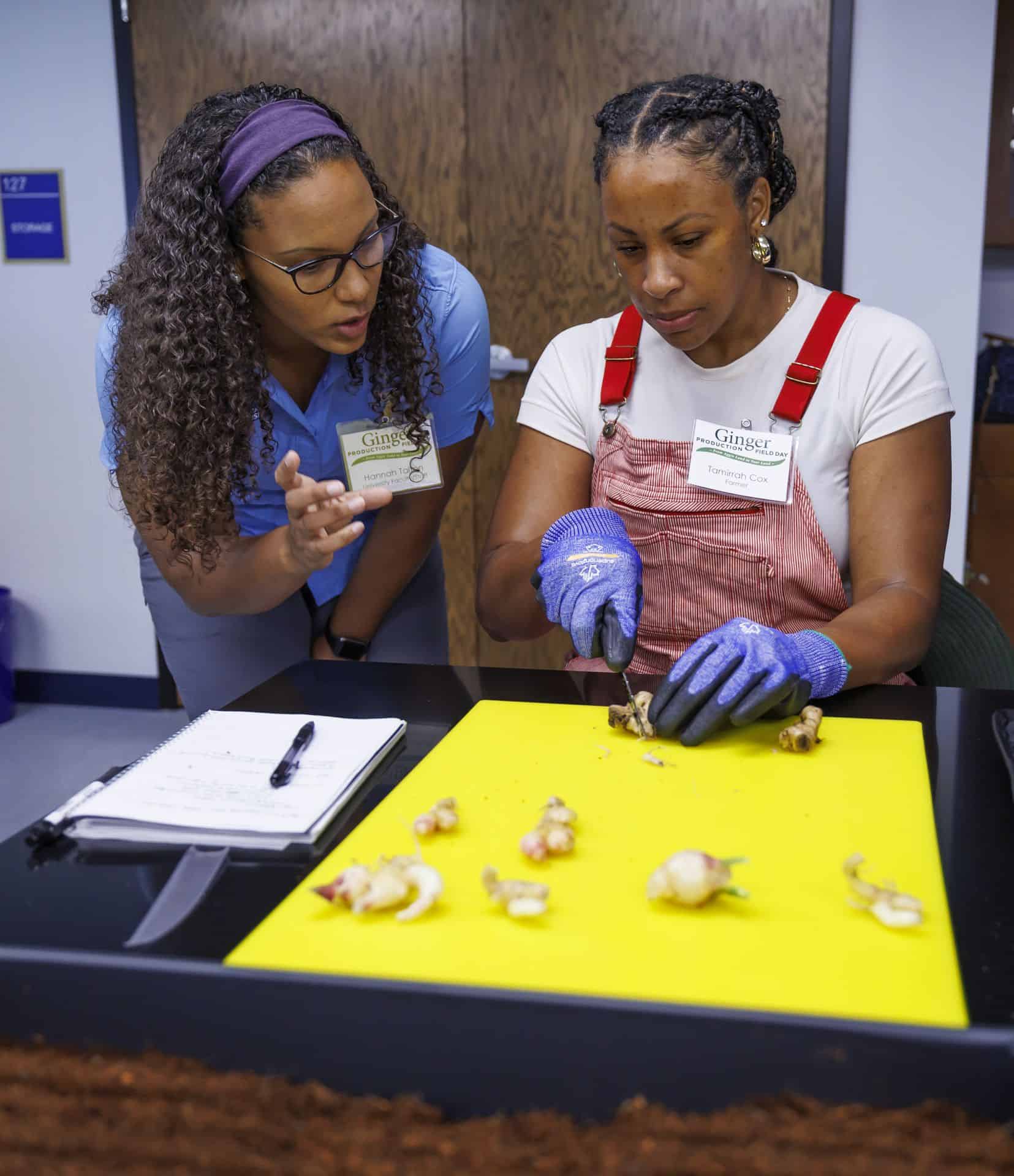
Guests also got practice cutting ginger nodes and guided tours through the farm’s high tunnel, greenhouse and wooded area production sites.
Judy Hudgins, a Gaston County homeowner and Master Gardener at her county's Extension office, said she’s been growing the crop for the last two to three years and saw an opportunity to share what she’d learned.
“I thought this [field day] was something where I could learn a little bit more, do possibly a ‘once a year’ ginger sale, and be able to impart additional information during classes,” said Hudgins.
Nathan Dove of Dove Vine Beverage winery in Mocksville said he was interested in learning about ginger to add to his products,
“I really like ginger beer, so I’d like to try to make a ginger wine or possibly teas and anything else that I could add to my portfolio,” said Dove. “Today, I learned the requirements of growing ginger were not as complicated as I thought they’d be.”
Tamirrah Cox, a 2023 alumna and agricultural educator from Rowan County, called the field day a “first-class experience.”
“One of the things we learned was that ginger had different generations, which I had no idea about before taking the course,” said Cox.
Most participants left the event having increased their knowledge and confidence of ginger production techniques.
“Quite a few of them plan to start growing ginger within the next year,” said Trequan McGee, Ph.D.. “I plan to follow up with them next spring to see if anyone sourced ginger and begun the sprouting process over the next few months.”
“With our field day, we want to support you, our stakeholders, and help find solutions for you that can help bring information from Aggieland to Your Land,” said Gouchen Yang, Ph.D., professor in the Department of Natural Resources and Environmental Design.
Yang also said the field day presented an “opportunity for collaboration” between the research sector of the College of Agriculture and Environmental Sciences and its Cooperative Extension.
“We thank our Extension specialists today for sharing their experience,” said Dean Gregory Goins, Ph.D. “That’s the beauty of N.C. A&T as an 1890 land-grant is building connections.”