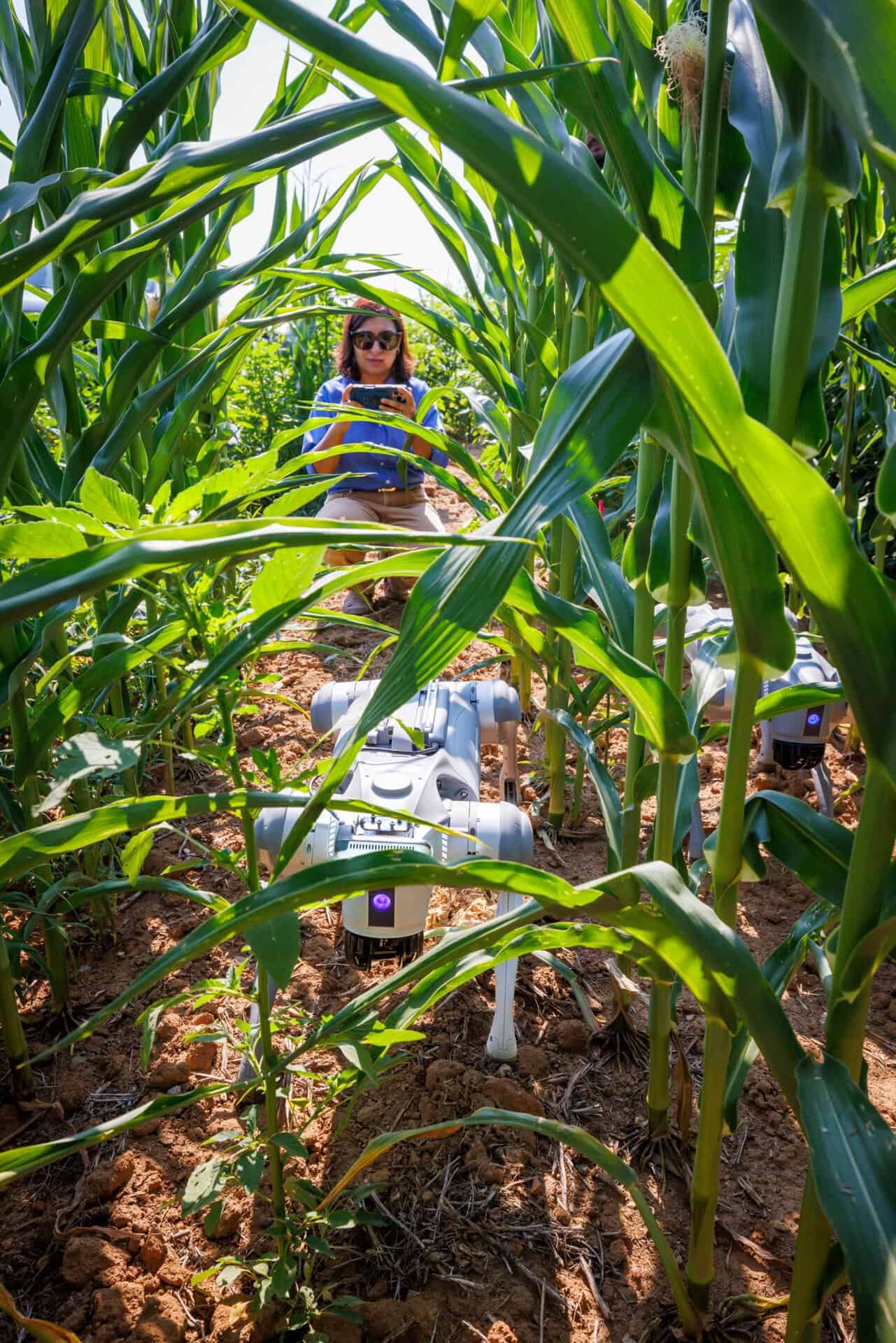
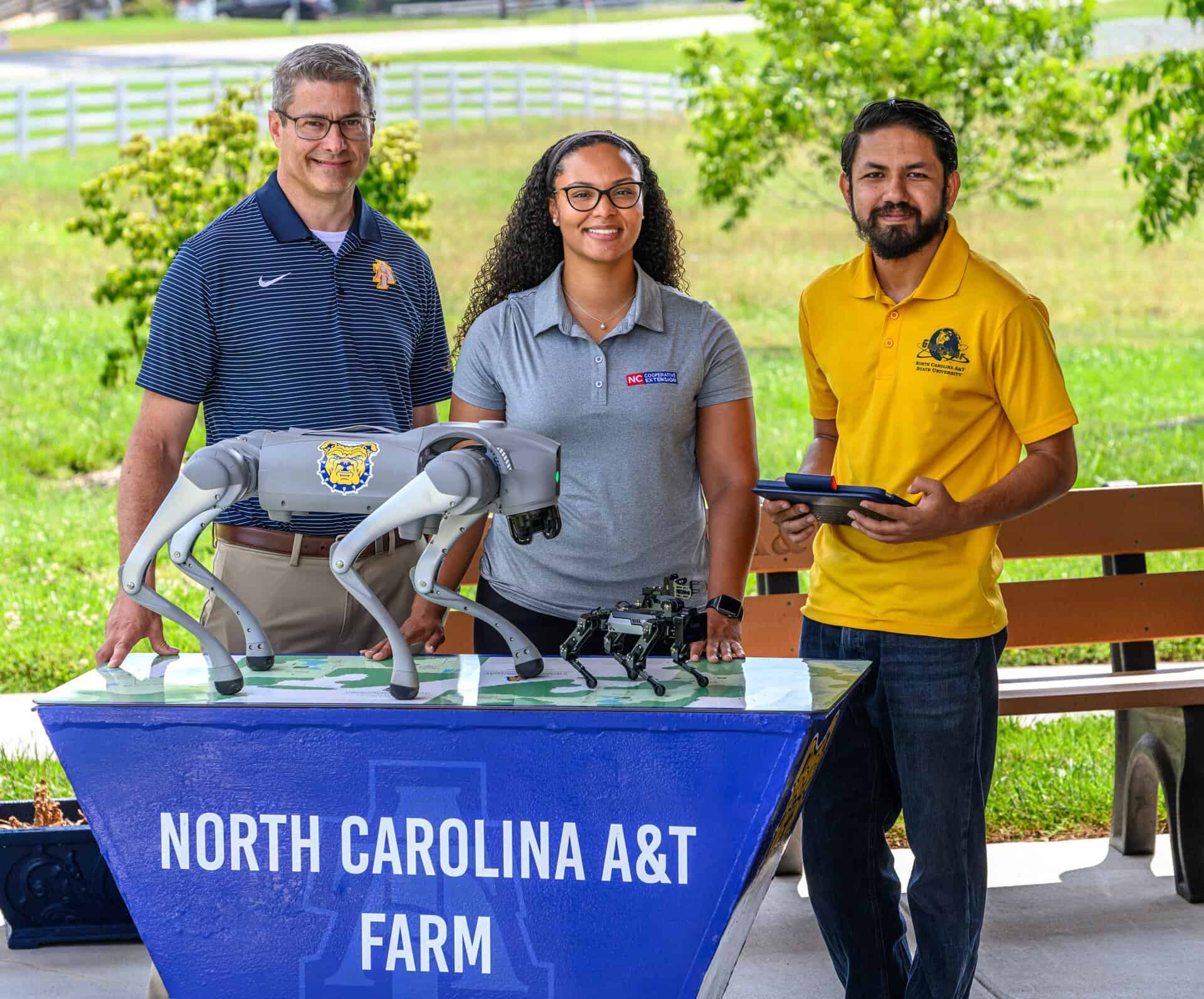
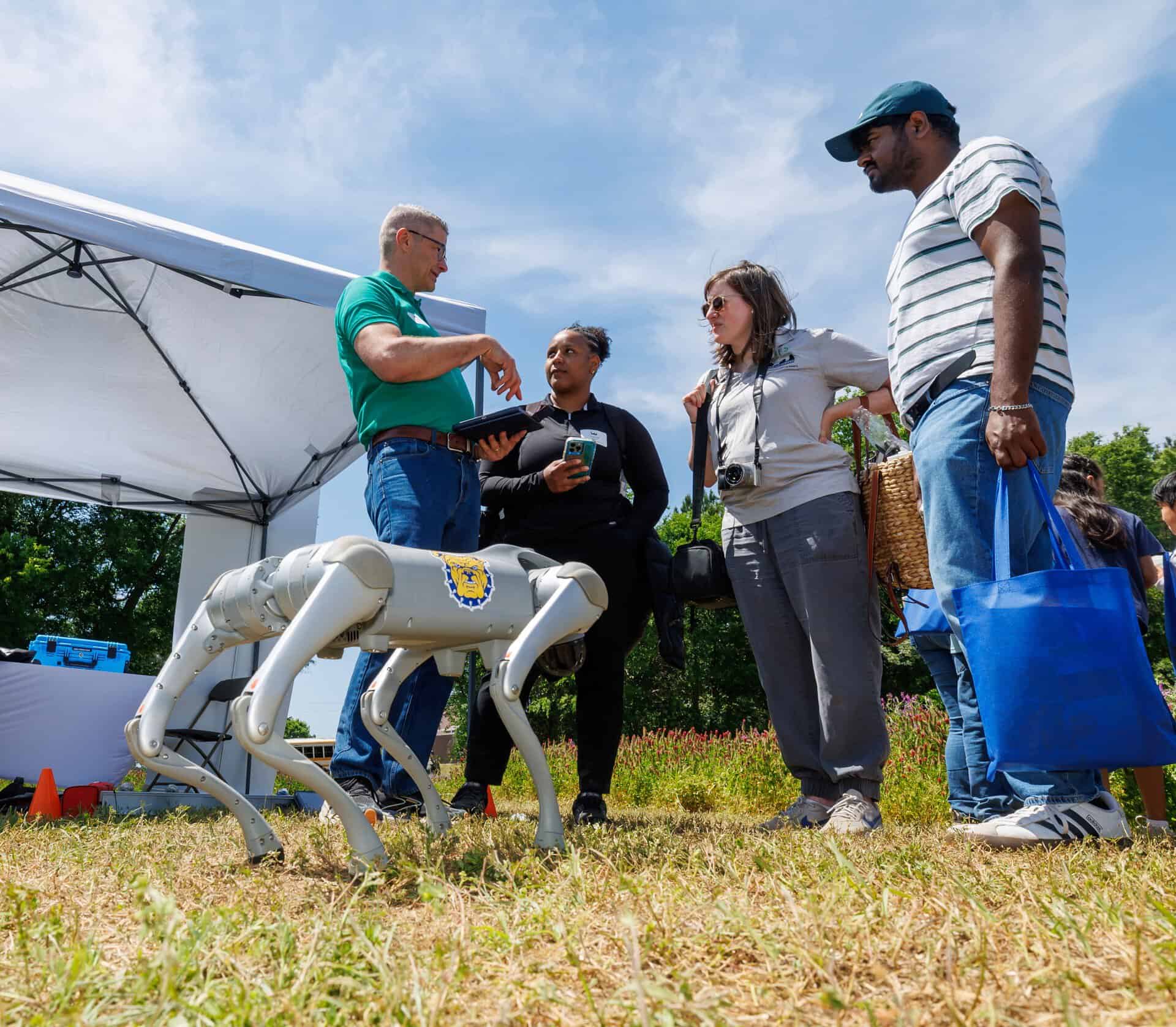
The College of Agriculture and Environmental Sciences has put three new “dogs” on the hunt for crop-destroying pests, plant diseases and invasive weeds, all to help growers manage their fields, their time and their budgets.
Three professors within the college are programming the robots, which are shaped like dogs, to recognize weeds, insects and plant diseases. LiDAR, a technology that uses pulsed laser light to measure distances and create highly accurate 3D maps, allows the “dogs” to map a field and avoid objects. An embedded digital camera takes and transmits photos to the operator, allowing growers to see problems early and take action.
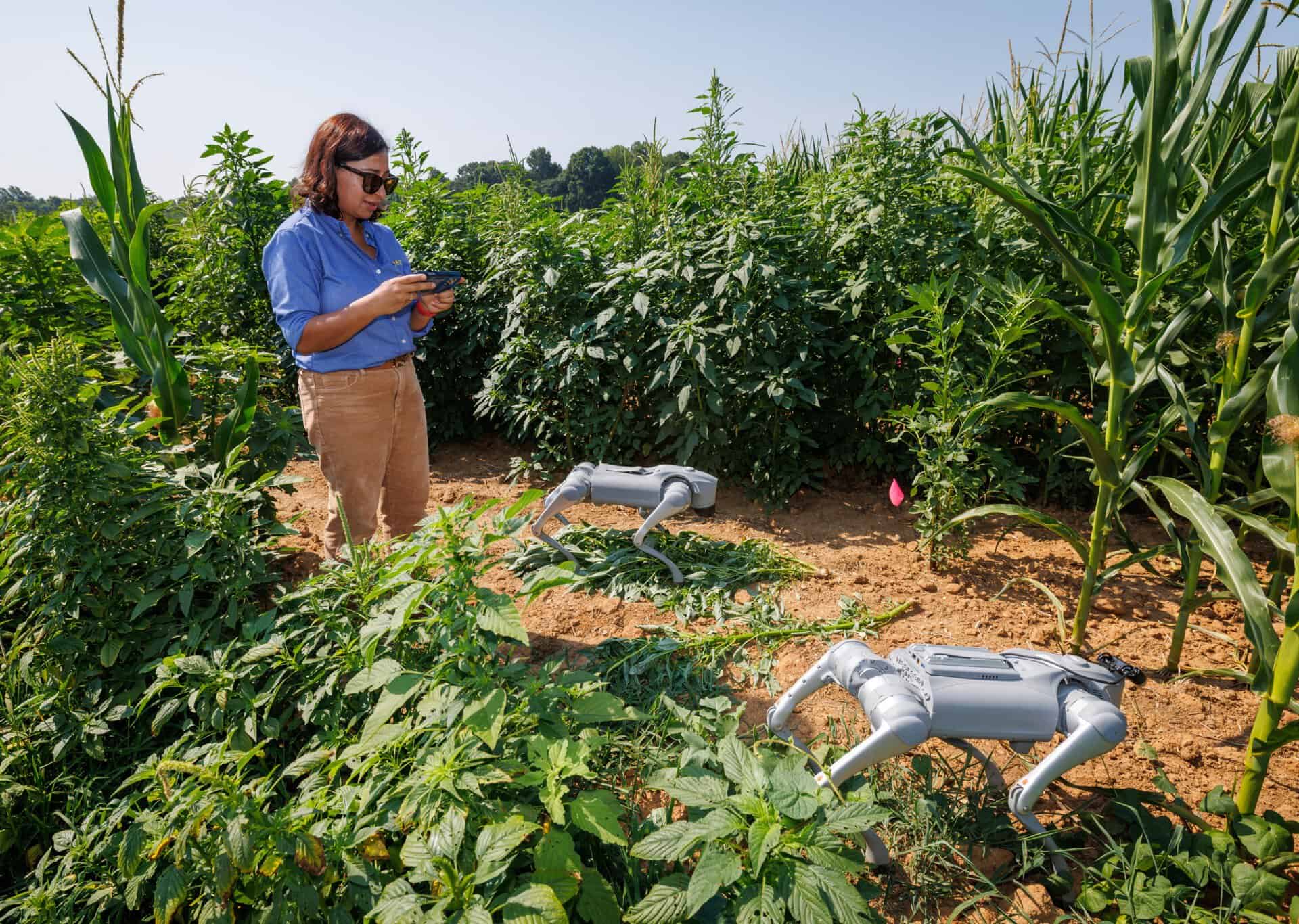
Harmandeep Sharma, Ph.D., research assistant professor in crop science and digital agriculture, is using two robotic dogs to compile the first comprehensive weed-image dataset in North Carolina. She is collecting thousands of images from her robotic dogs and from aerial drones for the project, which is funded by the NC Collaboratory.
Weeds account for more than 45 percent of total global crop losses, she said.
“By enabling accurate weed identification and targeted management, we expect the dataset to deliver direct benefits to farmers, including lower input costs, reduced environmental impact, and improved production efficiency,” Sharma said, adding that one of the dogs can be fitted with a mechanical arm and programmed to remove weeds that it identifies.
A third robotic dog is being set on the trail of insects and diseases by Hannah Talton, D.P.M, assistant professor of plant pathology and integrated pest management specialist at Cooperative Extension at A&T, and Mark Light, Ph.D., associate professor and 4-H STEM (Science, Technology, Engineering and Math) Extension specialist.
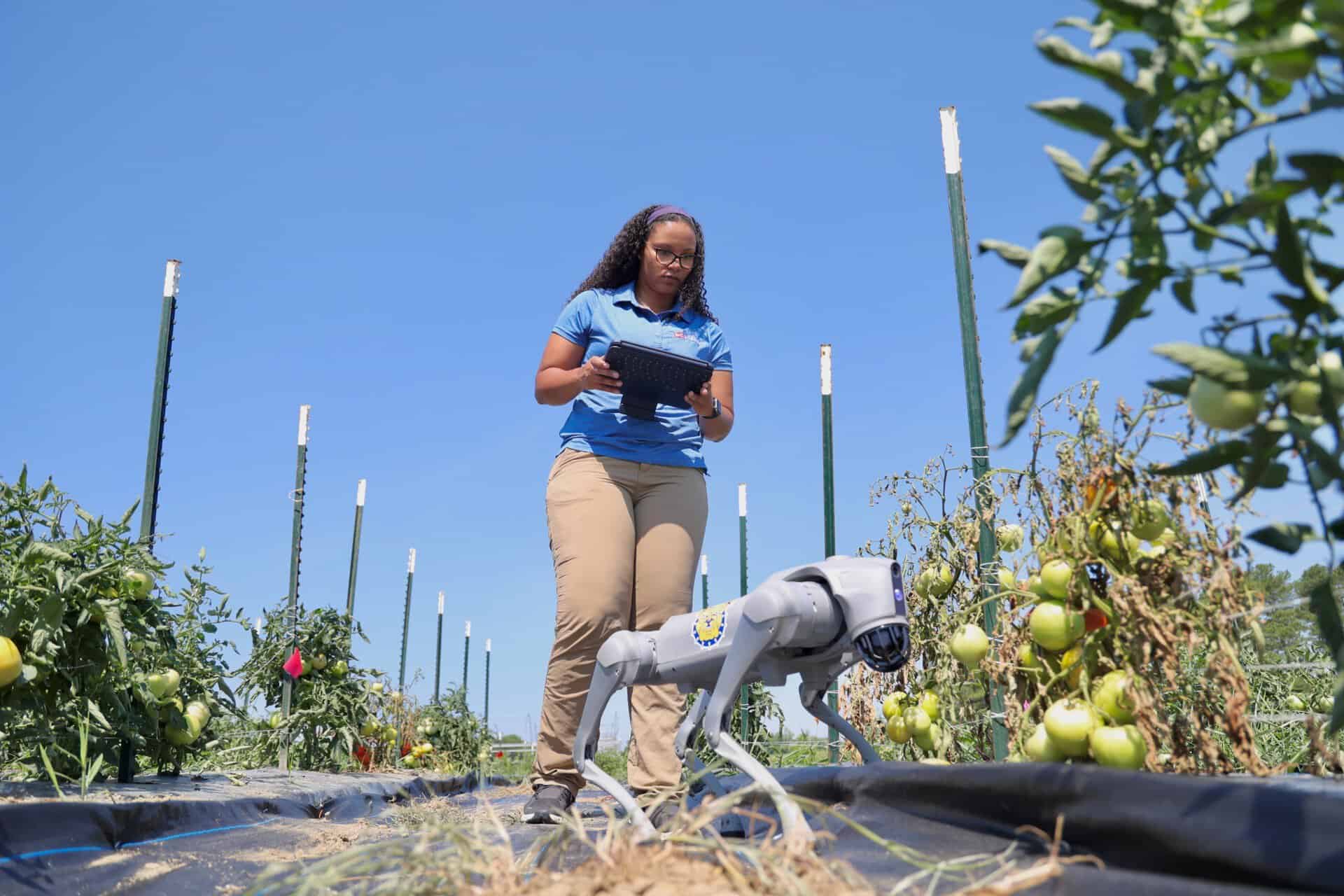
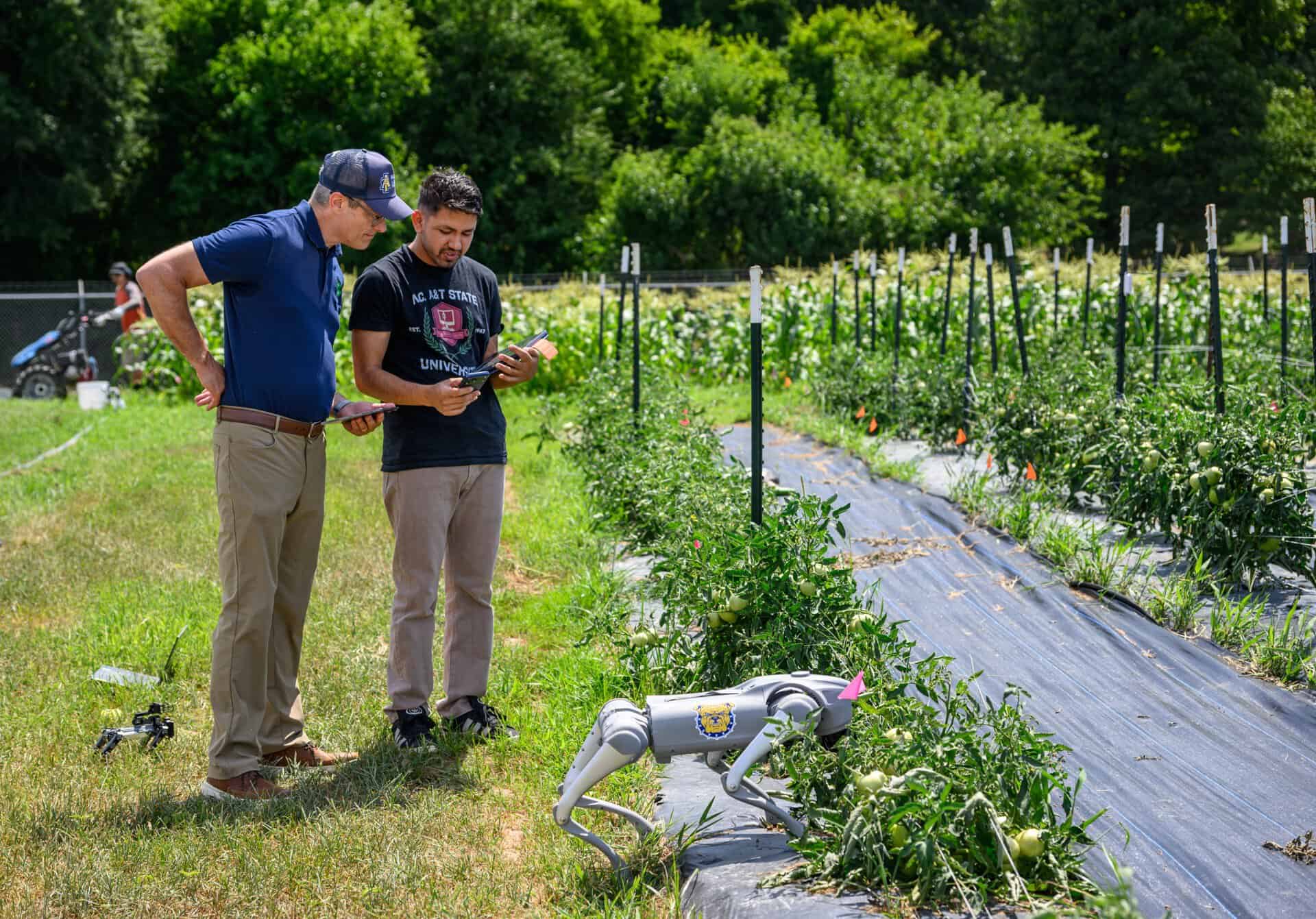
Hannah Talton, Ph.D. and “Aggie One” assess tomatoes at the University Farm. Talton’s “dog” is programmed to identify blight and insect damage on crops.
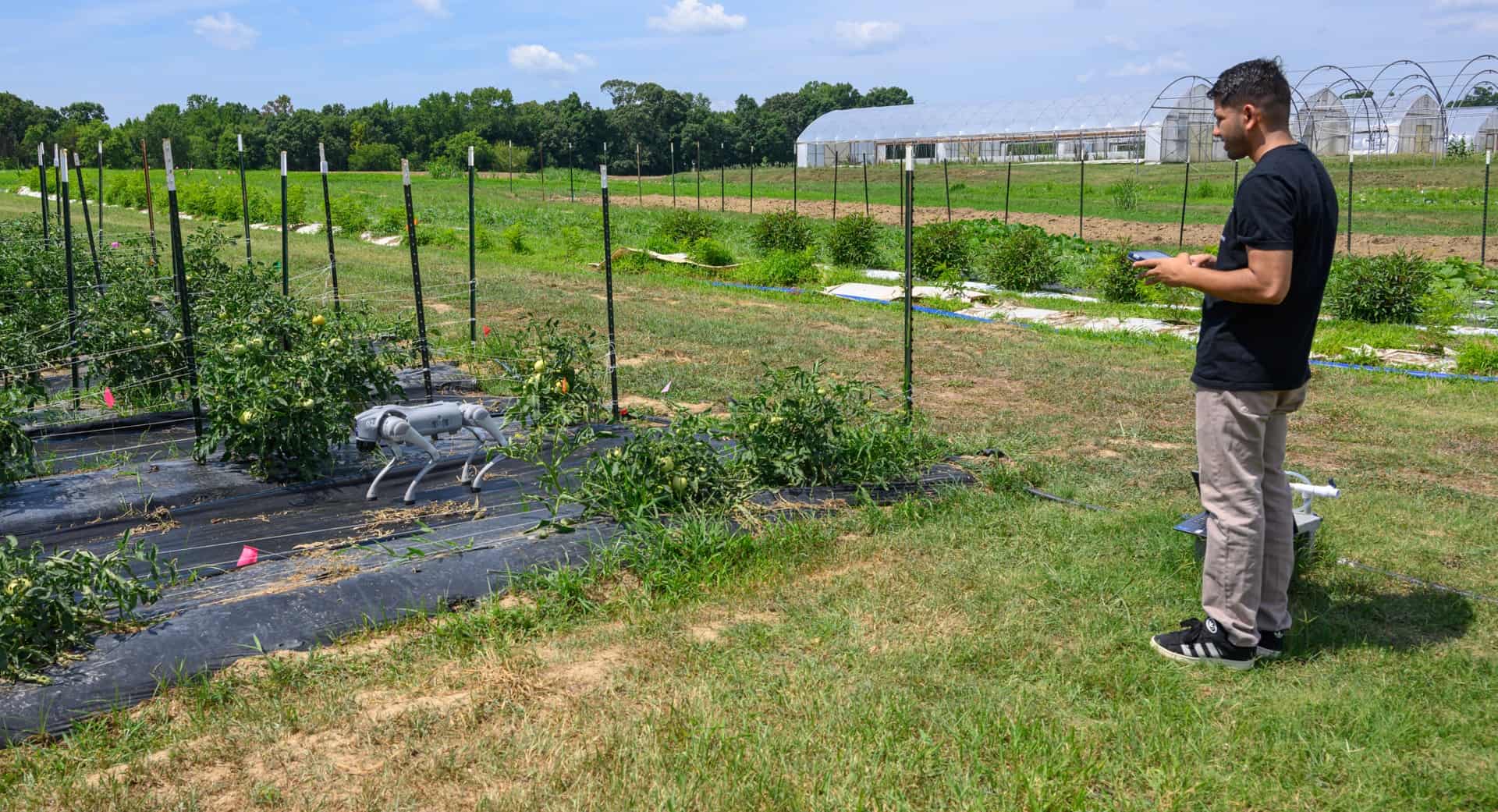
They're “teaching” their dog to search for diseased leaves and insects on tomato plants, with the goal of expanding to other important N.C. crops. Pinpointing the location where a pest or disease problem is developing allows farmers to spot-spray, confining the use of pesticides to that area and not the whole field, Talton said.
“We’ve used drone technology to scout fields for a long time,” Talton said. “This brings the technology and scouting closer to the ground, where the plants, insects and weeds are located.”
The robotic dogs also can be used to detect heat stress or soil moisture, an important benefit for growers wrestling with climate uncertainties, such as drought or extremely high temperatures, and can be controlled by a cellphone or programmed to walk a field autonomously while farmers are busy elsewhere. The dogs weigh about 35 pounds each and their rechargeable batteries last about two hours.
At about $4,000, their price is fetching for small-scale growers and gardeners who love their plants – but also balance growing with other jobs and family life.
“It’s technology that's in reach financially for the farmers that we serve,” Light said, adding that the robot dogs eventually may be included in Cooperative Extension’s equipment rental program.