The way to a boy’s heart is through the stomach — at least in the case of 8-year-old Pablo Zuniga.
That’s the pitstop at the Speedway to Healthy exhibit that Pablo, a student at Southwest Elementary School in Guilford County, enjoyed the most. “We were sorting foods (according to what’s healthy),” he said. “It was fun.”
Pablo was among 339 children who walked through the 1,200-square-foot exhibit with 10 rooms, each representing a part of the human body. Four elementary schools and the after-school program at the Carl Chavis Memorial YMCA in High Point, where the event was held May 18, participated.
Built and operated by Cooperative Extension at N.C. A&T, the traveling exhibit teaches children in kindergarten through fifth grade how the foods they eat affect their bodies.
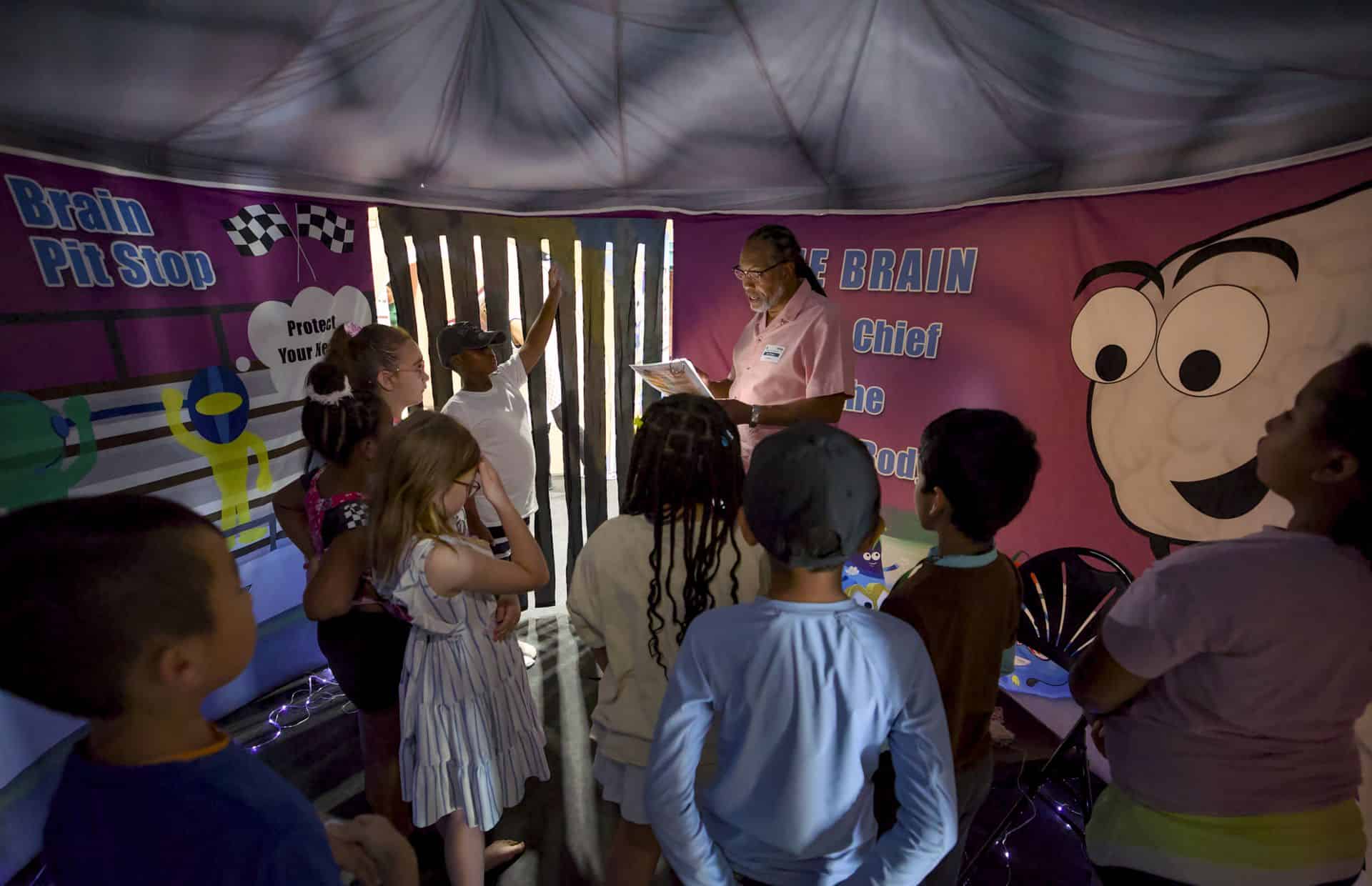
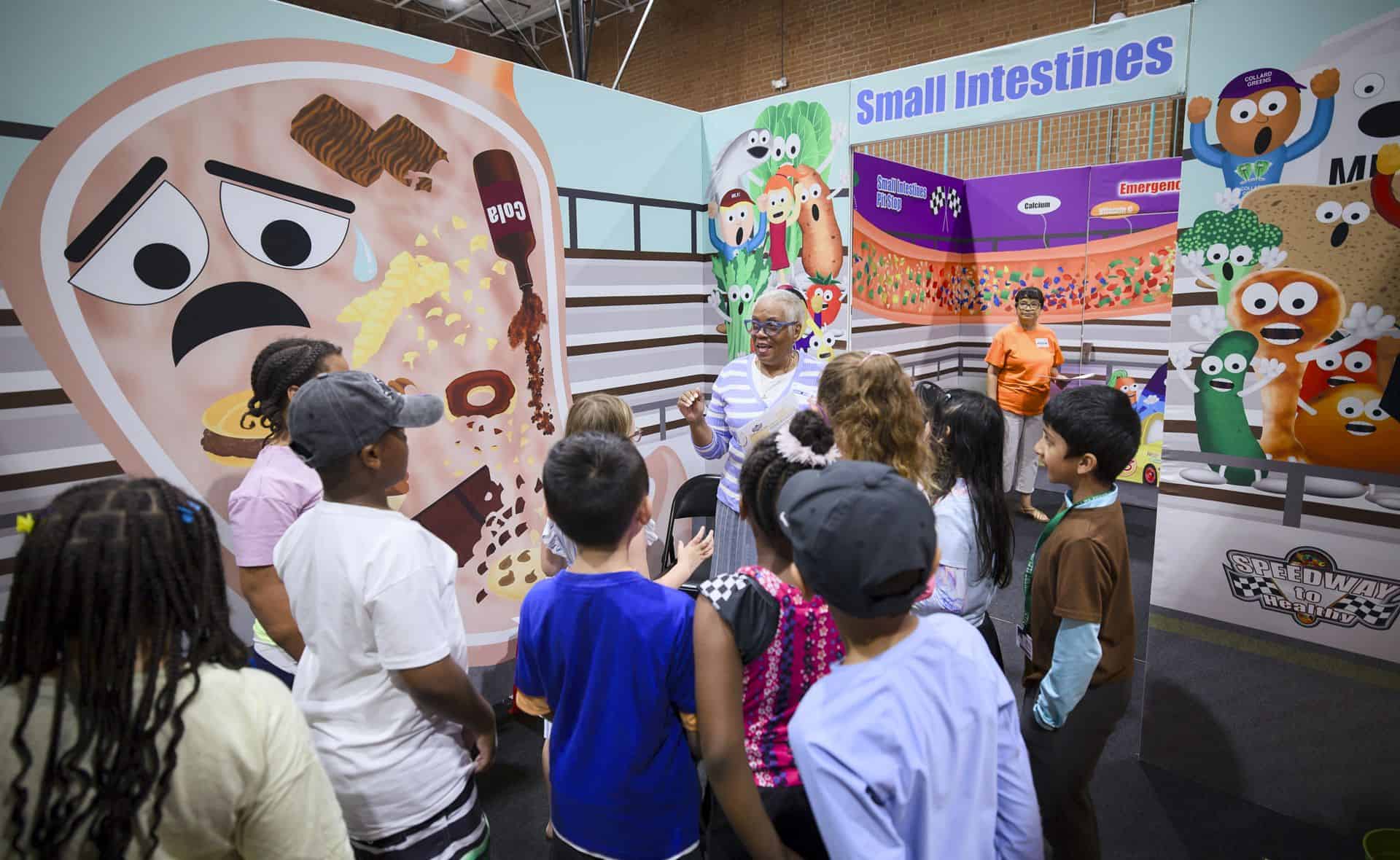
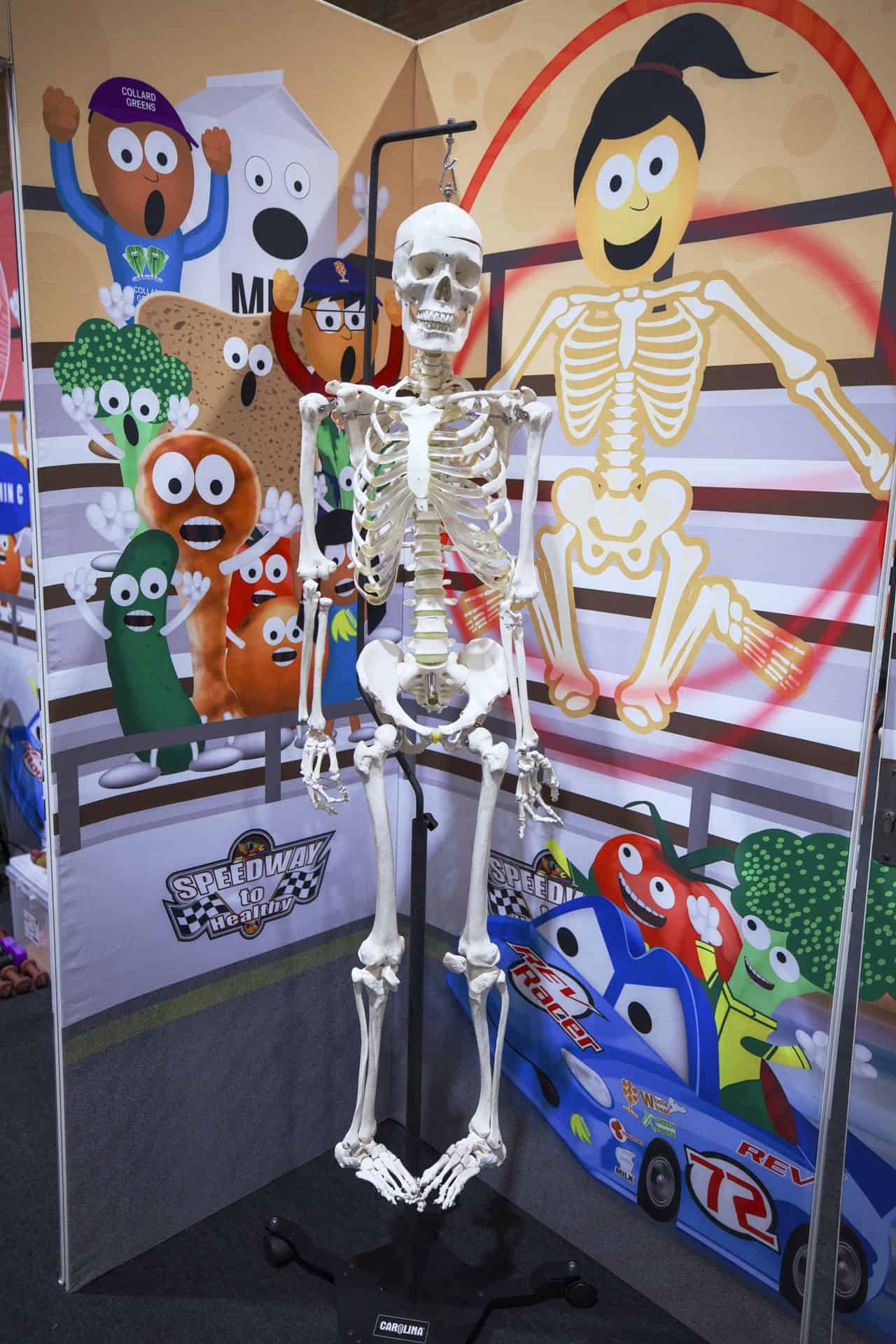
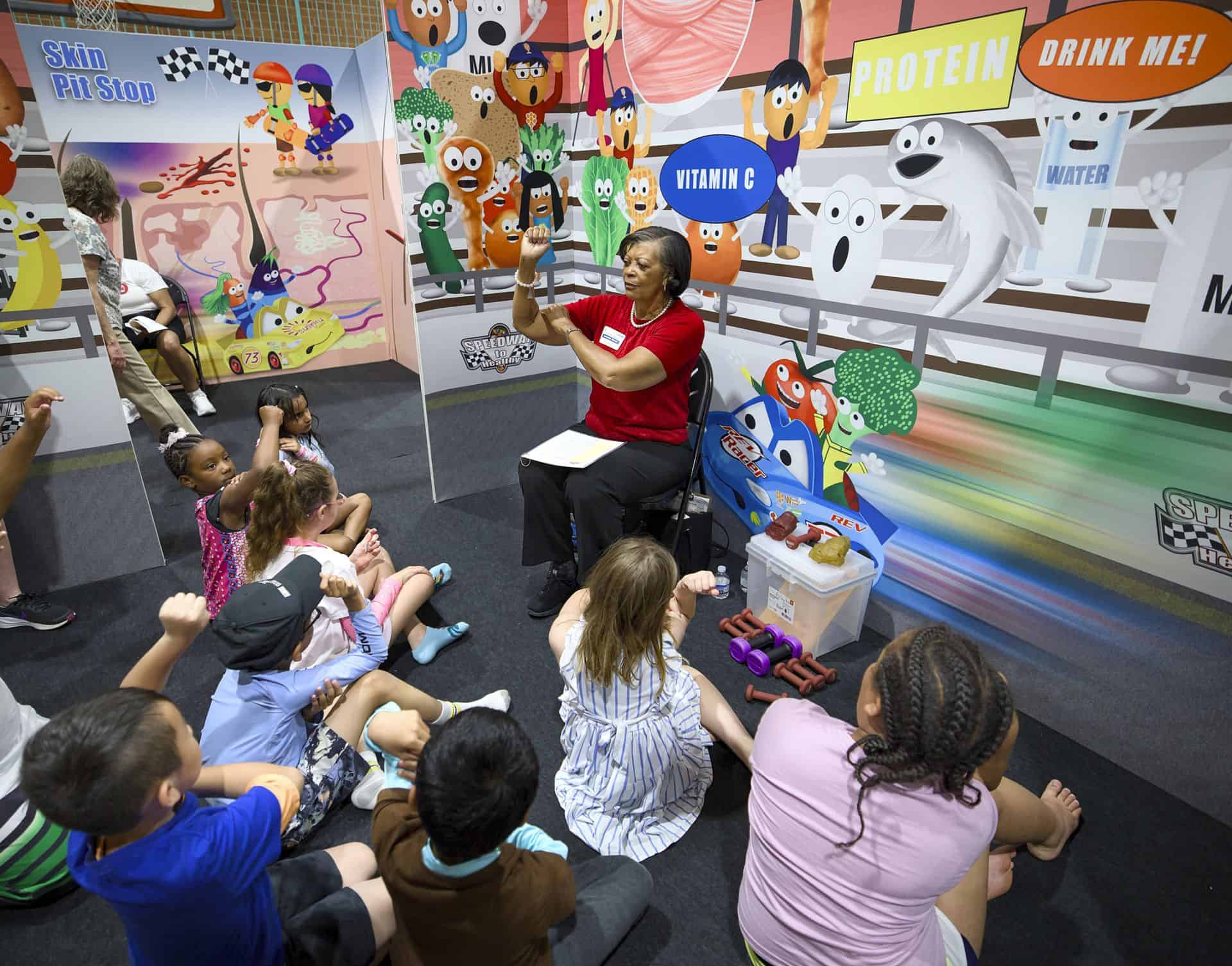
The youngsters are introduced to the five food groups before entering the exhibit through the brain exhibit. They then travel through the mouth, stomach, small intestine, heart, lungs, kidneys, bones, muscles and skin. Volunteers in each room talk about how nutrition and lifestyle choices, like smoking, affect the organs. Interactive displays – like flossing and brushing giant teeth or listening to a recorded heartbeat — add to the fun.
Meredith Kreeger, MPH, a 4-H Youth Development Extension agent in Guilford County, said it took about four hours to set up the event and was grateful for the 54 volunteers that helped out.
“I think it’s a great event,” Kreeger said. “It introduces healthy habits early in a child’s life. And the earlier these habits and resources are introduced, the better to address health down the road.”
In North Carolina, nearly one in three children ages 6–17 is overweight or obese, according to data from the State of Childhood Obesity report from the Robert Wood Johnson Foundation. And vegetable consumption among the state’s high school students has declined, with the percentage reporting eating vegetables at least once per day falling from 61.3% in 2013 to 51.6% in 2023, according to a Centers for Disease Control report.
After going through the exhibit, Kreeger said the children were asked if they learned something new today about their body and how to keep it healthy. “Ninety-four percent of the kids that answered said ‘yes,’” Kreeger said.
Pebble Byrd, a 2nd grade teacher at Troy Elementary School in Montgomery County, said all of the school’s second graders went through the exhibit when it visited her area in April. And the children appeared to later retain the information.
“They would talk about things that they would eat later at home. Or they might say, "My dad eats so and so, and I told him that was not a good choice,’” Byrd said.
“When we got to the human body unit in class, they had more questions for us, they weren't just blank because it was a new unit, they had already been prepped a little bit,” she said. “They were more aware in the cafeteria, too, when we would go down and talk about the things that they would eat or their food choices.”
Candice Dixon, president of the High Point Alumnae Chapter of Delta Sigma Theta Sorority — which hosted the High Point event, found the event fun for the children.
“I think (the visuals and the hands-on activities) help our second graders to understand the human body a little bit more, and how their body works,” she said.