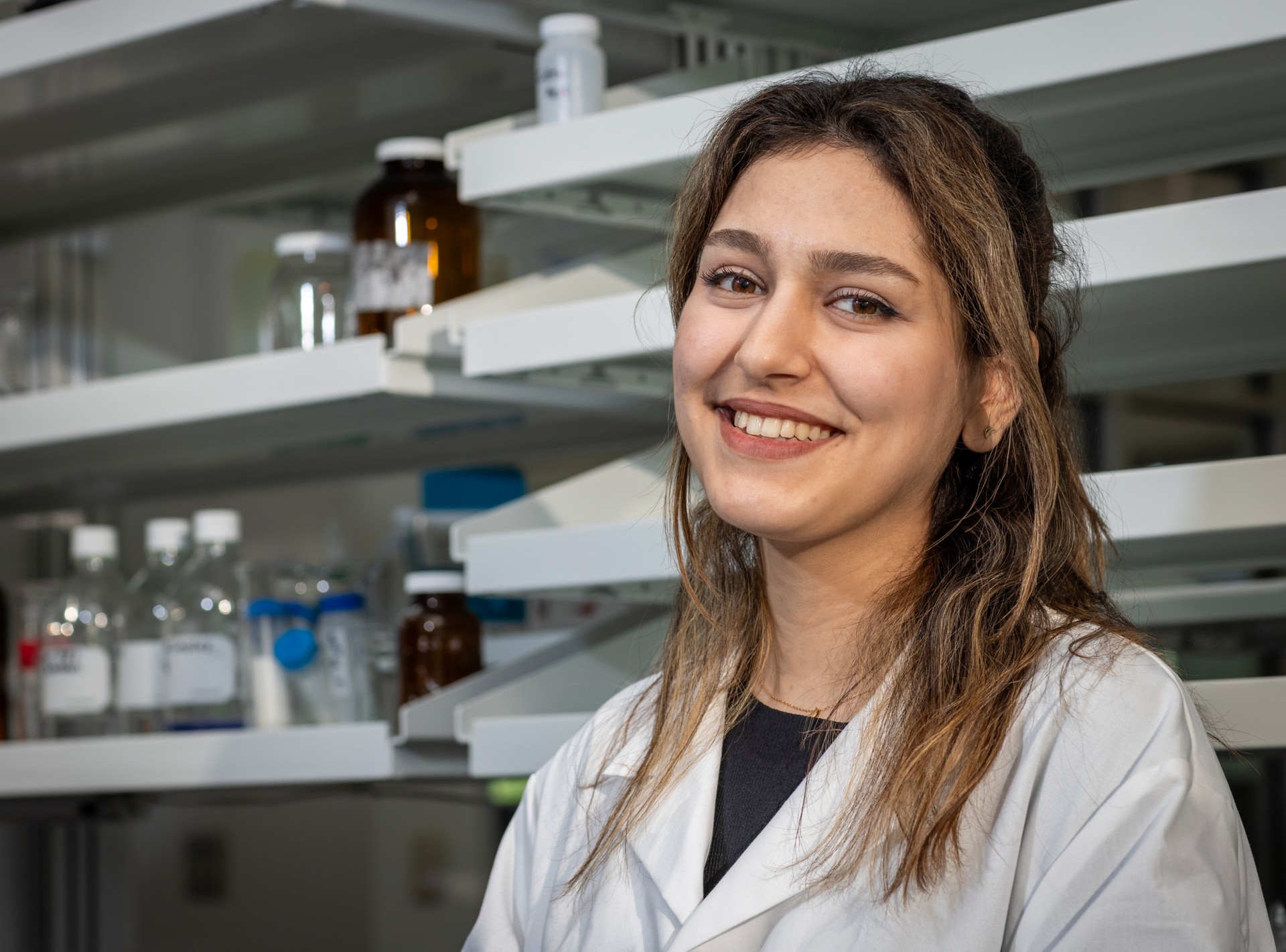
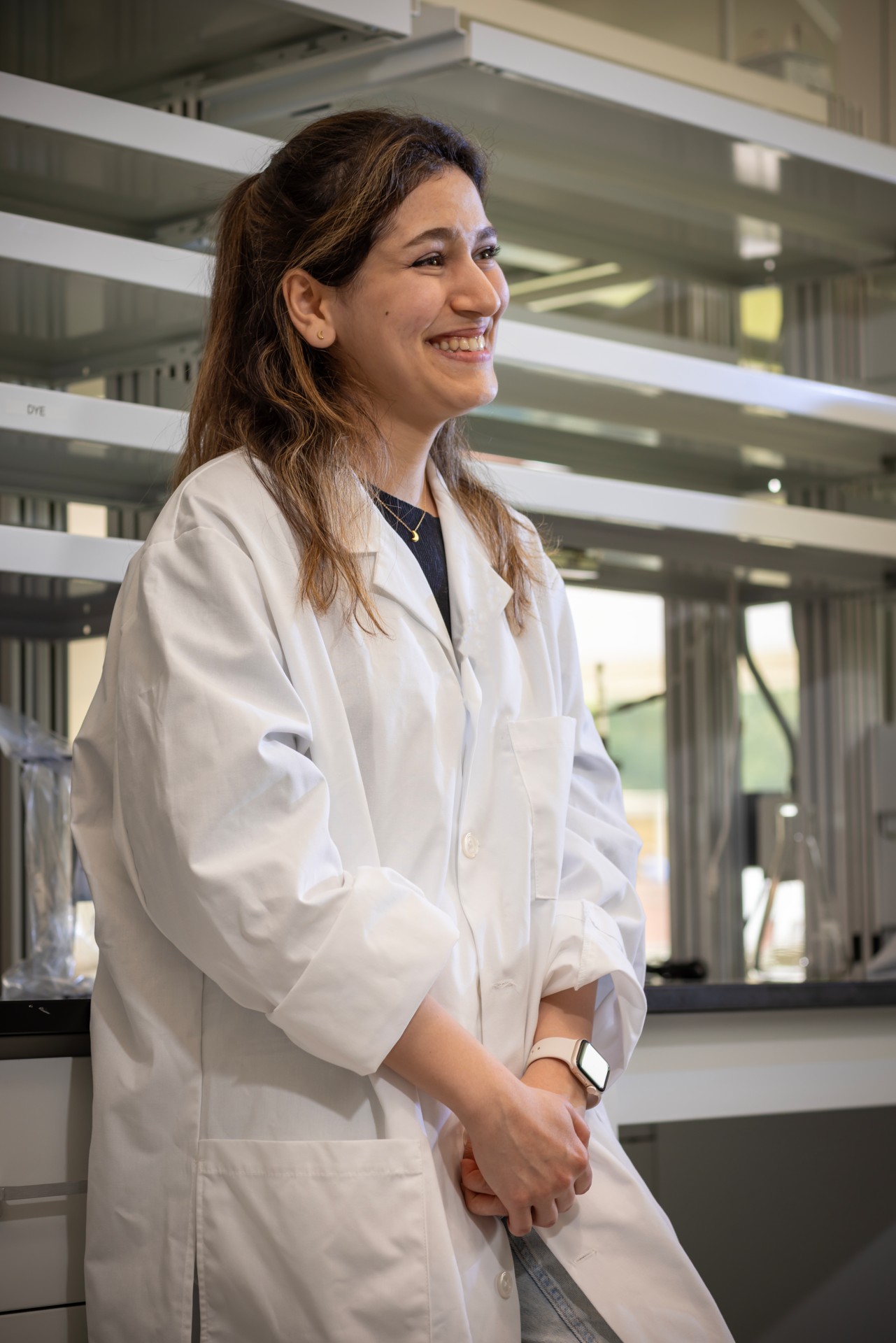
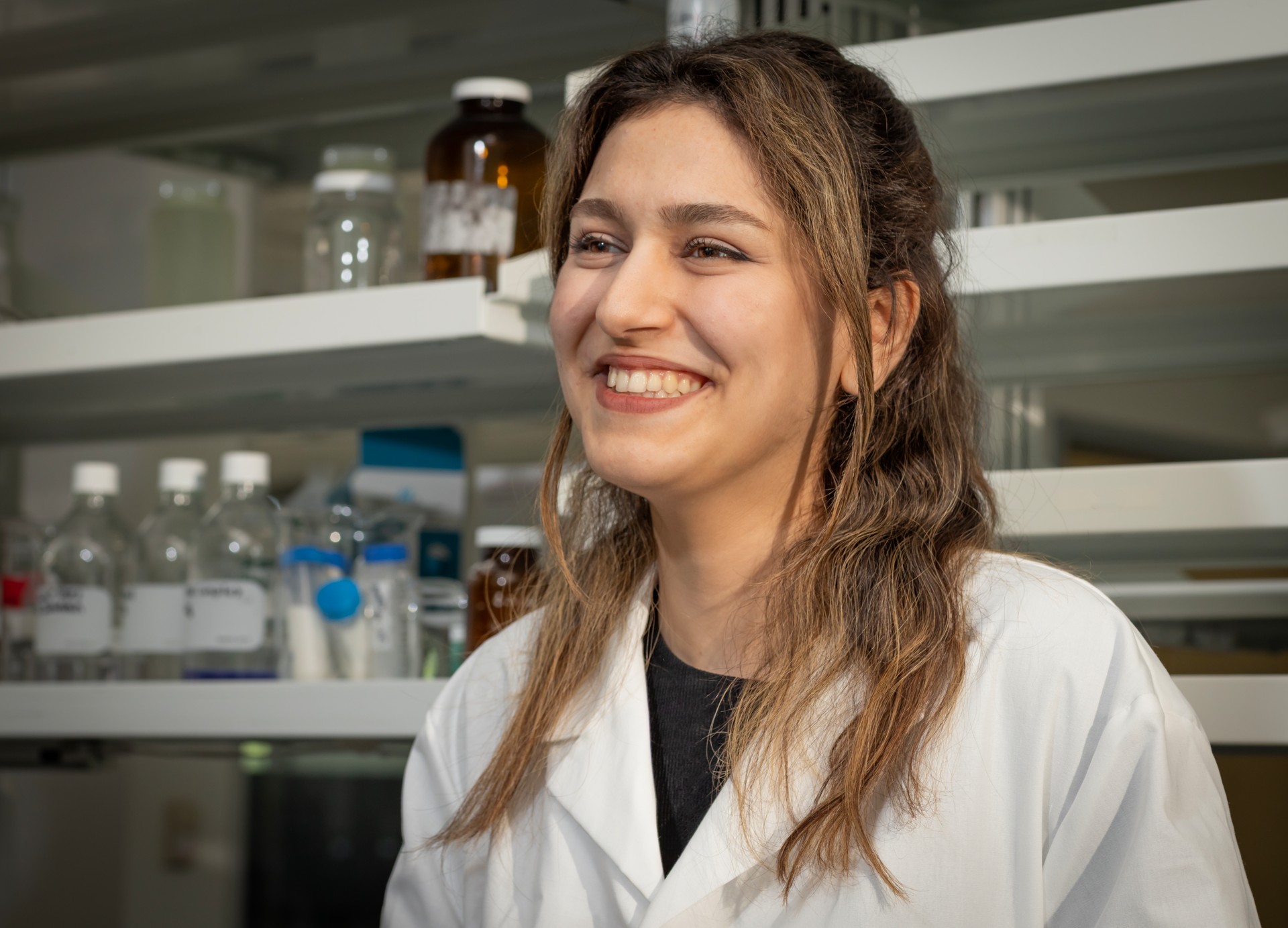
A conversation over a meal at Panera Bread with one of her best friends led Mahshid Eghbali, a food and nutritional sciences master’s student at N.C. Agricultural and Technical State University, on an unexpected journey into the medical supply field.
Her friend, Hoda Motaghed, a doctoral student at the Joint School of Nanoscience and Nanoengineering, was talking about her project using biodegradable polymers, large molecules bound together into a plastic or resin that decompose as natural substances, like water, carbon dioxide and organic matter.
Motaghed, who became fascinated with skin products as a teen, was working to create a wound dressing that would promote healing and was environmentally friendly. Motaghed’s use of an agricultural by-product caught Eghbali’s attention.
As a second-year master’s student studying food and nutritional sciences at the College of Agriculture and Environmental Sciences, Eghbali was interested in how to improve the antimicrobial properties of the agricultural by-product (which is not being disclosed because of its proprietary nature).
“(Motaghed) was talking about all those antimicrobial properties about this (by-product), and I was thinking to myself that, what if you could add a little bit of details to this (by-product), so that you would kind of reinforce this and make some improvements into the whole project?” Eghbali said.
Ultimately, Eghbali joined Motaghed’s research team at the Joint School of Nanoscience and Nanoengineering. The team focuses on using cellulose-based hydrogels. Team members include doctoral students Kayla Morgan and Vaishnavi Kandula and is mentored by Demetrius Finley, Ph.D., and Niya King, Ph.D.
“Cellulose is a very abundant, very natural polymer that that you can find anywhere in nature," said Michael Curry, Ph.D., graduate curriculum coordinator for nanoengineering. “If you go outside and you look at the trees, you're looking at cellulose.”
Hydrogels are a network of hydrophilic polymer chains that can absorb and retain large amounts of water or biological fluids, forming a soft, gel-like substance.
The team’s work culminated in an innovative wound dressing called Woundra, a material engineered for controlled antimicrobial release, cellular safety, and environmental safety.
“It’s going to be a sustainable material that can … promote wound healing, hopefully without infections, and then also it will lessen the impact of the carbon footprint on the environment, because it's all renewable,” Curry said.
Once perfected, it could be included in home first-aid kits and made available to injured farmers, who can’t get to a hospital immediately, and to parents, whose children might have suffered a cut or a burn, Curry said. Emergency responders in the field could also carry it, he said.
The team presented Woundra at the 2025 Innovation Venture Expo, hosted by Delaware State University, the 1890 Center of Excellence for Emerging Technologies and sponsored by Capital One. The event is designed to foster collaboration among industry leaders, researchers, entrepreneurs, and policymakers, with a focus on advancing scientific innovation and economic development.
Eghbali said the team added two other natural agricultural byproducts, both of which are normally discarded, to the first agricultural byproduct in making Woundra. Working together, those three things can boost the body’s immune system, improve skin hydration and increase the wound dressing’s antimicrobial effects, helping to combat bacteria that can cause infection.
“I was looking for agricultural products that are currently wasted that could be used to elevate the beneficial properties of the base product we’re using for Woundra,” she said.
Overall, Woundra aims to increase the speed at which the wound heals, she added.
Using materials often wasted in agriculture allows the team “to decrease the price of the product and we have the opportunity to help the planet stay more safe,” Eghbali said.
She’s grateful to be part of the interdisciplinary team and to her advisor, Jianmei Yu, Ph.D., a Google Scholar in the Department of Family and Consumer Sciences.
“I really appreciate the opportunities that my advisor has given me to be a part of this project,” Eghbali said.