CaesNews

Where Science Meets Society

Logo featuring the letters "A" and "T" in blue and gold, representing North Carolina Agricultural and Technical State University.

CaesNews

Where Science Meets Society

Home

Sign up for the Newsletter

Nationwide Partners Gather to Study College’s Work Toward Preparing “Next Gen” 

|

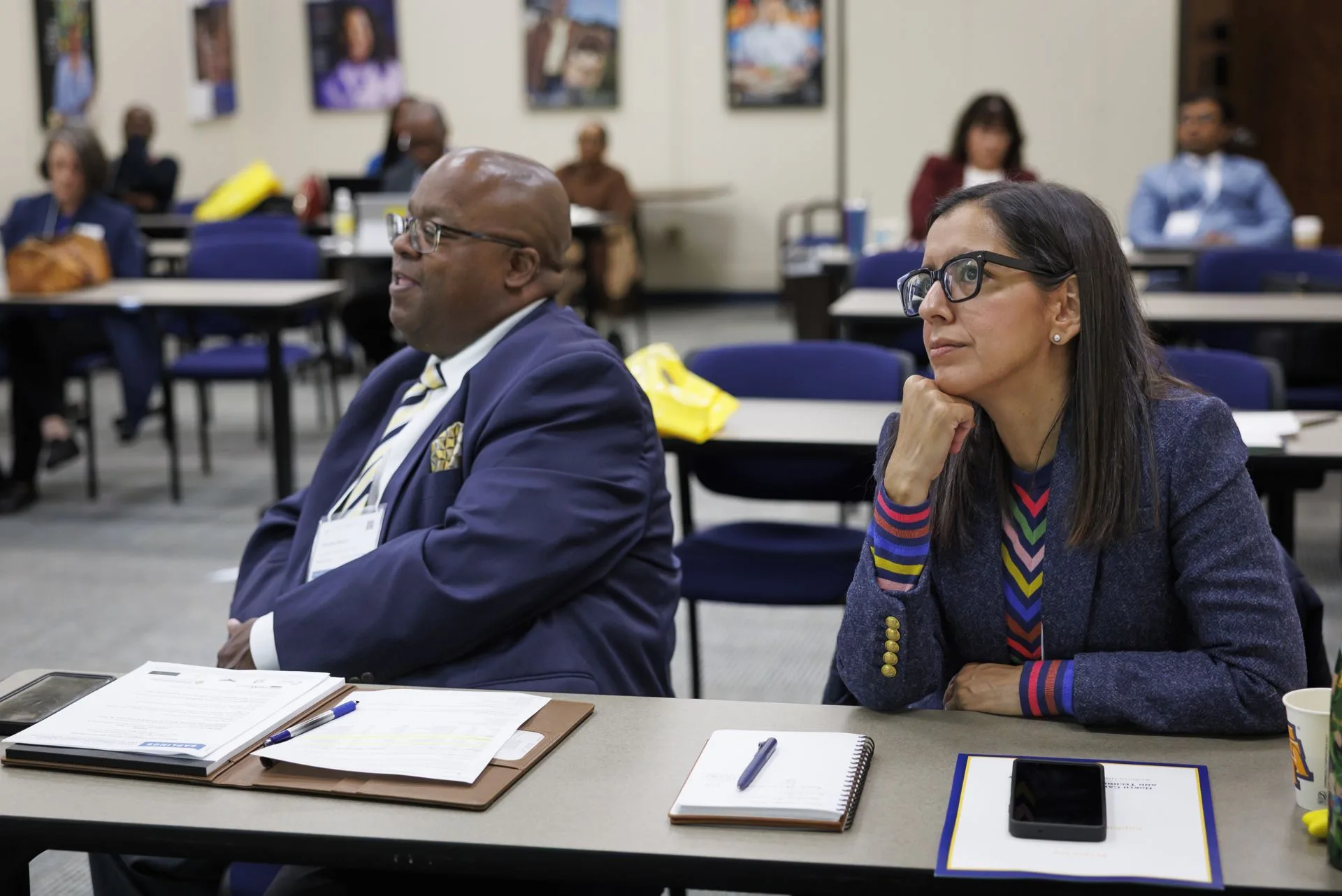
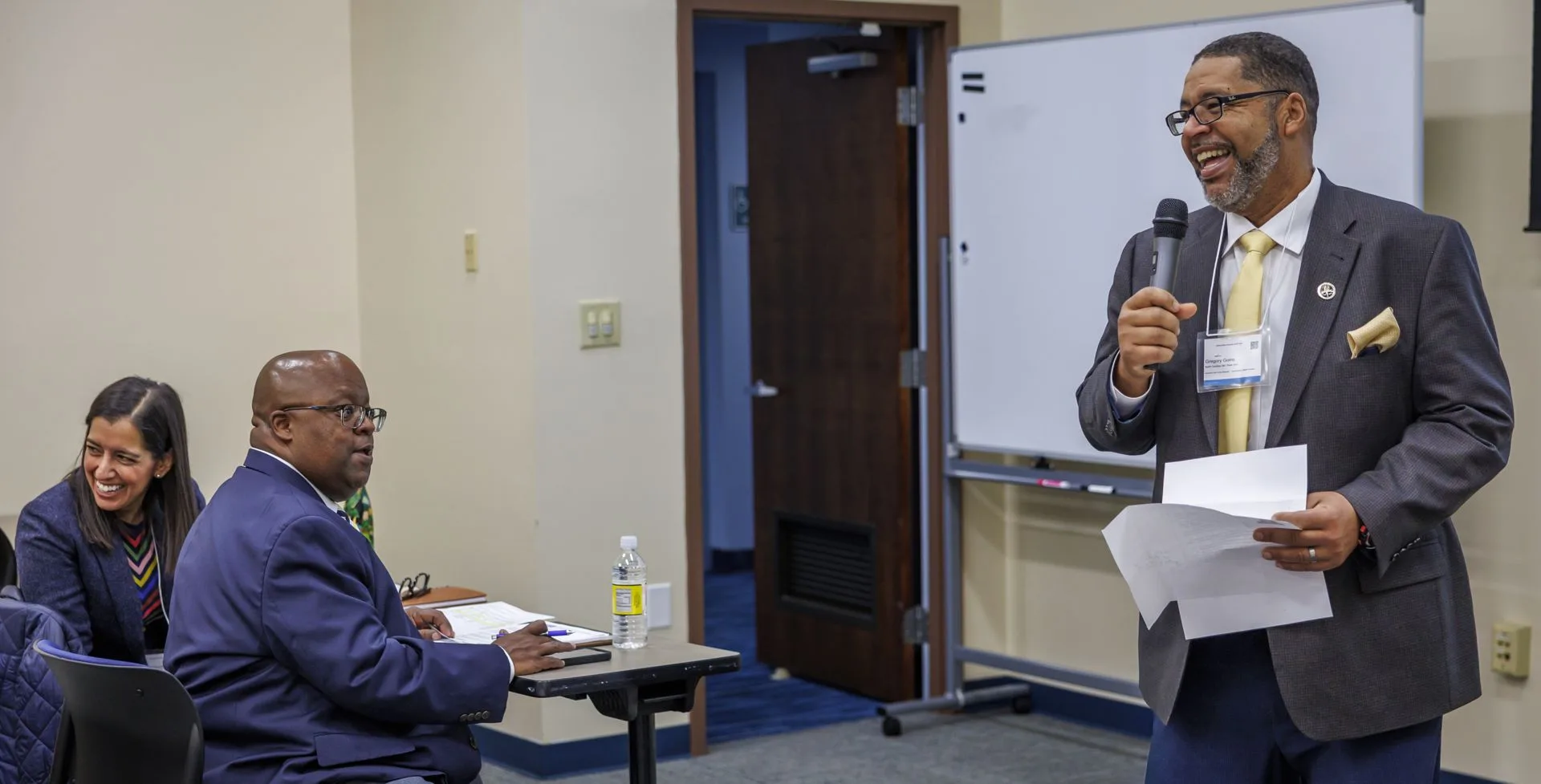
Two people attentively listening during a presentation.

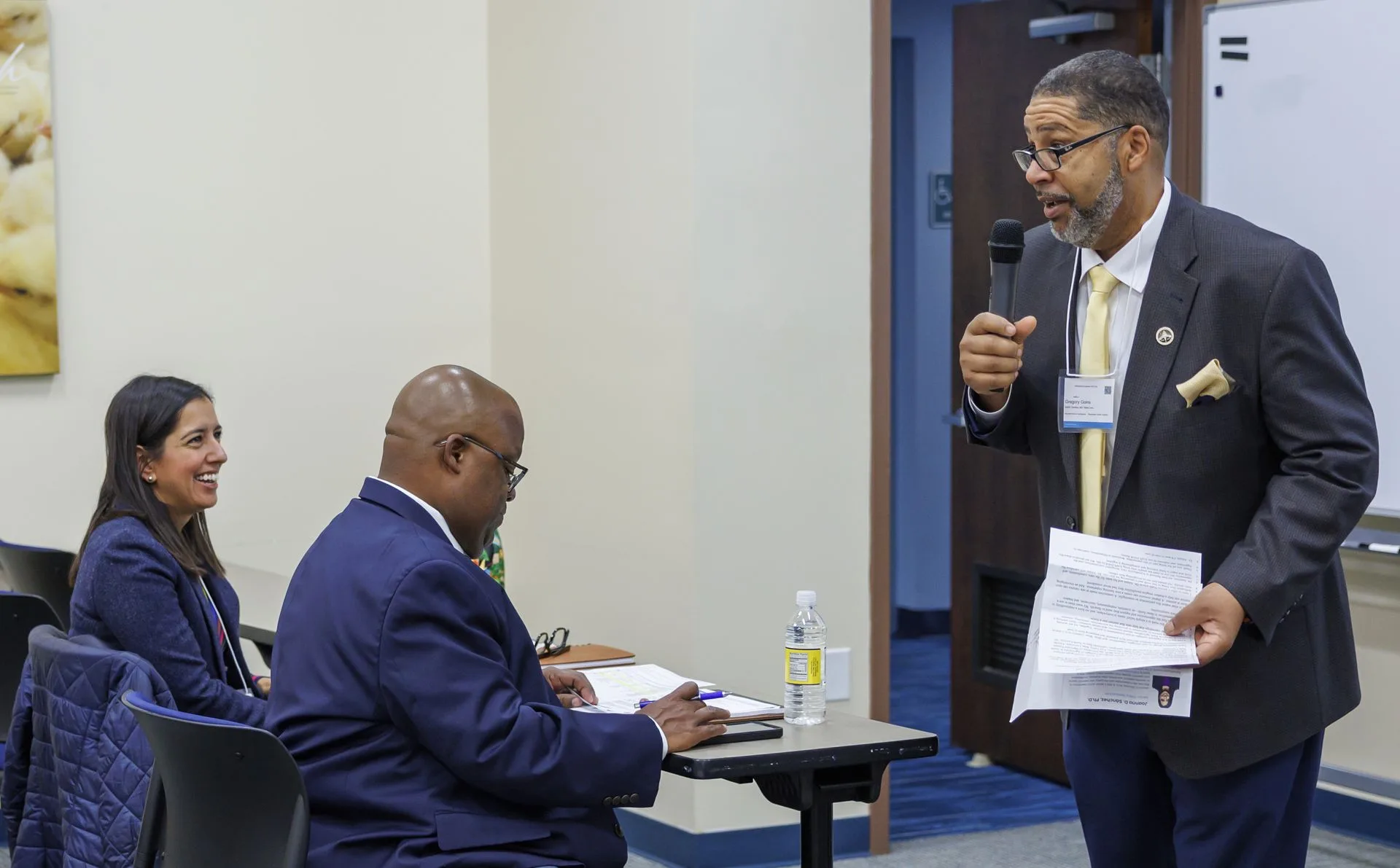
Project reviewer Joanna Sanchez, Ph.D., right, and Antoine Alston, Ph.D.,, associate dean for academic studies in the College of Agriculture and Environmental Sciences, listen to a presentation Oct.21. The college has held the grant since 2022 and leads the program, with seven partnering Historically Black College and Universities.

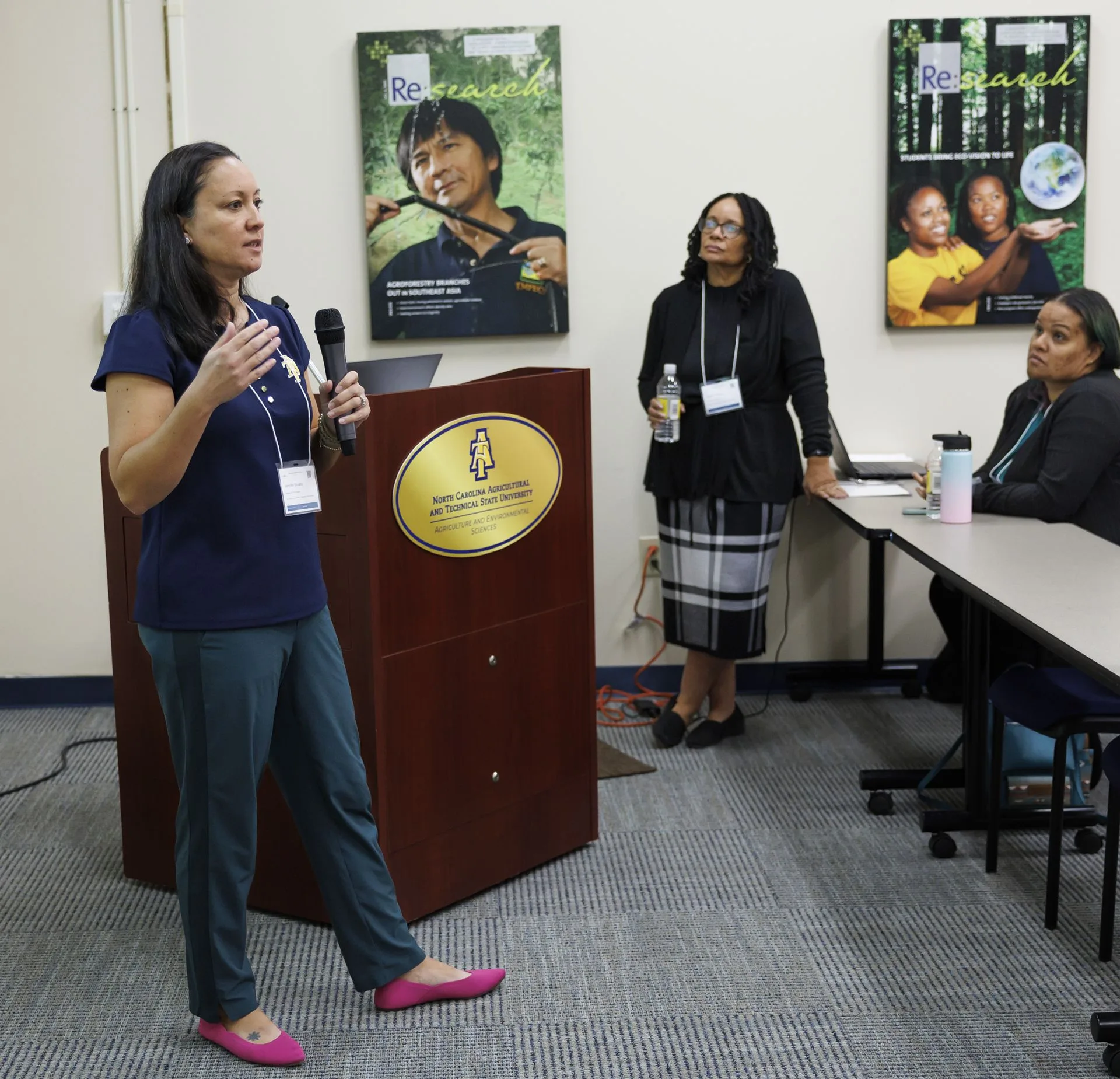
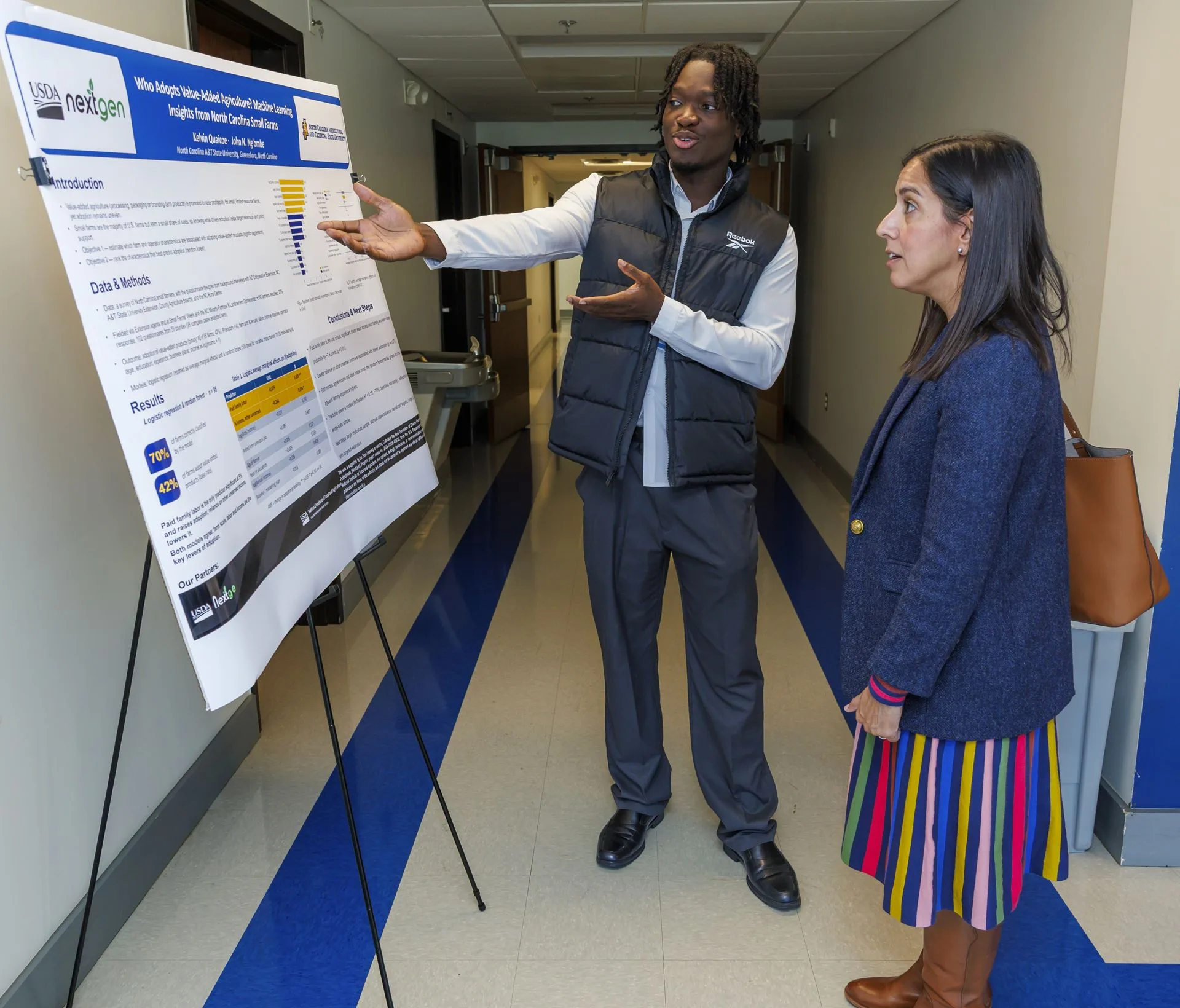
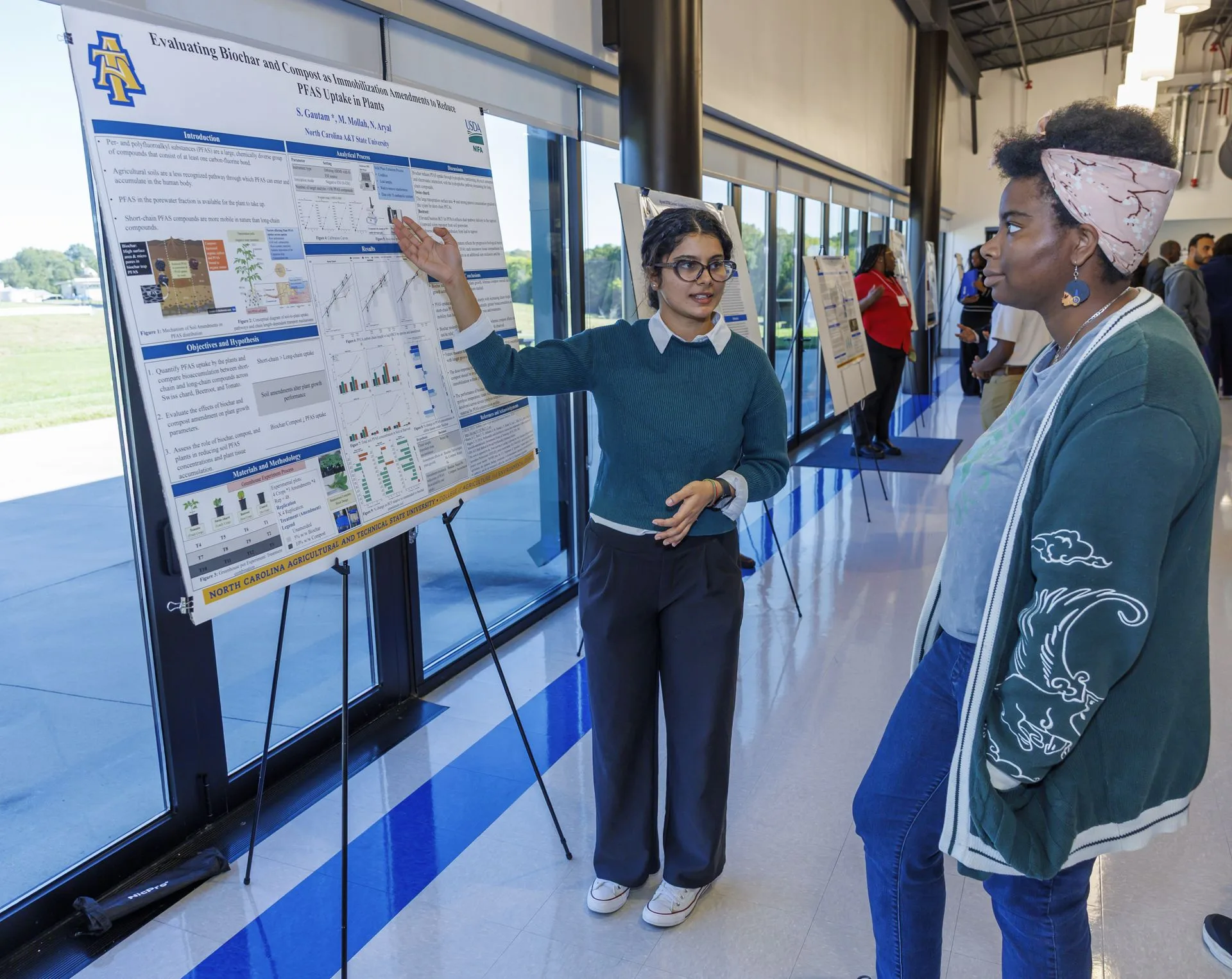
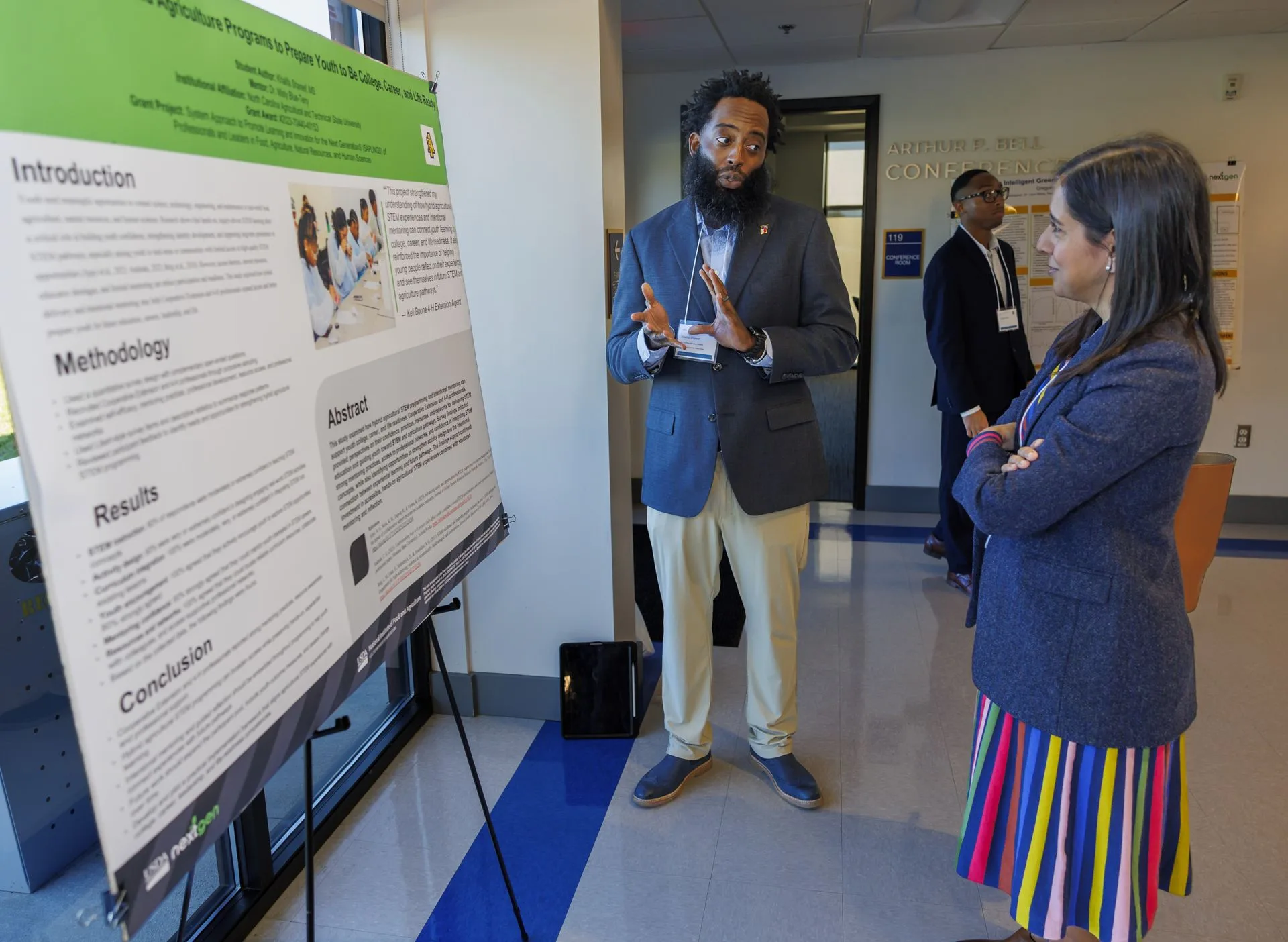
Students and faculty from seven 1890 land-grant universities and 1862 partner universities joined their counterparts from the College of Agriculture and Environmental Sciences (CAES) for a two-day showcase of a unique program to educate the next generations about agriculture.

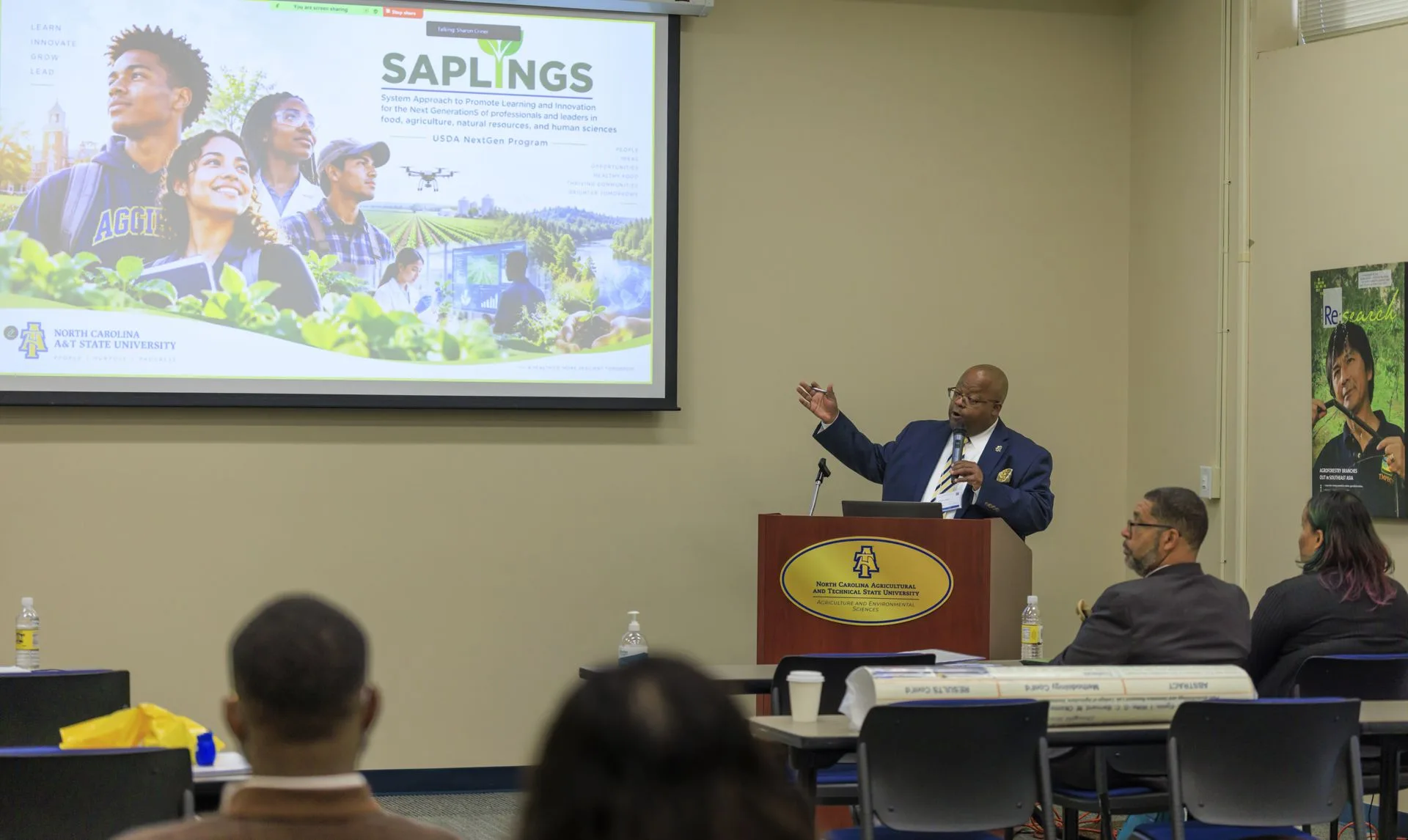
Called "SAPLINGS," or System Approach to Promote Learning and innovation for the Next Generations, and supported by an $18.1 million grant from the U.S. Department of Agriculture (USDA), the program seeks to build K-12 and youth engagement, support student scholarships and internships, and provide cross-training and certificates in agriculture-driven data science and systems-level problem solving.

"Agriculture is more than just land," program coordinator Sharon Criner said. "We have science-based evidence for reducing health disparities, AI labs, and summer workshops. This symposium brings it all together to show the work we've been doing."

"SAPLINGS represents an investment in 1890 institutions, showcasing the tremendous capacity, talent, and impact we bring to the national agricultural enterprise while strengthening the future of our nation’s food and agricultural system," said Gregory Goins, Ph.D., dean of the college.
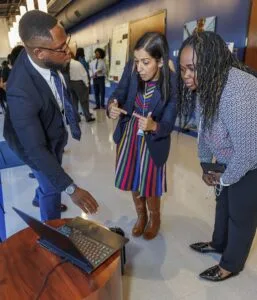
Three individuals engaged in a discussion near a laptop during a presentation event.

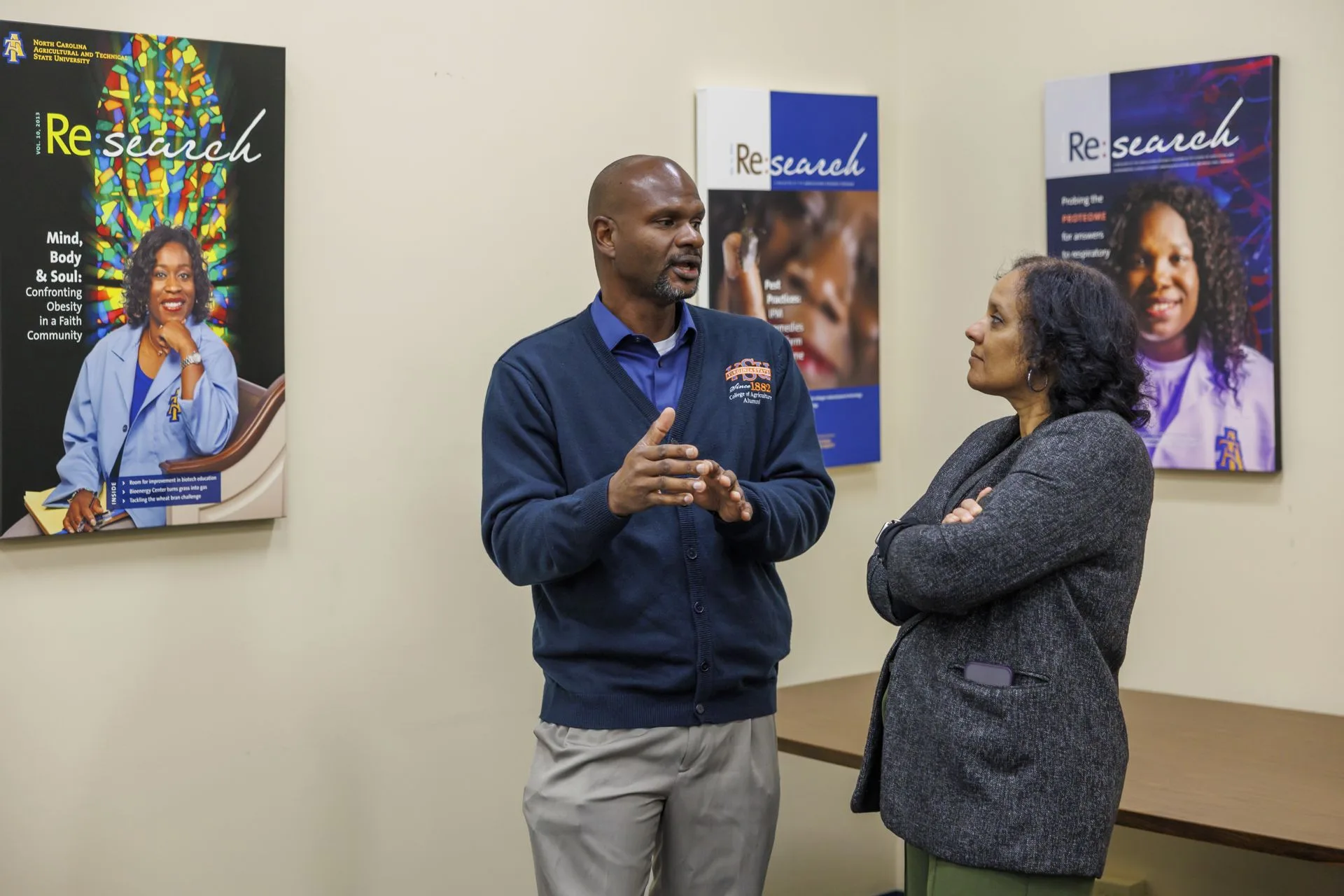
Joanna D. Sanchez, Ph.D., SAPLINGS NextGen site reviewer, center, asks a question of Virginia State University student Alain-Eucher Armoussou, left, who exhibited his research project during a presentation at the N.C. A&T Farm Pavilion. Shecoya White, right, observes.

The program is based on six modules, which run concurrently. In one module, middle and high school students are using drones, robotics and mobile STEM classrooms, such as A&T’s Innovation Station, to learn about the technical side of agriculture, while college students are learning to develop their ability to start, and grow, their own agricultural businesses. Others are learning climate-smart agricultural techniques on A&T’s University Farm, or discovering ways to use plants’ medicinal properties to heal illnesses.

High school and college students, university faculty and young farmers alike are learning ways that data analytics, artificial intelligence and data science incorporate into food, agriculture, natural resource and health education.

Faculty at all seven partner institutions are receiving training in ways to improve student experiences and improve the educational environment. High school teachers receive professional development in food and agriculture related STEMS while parents are engaged through tailored outreach and marketing programs.

Joanna Sanchez, Ph.D., a senior policy researcher at the Intercultural Development Research Association (IDRA), heard all six presentations and left impressed.

"Seeing your work raises the bar on all of our big grants," said Sanchez, who is a contacted reviewer for USDA. "The modules identify and target different aspects of the project that make it more useable and powerful. The students and relationships really helped this project hit the ground running, and you've made excellent progress. You've really tried to be responsive to the communities you're serving, and to telling their story.

"I spend a lot of time looking at data, but seeing the people and hearing the work makes me a better 'storyteller' for USDA."
GALLERY

Would you like to learn more about N.C. A&T State University?

Founded in 1891 in Greensboro, North Carolina, N.C. A&T is the nation’s largest historically Black university and a premier 1890 land-grant doctoral research institution. Home to more than 14,000 students, A&T is nationally recognized as the top public HBCU in the country and the number one producer of Black graduates in engineering and agriculture. With over $2.4 billion in annual economic impact, the university combines rigorous academics, pioneering research, and a vibrant campus culture to prepare the next generation of global leaders. 

Read more CAES News

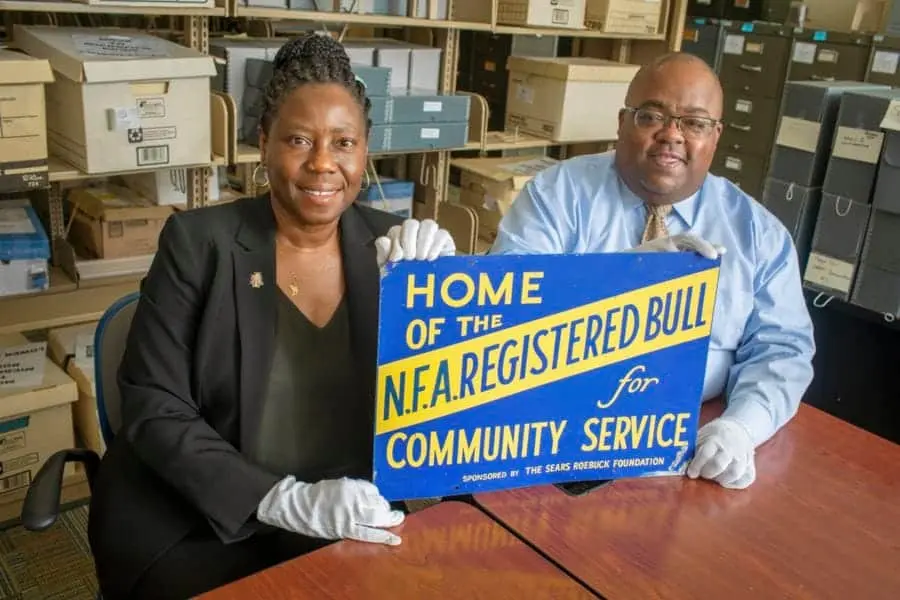
Finding jewels: New grant will let A&T delve into its unique collection of New Farmers of America memorabilia

Finding jewels: New grant will let A&T delve into its unique collection of New Farmers of America memorabilia

About a century ago, an N.C. A&T professor named S.B. Simmons started a new statewide organization to train young Black males to be farmers.
Animal science major Milosh McAdoo chosen for 2021 HBCU White House Initiative

Animal science major Milosh McAdoo chosen for 2021 HBCU White House Initiative

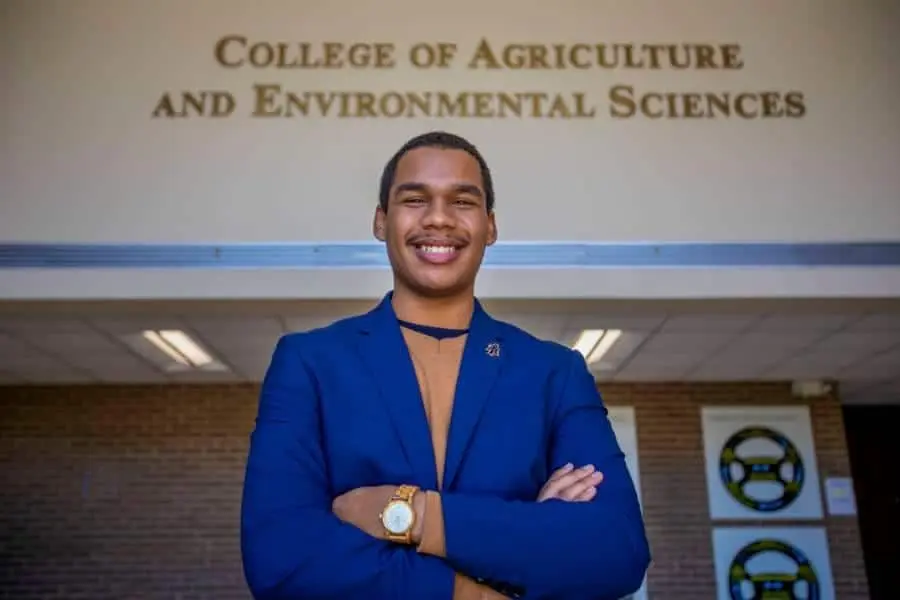
The White House Initiative on Historically Black Colleges and Universities has selected Milosh McAdoo, a junior animal science (animal industry) major from Hillsborough, as a 2021 HBCU Competitiveness Scholar.
CAFÉ Student Workshop Bridges Industry, Agriculture Students

CAFÉ Student Workshop Bridges Industry, Agriculture Students

A partnership between the College of Agriculture and Environmental Sciences and the Farm Foundation is teaching college agriculture students the ins, outs and opportunities available in the agriculture industry.
DR. ANTOINE J. ALSTON COMPLETES PRESTIGIOUS PROGRAM

DR. ANTOINE J. ALSTON COMPLETES PRESTIGIOUS PROGRAM

Dr. Antoine J. Alston, CAES associate dean for Academic Studies,  graduated from the Food Systems Leadership Institute (FSLI) in November. The program offers leadership development to upper-level leaders in higher education, government and industry. Alston has taught, advised and mentored countless students in his teaching and administrative career. Through the FSLI, he proved that he also is a life-long learner.
No results found.