Cooperative Extension at N.C. A&T State University has launched a new effort to apply its expertise and experience in community outreach and education to urban communities and nontraditional audiences across North Carolina.
Shannon Wiley, Ph.D., leads the new Extension Region for Urban and Underrepresented/Nontraditional Audiences. While the organization’s east and west regions focus on geographic areas, the new region extends across the state to reach urban communities and nontraditional communities, such as Indigenous Americans and Latinos.
“You have lots more people who are tapping into farming who are not necessarily migrating back to rural areas,” said Wiley. “We're now beginning to move in a direction where we have to make sure we are providing resources for our audiences that are not necessarily in traditional agriculture communities.”
The urban initiative will tap into a growing interest in urban agriculture and locally sourced food. It will leverage the work of the university’s Urban and Community Food Complex, which broke ground Nov. 9 on the N.C. A&T University Farm. The complex will include space for consumer and post-harvest research, a food processing and food safety lab, and support for food entrepreneurs developing “valued added,” locally grown products. But the key driver of programming and outreach through the new region will be communities, according to Wiley.
“It’s really more community driven than anything else,” she said. “It’s going to involve coming together with communities and relying on county directors and stakeholders who are already part of the community.”
Cooperative Extension already has community collaborations across the state as well as agents based at county centers and specialists on campus who develop programming and conduct research. Moving forward, the new region will support efforts to strengthen and build more collaborations in urban and nontraditional communities and on ensuring that programs for youth, families, and farmers are repurposed for urban and nontraditional audiences, said Wiley.
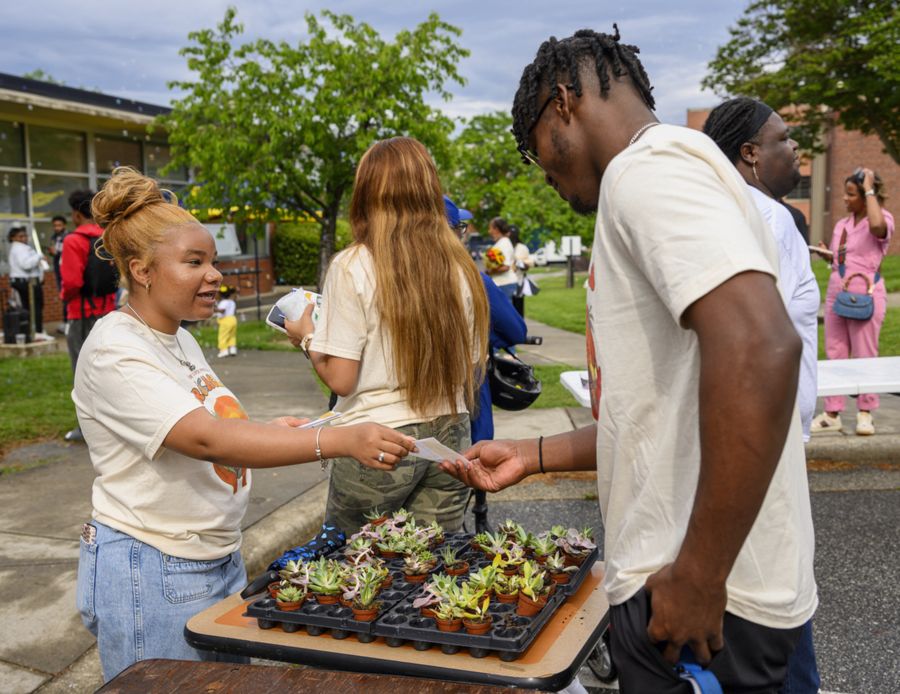
For example, agriculture programs might focus on container gardens and community gardens instead of row crops. It might mean growing different crops from different ethnic traditions. Similarly, 4-H club members might have no experience with farm life or raising livestock—yet they could explore local food production, community service, and the technology that powers the agriculture sector.
“Right now, we’re in the ideate phase,” said Wiley. “We are listening. We are meeting. I’ve had conversations with several of our county Extension directors who work in urban settings.”
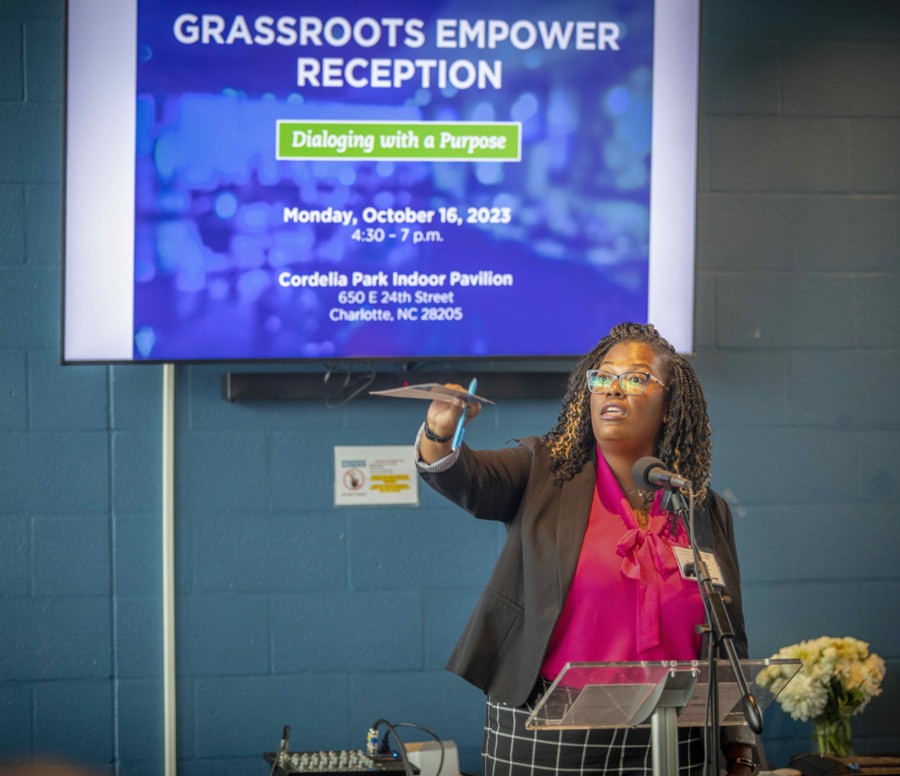
Some of those community conversations kicked off at the Grassroots Leadership Conference (GLC), held Oct. 17 in Charlotte. Each year, Extension’s GLC brings together Extension staff and community stakeholders to brainstorm on problem solving at the grassroots level. With the conference located in a diverse urban community for the first time, it provided an opportunity to discuss urban needs, issues and opportunities. A pre-conference reception for local community and business leaders was a chance for Extension staff to network with local stakeholders and discuss their vision for urban Extension programming.
“As the most populous city in the state, Charlotte is a social and economic powerhouse. By deciding to host the Grassroots Leadership Conference in Charlotte this year, we wanted to appeal to the diversity of interests there and stay true to our purpose,” said Michelle Eley, Ph.D., community and economic development specialist with Extension at A&T. “We wanted to focus on economic empowerment and innovation at the grassroots level and what community members can do to find solutions that address local needs and challenges.”
Eley said the 2023 GLC was one of the most well attended and covered topics of interest to urban stakeholders, including economic development and inclusion, urban agriculture, land use planning, philanthropy, access to capital and credit, and small business and workforce development.
The success of the Extension urban and nontraditional region, said Wiley, will depend in part on Extension specialists working with “boots on the ground” urban Extension staff, with local community connections to create programming that is appropriate for people in urban areas and those with Latino, Native, or other nontraditional backgrounds.
According to Extension Administrator M. Ray McKinnie, Ph.D., this is the kind of work Extension was created for, but refocused for more diverse audiences in a changing world.
“This is what Extension does; it takes the university to the people to help them improve their lives,” said McKinnie. “We’ve created this region because of the needs that have surfaced in urban communities and because we need to do more to reach nontraditional communities. As the nation’s largest 1890 land-grant university, we have an obligation to change with the times and take our programs and expertise to North Carolinians, whether they live in a city or on the farm."