
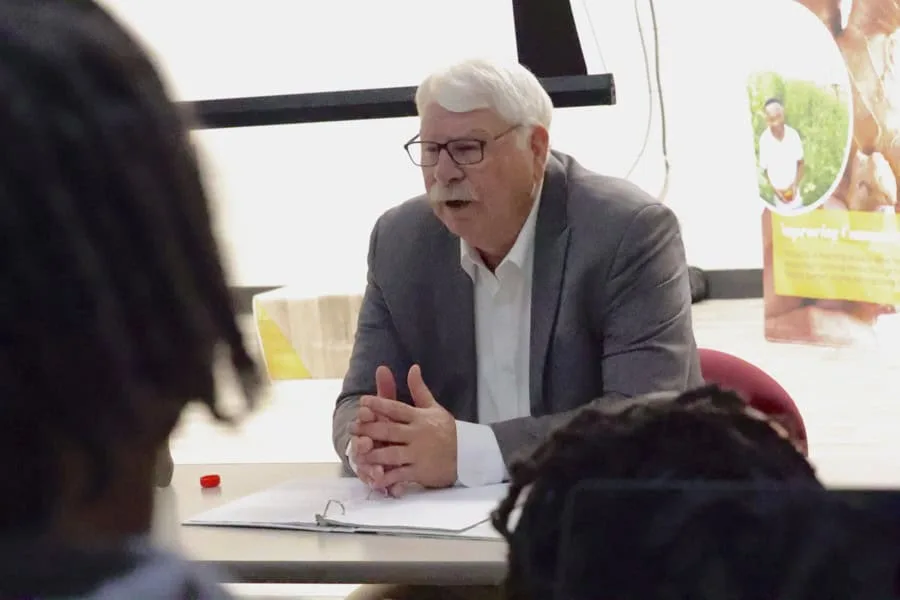
North Carolina’s Agriculture Commissioner Steve Troxler launched his fourth annual CAES seminar series this month with a presentation by the department’s Emergency Programs Division Director Kelly Nilsson, who told a group of students and faculty about ways the division readies the agricultural and general community to face natural and unnatural disasters.
Emergency management plays a key role in agriculture, Nilsson told the group.
FEMA’s five national frameworks for planning during a disaster include prevention, protection, mitigation, response and disaster recovery. Nilsson focused on “response,” which is structured to help jurisdictions, citizens, organizations and businesses develop whole community plans, integrate continuity plans, build response capabilities to cascading failures, and collaborate to restore services and stability.
“All of these frameworks take a full-community approach,” said Nilsson. “That means when we plan, when we prepare, when we respond during a disaster, we all need to work together as a community and with our agencies. If you’re planning for the livestock industry or the poultry industry and preparing for them, they sit at our same table as well.”
Nilsson said the framework is meant to expand “like a Swiss army knife” to fit a wide variety of disasters, from chemical explosions to hurricanes.
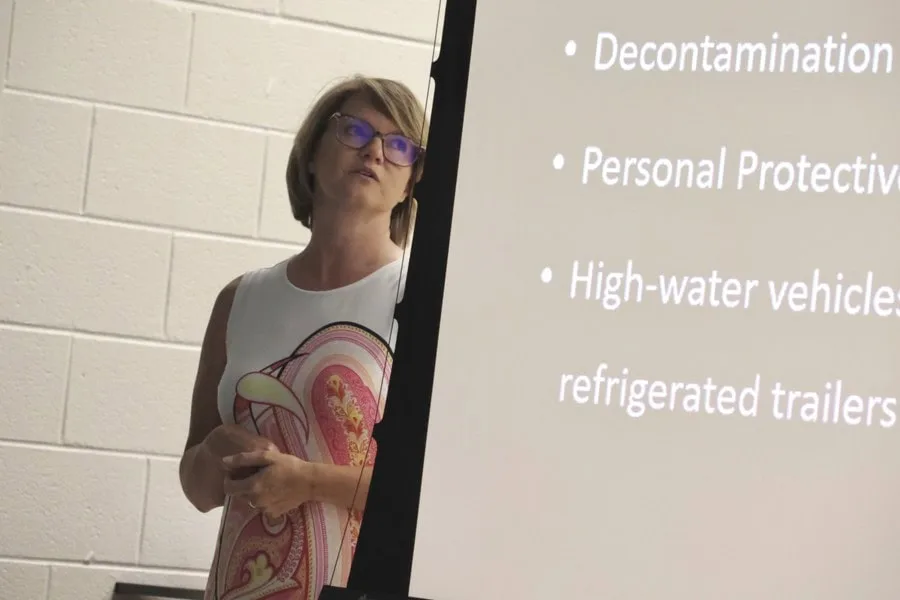
Emergency Programs Division Director Kelly Nilsson, who told a group of students and faculty about ways the division readies the agricultural and general community to face natural and unnatural disasters.
“We’ve had hurricanes in North Carolina years ago,” said Nilsson. “I set up a National Incident Management System here and it was structured to where, if I wanted to take that and fight a fire in California, I could do the same thing and follow that same organizational structure.”
The N.C. Department of Agriculture brings in representatives, experts, members of the agricultural community and public service agencies in their preparedness efforts well in advance of a disaster.
“Not just livestock and poultry,” said Nilsson, “but crop industry and farm workforce need to be taken care of, too. As we’ve seen from COVID, a supply chain could be growing and be plentiful, but if you don’t have people, then it goes to waste.”
Nilsson ended her seminar by explaining the POETE acronym for emergency management – Planning, Organizing, Equipping, Training, and Exercising.
“Think about POETE as you plan and plan the rest of your career here at A&T,” said Nilsson. “You have to plan for it, organize, make sure you have the proper tools, you have to train until you get good at it, and then you have to exercise it.”
Troxler’s series continues next month with a talk on local food purchasing programs and their impact on small farmers and communities, and concludes in November with a talk on the ways the agency supports the state’s animal agriculture industry.