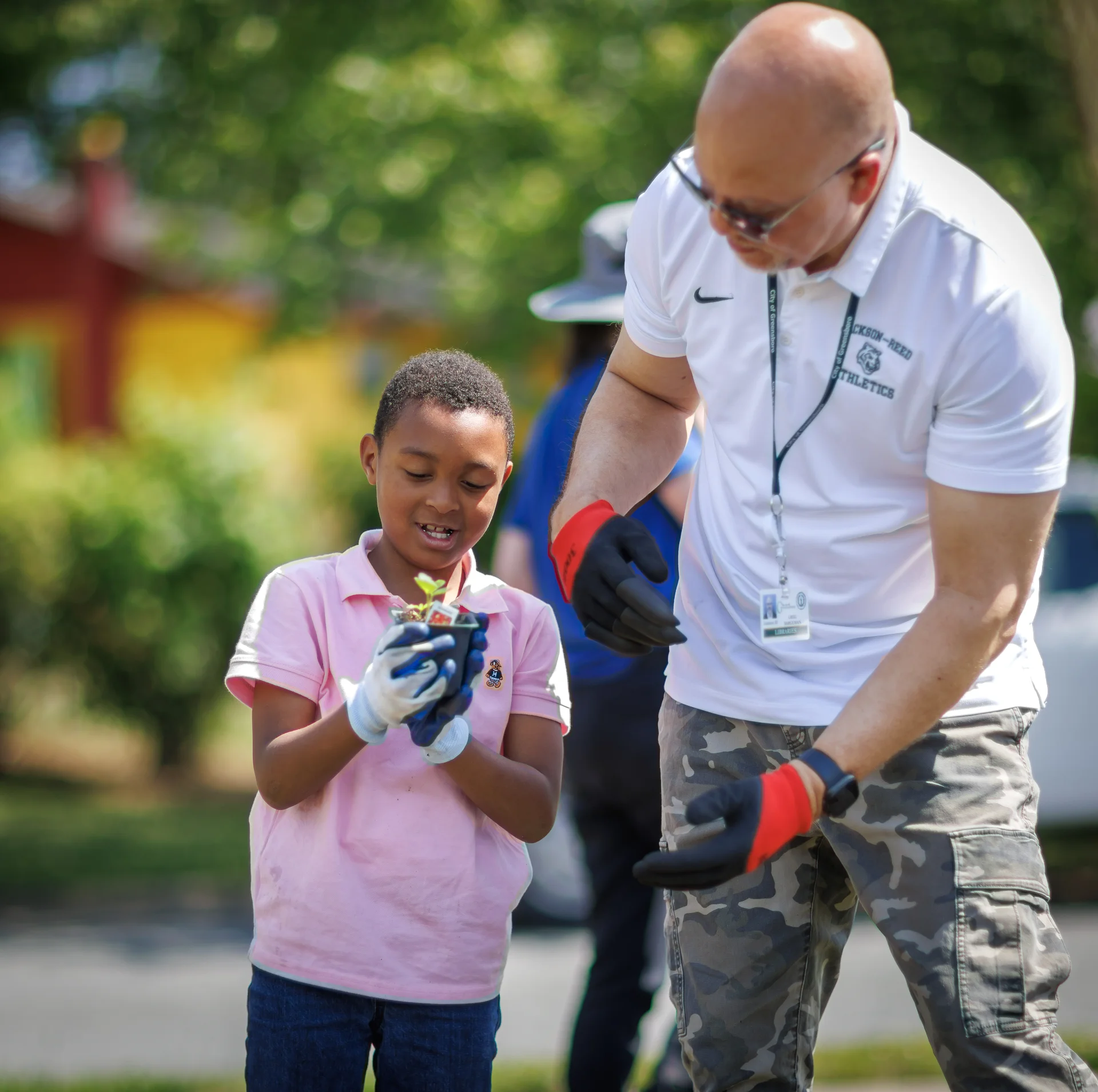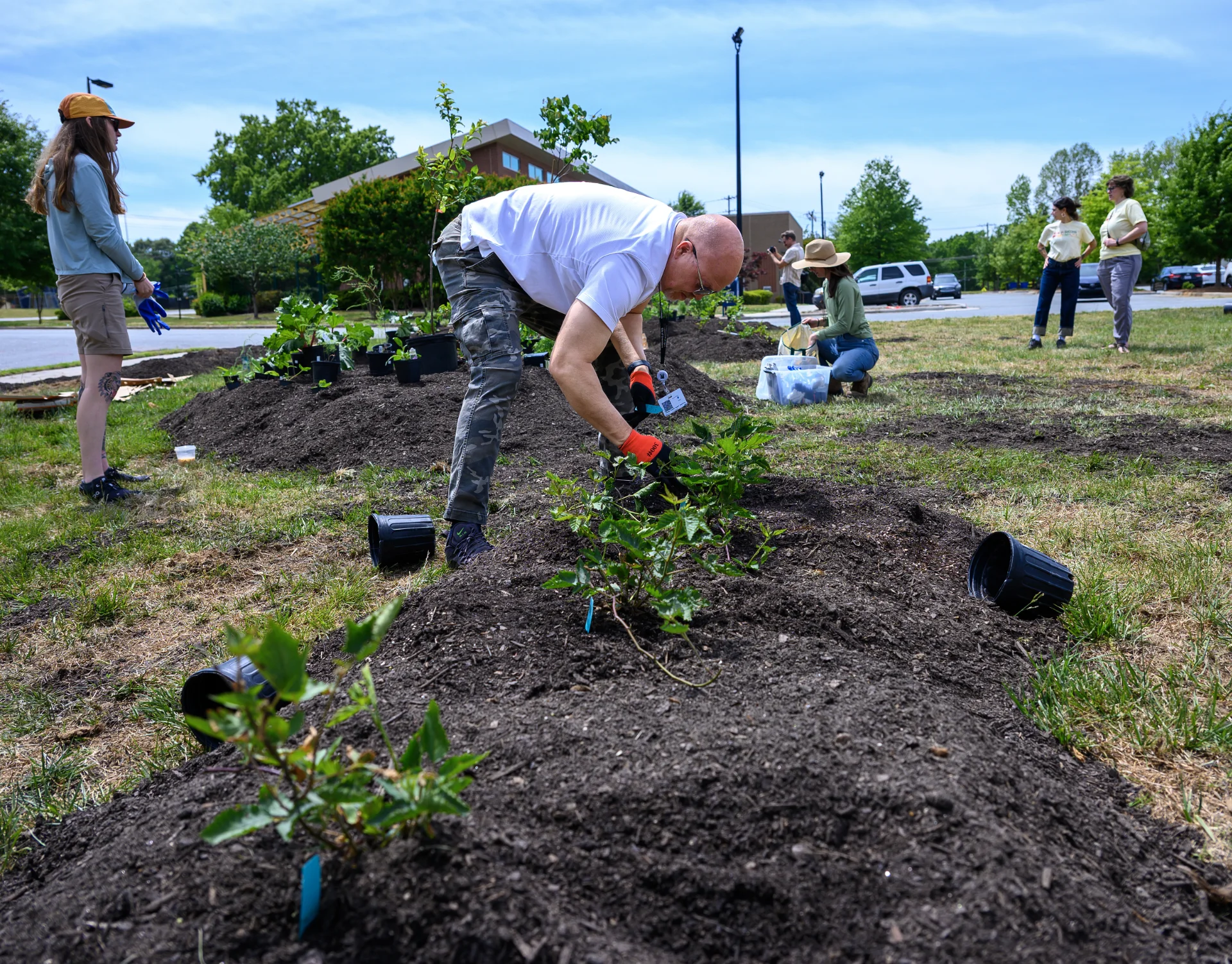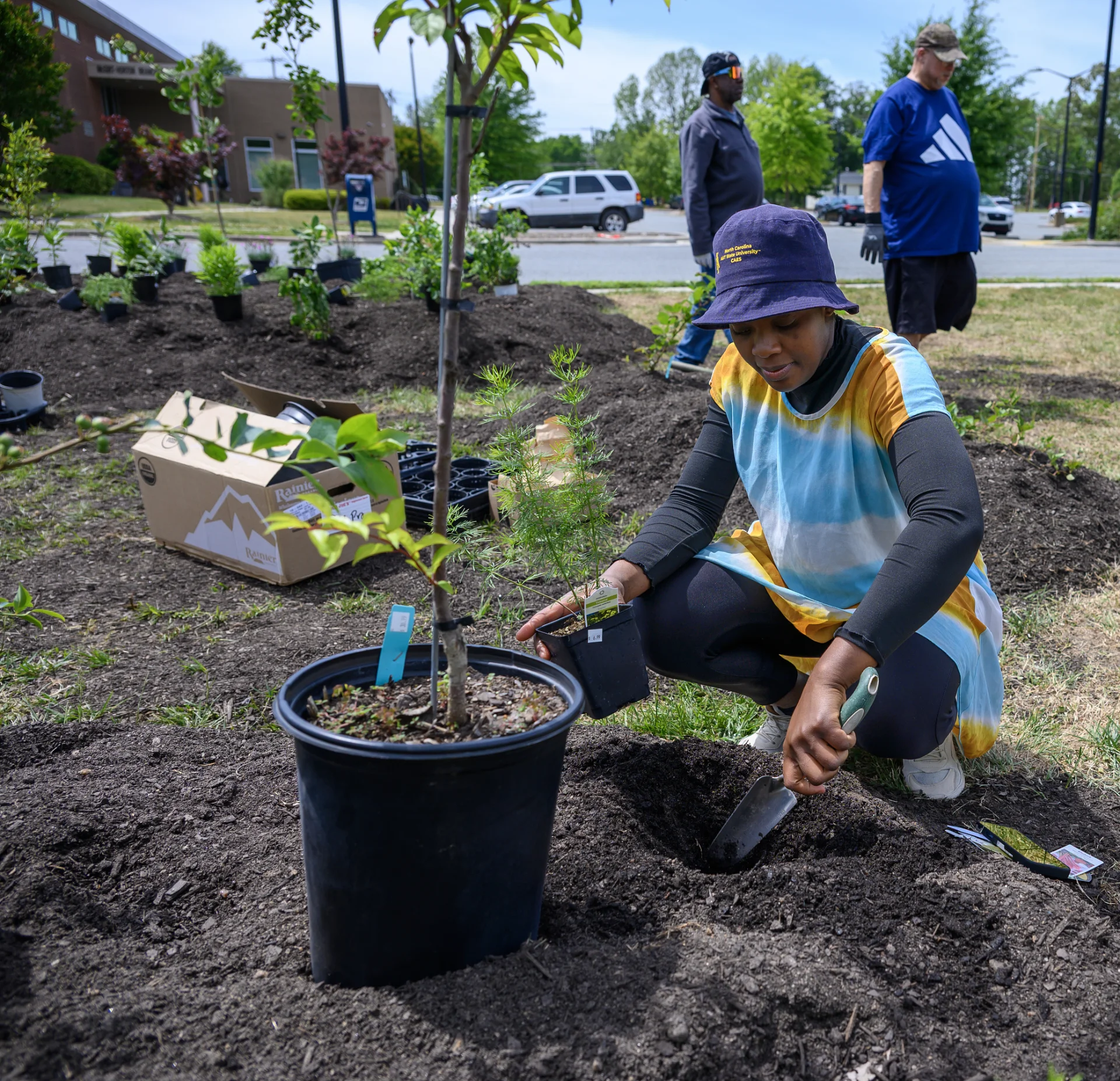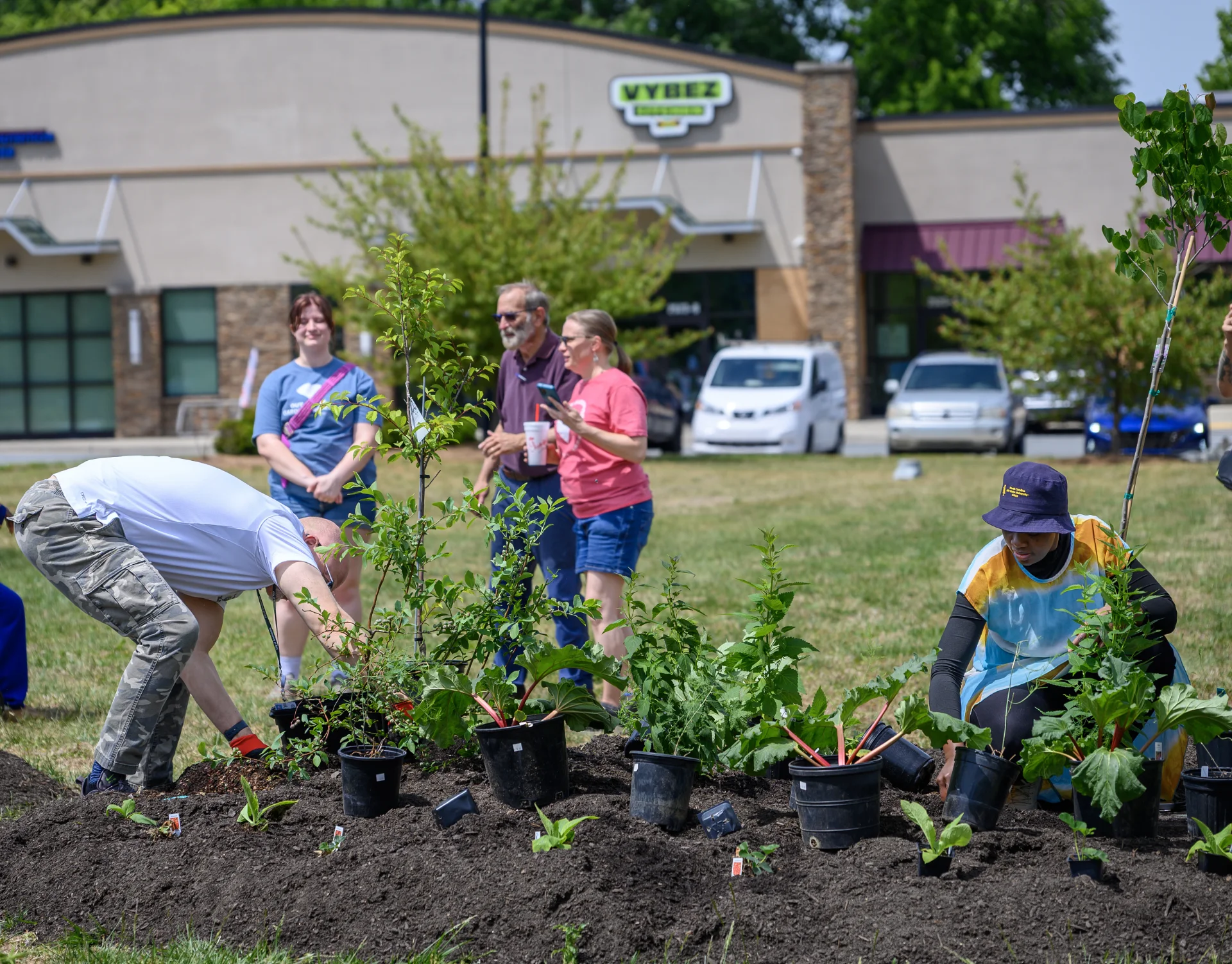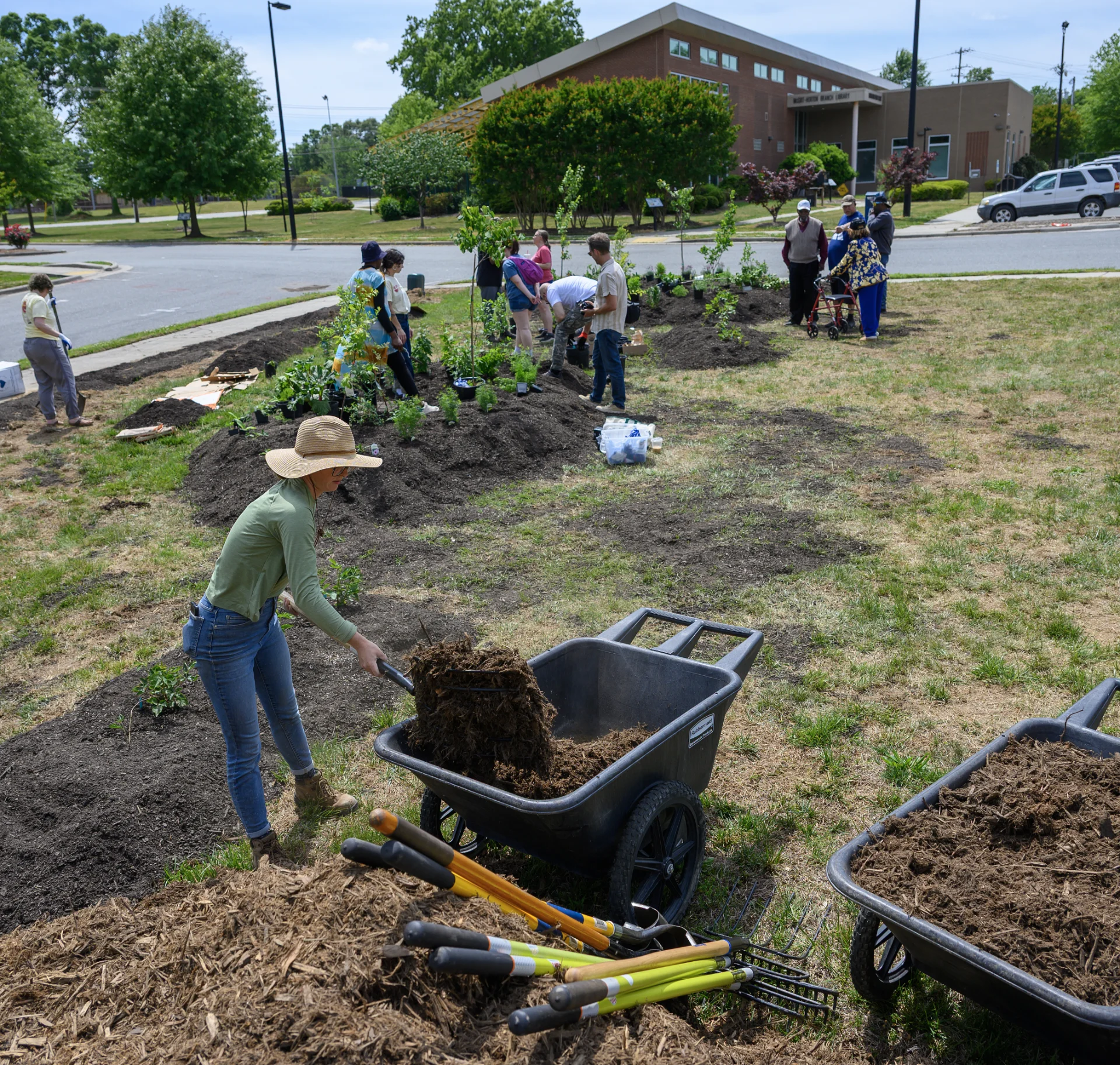
Cooperative Extension at North Carolina A&T’s Try Healthy program is one of many partner organizations working to bring accessible food to the Guilford County community, straight from the ground.
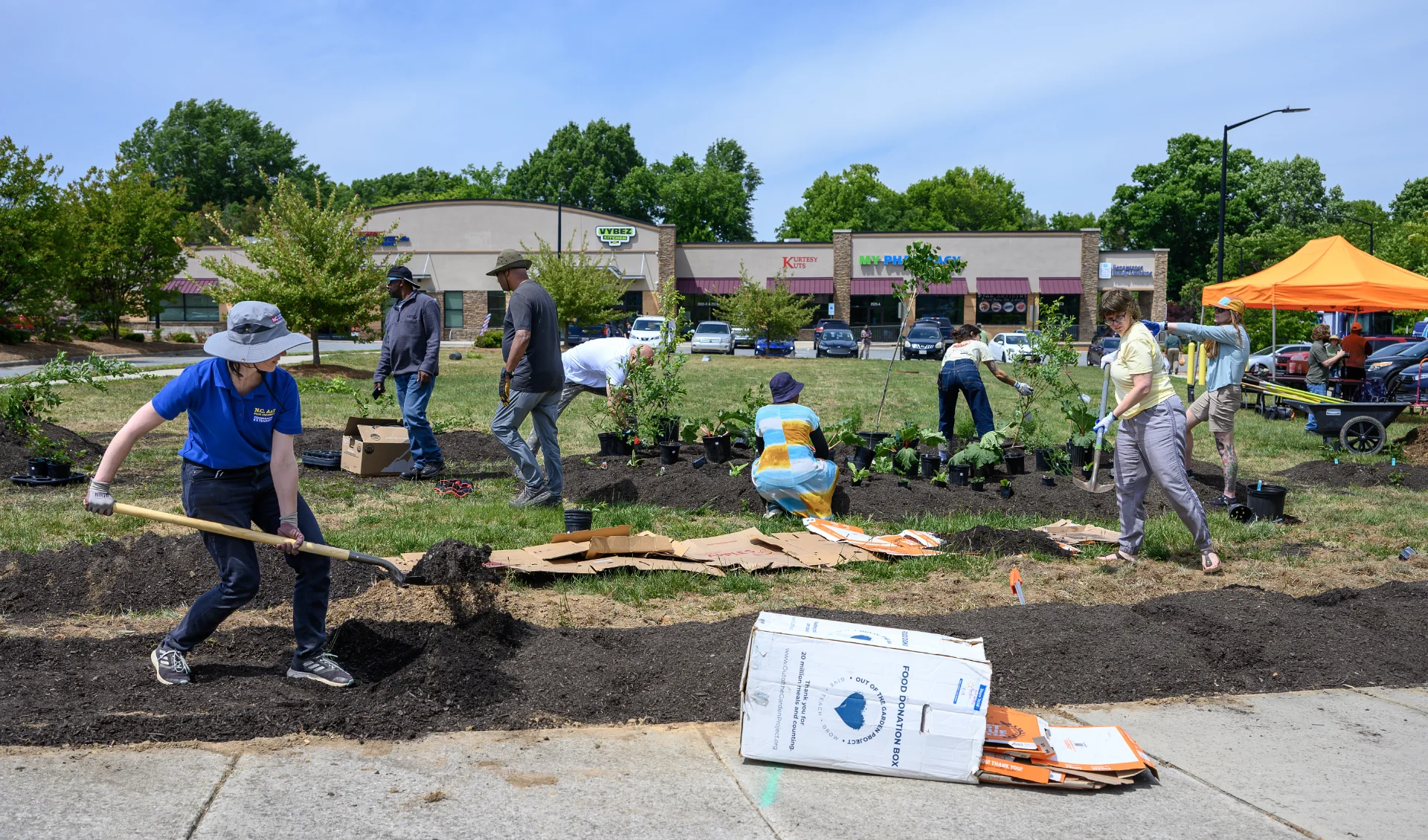
The Guilford County Food Action Network (GCFAN), a diverse coalition of community partners, organizations and community members addressing food insecurity, is collaborating with key partners to install edible landscapes – food-producing plants and trees installed at residential and commercial properties – across the county, with a pilot landscape planted on May 5 at the Renaissance Center shopping area in Greensboro.
“Our Try Healthy program is a SNAP-Ed program, and part of our work is policy systems and environmental change, so that includes things like helping communities to get access to more nutritious food,” said Katryn Eske, Ph.D., nutrition specialist with N.C. A&T Cooperative Extension. “The goal is to plant things like pecan trees, which will be here for generations, and fruit trees so people can come and take what they need, and also beautify the space that they live in.”
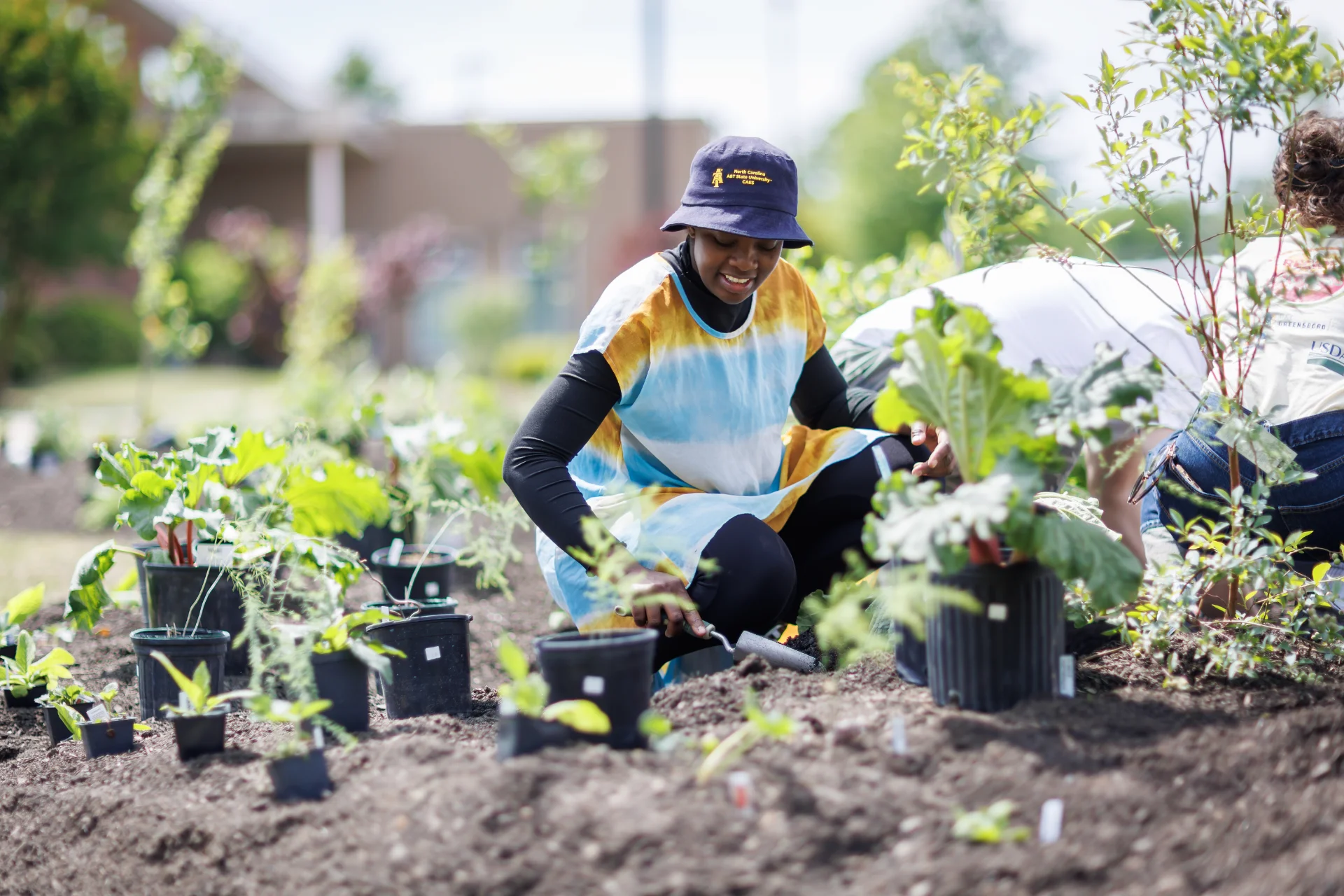
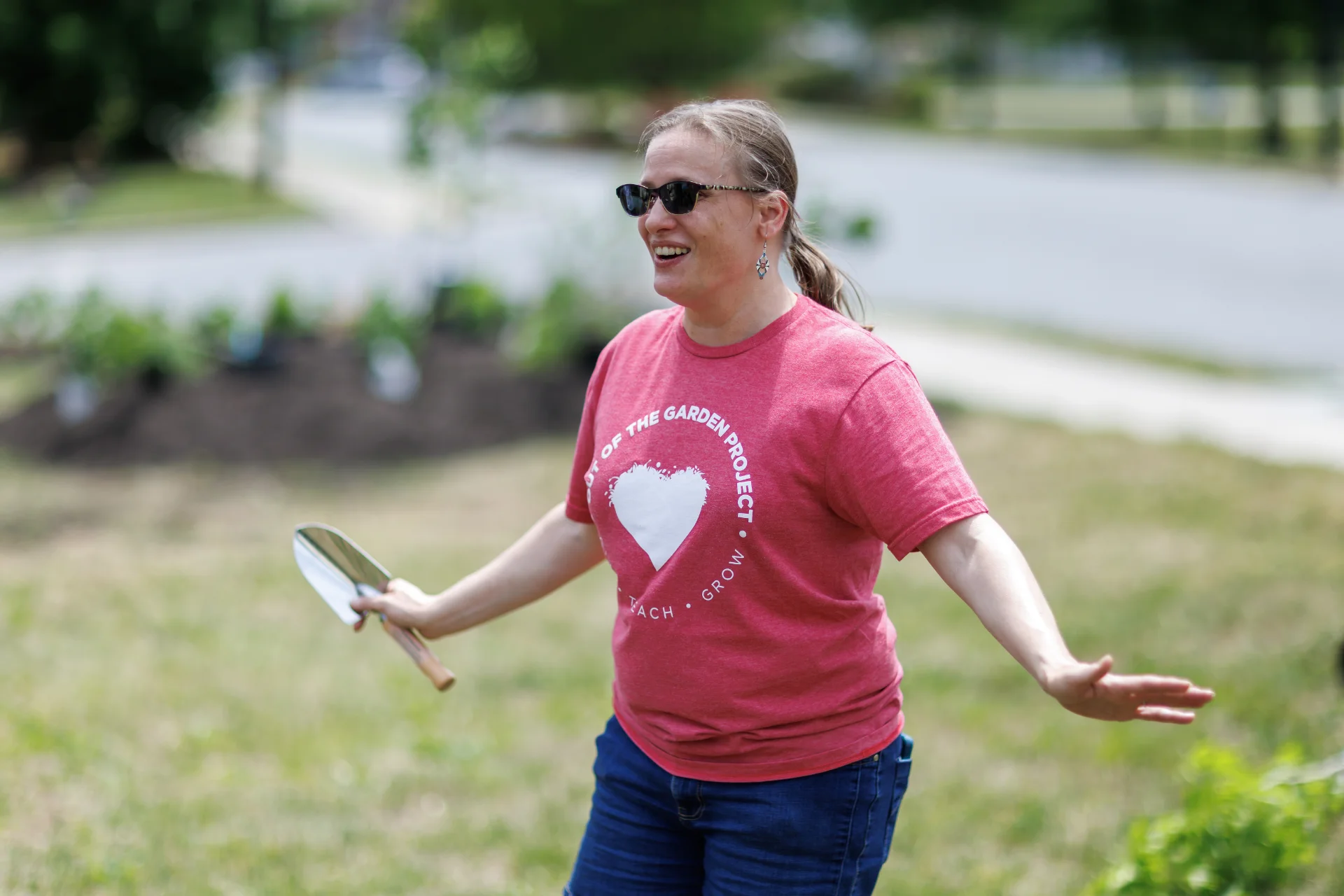
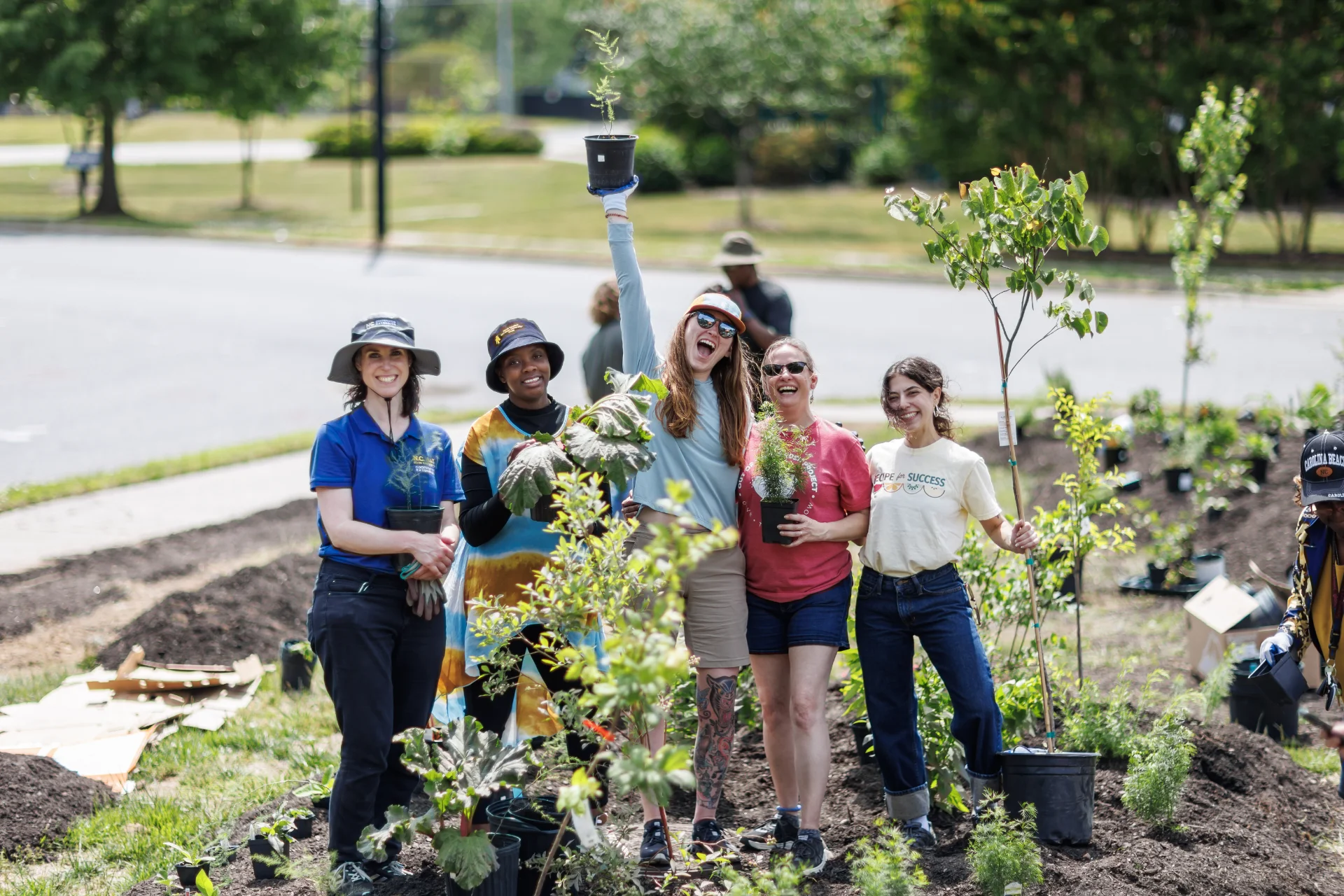
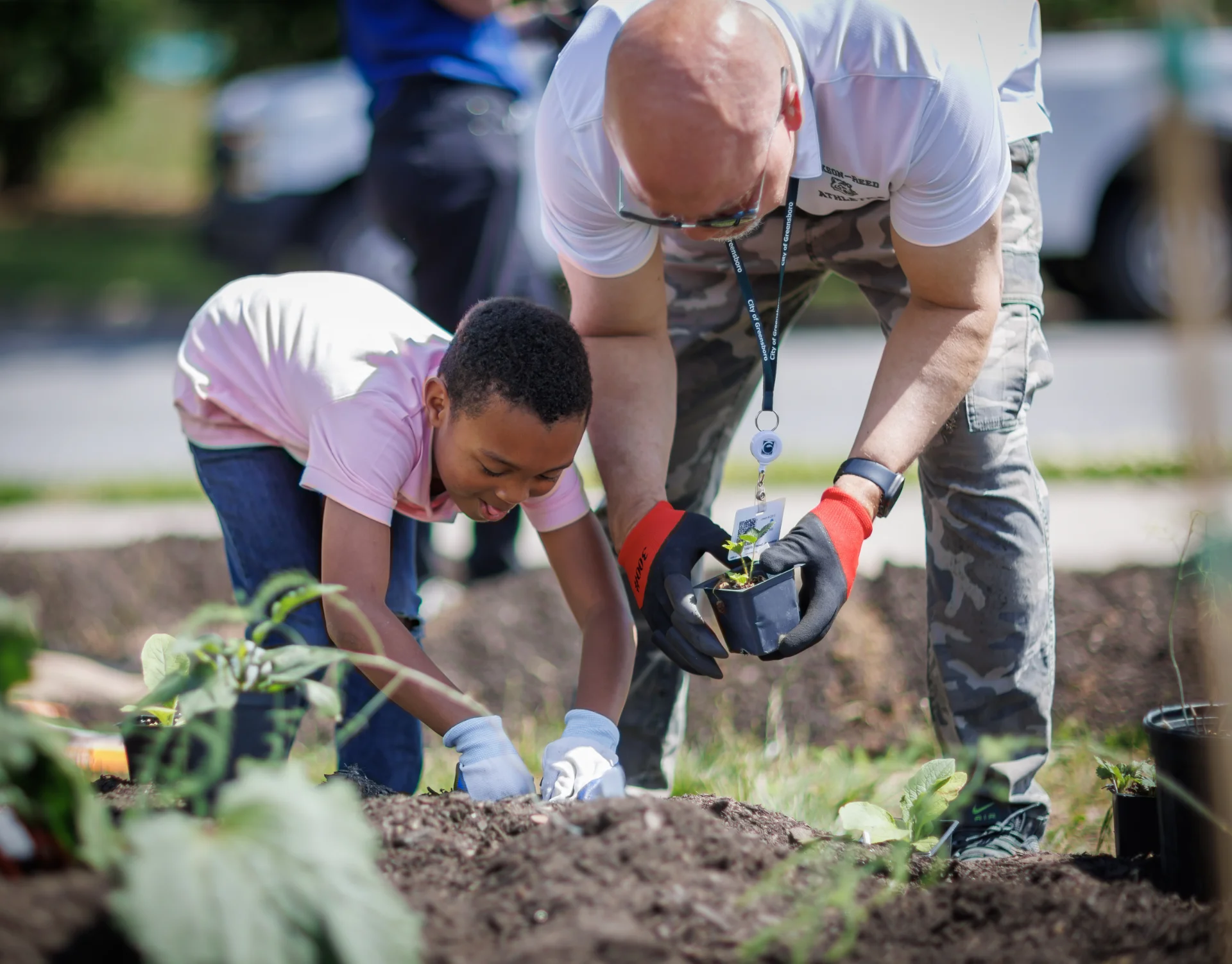
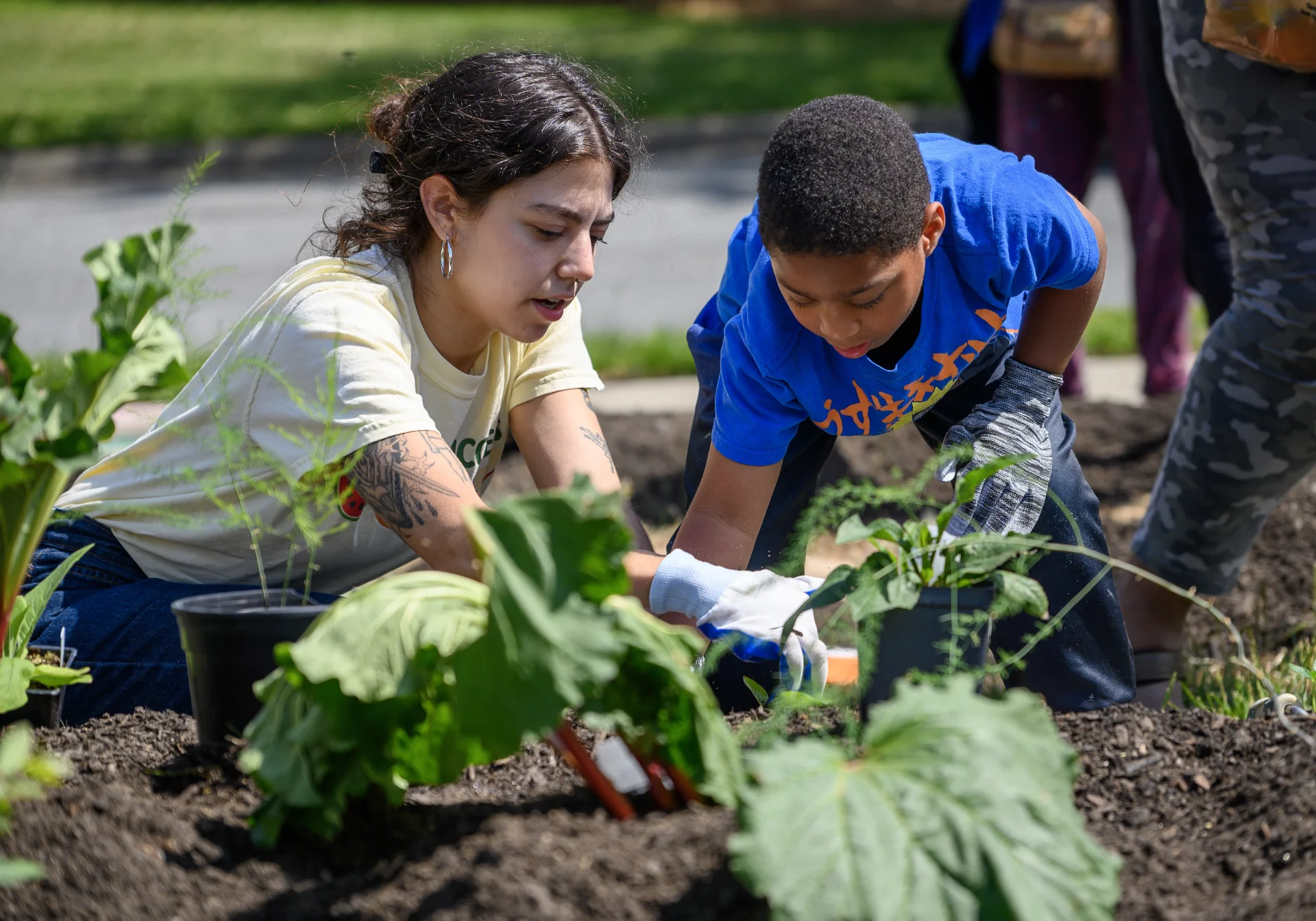
In the afternoon, Eske, GCFAN team members and volunteers added to the land donated by the shopping mall, planting pecan trees, strawberries, rhubarb, herbs and other fruit-bearing trees. Ellen Wessling, youth services leader of the Out of the Garden Project and GCFAN food advocacy council co-chair, stressed that the venture was a long-term strategy.
“This is not like a community garden where you’re going to see what you put into it this season,” said Wessling. “You will see fruit out of a lot of these plants this season, but the majority of them will be within a year or two years as they mature. The idea is to make sure that the roots are in this community to meet its needs.”
In addition, Eske said Try Healthy will provide signage that offers information on the plants grown at each location.
“This will provide education like the scientific name, but also the common name like ‘blueberry,’ and give people information about when it’s ready to pick and eat,” said Eske. “Throughout the landscape, we will be installing signs to provide that information to the community so they’ll know. ‘Can I pick this food? What can I do with it? When can I eat it?’ ”
Extension is among several key partners to the edible landscaping project, which includes organizations like the Out of the Garden Project, UNC-Greensboro’s Try Healthy program, Second Harvest Food Bank, Greensboro Public Library, and other businesses and community-led members.
Rebecca Oakes, Healthy Communities coordinator for Guilford County Division of Public Health and co-chair of GCFAN’s food access council, said that community involvement was crucial to not only installing the fruit-bearing plants, but also deciding what should be planted.
“We worked with the local community to gleam what they wanted in their space, so that, for example, we wouldn’t plant a bunch of jalapeños if people in the community didn’t want a bunch of jalapeños,” said Oakes. “We want to make sure we bring things to local communities that they use and are familiar with.”
East Greensboro is considered to have many areas that can be classified as a “food desert,” an area in which residents have few or no convenient options for purchasing healthy, affordable foods. Several chain grocery stores have come and gone from Renaissance Center over the years; the latest, Renaissance Community Co-op, closed in 2019.
Ernestine Surgeon, an East Greensboro community advocate, was among local volunteers collaborating with GCFAN to help convert the area.
“We are going to pull our resources together and start supporting our ‘food desert area’,” said Surgeon. “We’re not going to stay that way. We’re about to change that into a garden and I say, let’s do what we’ve got to do. Northeast [Greensboro] has a lot of land, I say let’s turn all of it into a garden.”