Traditional Southern dishes — hearty, tasty and as comforting as a hug from your favorite grandmother — have been enjoyed by families for generations. But there’s a downside to this down-home deliciousness: These long-time favorites are extremely unhealthy.
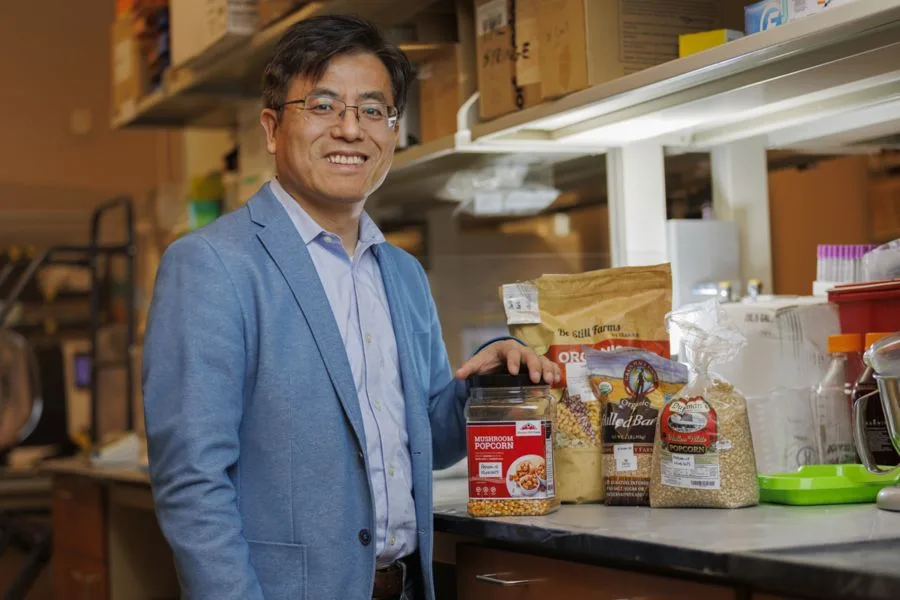
Food researcher Shengmin Sang, Ph.D., will use a four-year, $1,046,500 award from the U.S. Department of Agriculture to create a healthier version of the traditional Southern diet. But instead of urging people to give up their long-time favorites, Sang — whose research specializes in a “food as medicine” paradigm — will investigate whether a diet that blends Southern and Mediterranean foods can be feasible, sustainable and ultimately able to prevent chronic diseases.
“It’s unlikely that you can completely change people’s entire diet. Admittedly, that’s the most challenging part of this project,” said Sang, the Distinguished Professor of Functional Foods in the College of Agriculture and Environmental Sciences. “But the idea is to create a healthier ‘Mediterranean South’ diet — one that’s based on traditional culture, but modified so individuals are more likely to stick with it.”
Sang’s latest project is funded by the USDA National Institute of Food and Agriculture’s Agriculture Food and Research Initiative (AFRI). Sang is one of only two faculty members at North Carolina Agricultural and Technical State University to receive a standard AFRI grant, and he’s the only A&T professor to win multiple AFRI awards. Sang will lead this project from his Laboratory for Functional Foods and Human Health at the North Carolina Research Campus in Kannapolis. He will collaborate with two nutrition researchers from UNC-Chapel Hill’s Gillings School of Global Public Health.
Sang’s project will attempt to modify the traditional Southern diet, which is rich in saturated fats and sugary foods and a major contributor to rising national rates of obesity and other serious metabolic disorders. The Mediterranean diet, meanwhile, is a generic term for foods common to Italy, Greece and other regions that border the Mediterranean Sea. This plant-forward diet is high in fruits, vegetables, whole grains, nuts and other minimally processed foods. Extra virgin olive oil is the primary source of healthy fat, while fish and poultry generally replace red meat. Multiple studies have shown that this approach can reduce the risk of cardiovascular disease and type 2 diabetes.
The centerpiece of Sang’s project is a four-week clinical trial involving 96 participants with prediabetic conditions. Half of participants will eat their regular diet. The other half will eat a Mediterranean South diet, with healthier ingredients substituted for the high-fat, high-sugar and ultra-processed staples of the traditional Southern diet. Participants will receive ingredients and recipes to help them ease into a familiar, yet different way of eating that could help prevent chronic diseases.
Sang will investigate the potential health benefits of this modified Southern diet. He’ll focus especially on whether this modified diet can reduce carbonyl stress, which can result from a buildup of harmful compounds from sugar and lipid metabolism and lead to chronic inflammation, diabetes and other diseases. His project also will identify genetic signatures associated with changes in carbonyl stress and genetic indicators that might indicate increased susceptibility to carbonyl stress among Black participants.
Sang’s research will travel far beyond his functional foods lab. This project will train students and clinical trial participants to be ambassadors who spread the word about the health benefits of the Mediterranean South diet to their family and friends.
“We’re not just providing them with healthy food. We’re also training them to select healthier food and prepare it in healthier ways so individuals can cook better for themselves and their families,” Sang said. “Then we want them to tell their friends that their health numbers are better and they’re feeling better.”
Sang said this project will dig into areas largely unexplored by other researchers. He said that most studies of the Mediterranean diet have obtained results from questionnaires and epidemiology studies, not the feeding trial Sang will conduct. In addition, Sang is one of only a few researchers investigating the mechanism of carbonyl stress, a relatively new frontier in the research into chronic diseases.
This project also represents a new direction for Sang’s research.
“Mostly, I work either on a single food or a specific bioactive compound. This time, I’m working on a dietary pattern that’s more translational and more applicable to real life,” Sang said. “Here, we’re not using a cell line to study something. We’re using real people and a real diet, and we’re training students and community participants to help us discover nutrition-based strategies for combating metabolic diseases.”
“This research also relates to my community, and as a resident of North Carolina and the South, I feel obligated to help my community. This project will be really challenging, but I’m really excited about it.”