CaesNews

Where Science Meets Society

Logo featuring the letters "A" and "T" in blue and gold, representing North Carolina Agricultural and Technical State University.

CaesNews

Where Science Meets Society

Home

Sign up for the Newsletter

Regional Small Farms Conference Helps Farmers Grow Their Knowledge

|

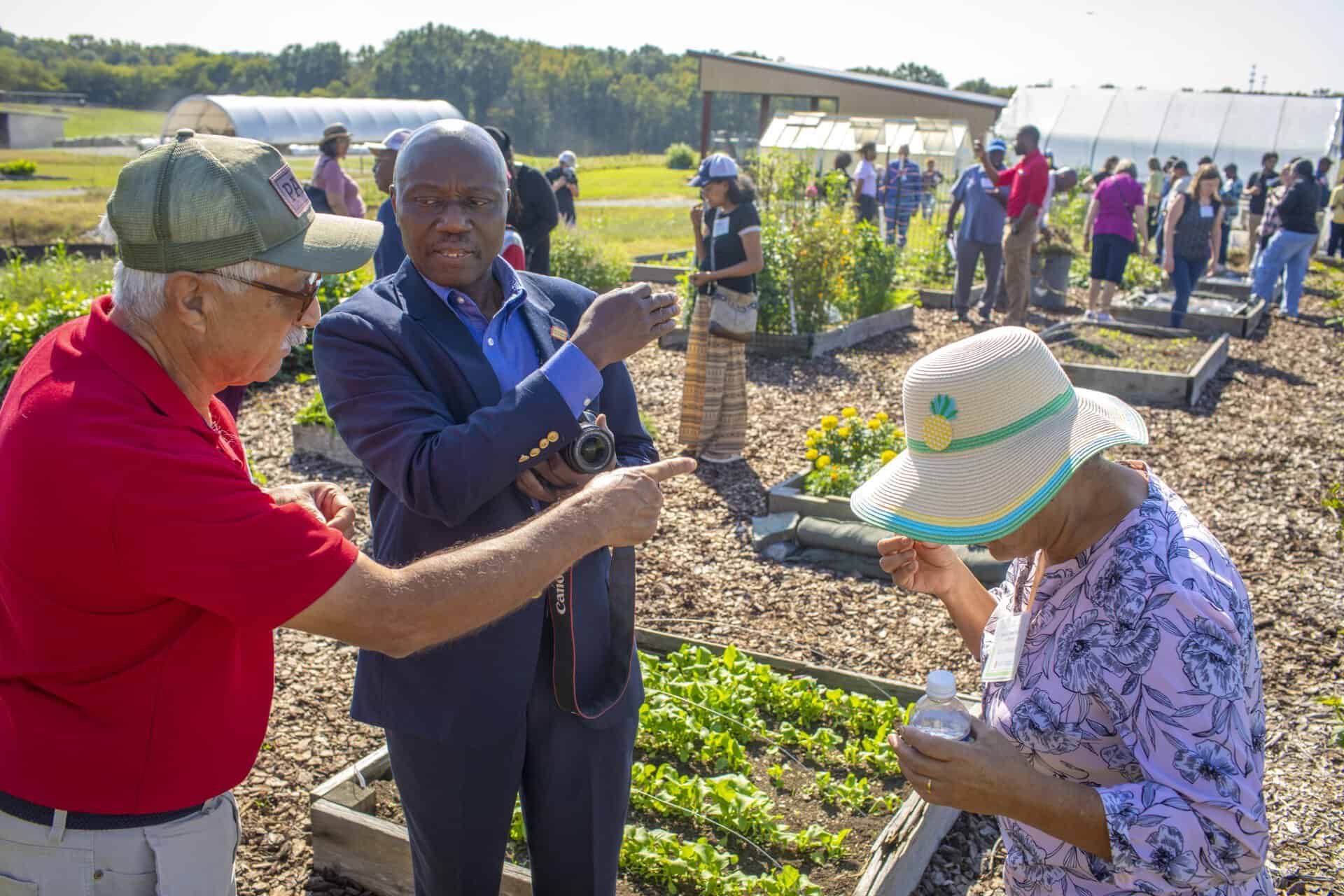
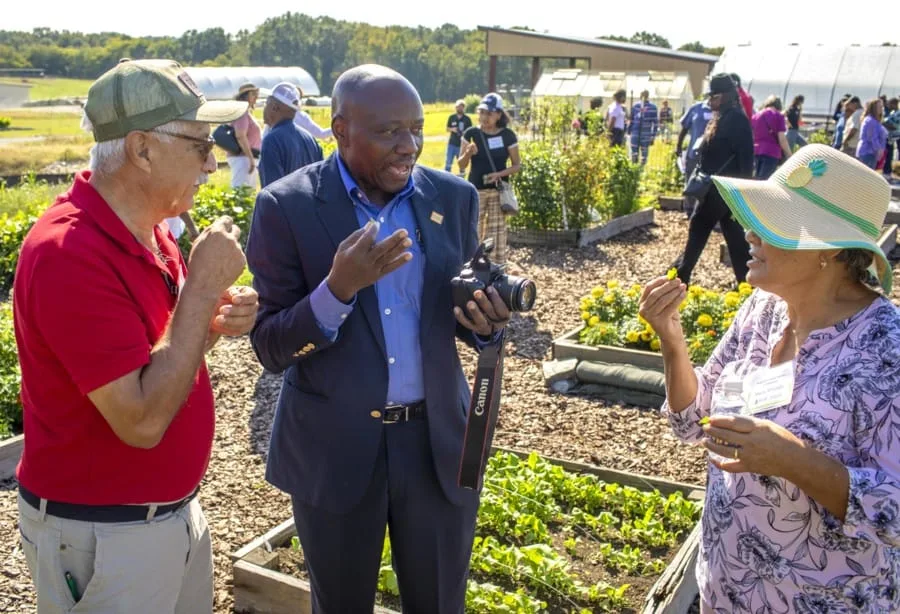
Three people engage in conversation outdoors during a small farms conference. The man on the left, wearing a red shirt and green cap, gestures while holding a small item. The man in the center, dressed in a suit and holding a camera, speaks animatedly. The woman on the right, wearing a patterned blouse and sun hat, responds while holding a sample of produce. In the background, people walk through garden beds filled with greenery and flowers, and greenhouses are visible in the distance.

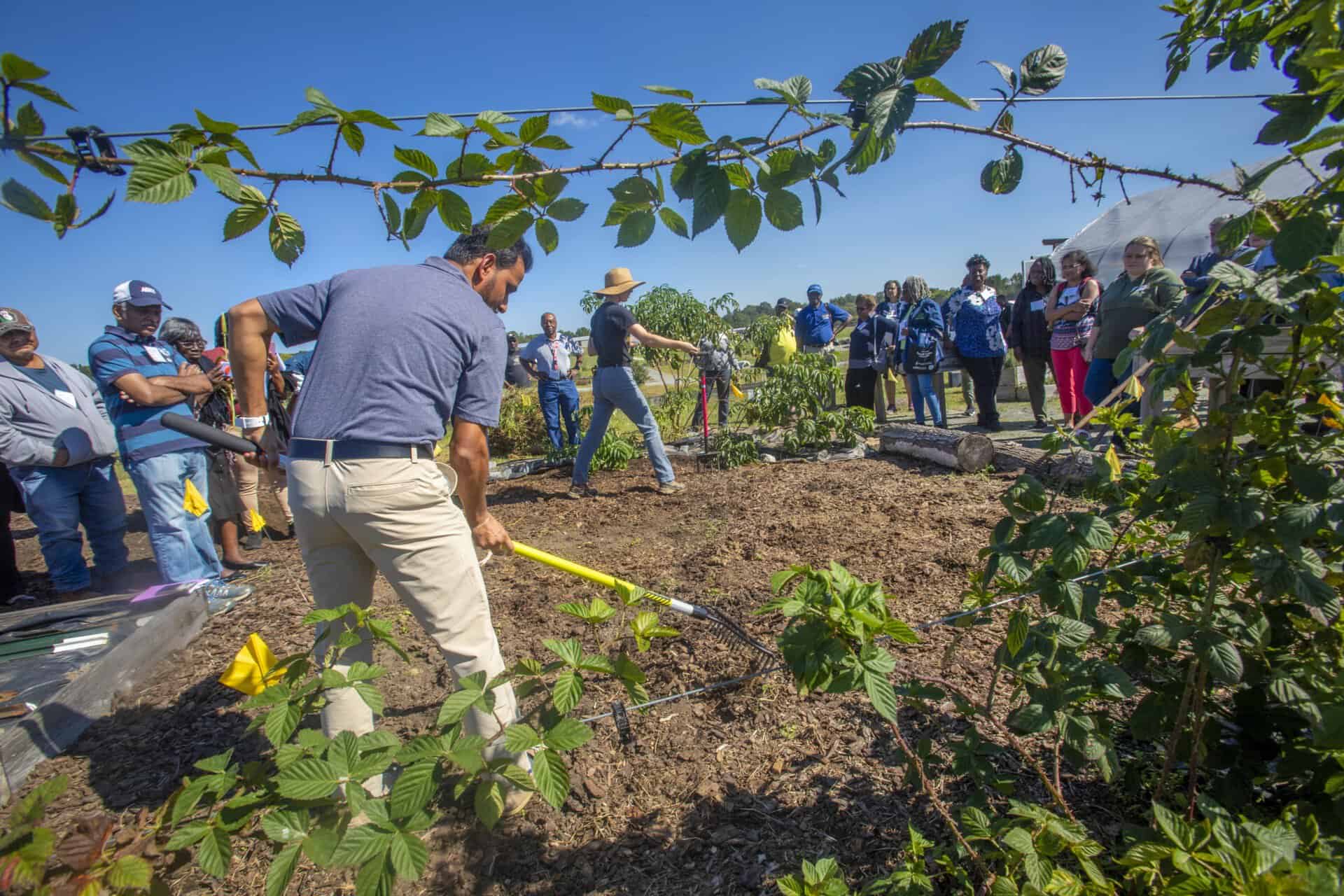
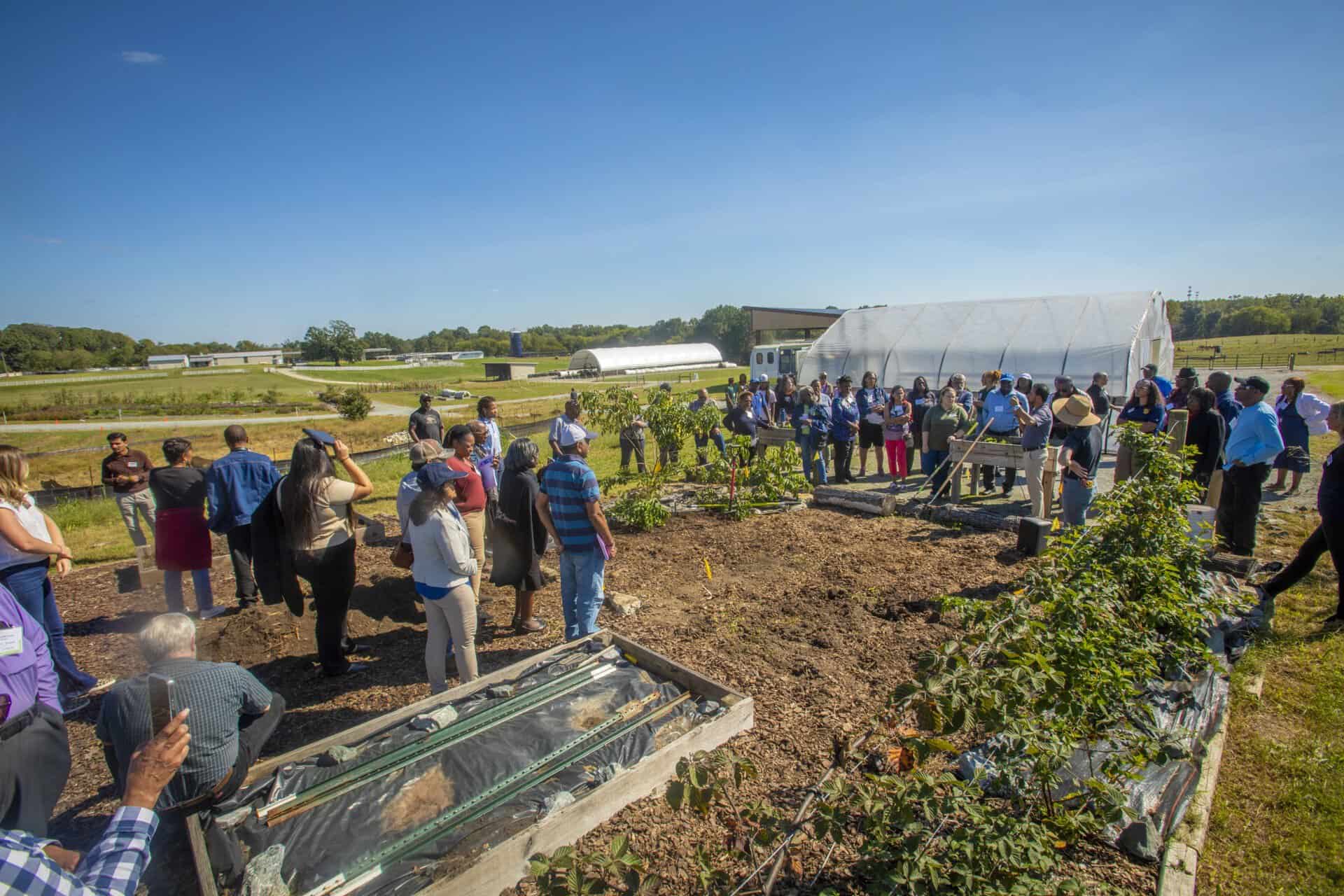
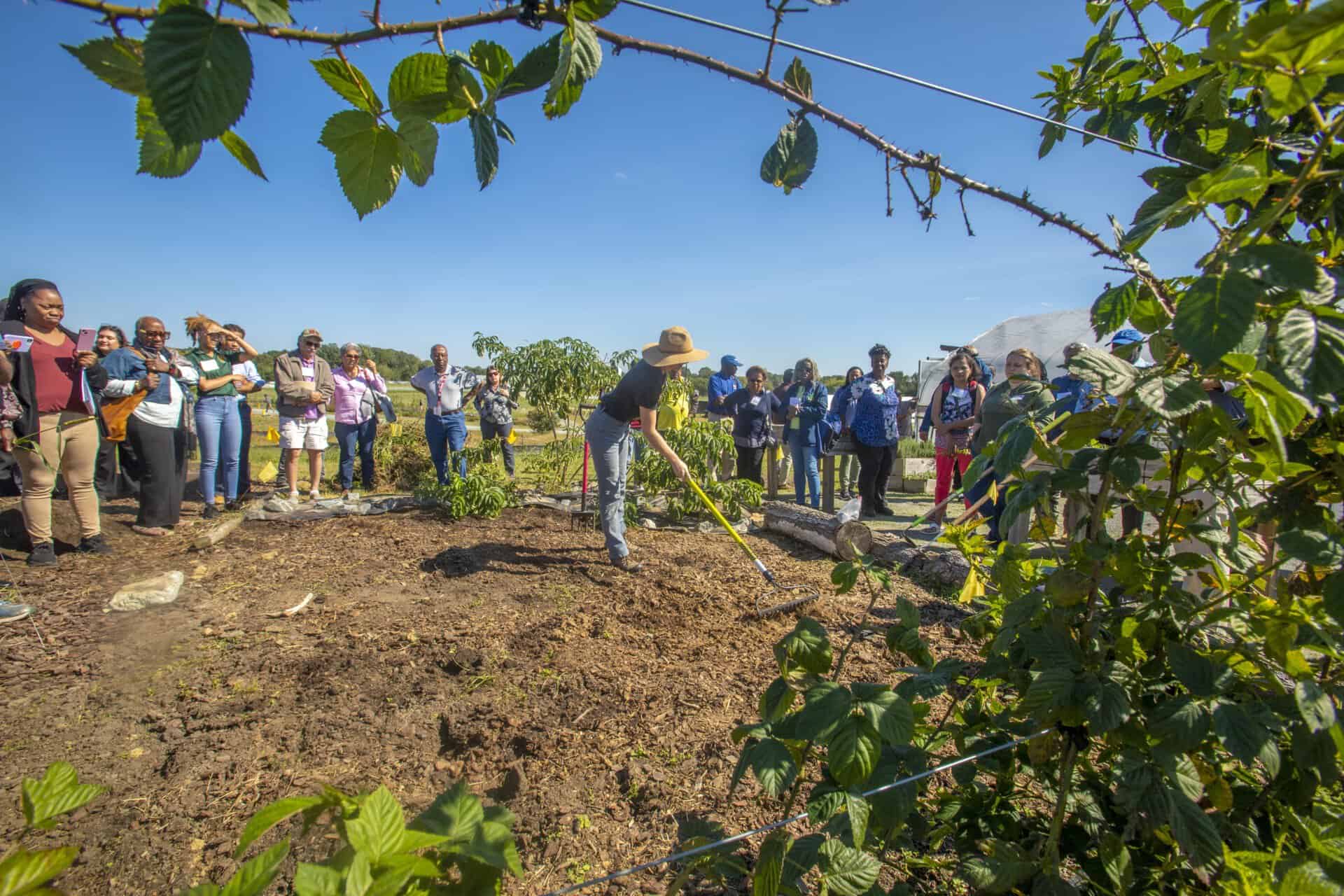
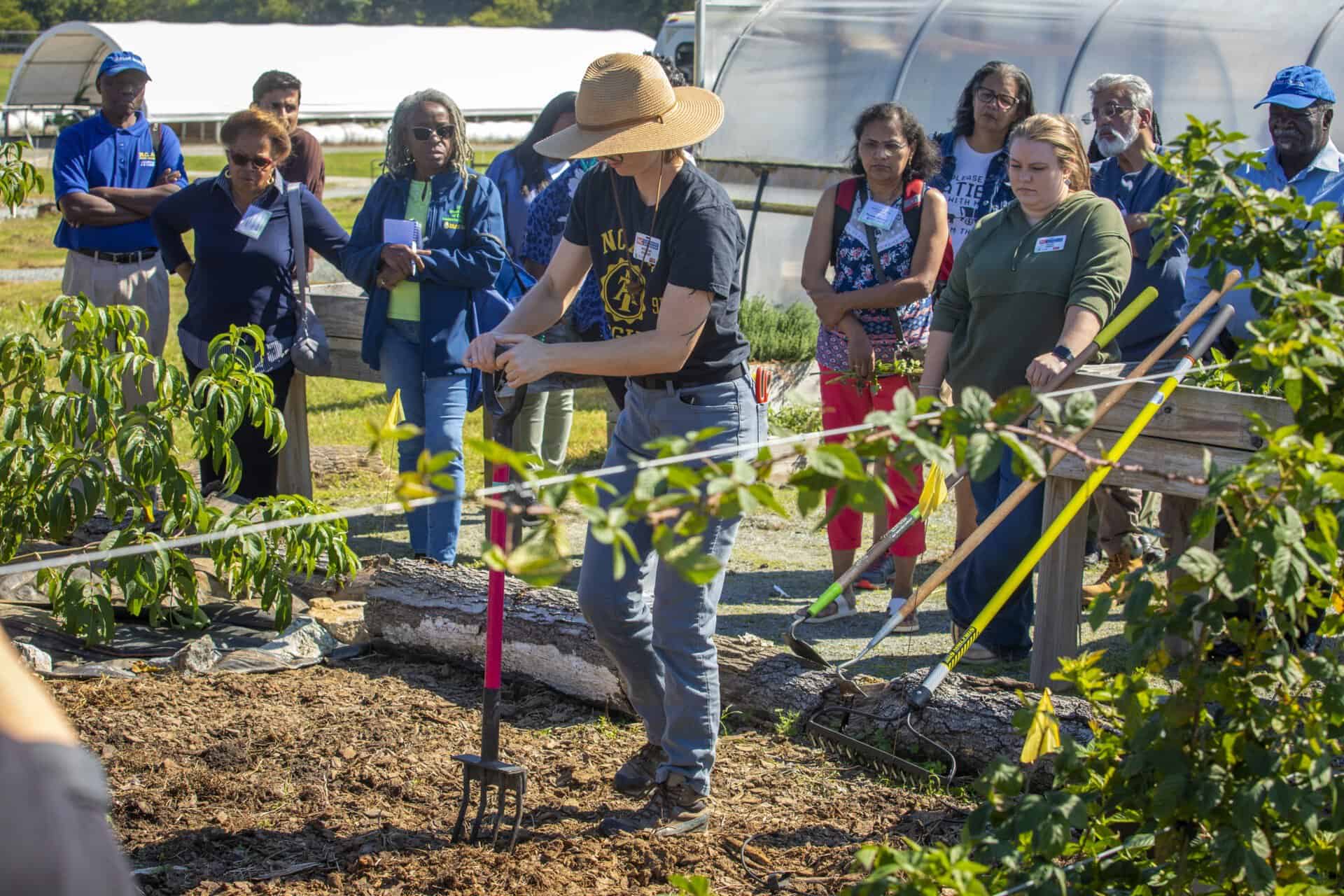
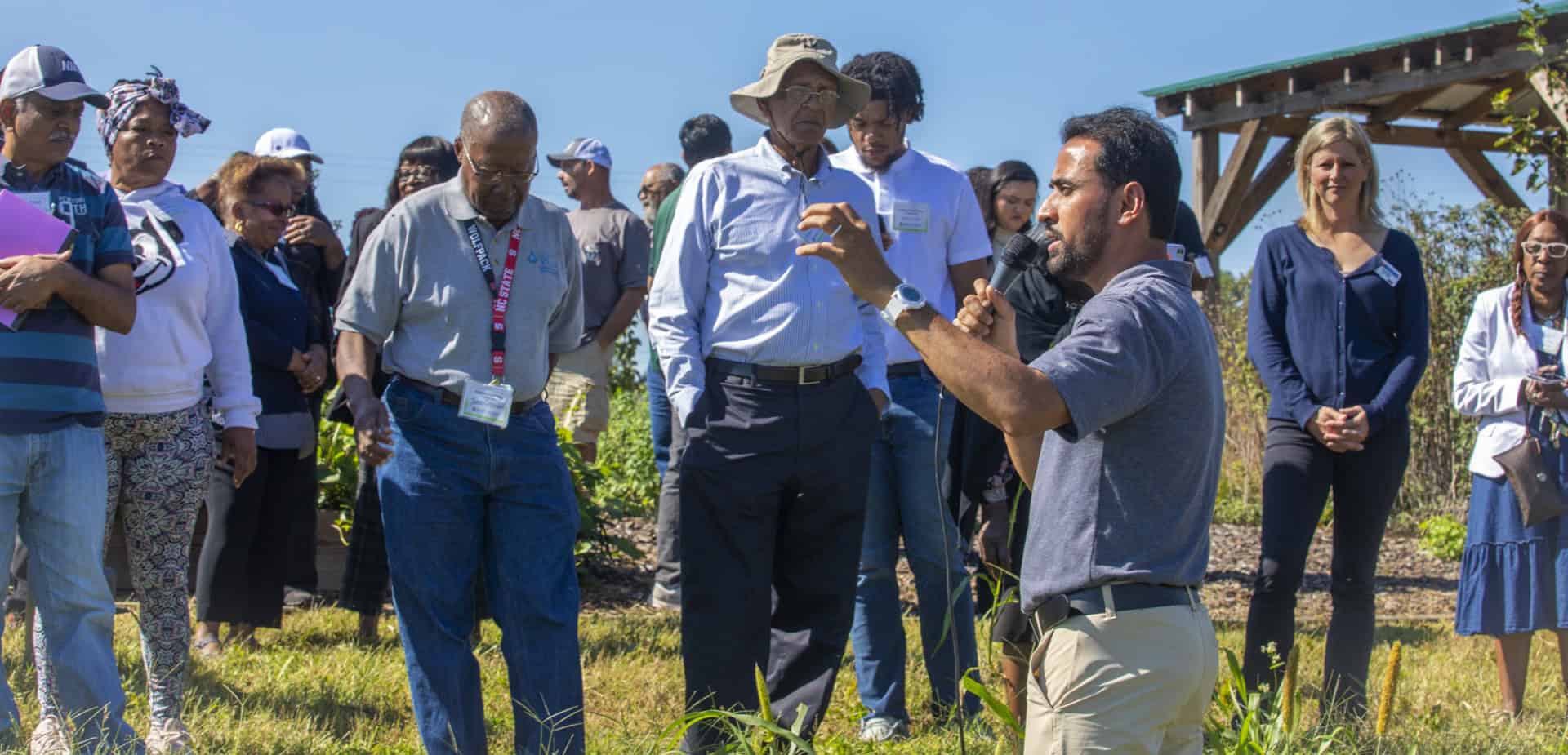
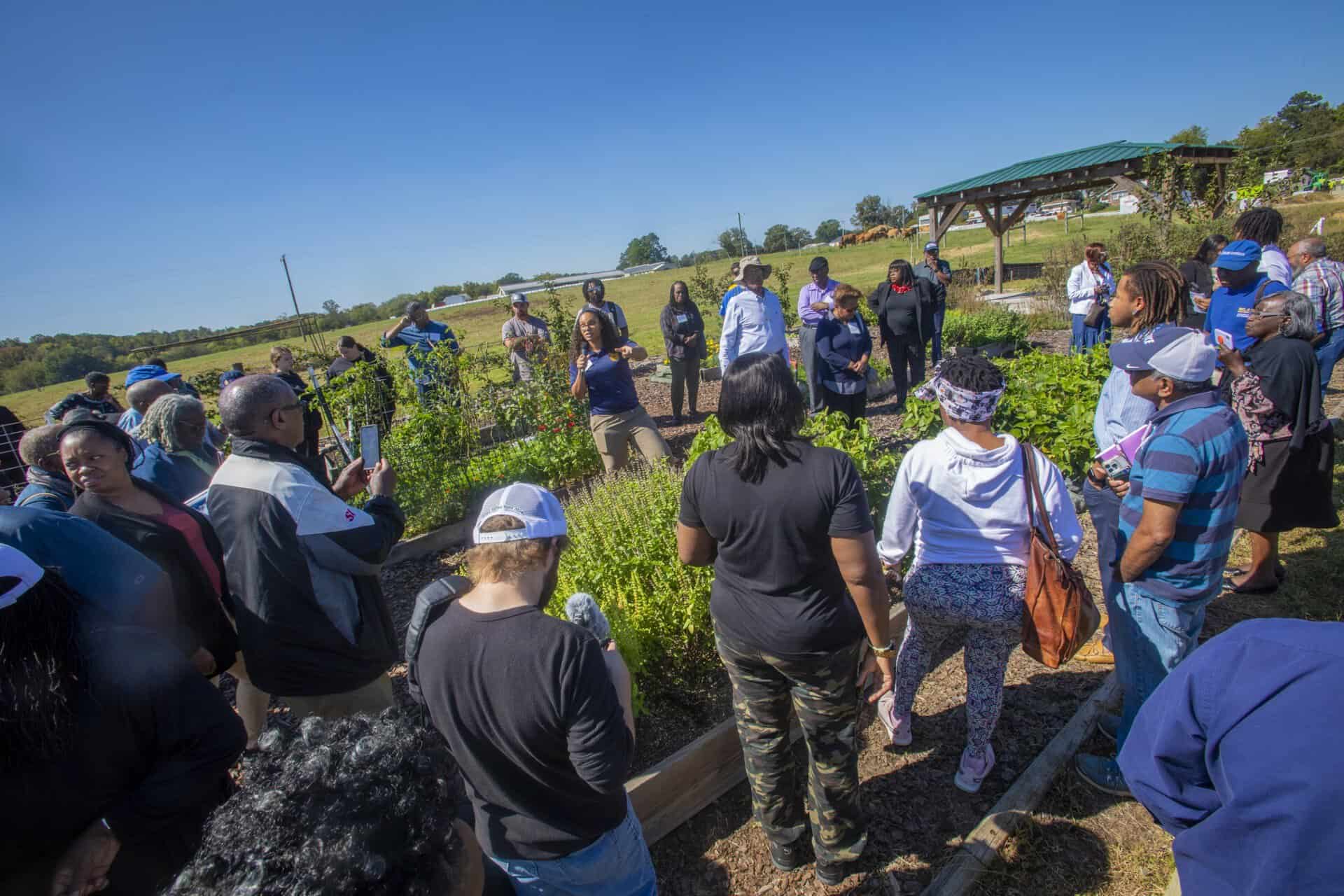
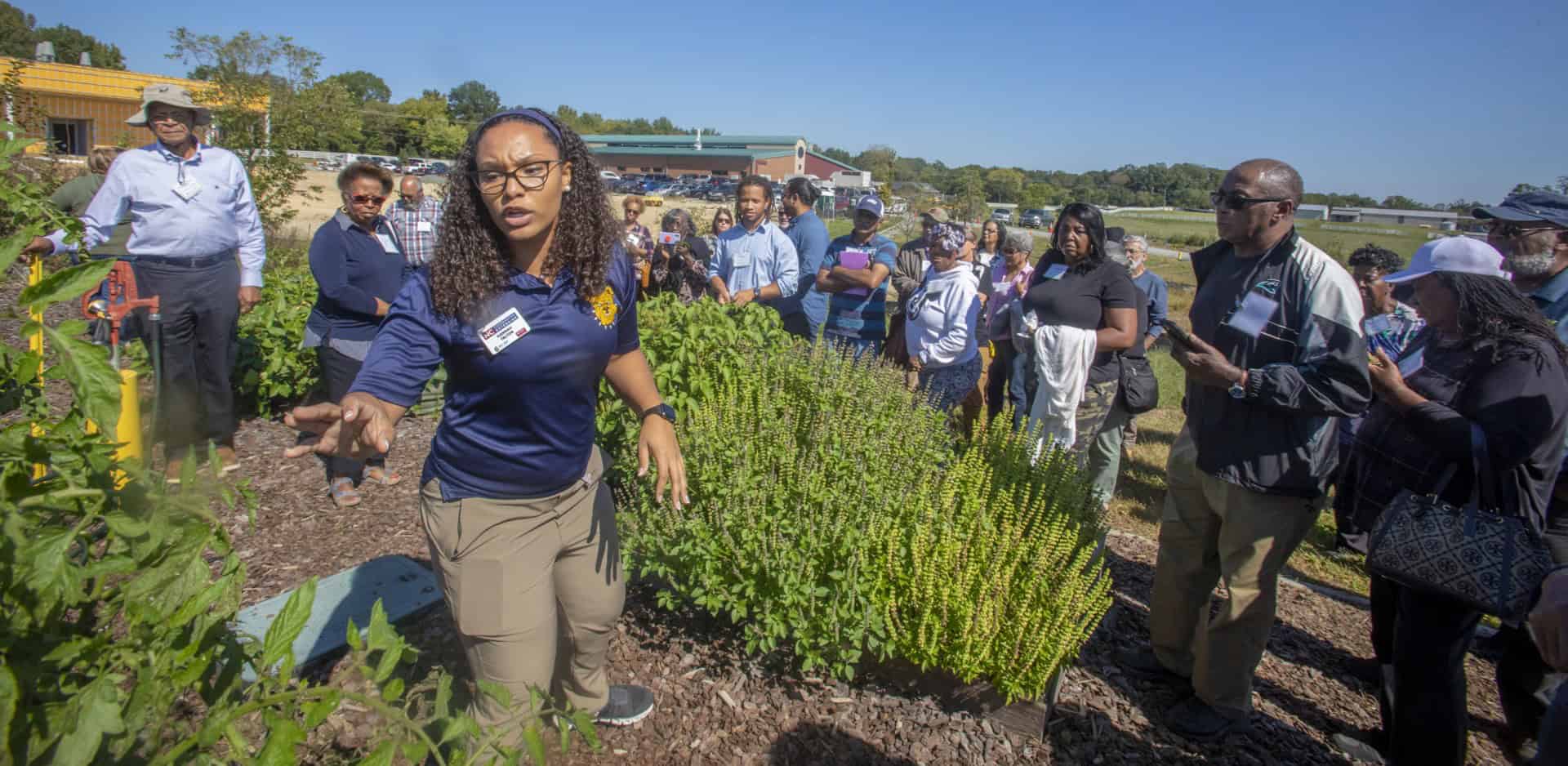
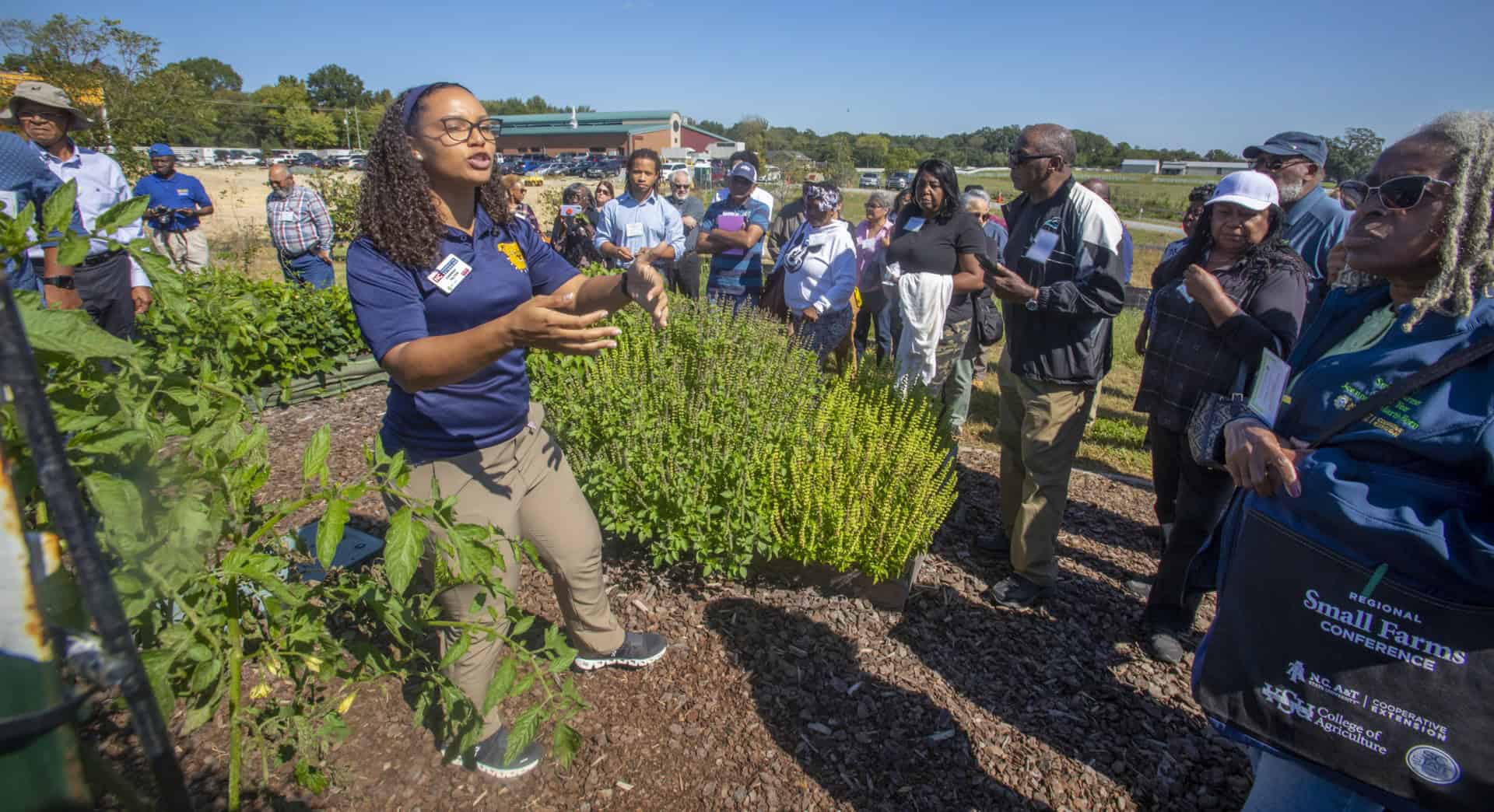
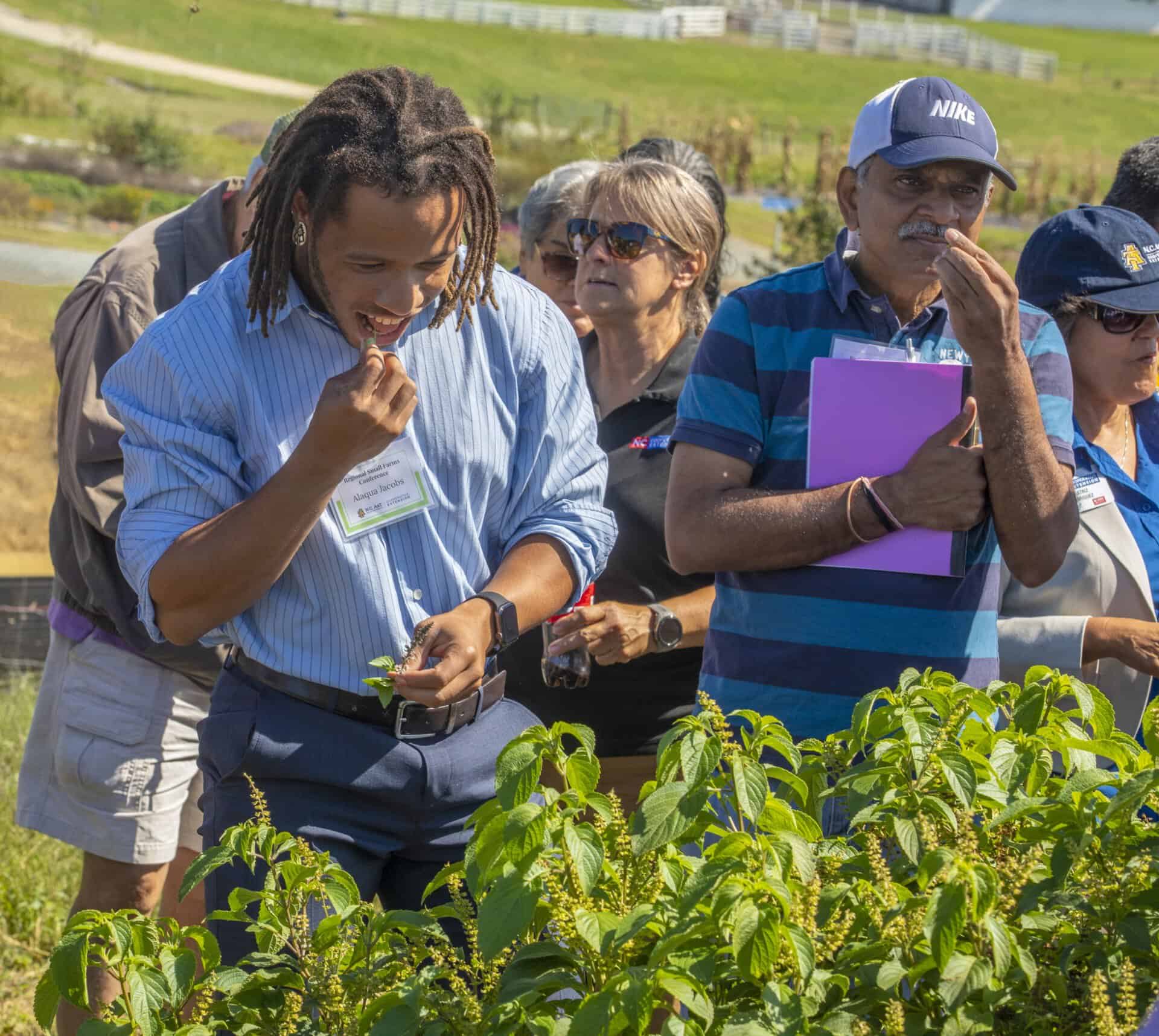
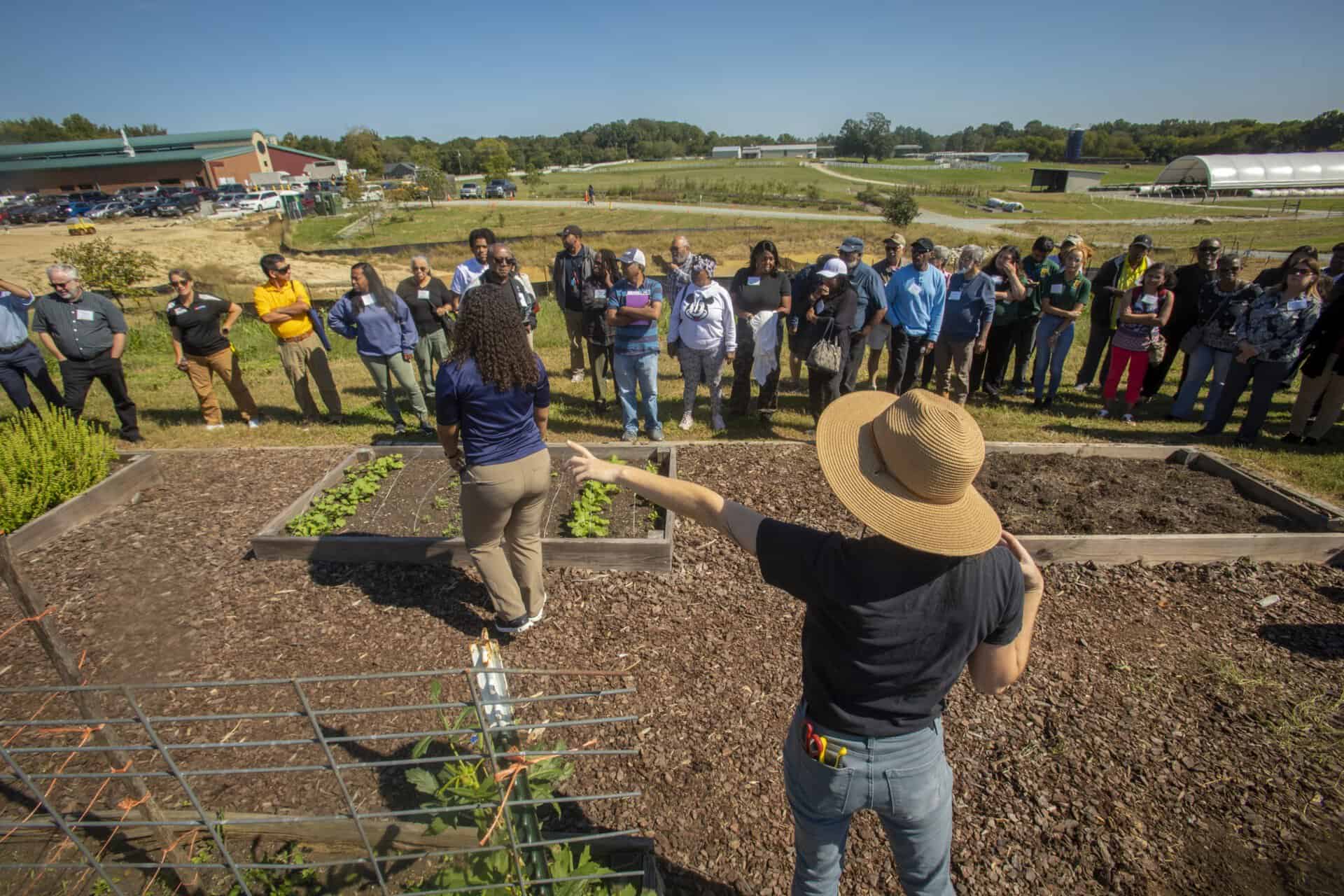
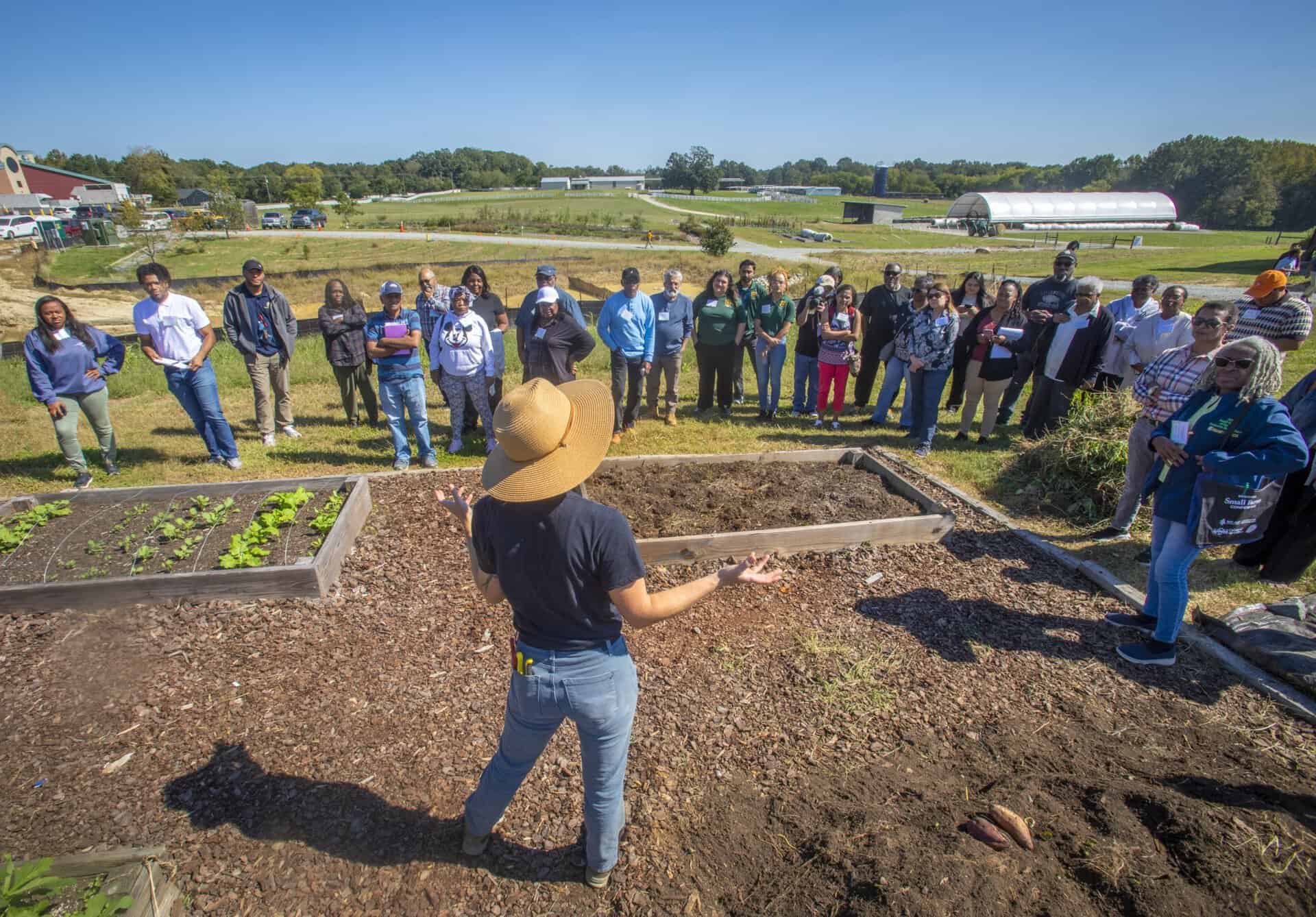
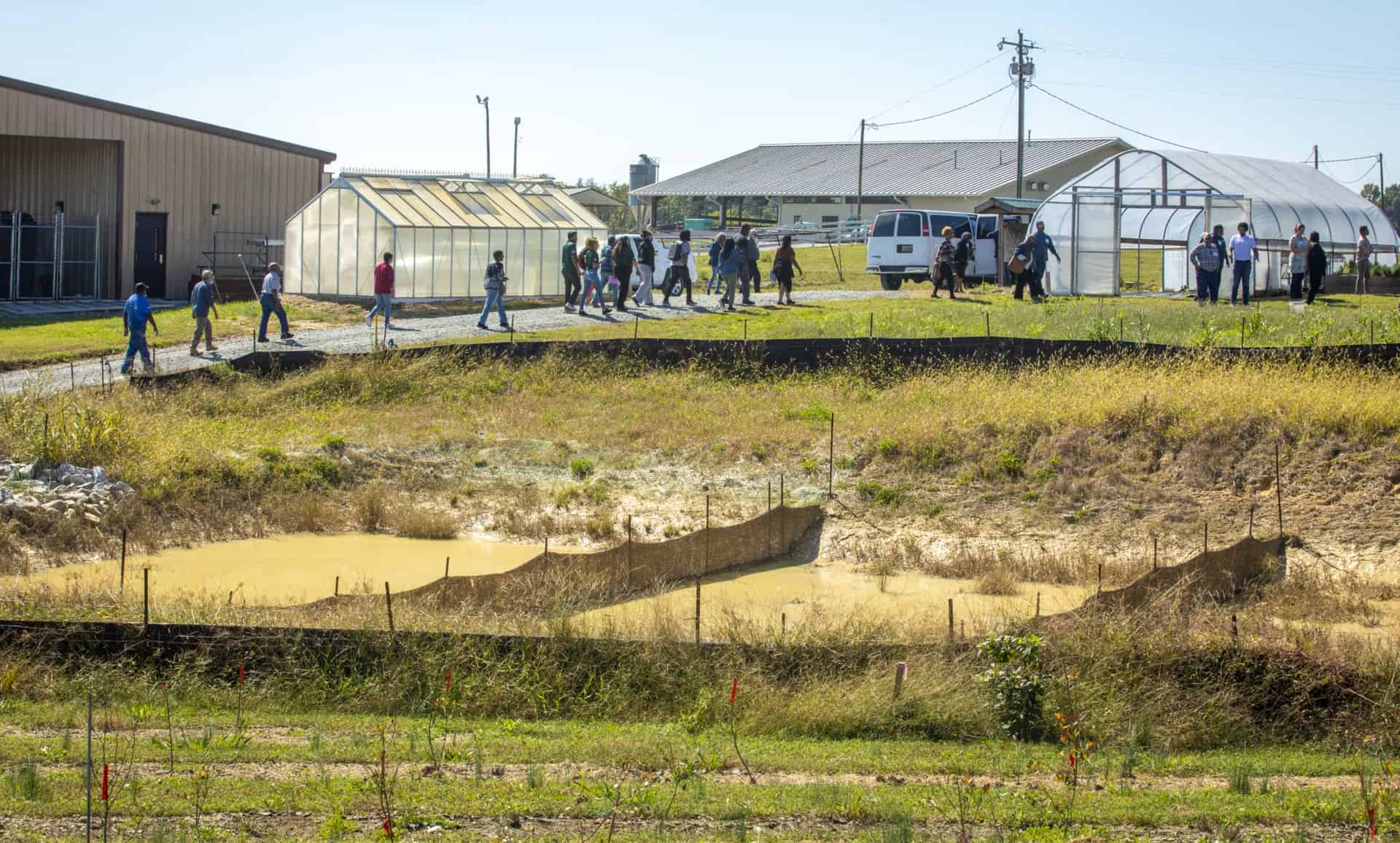
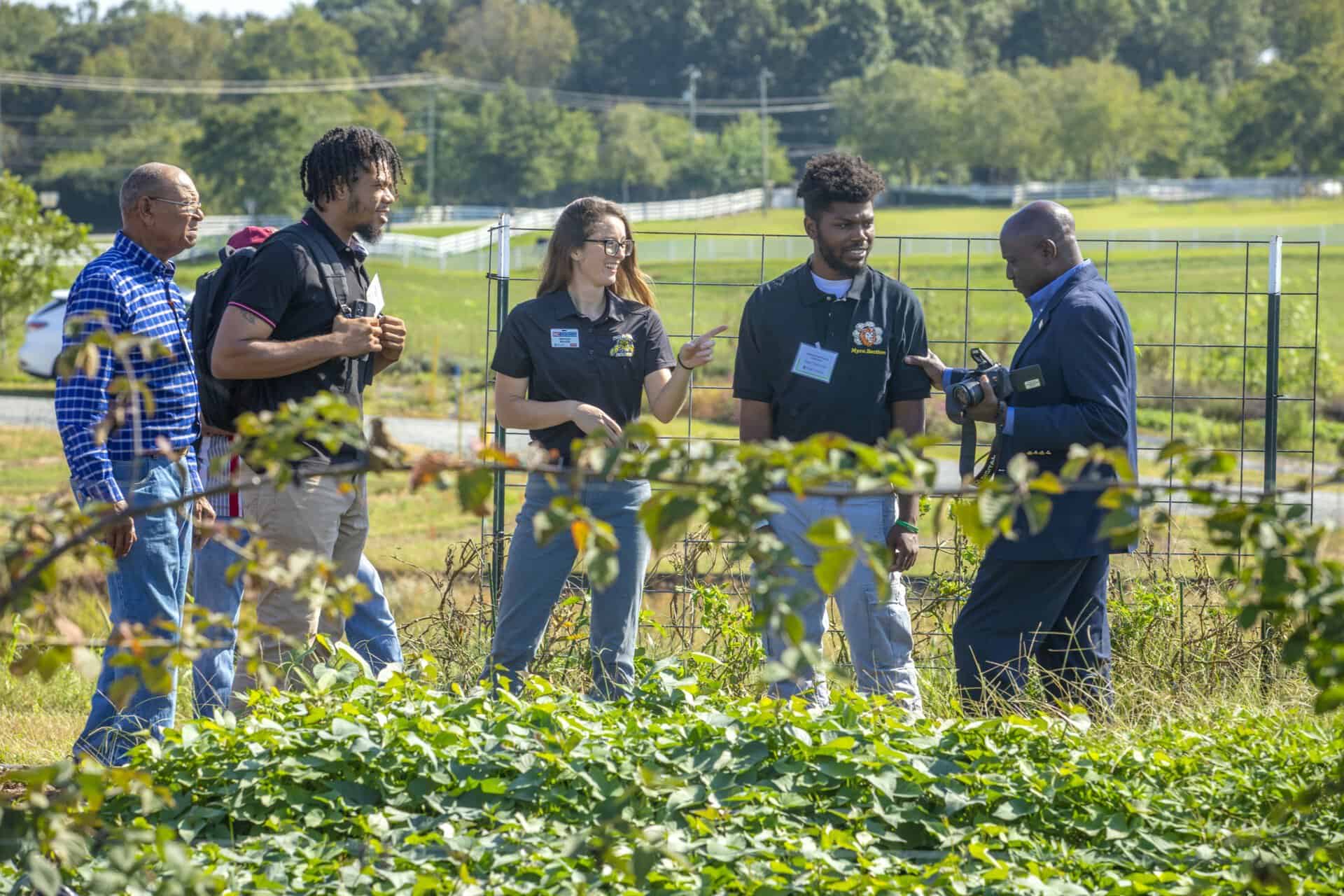
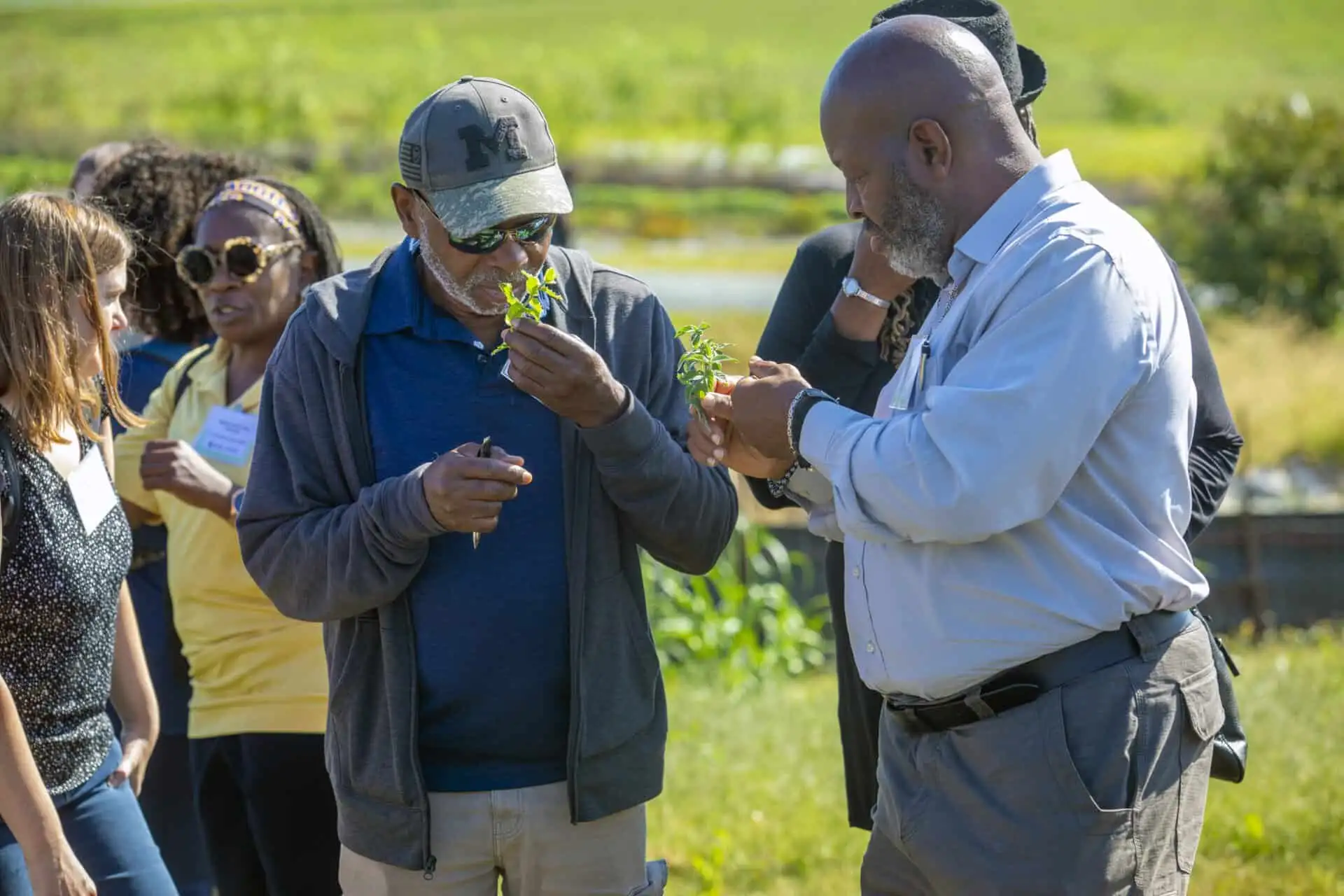
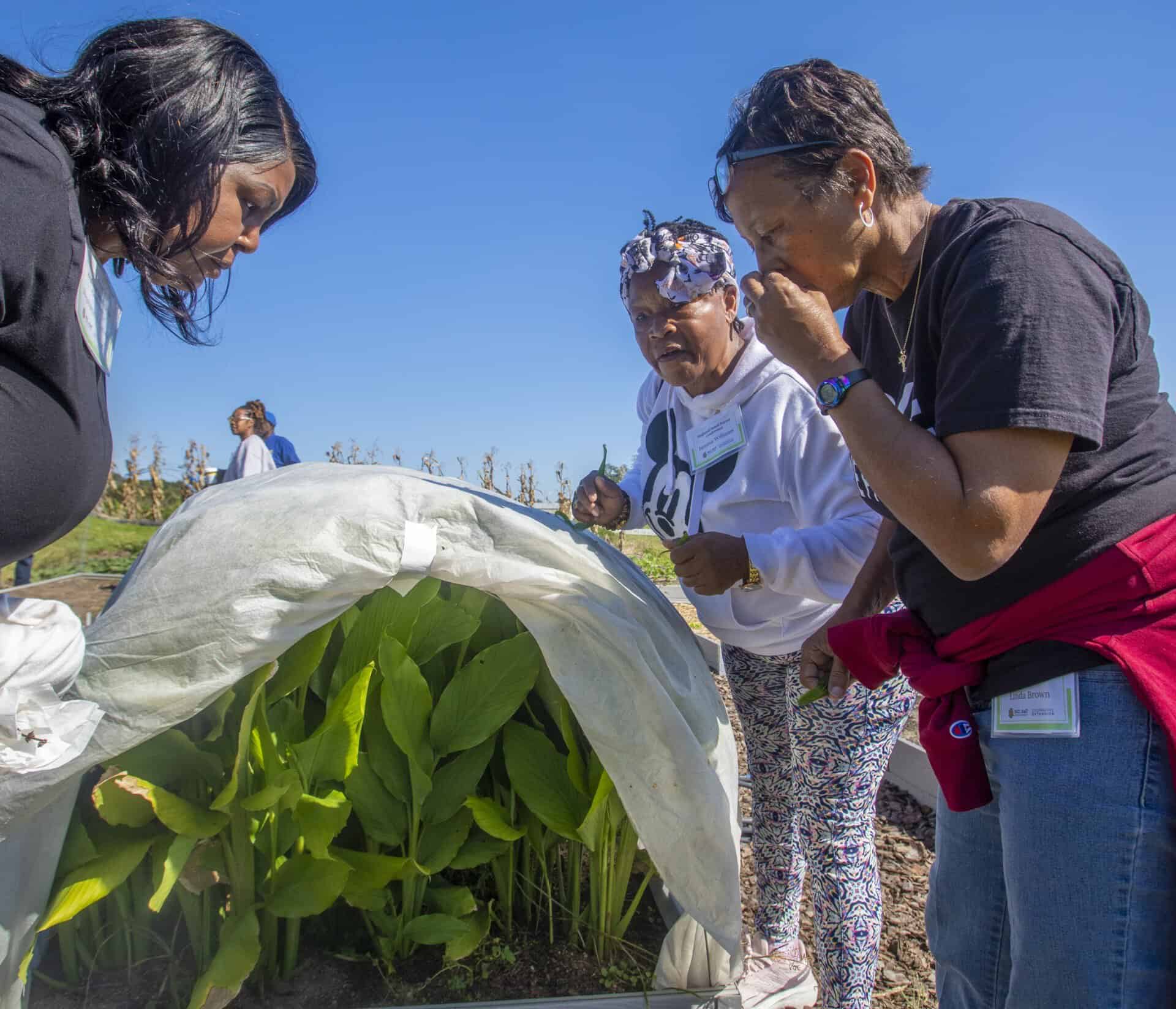
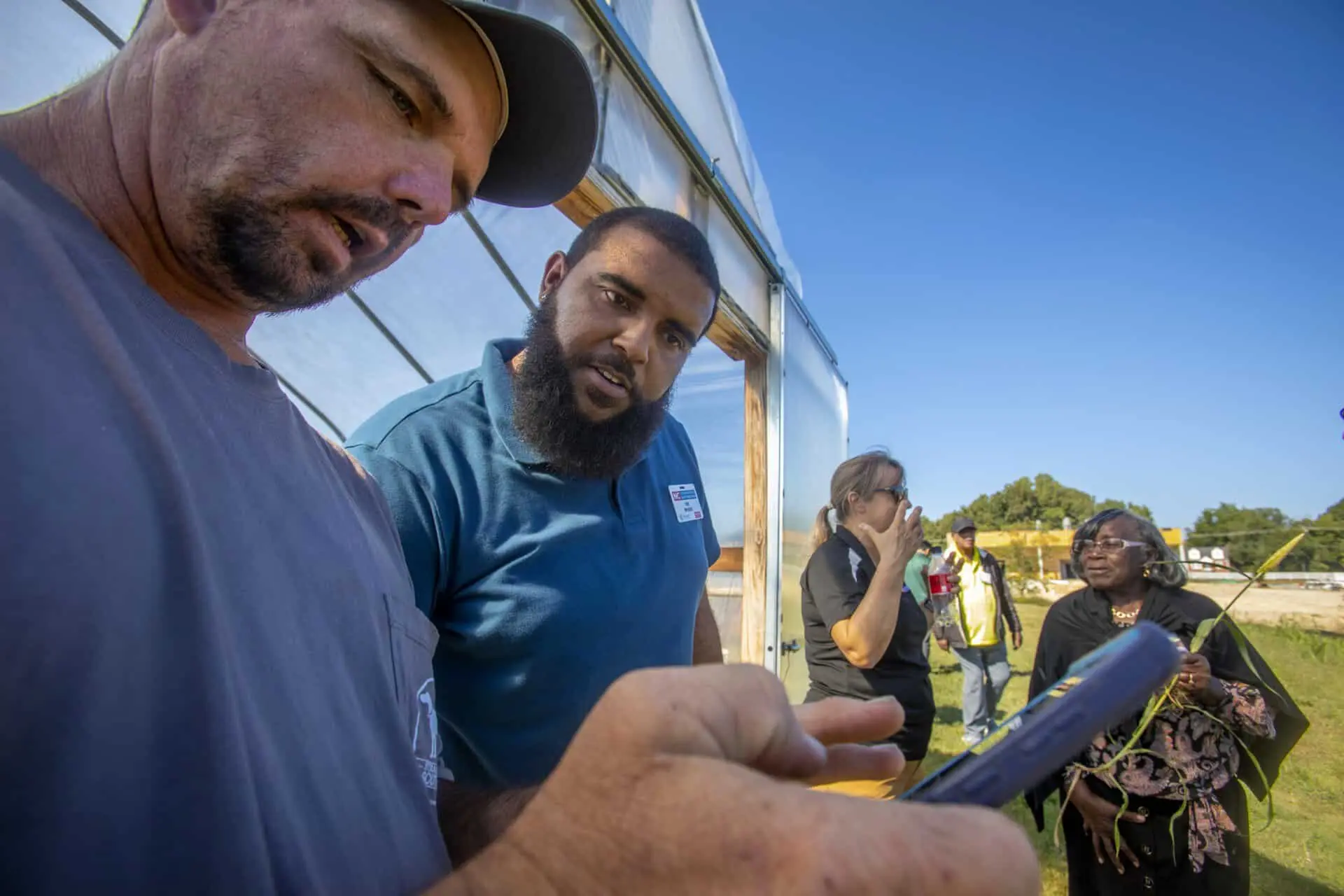
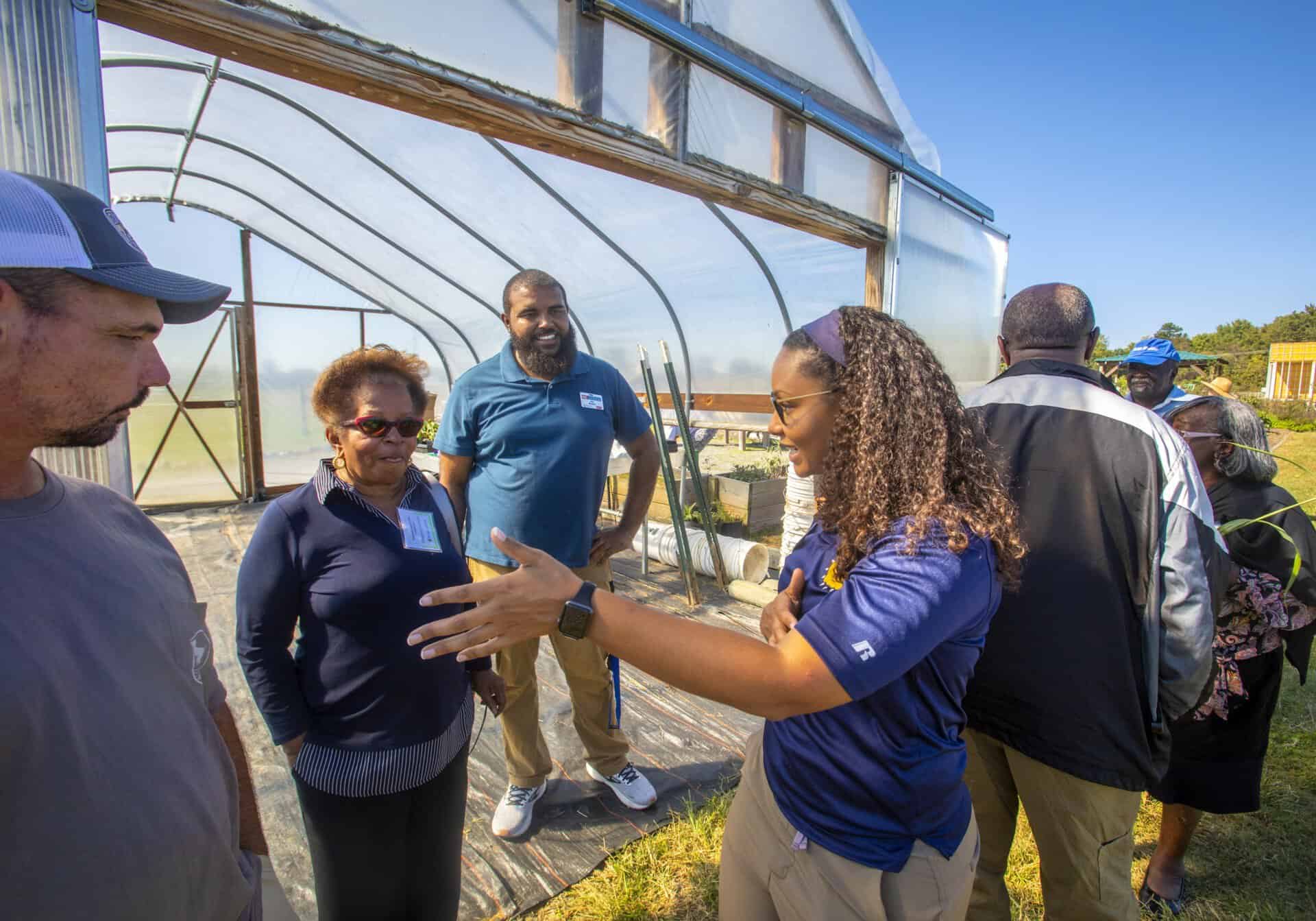
Attendees of Cooperative Extension’s first Regional Small Farms Conference received a tour of the University Farm’s Community Garden to look at different cultivars and learn about pest management and plant termination.

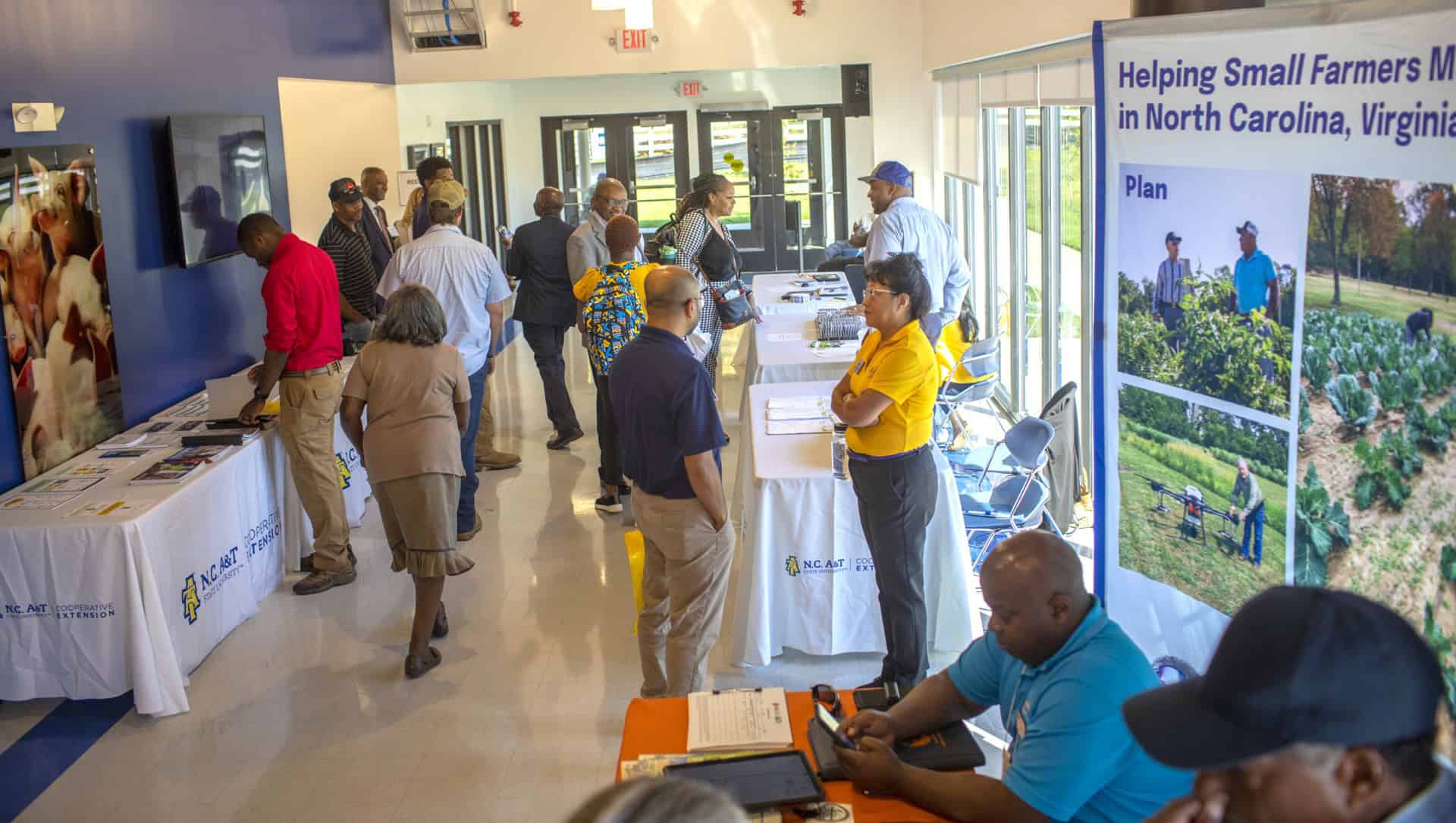
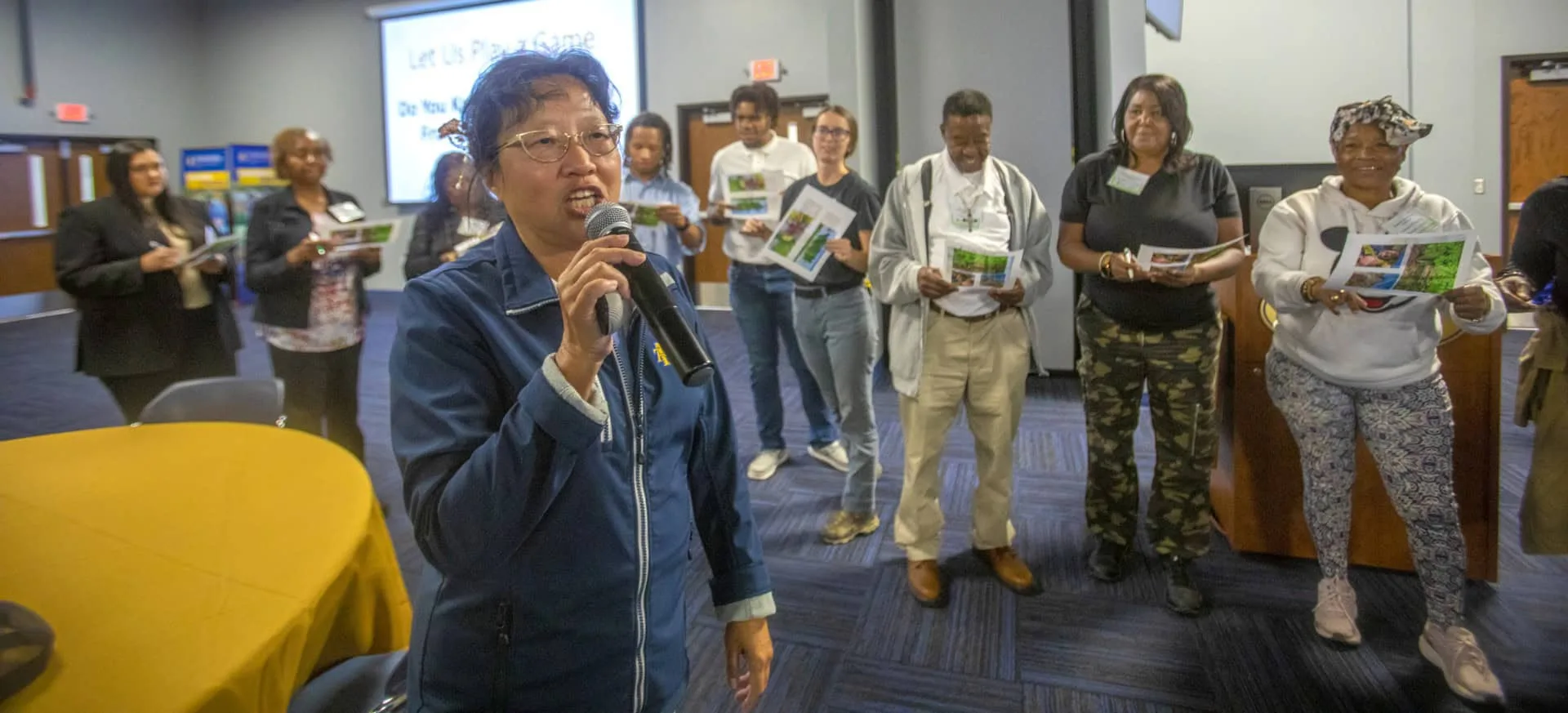
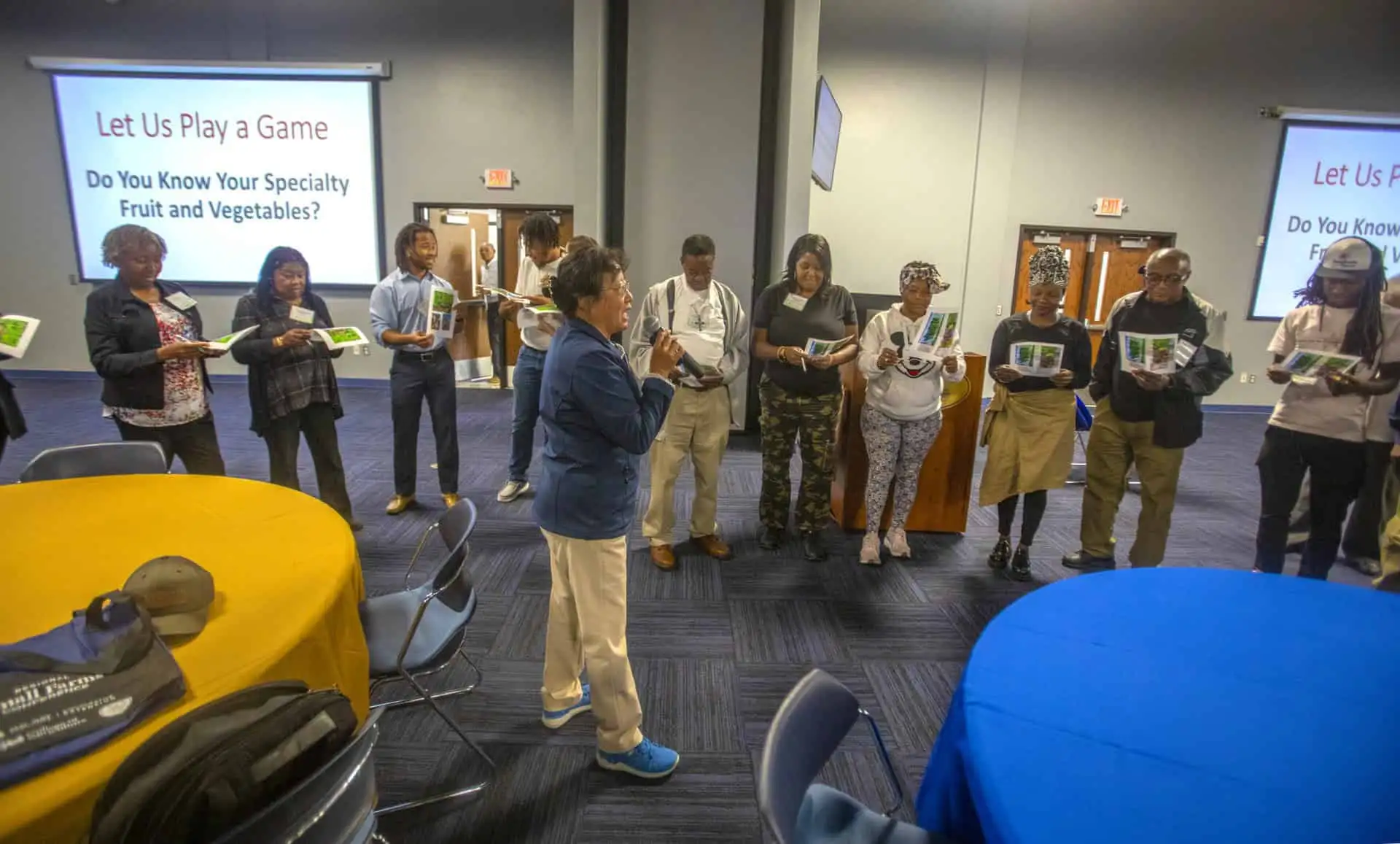
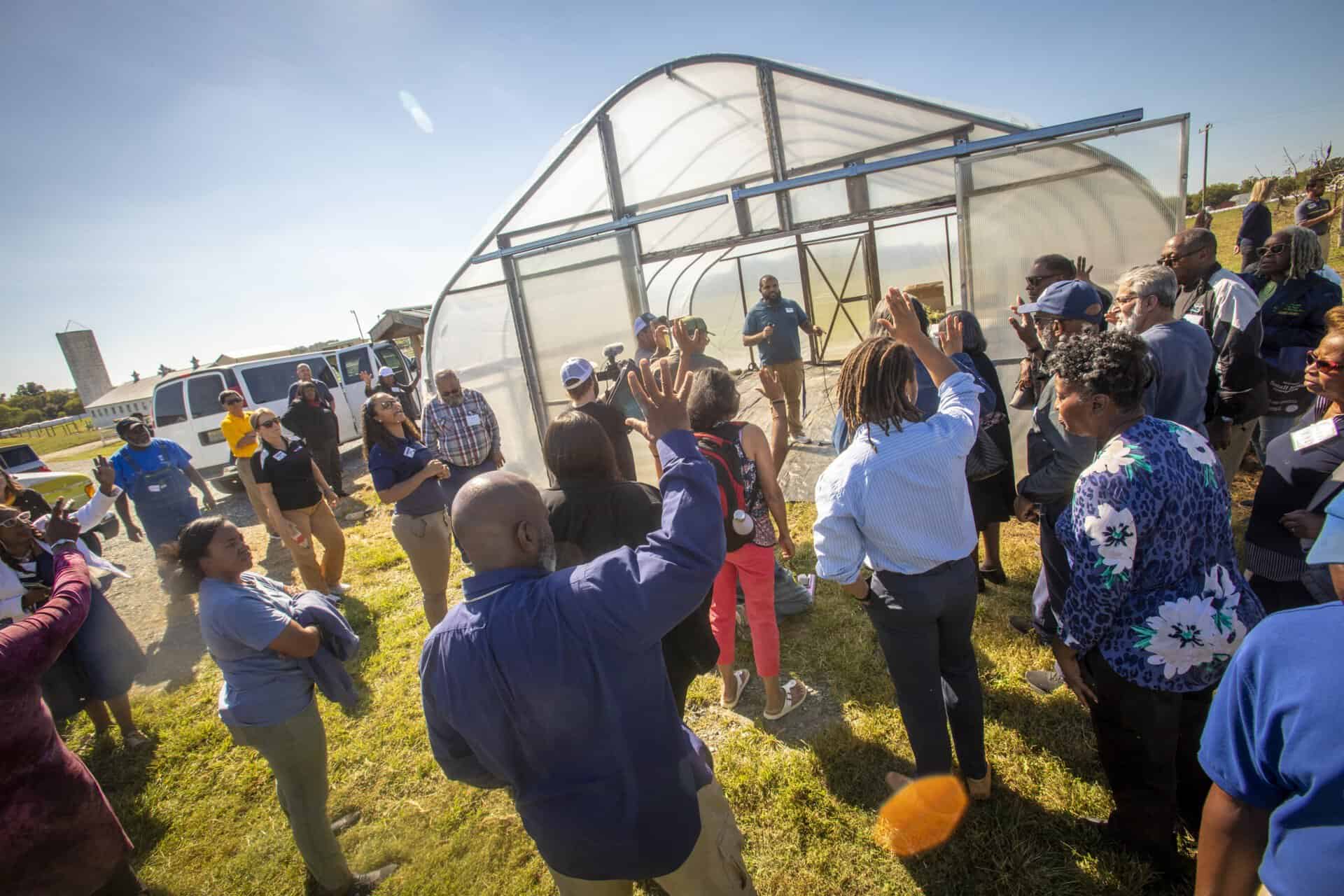
More than 130 guests gathered from three states to share their experience, and expertise, at Cooperative Extension’s first Regional Small Farms Conference at the N.C. A&T University Farm Pavilion this fall.

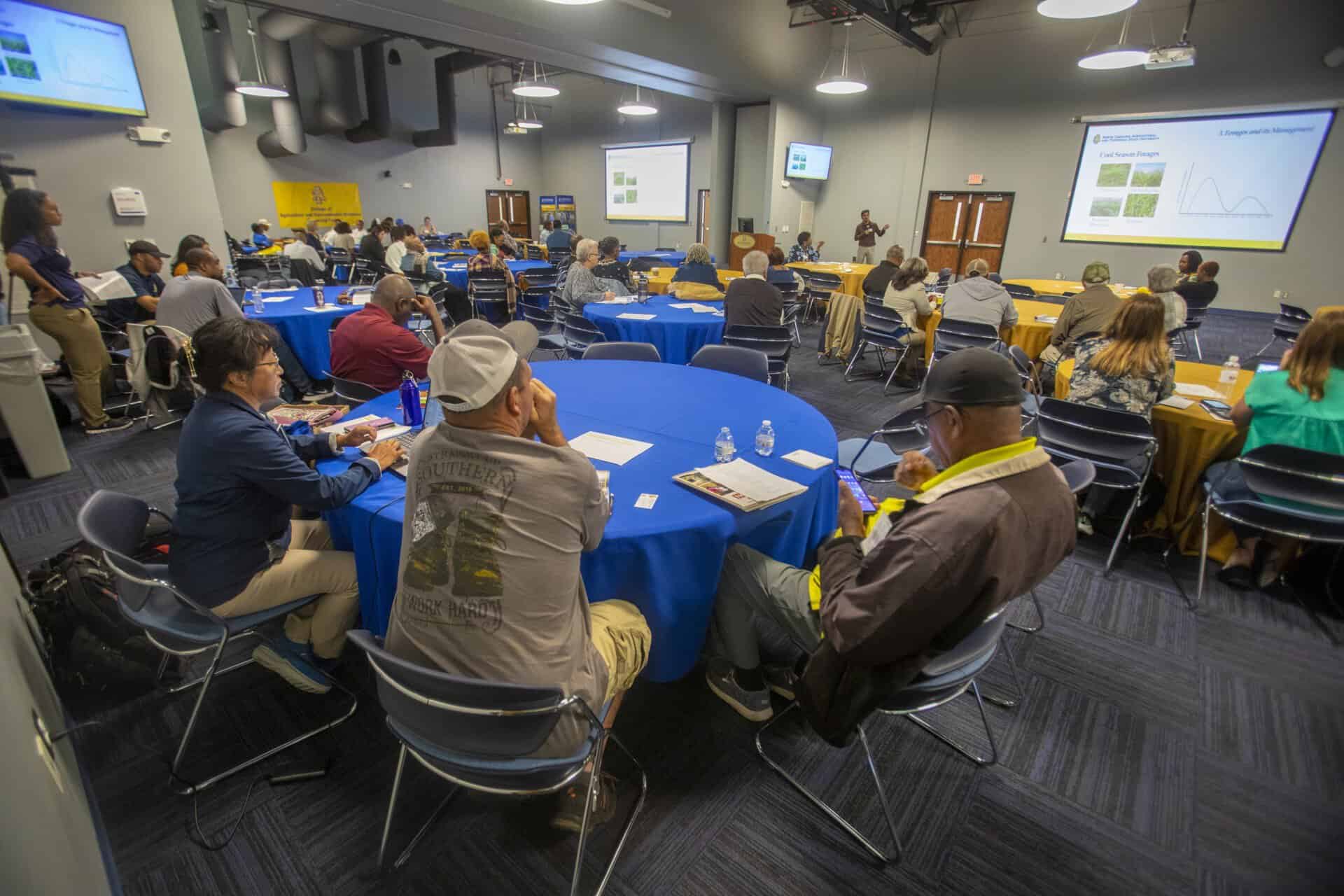
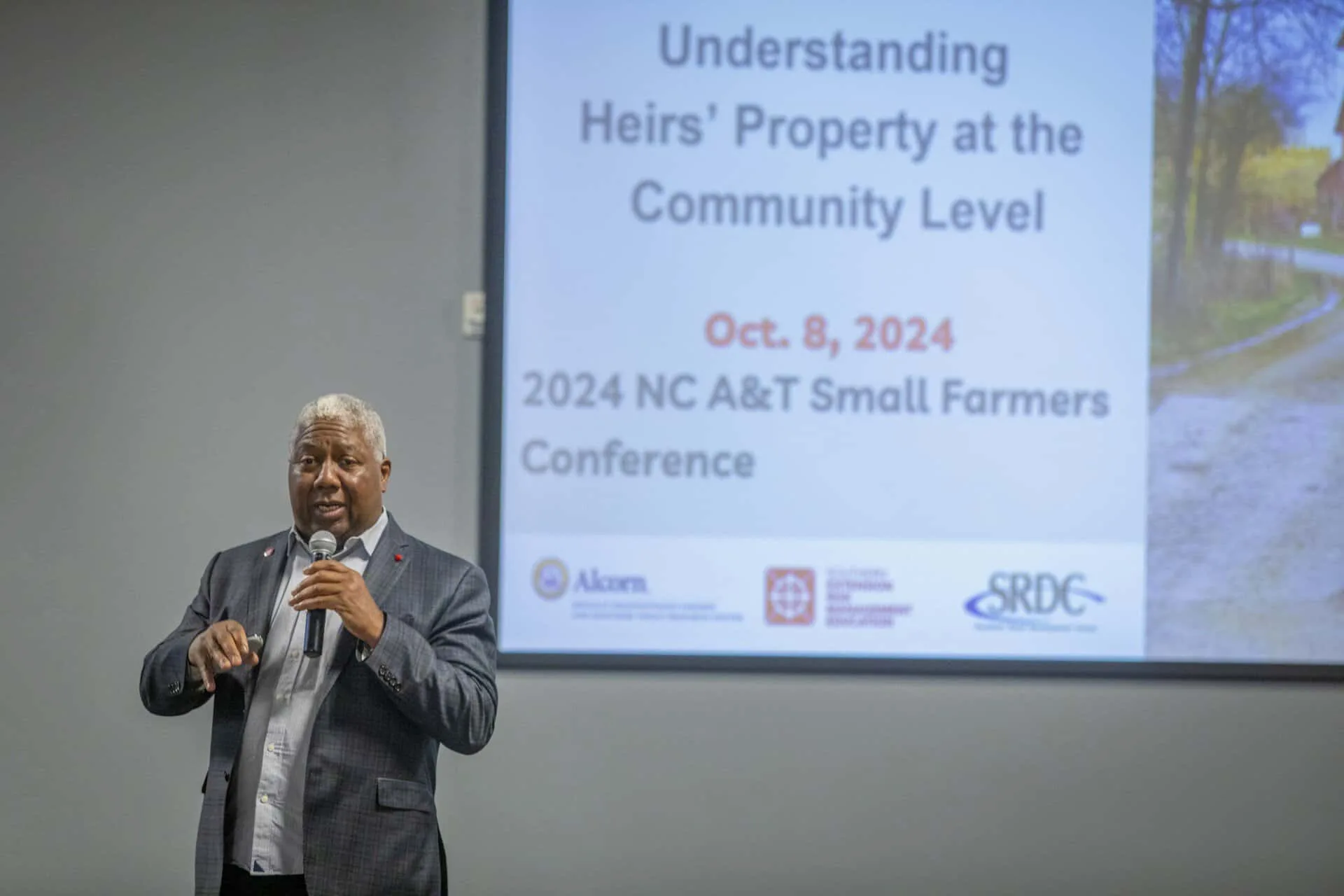
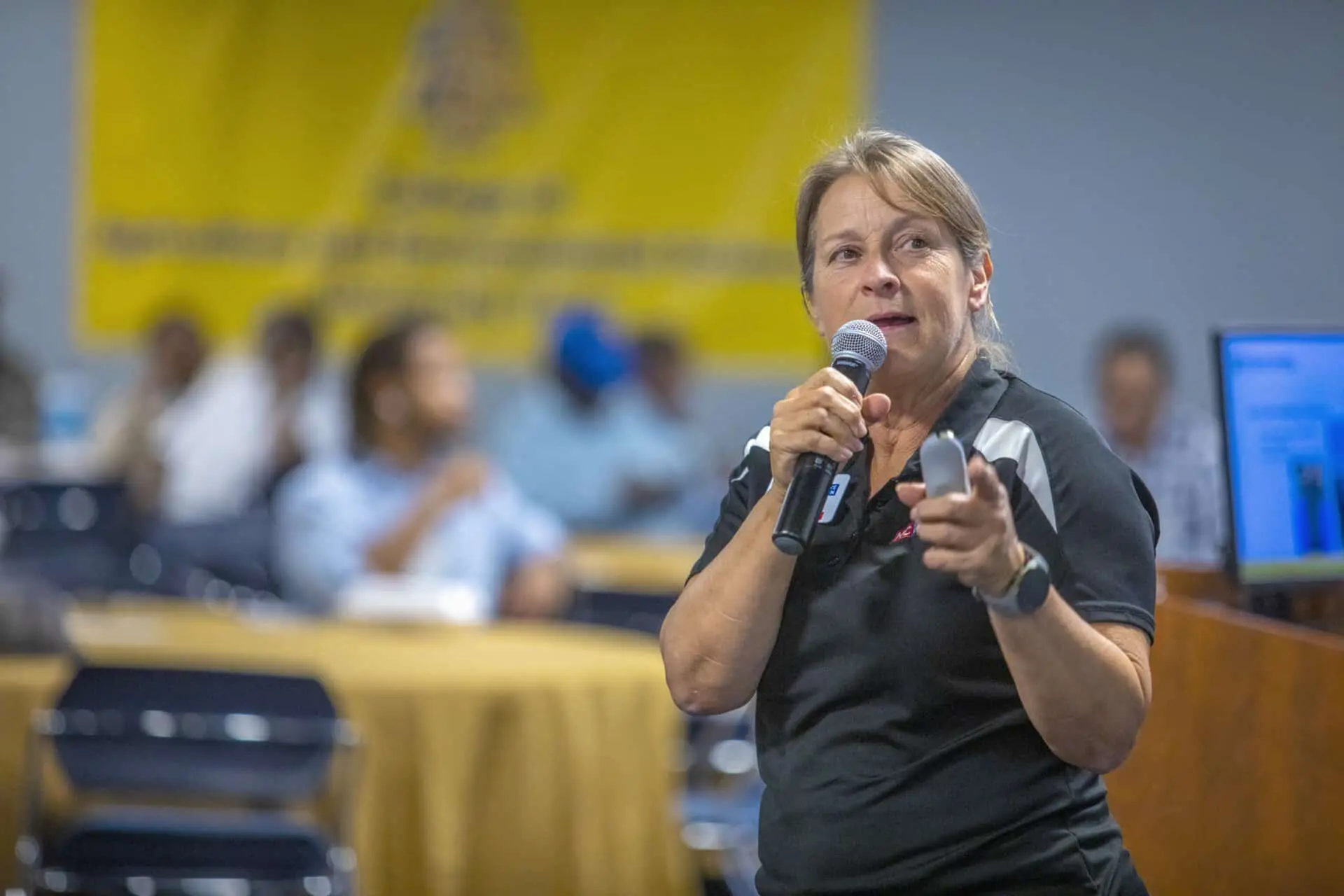
The first annual Regional Small Farms Conference, held Oct. 7-9, gathered small-scale growers and Cooperative Extension professionals from North Carolina, South Carolina and Virginia to learn about each state program’s activities in such areas as animal production, crop production, niche marketing for ethnic crops, agritourism and forestry. Tips for applying for U.S. Dept. of Agriculture grants and navigating the resources in N.C. Dept. of Agriculture’s Small Farm Unit Program were highlights, also.

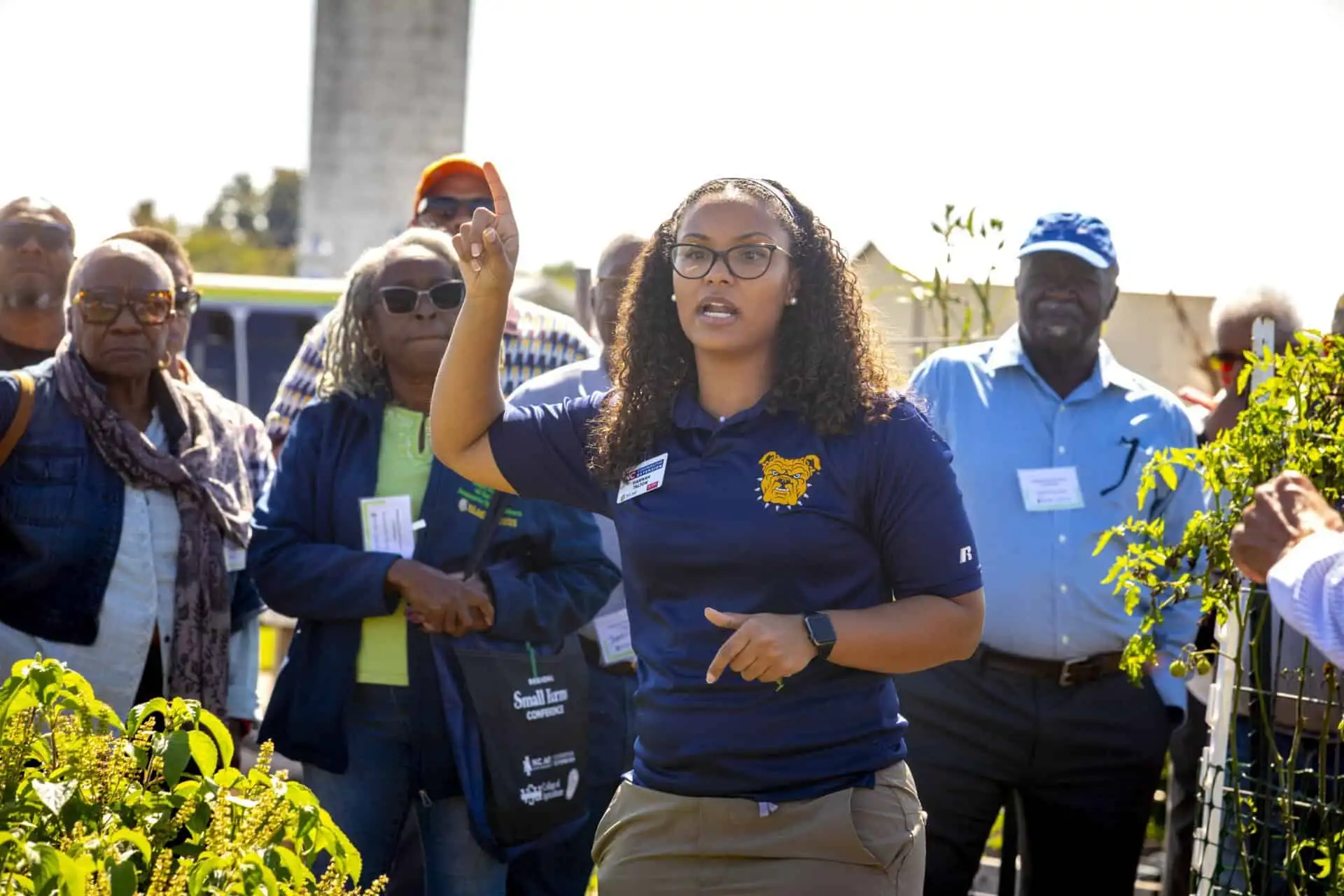
“This is an opportunity for our farmers to mix and mingle, learn different techniques that can benefit each other on their small farms, and get great information from our speakers on how they can apply for different grants and programs,” said Hannah Talton, DPM, assistant professor and Extension plant pathology specialist.

Participating 1890s land-grant institutions – N.C. A&T, Virginia State University, and South Carolina State University – provided most of the programming.

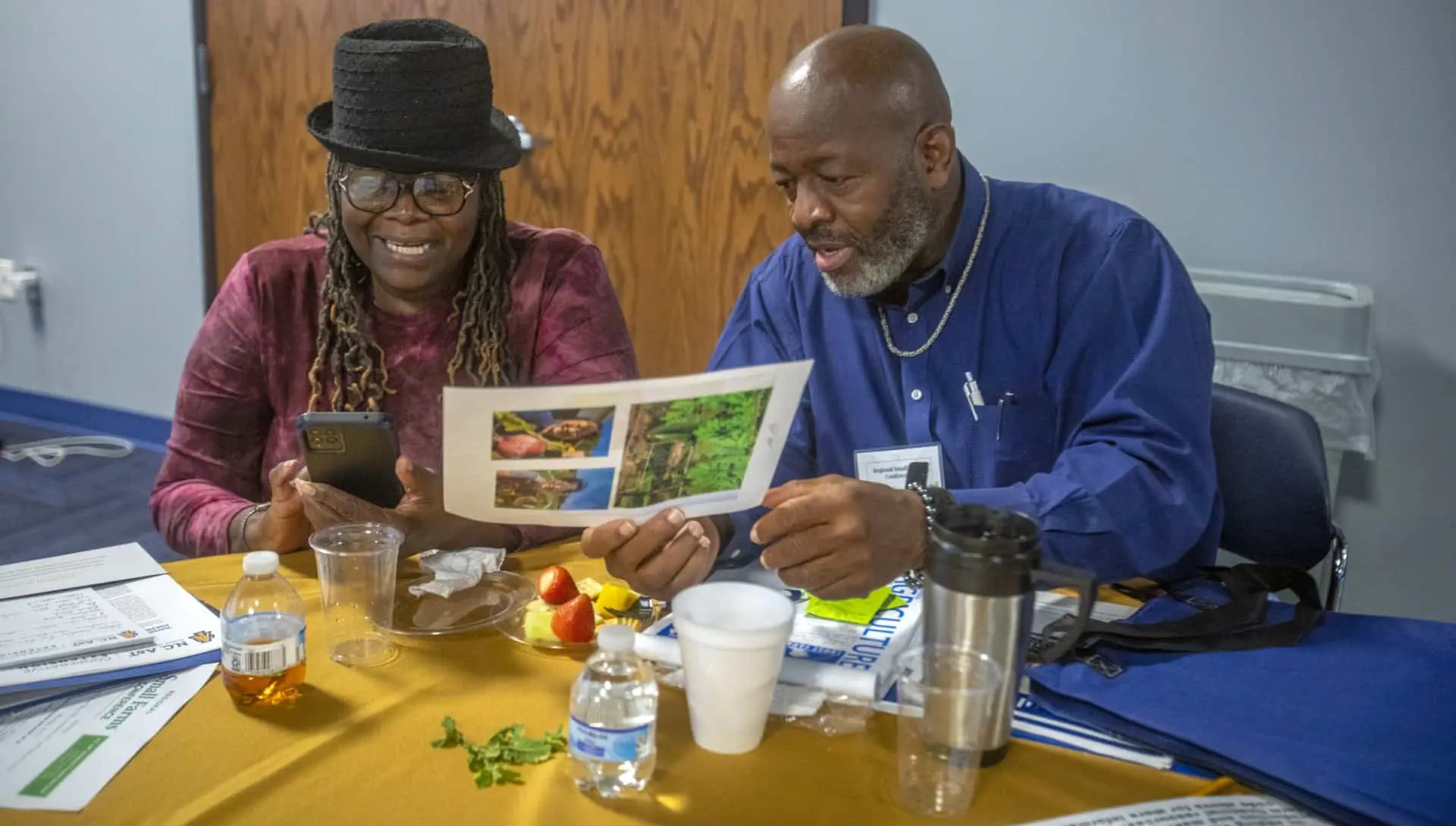
“We ask that you engage while you’re here today,” said Extension Administrator M. Ray McKinnie, Ph.D. “We have information to share, but I think the richest information will come from you engaging with one another, in conversations over lunch and dinner, and in the hallways. Out of these discussions will come the richness of what we at the university need to know to help you.”

Jeanette Martin Horn, 2023 Small Farmer of the Year and co-owner of J&J Martin Produce in Mount Olive, came to learn.

“I truly believe that we, as small farmers, cannot overeducate ourselves in all areas of farming,” she said. “I came here to learn more information about soil conservation and marketing, and other areas of small farming.”

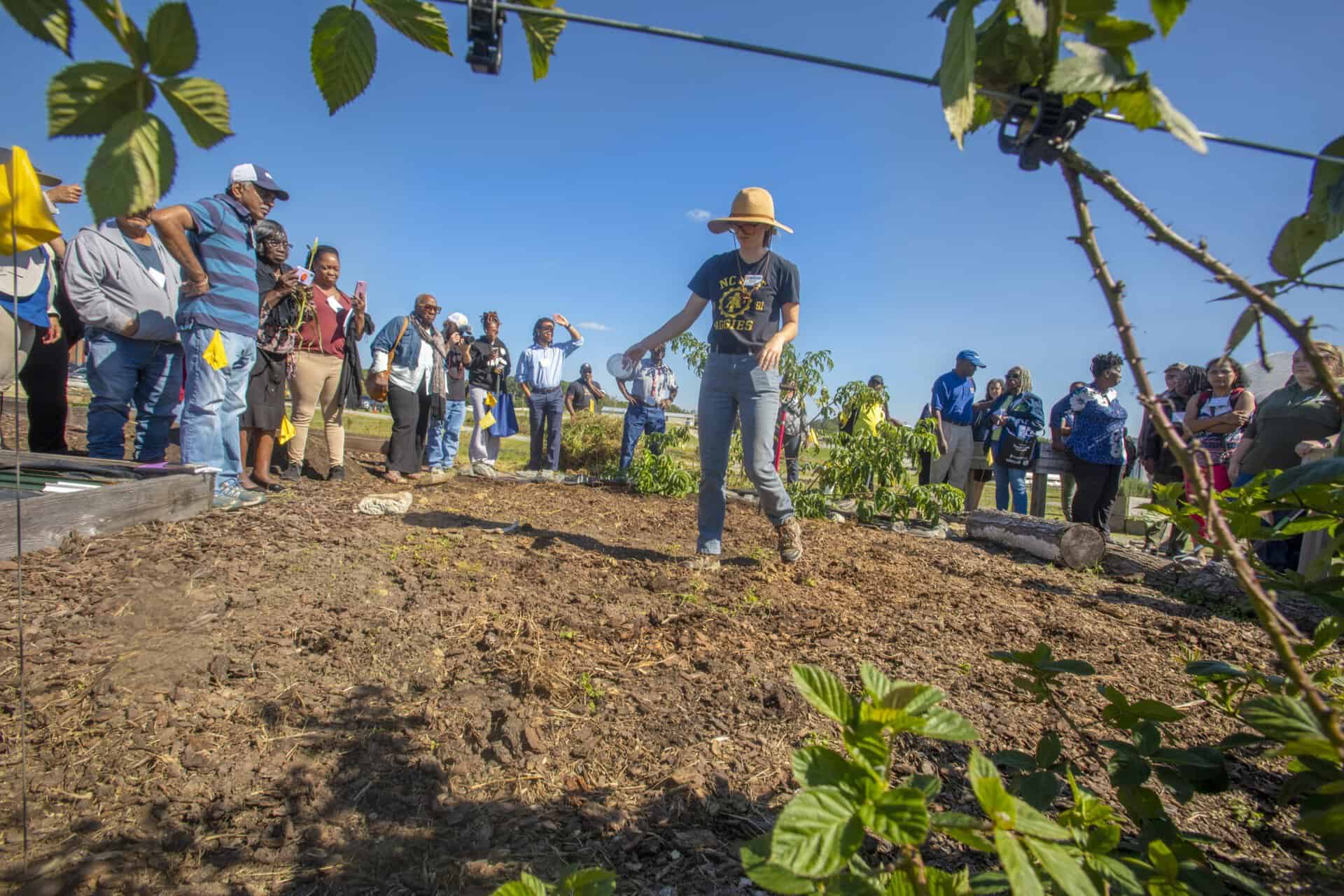
In addition to presentations, the attendees were treated to a tour of the University Farm’s Community Garden to look at different cultivars, and learn about pest management and plant termination.

Bryant and Margaret Harrison of H&G Produce in Greenville, S.C., decided to attend the event despite damage to their farm in the wake of Hurricane Helene.

“It’s been a trying time,” said Margaret Harrison, “but I feel like, by the grace of God, are still here and we were still able to go. When we heard about this trip, we still decided that we would come, participate, and see what it was all about.”

“We’ve learned some new practices and made some new acquaintances,” said Bryant Harrison. “Events like this build morale and a support system of folks that you can call and ask questions of. It’s been most beneficial, especially learning about some of the grants and other funding opportunities.”
Gallery

Would you like to learn more about N.C. A&T State University?

Founded in 1891 in Greensboro, North Carolina, N.C. A&T is the nation’s largest historically Black university and a premier 1890 land-grant doctoral research institution. Home to more than 14,000 students, A&T is nationally recognized as the top public HBCU in the country and the number one producer of Black graduates in engineering and agriculture. With over $2.4 billion in annual economic impact, the university combines rigorous academics, pioneering research, and a vibrant campus culture to prepare the next generation of global leaders. 

Read more CAES News

Advocate for Small Farmers, Rural Development to Deliver Small Farms Week Keynote 

Advocate for Small Farmers, Rural Development to Deliver Small Farms Week Keynote 

When Kimberly Ratcliff traded her successful career in corporate America for jeans, a cowboy hat, and life on her family farm in Texas, she saw a large gap between big business and family farms simply working to make ends meet and provide the best agricultural products possible.
Cheating Climate Change: Climate-resilient farming provides financial benefits for N.C. growers, study shows

Cheating Climate Change: Climate-resilient farming provides financial benefits for N.C. growers, study shows

Climate-resilient agriculture practices can help small farms in North Carolina adapt to a changing climate profitably, according to new research by North Carolina Agricultural and Technical University Cooperative Extension and Environmental Defense Fund (EDF).
10 Easy Ways to Celebrate an Eco-Friendly Holiday

10 Easy Ways to Celebrate an Eco-Friendly Holiday

The holiday season is upon us! It’s a time of year is full of traditions, family gatherings and friendship reunions, but perhaps most of all… it’s a season of consumption! The spirit of giving can be satisfied without sacrifice to the health of our planet.
“Passionate, Knowledgeable, Collaborative”: Granville Couple are 2025 Small Farmers of the Year

“Passionate, Knowledgeable, Collaborative”: Granville Couple are 2025 Small Farmers of the Year

When Elvin and Madeline Eaton of Fairport Farm in Kittrell, N.C., decided to try growing produce and microgreens as a retirement venture, they resolved to do things differently on their quarter-acre farm: No tilling, no commercial fertilizers or pesticides, and beds that stayed in place for multiple seasons, rather than rotating.
No results found.