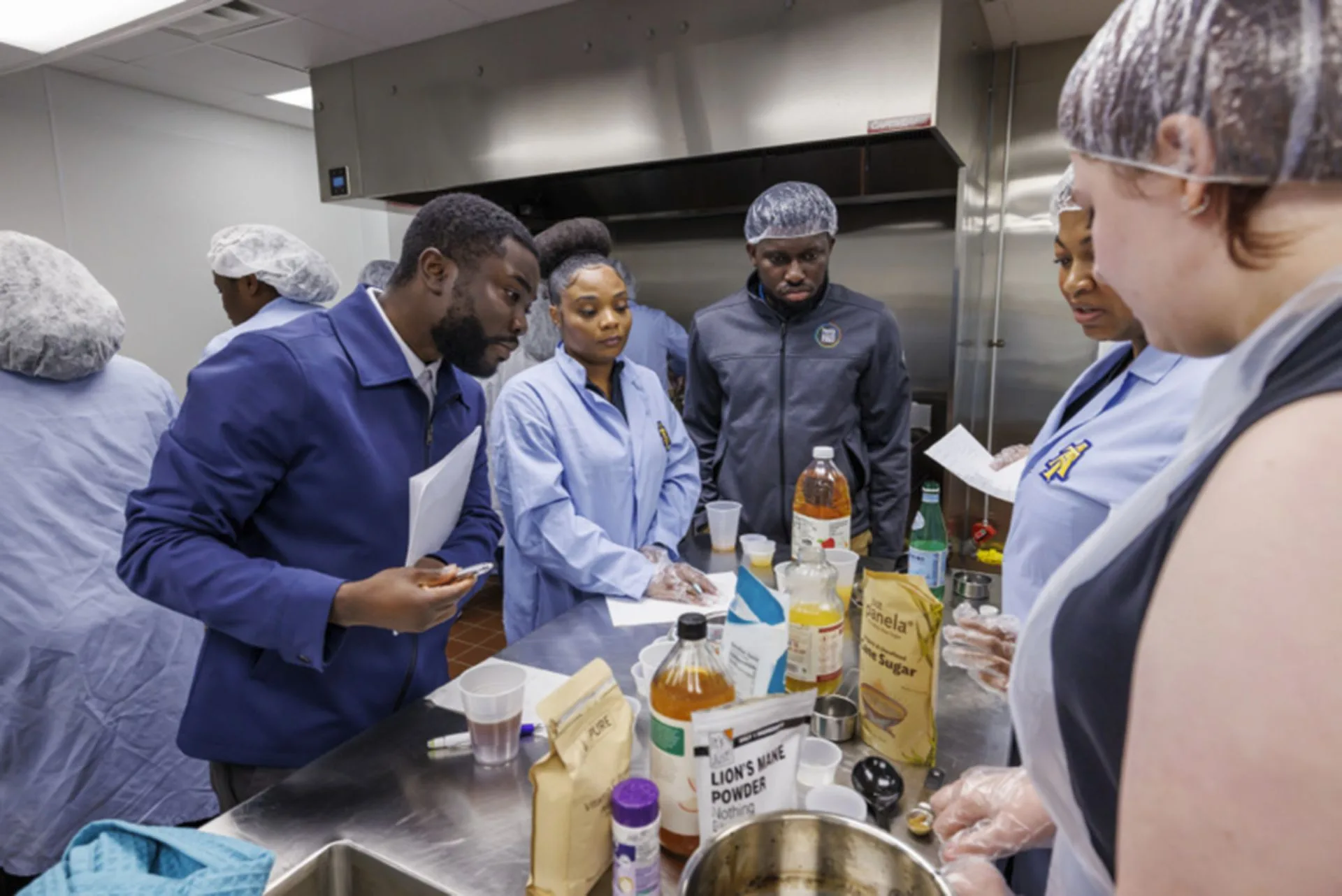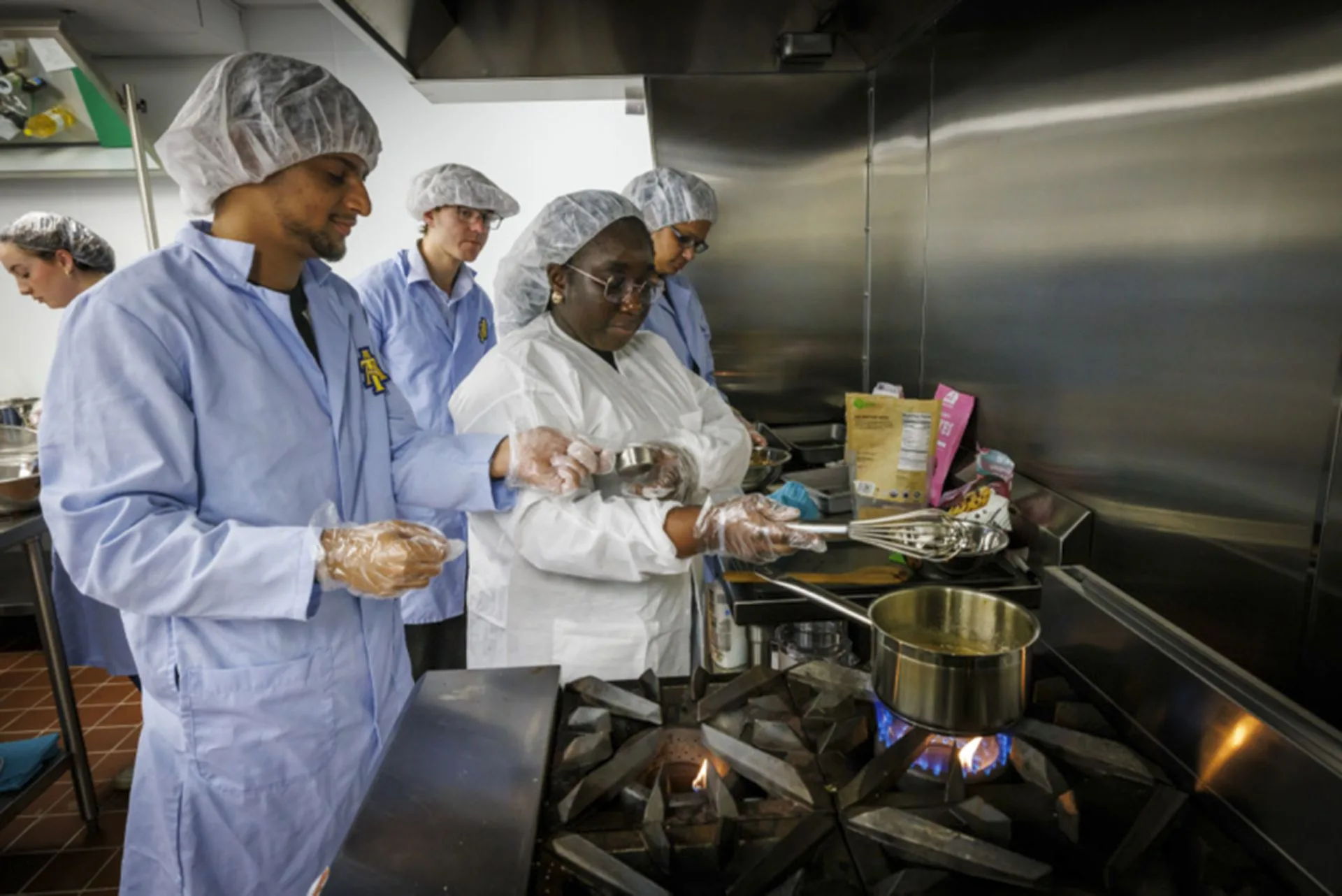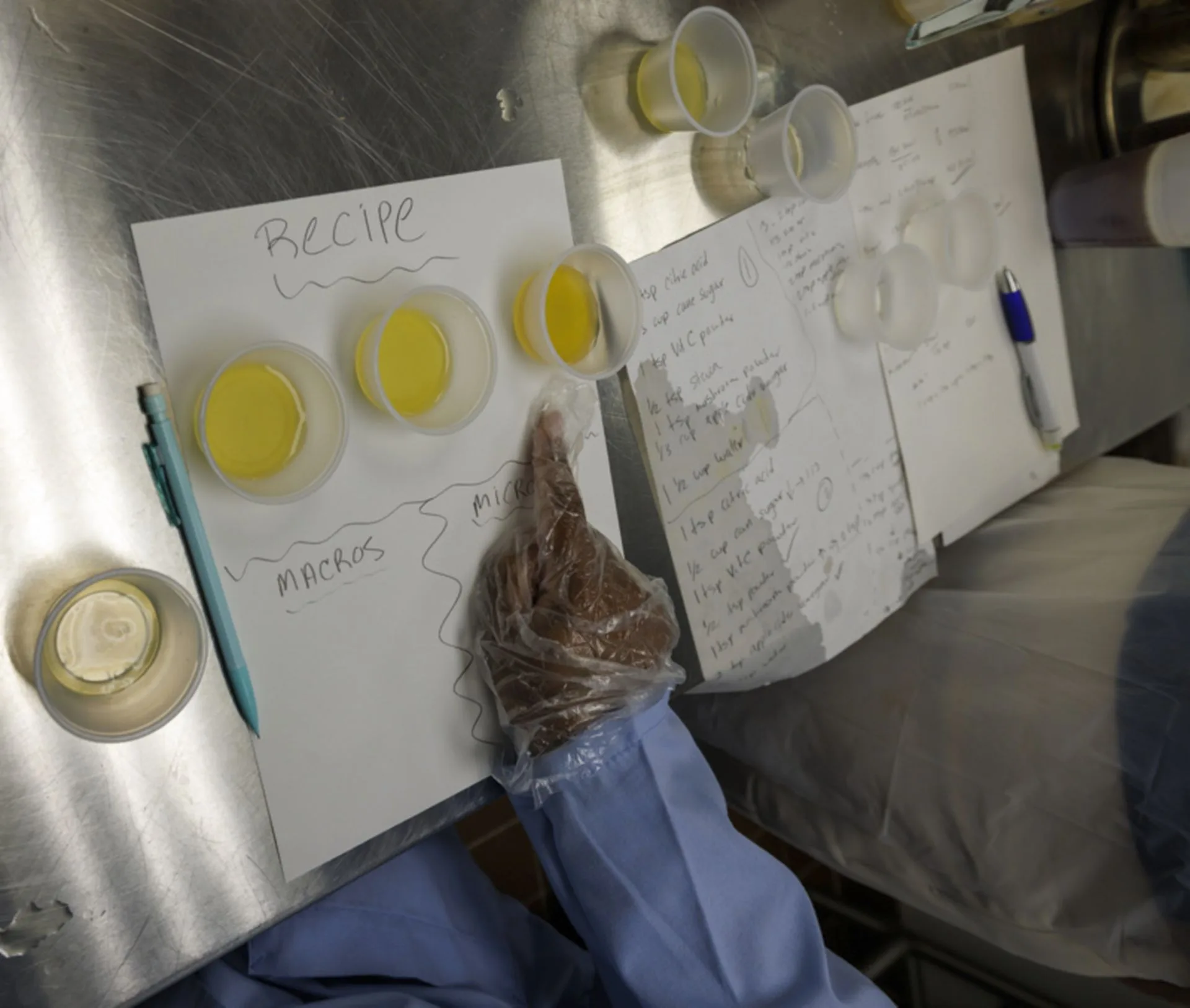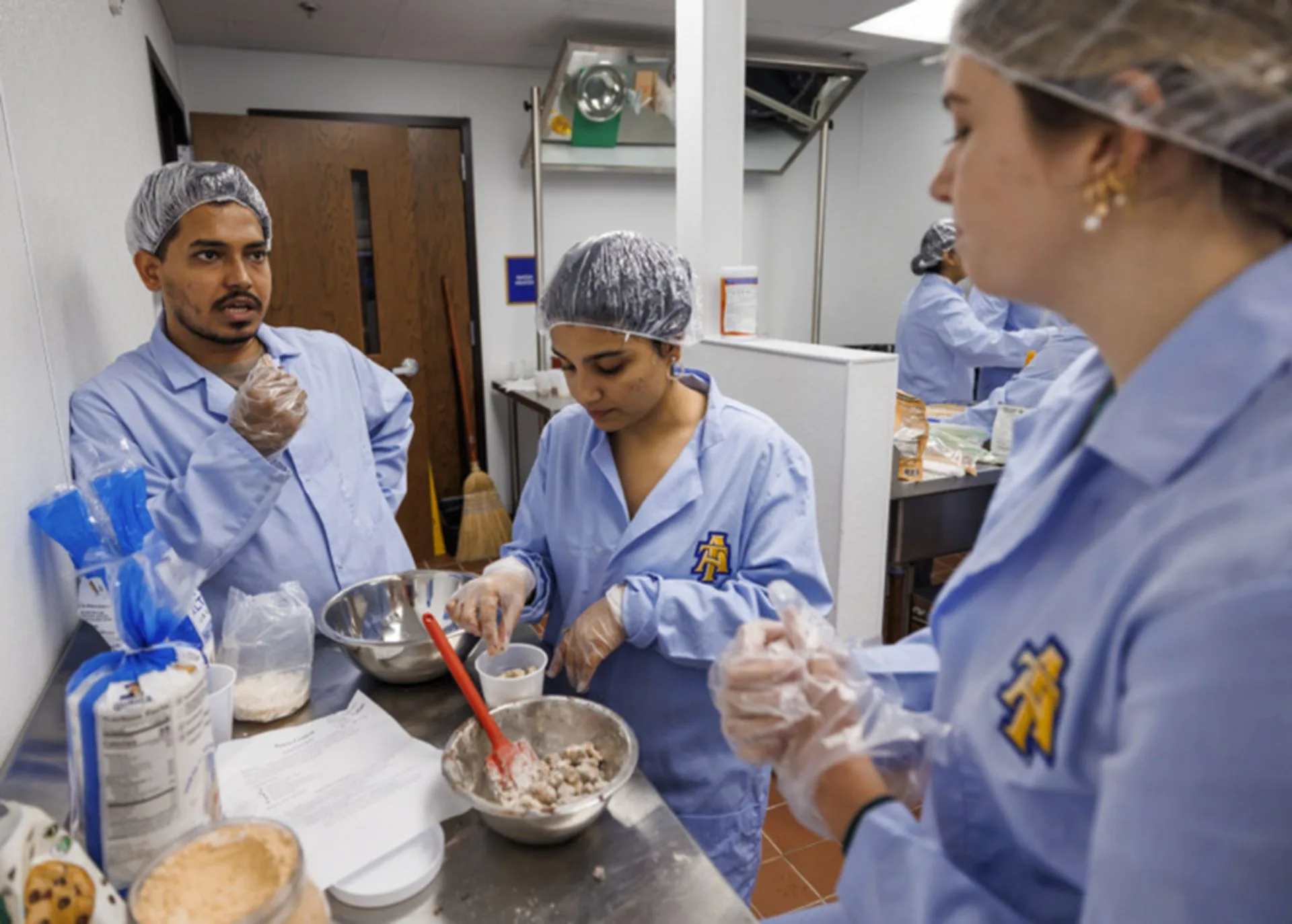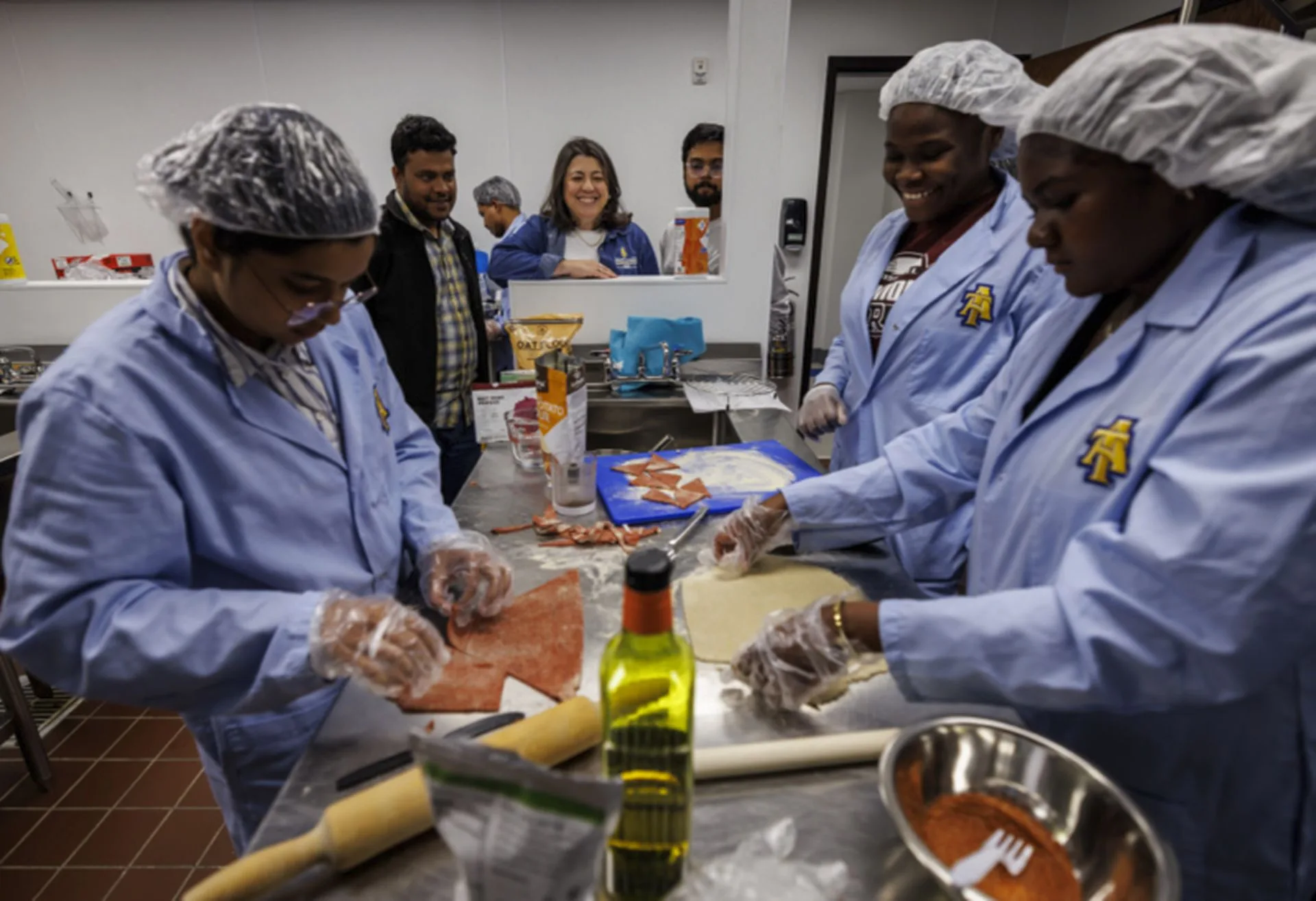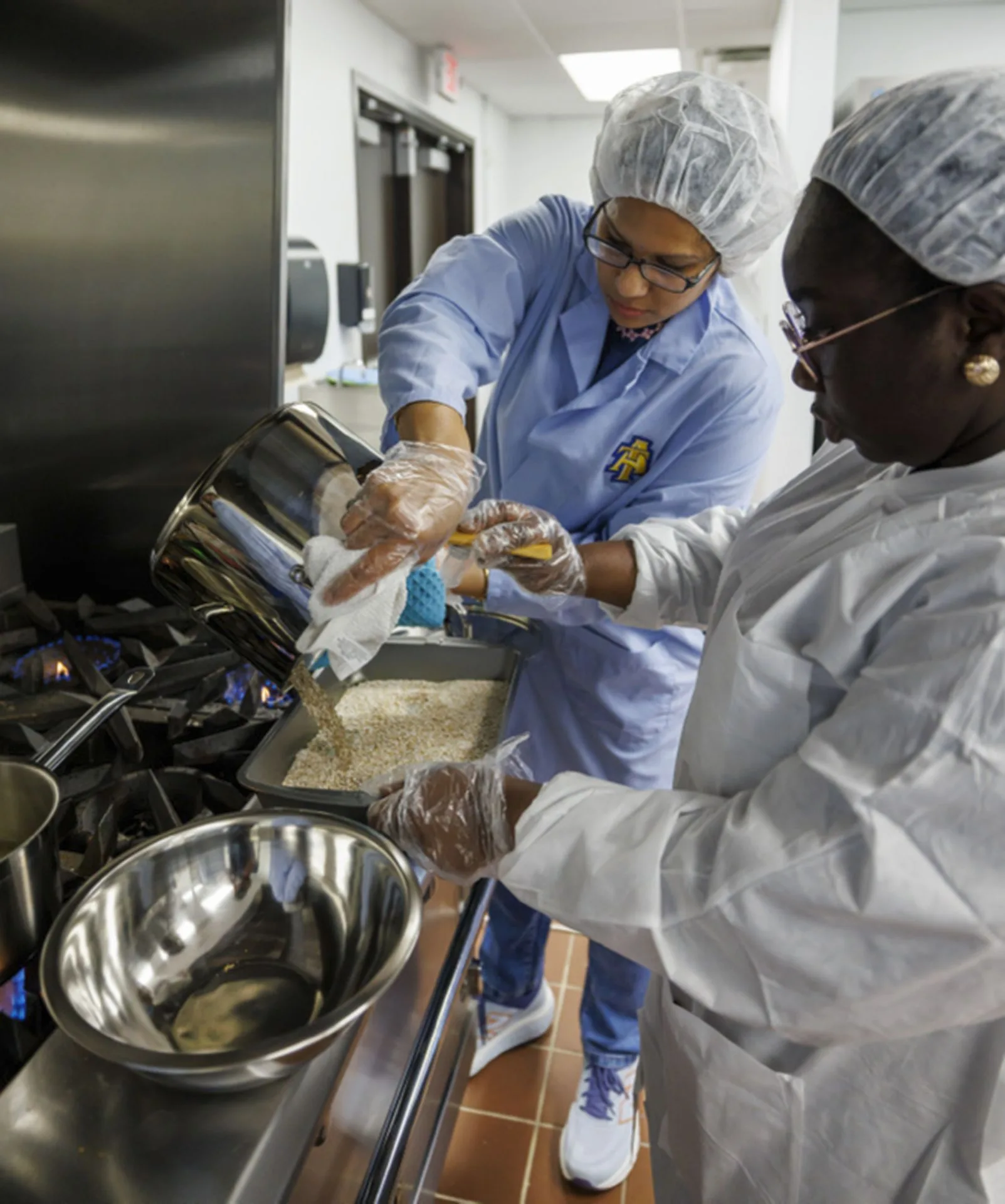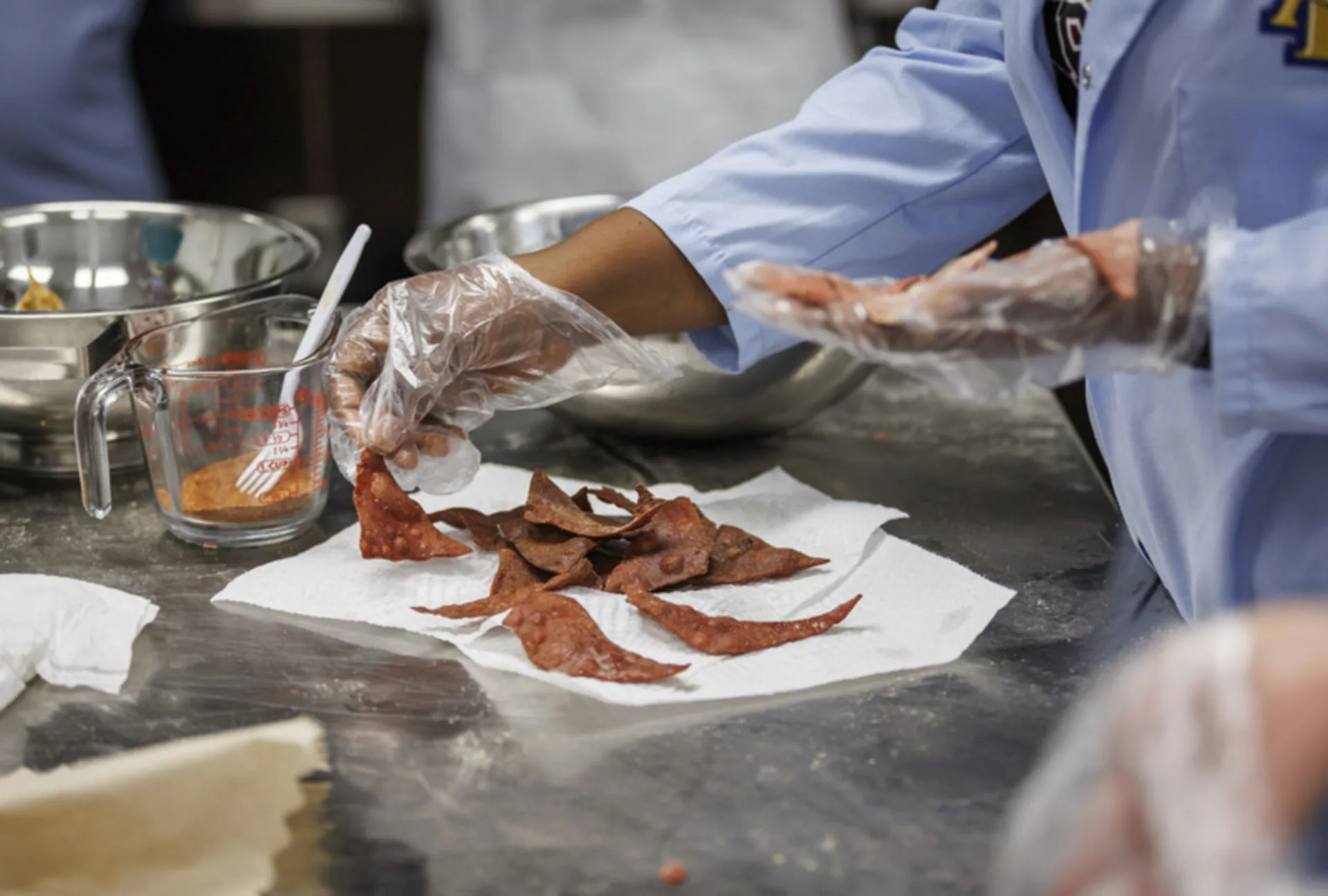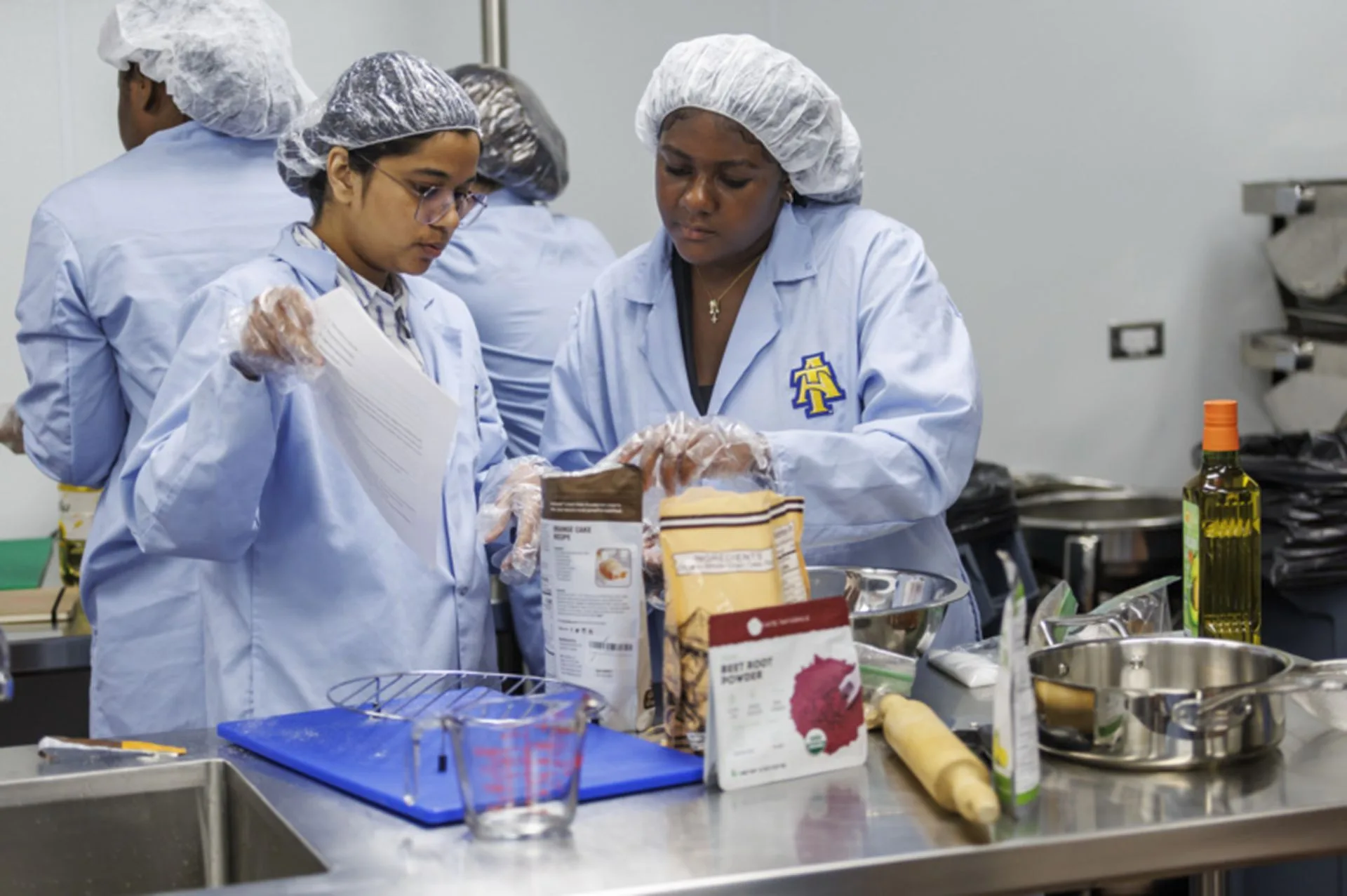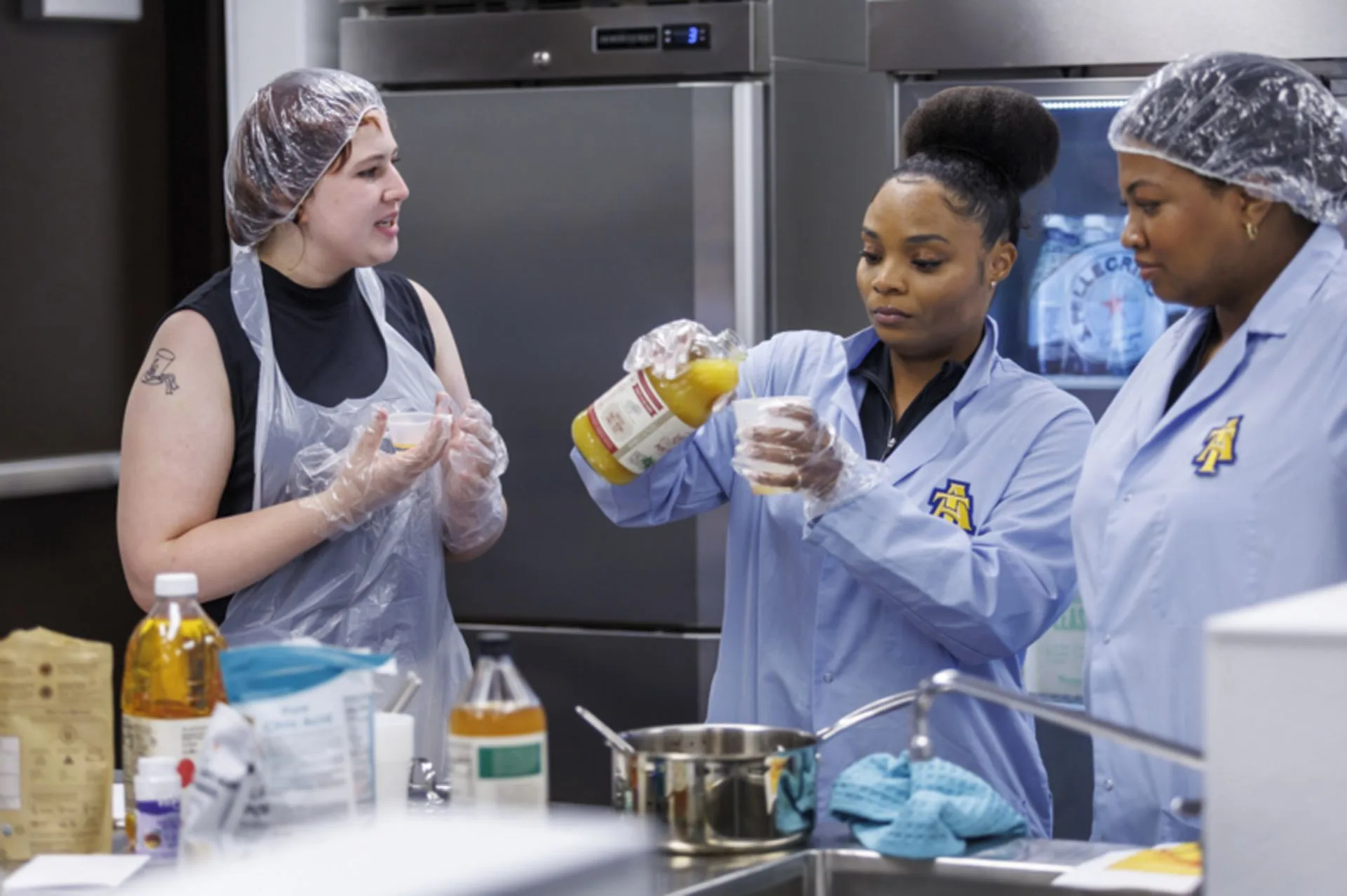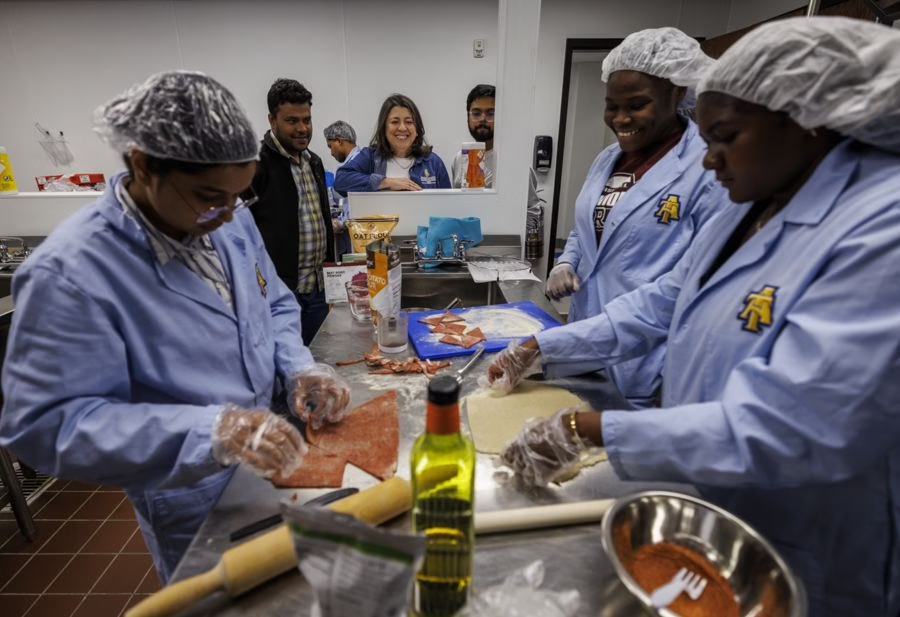
With the timer set at 90 minutes, five teams of newly acquainted college students piled into the kitchen at N.C. A&T’s University Farm Pavilion to prepare their vision of the next commercially produced food or beverage.
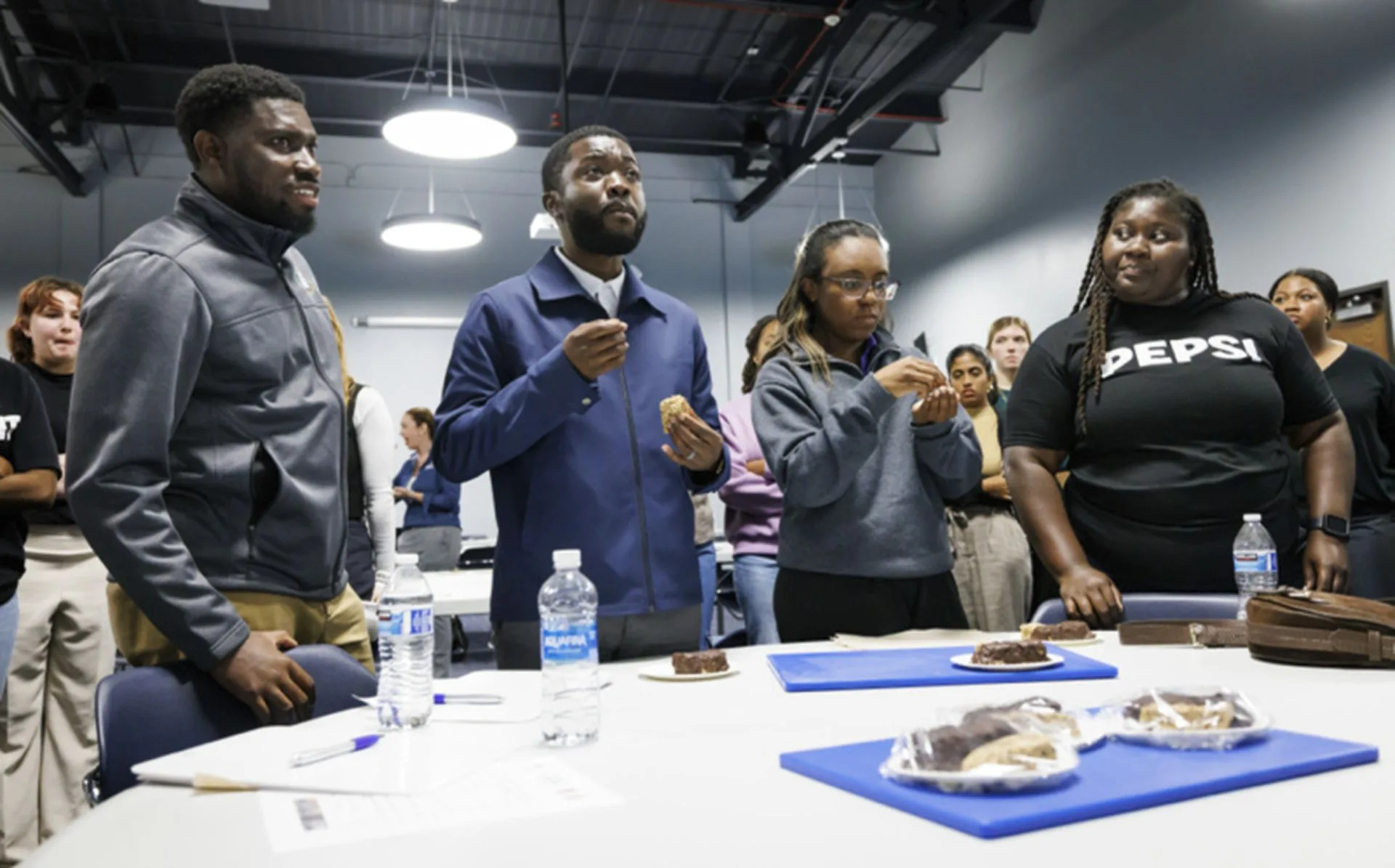
They did not disappoint the judges, four colleagues at PepsiCo, who had difficulty choosing the winner of the Sept. 11 competition.
For the second year, the Dogwood IFT Food Olympics competition brought A&T and N.C. State University students together in 4-member teams and challenged them to create a product that was tasty, nutritious and packed with energy.
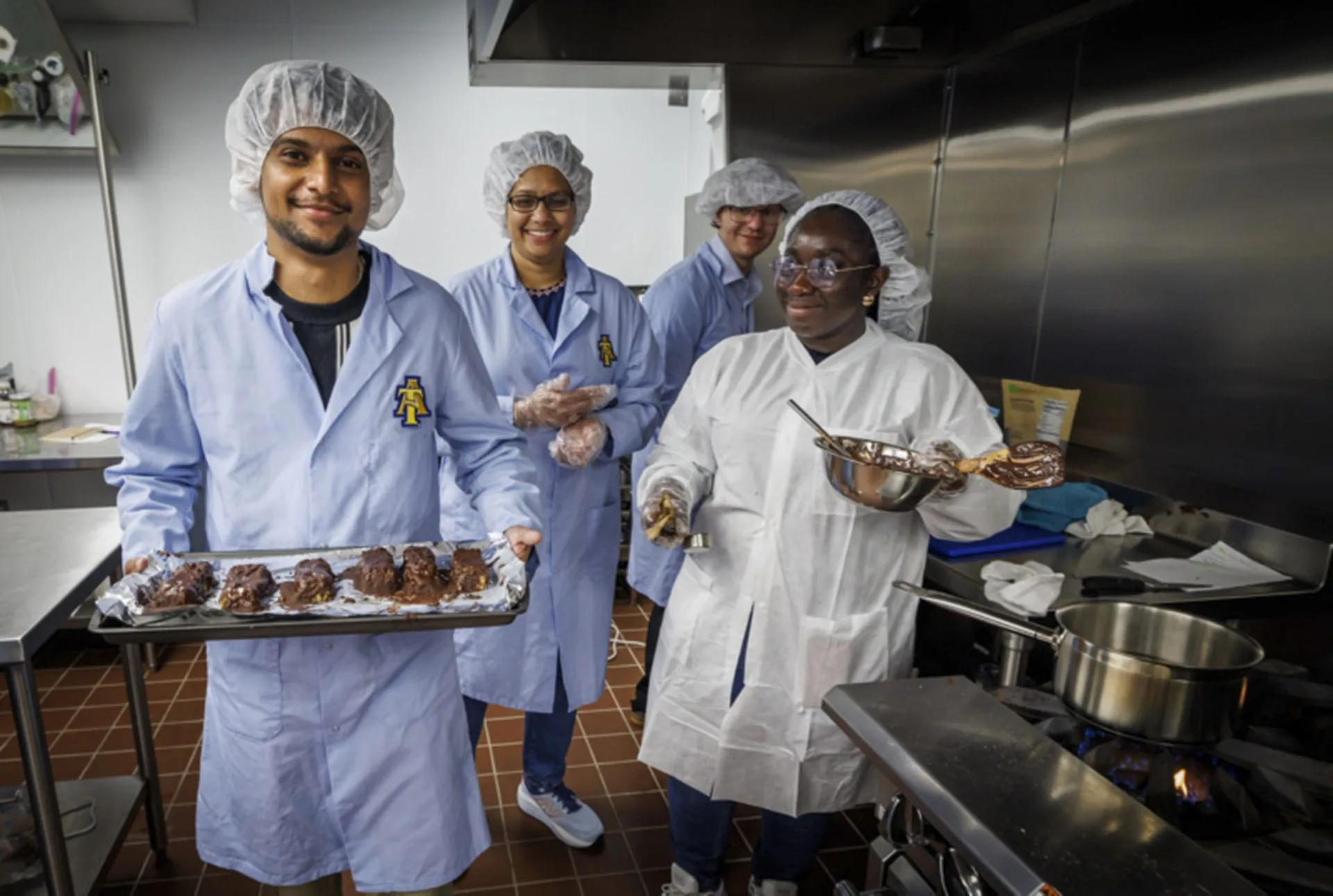
The fast-paced exercise helped Ruth Awuku, a second-year master’s student in the A&T food and nutritional sciences program, understand the science behind her team’s energy bar, which included amaranth seeds and ultimately won the competition.
“We had challenges in cracking it,” Awuku said of the amaranth seed. “Instead of using the industrial process, we had to keep it on the stove so it could heat a bit, then pop it up to use it in our product.”
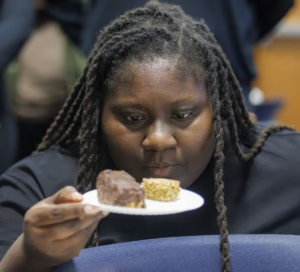
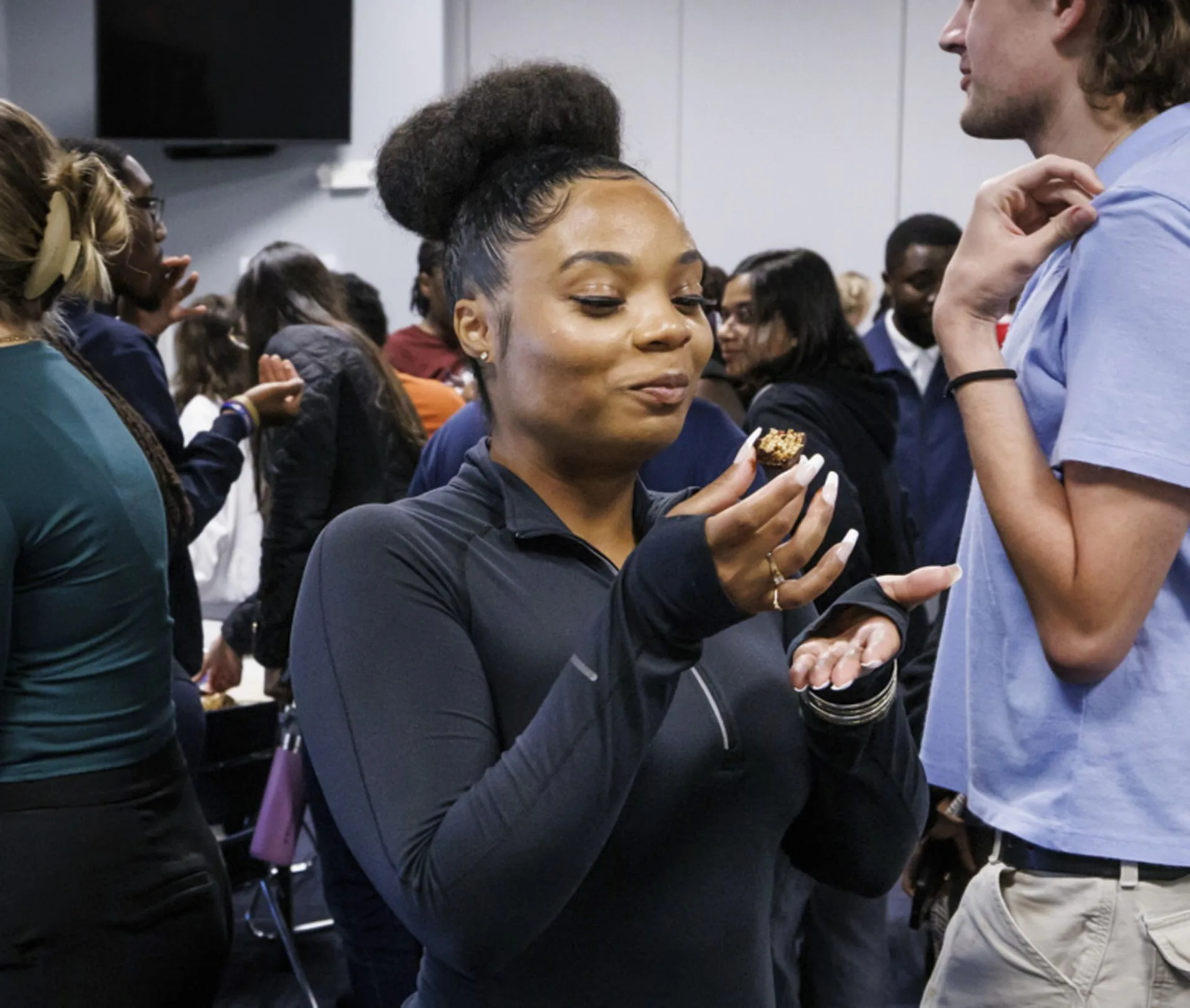
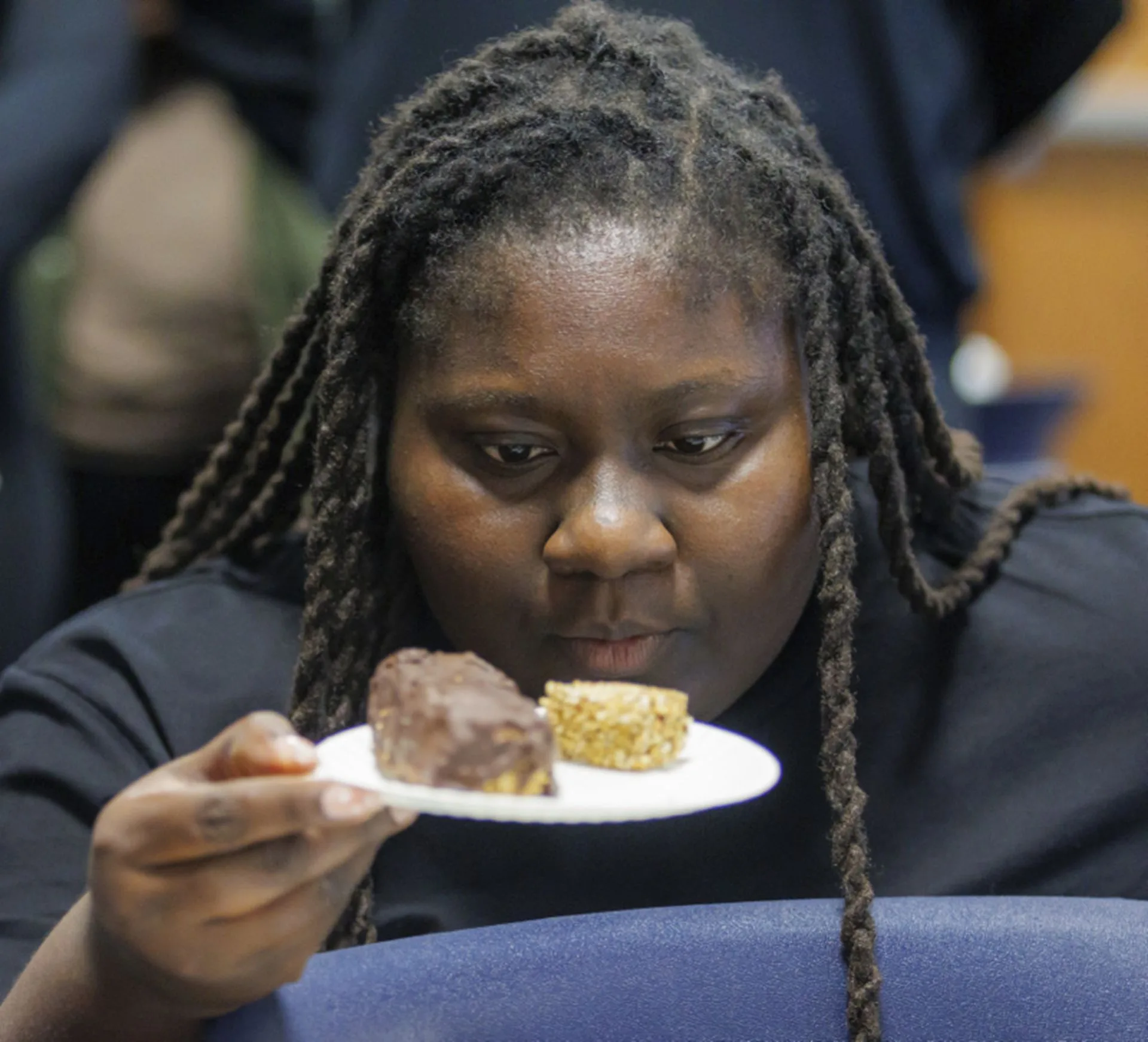
Acacia Hines, Research and Development engineering supervisor at PepsiCo and a competition judge, closely examines the snack bar prototype that was created (and won first place) at the Food Olympics, where mixed teams of students from North Carolina Agricultural and Technical State University and N.C. State University created recipes and made the prototypes in the kitchen at the N.C. A&T Farm Pavilion. The creations were then judged by Research and Development team members from PepsiCo, with the winning team also receiving $2,000.
This year, the teams were judged not only on their pitch and the product they produced, but also on their organizational skills — down to how well they cleaned the kitchen.
“The judge was inside of the kitchen to observe them preparing everything,” said Roberta Claro da Silva, Ph.D., associate professor of food and nutritional science in A&T’s College of Agriculture and Environmental Sciences. Silva and Fernanda Santos, Ph.D., co-director of undergraduate programs for food science at NC State, organized the competition with help from volunteers.
The winning team received $2,000, second place got $1,000 and third place received $500.
Ten teams competed in the challenge, Silva said, and organizers arranged the teams so that each included students from both universities and had a mix of graduate and undergraduate students.
The teams were responsible for meeting and deciding what they wanted to create ahead of time, based on requirements set by PepsiCo. The product had to be appropriate for inclusion in PepsiCo’s portfolio, which includes such brands as Quaker, Gatorade and Lay’s chips.
The creation also had to have a “hero ingredient,” Silva said. “Some type of functional ingredient that gives you some health benefit.”
The team that placed third created a carbonated pineapple juice beverage that included lion’s mane powder, Silva said. Lion’s mane is a mushroom that may help improve cognitive function, the immune system and gut health.
The second-place team created a granola bowl with chia seeds, which are high in antioxidants and omega-3 fatty acids.
The teams had two months to come up with their proposals, which were sent to PepsiCo two weeks before the event for its approval. On the day of the competition, each team gave a three-minute presentation and answered the judges’ questions.
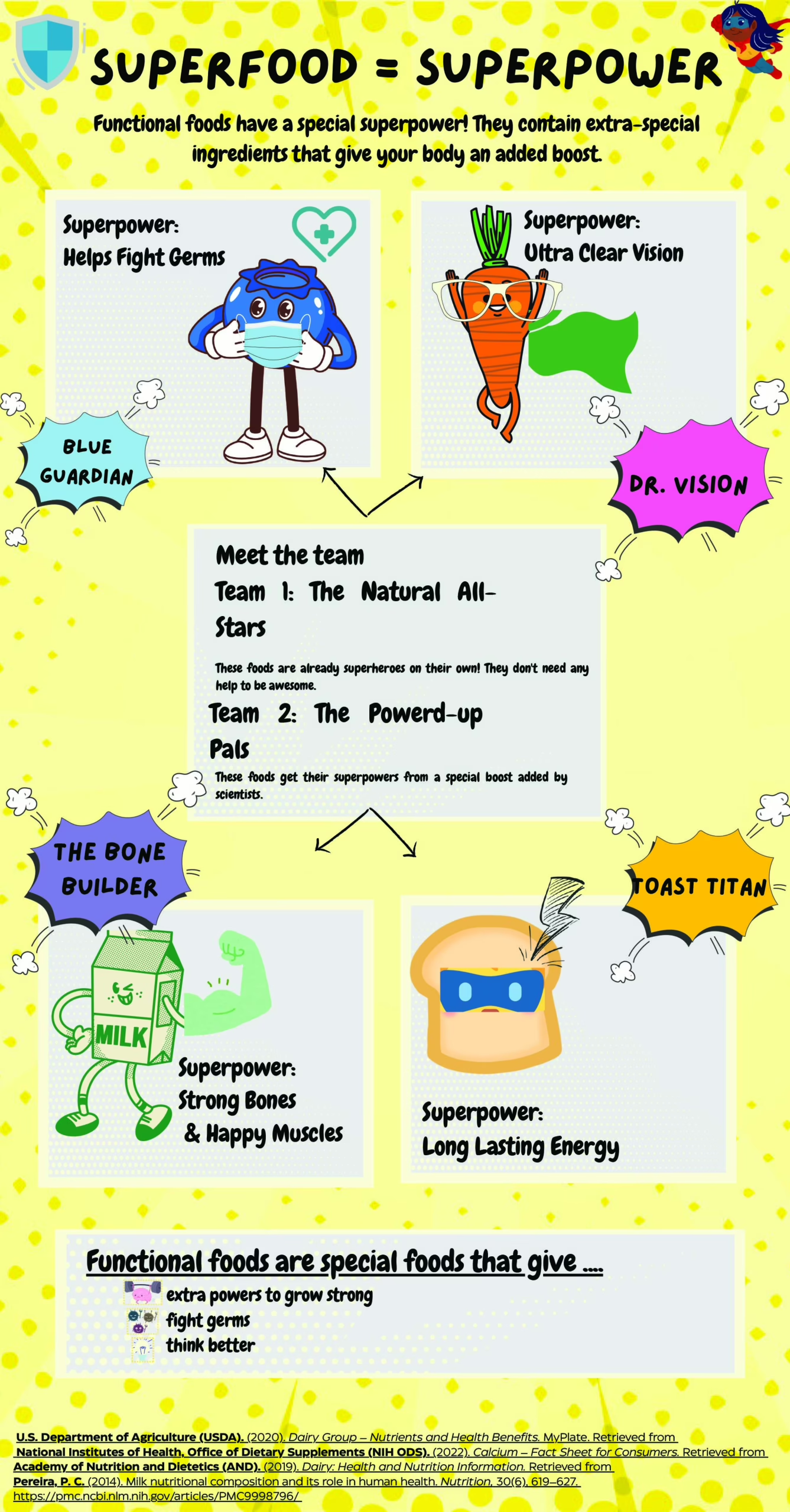
This infographic, created by Delmonica Farrior of N.C. A&T and Katelyn Walker and Swara Bhayde of N.C. State, won first prize at the Dogwood IFT Food Olympics.
Because of the limited kitchen space, the judges whittled the teams down to five that could go on to create their products within 90 minutes.
The other five teams were tasked with creating an infographic from scratch explaining the concept of functional foods, which offer health benefits beyond basic nutrition.
“They did their research during that time,” Santos said. “They created nice infographics and what was turned out was incredible.” The winning team received a swag bag from PepsiCo.
Sahaj Khanal, who was on the winning kitchen team, said one challenge was to figure out how to keep their bar’s form consistent. “We didn’t have a mold to give it a structure,” said Khanal, who is studying for his master’s in food and nutritional science at A&T. Team members used their hands to shape the bars and froze them for a few minutes to get a uniform structure.
“It was a great reminder of how important adaptability and teamwork are in product development,” Khanal said.
Fellow teammate Devyani Jinendra Unhone agreed, adding that time management was another important lesson.
Unhone, an N.C. State graduate student studying food science, said the competition made participants consider such things as scaling up the product for mass production, commercial packaging and potential shelf life.
“These are some things that help us understand real-world scenarios while developing the product,” she said.
Prince Boakye, an associate principal scientist with PepsiCo, said the competition was difficult to judge. “There were a lot of great proposals,” he said. “The execution was great across the board, so it was almost splitting hairs” when choosing the best entries.
Organizers are looking forward to continuing the competition — which brought Dogwood IFT an Impact Award in Student Engagement from the Institute of Food Technologists in August. Santos said the competition eventually may be offered to students twice a year.
“I think there is a lot of value in doing the competition the way we do it,” she said. “It makes students make decisions on the fly ... that’s what they will do if they want to become food product developers.”