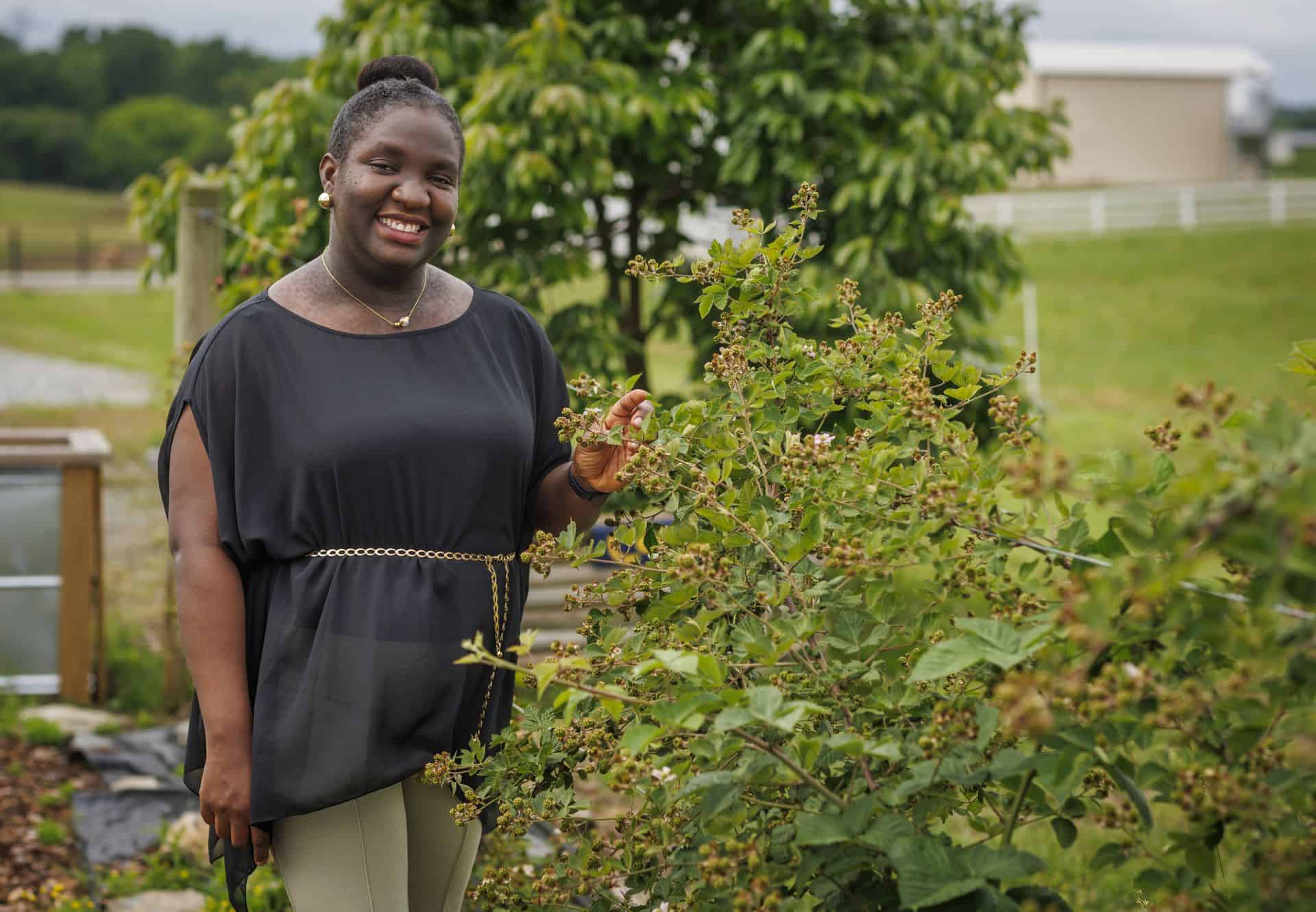
“Diligent” is the way Uchenna Anele, Ph.D., professor and interim chair of the Department of Animal Sciences, describes his mentee, graduate research assistant Chika Anotaenwere. So, he wasn’t surprised that she completed the 16-week Agribusiness Entrepreneurial Academy at the Agriculture Business Innovation Center (ABIC) — and won a student award in the process.
“She’s not willing to just do the minimum work, she pushes herself to do as much as possible,” said Anele, noting that the College of Agriculture and Environmental Sciences student is first author on five manuscripts and is working on another five.
“She’s that kind of person, very diligent,” Anele said.
A native of Nigeria, Anotaenwere won third place and $2,000 in the Tournament of Ideas pitch competition for her hibiscus-based drink. CAES News recently spoke with Anotaenwere about the idea and her experience with the academy.
What is your business idea?
My business idea is called HibiFresh. It is an early-stage idea for a hibiscus-based drink that would offer a refreshing, natural and culturally inspired beverage option. At this point, I am still developing the concept and learning what would be needed to move it from an idea to a real product in the future.
Your research at A&T focuses on ruminant nutrition, so what inspired the idea of a beverage?
The idea was inspired by my interest in agriculture, nutrition and value-added food products. Hibiscus is widely known and appreciated in many cultures, especially in African communities, and I saw an opportunity to explore it as a refreshing beverage idea. I was also motivated by the growing health concerns linked to sugary drinks, so I wanted to think creatively about a natural drink option that could appeal to health-conscious consumers.
Is the business ready to launch?
I am not ready to start the business yet, but the ABIC has helped me understand the steps I would need to take before launching.
What did you learn from the ABIC program?
ABIC helped me understand that a business idea needs more than passion. It requires planning, research, a clear target market, financial thinking, branding and strong communication. The program helped me begin to shape HibiFresh more clearly and think about the practical steps needed before starting a business.
What’s next?
I would like to continue developing the idea by learning more about product formulation, consumer preferences, packaging, pricing and food safety requirements. My goal is not to rush the process, but to build a strong foundation so that if I decide to launch, I can do it properly.
How do you think ABIC will continue to help you?
ABIC can continue to help through mentorship, business development guidance, networking and access to people who understand agribusiness. That kind of support is important because it can help me make informed decisions before taking the next step.
What impact do you hope HibiFresh could have someday?
Someday, I hope HibiFresh can encourage healthier beverage choices while also highlighting the value of agricultural products and cultural innovation. I also hope the idea can inspire other students to explore entrepreneurship and take their ideas seriously.
What would you say to others considering the ABIC program?
ABIC is a valuable opportunity to learn, grow and understand what it takes to develop an idea into something more structured. Even if someone is not ready to start a business immediately, the program can help them build the foundation.