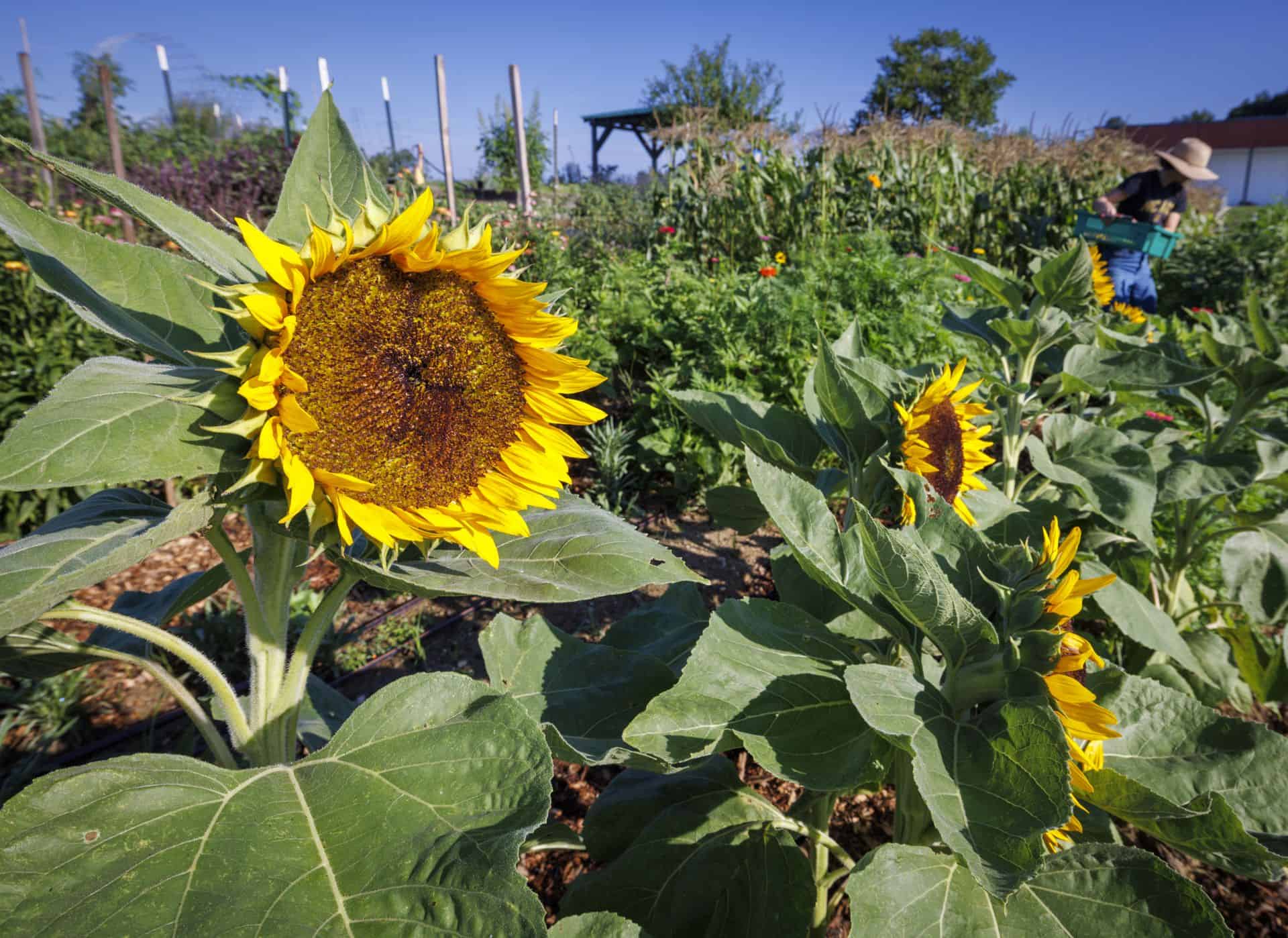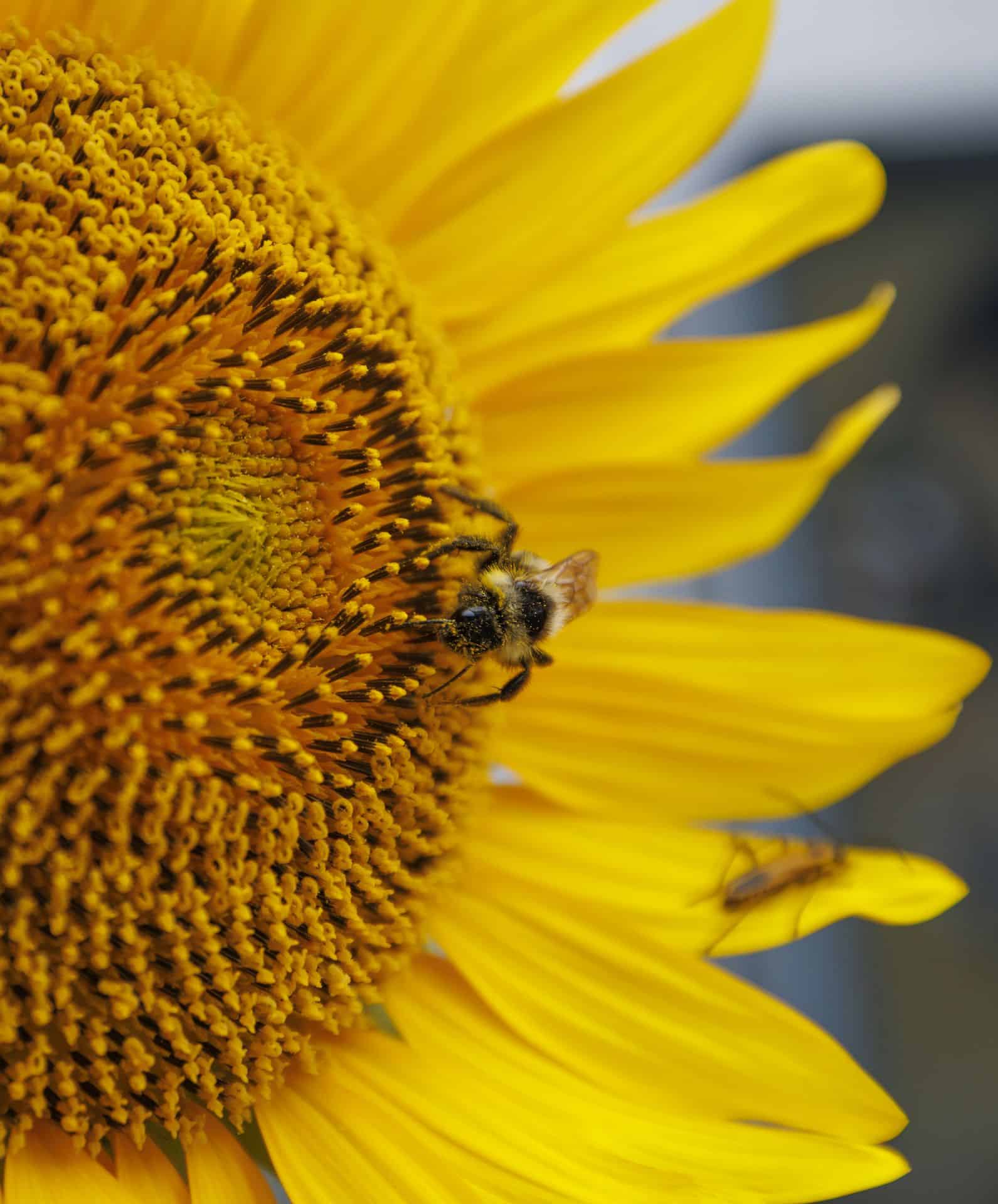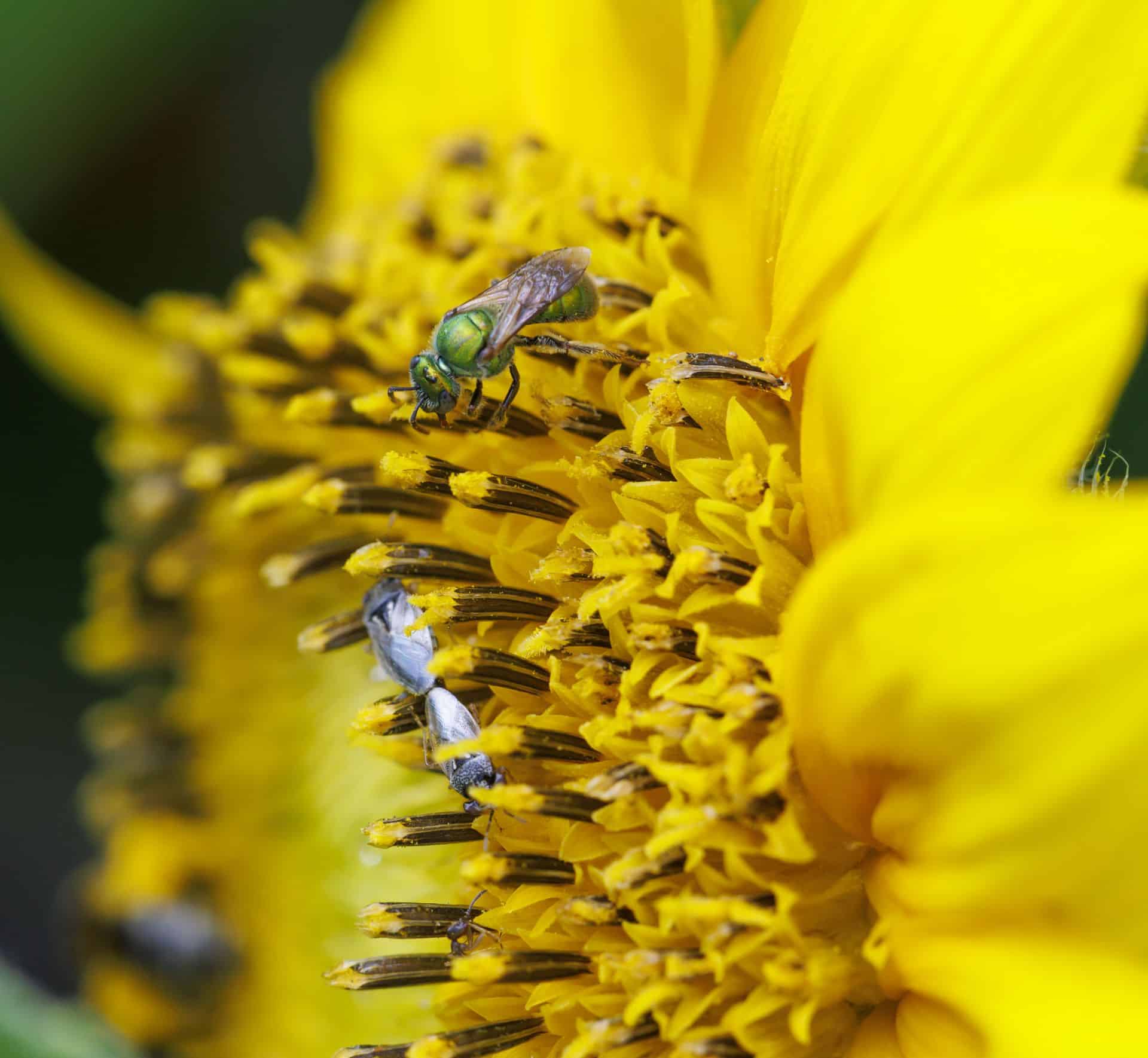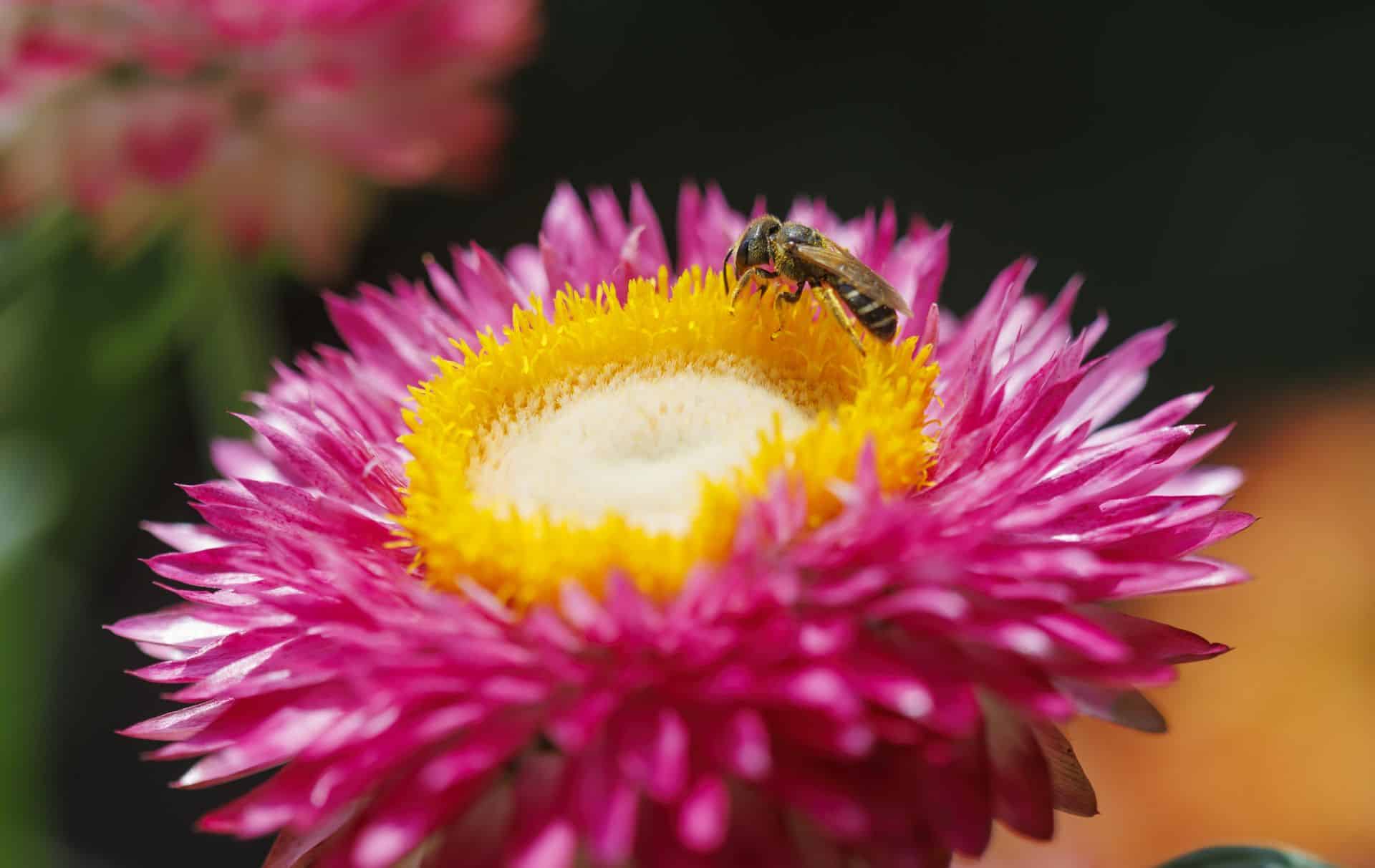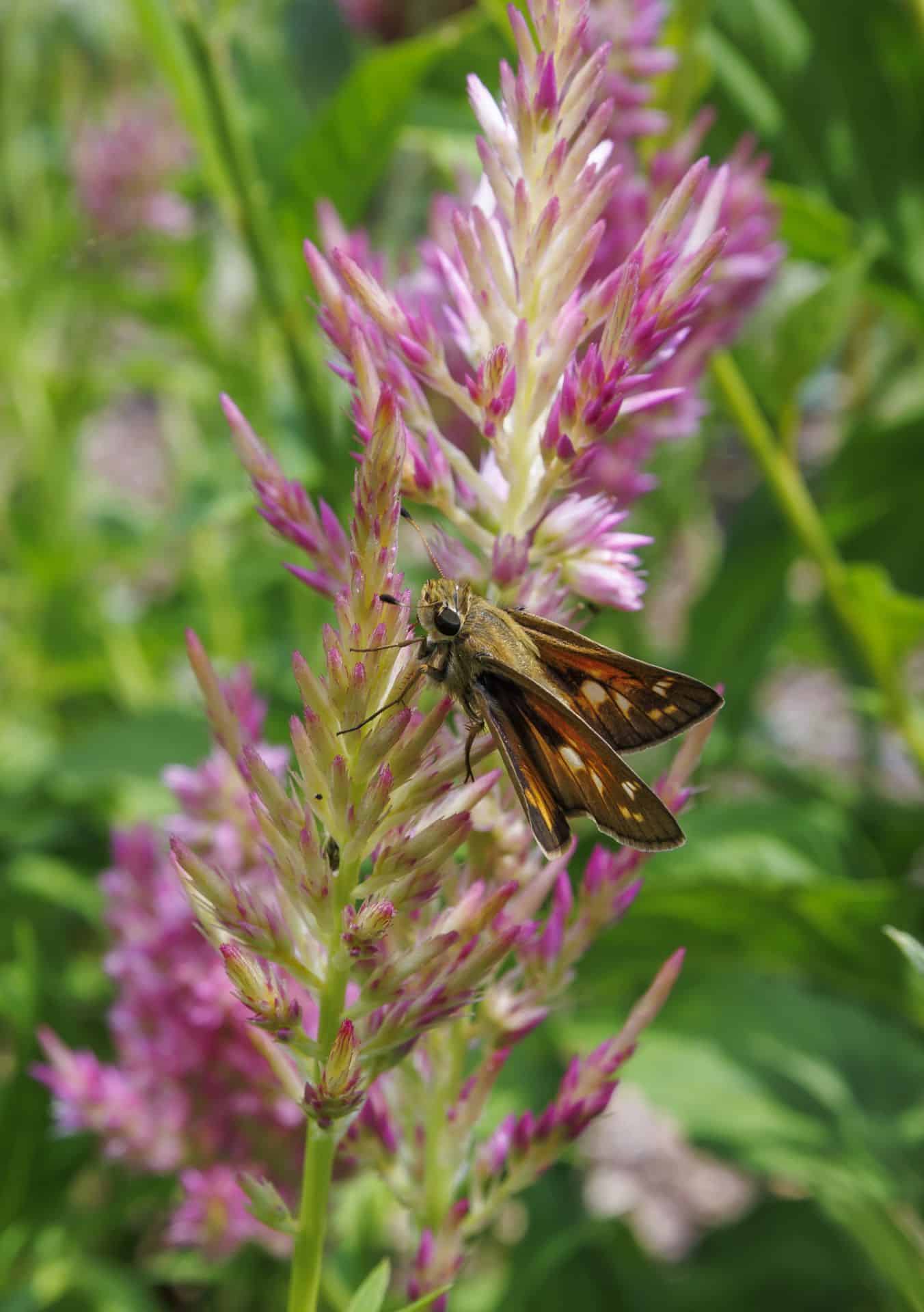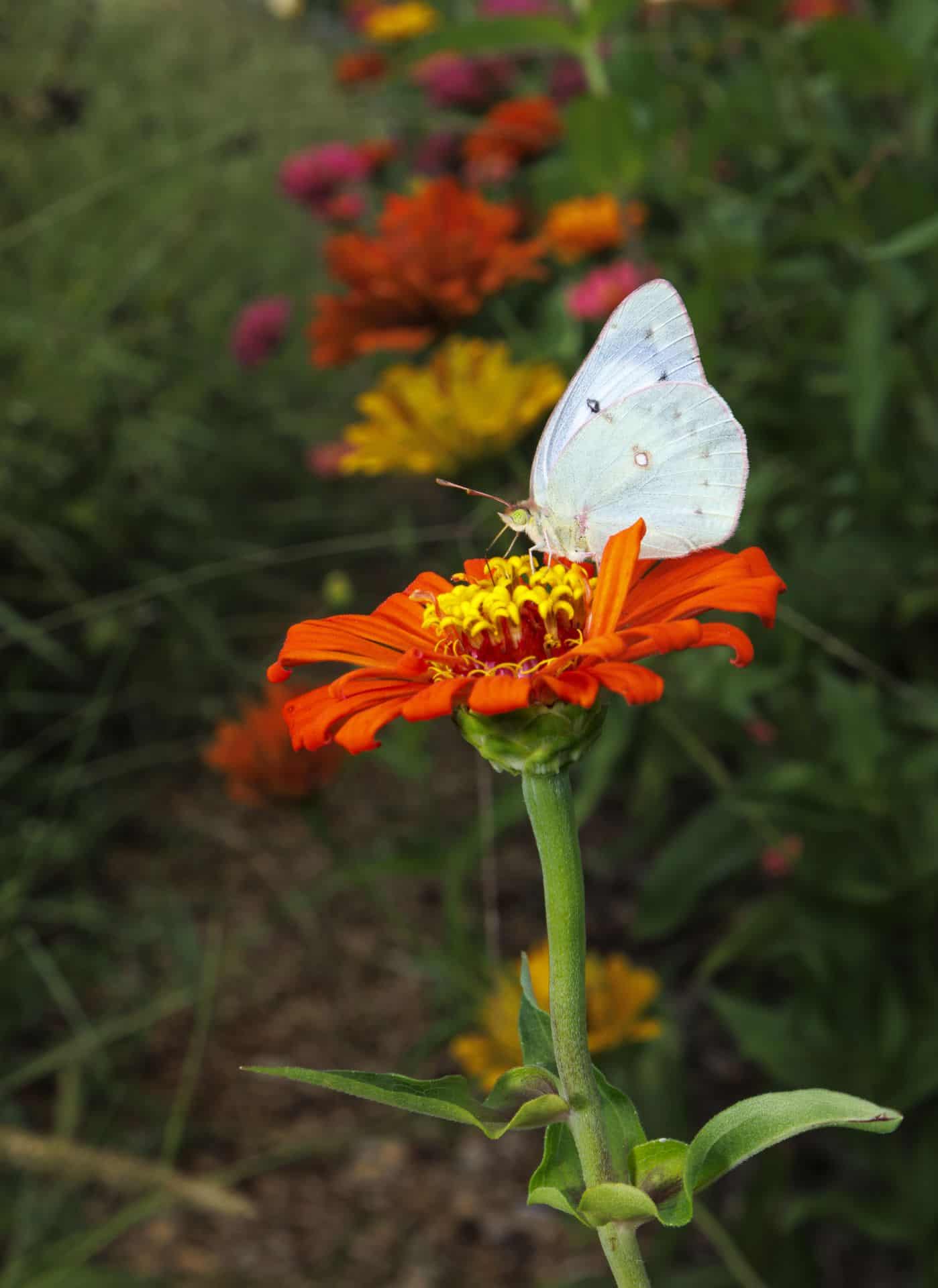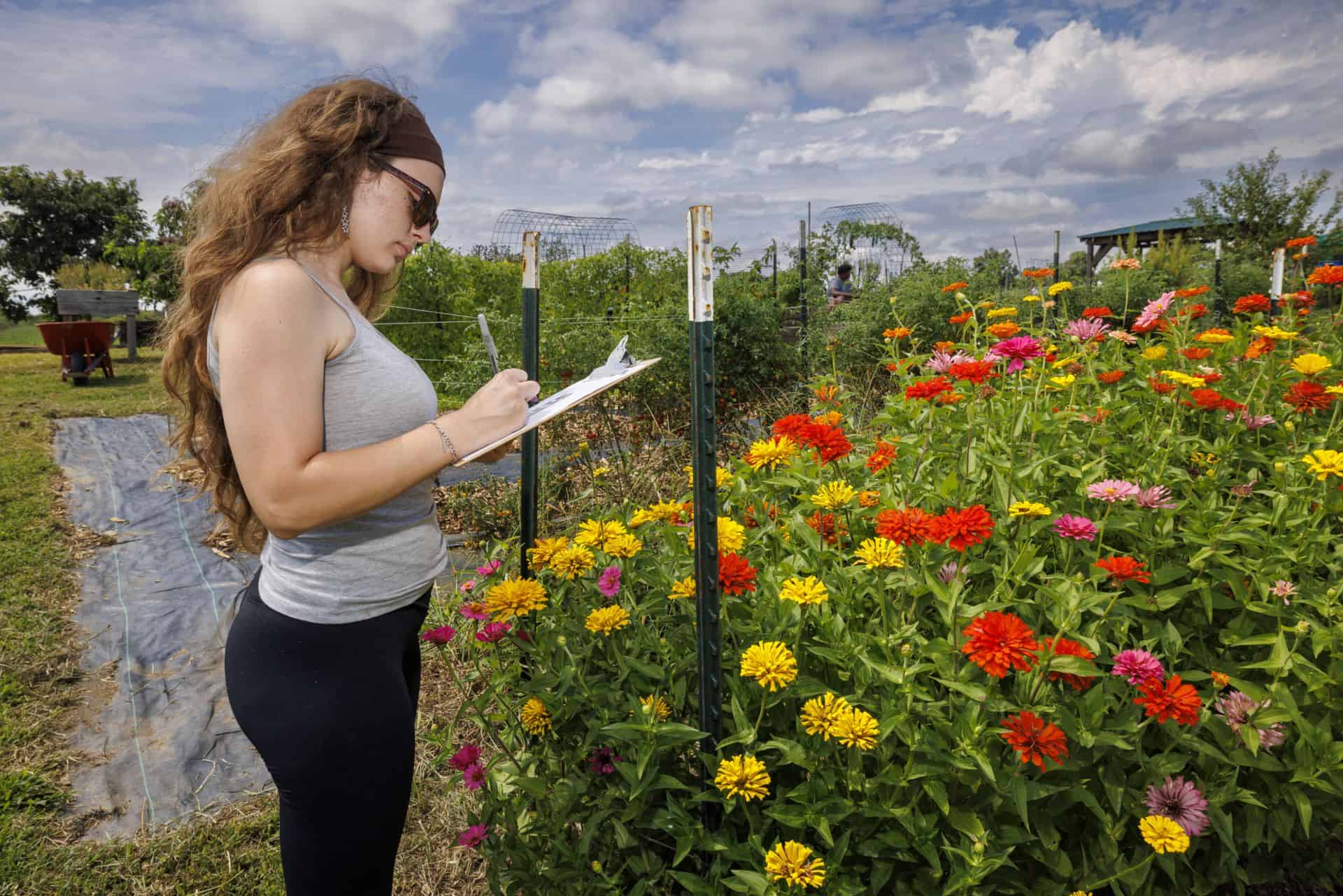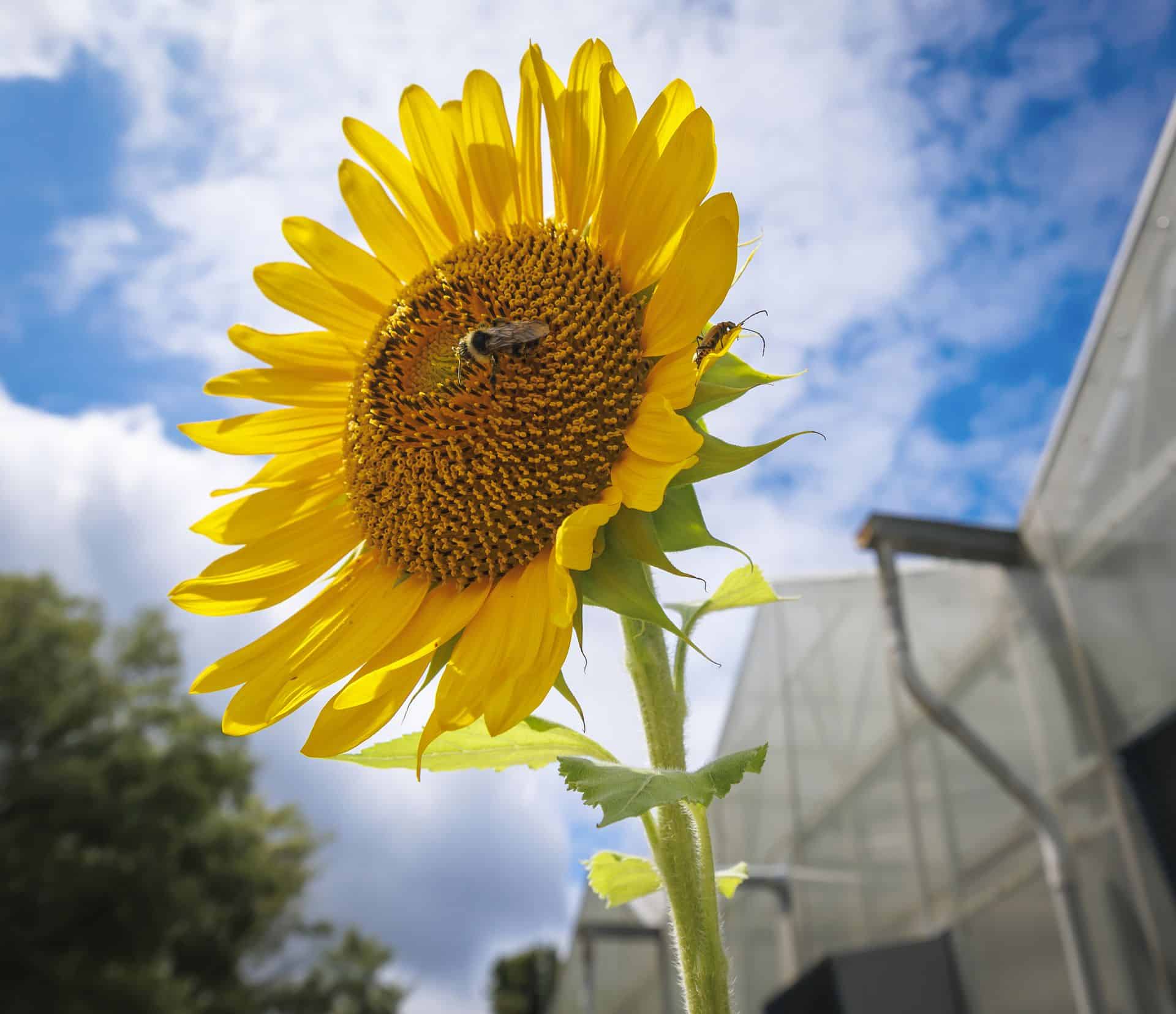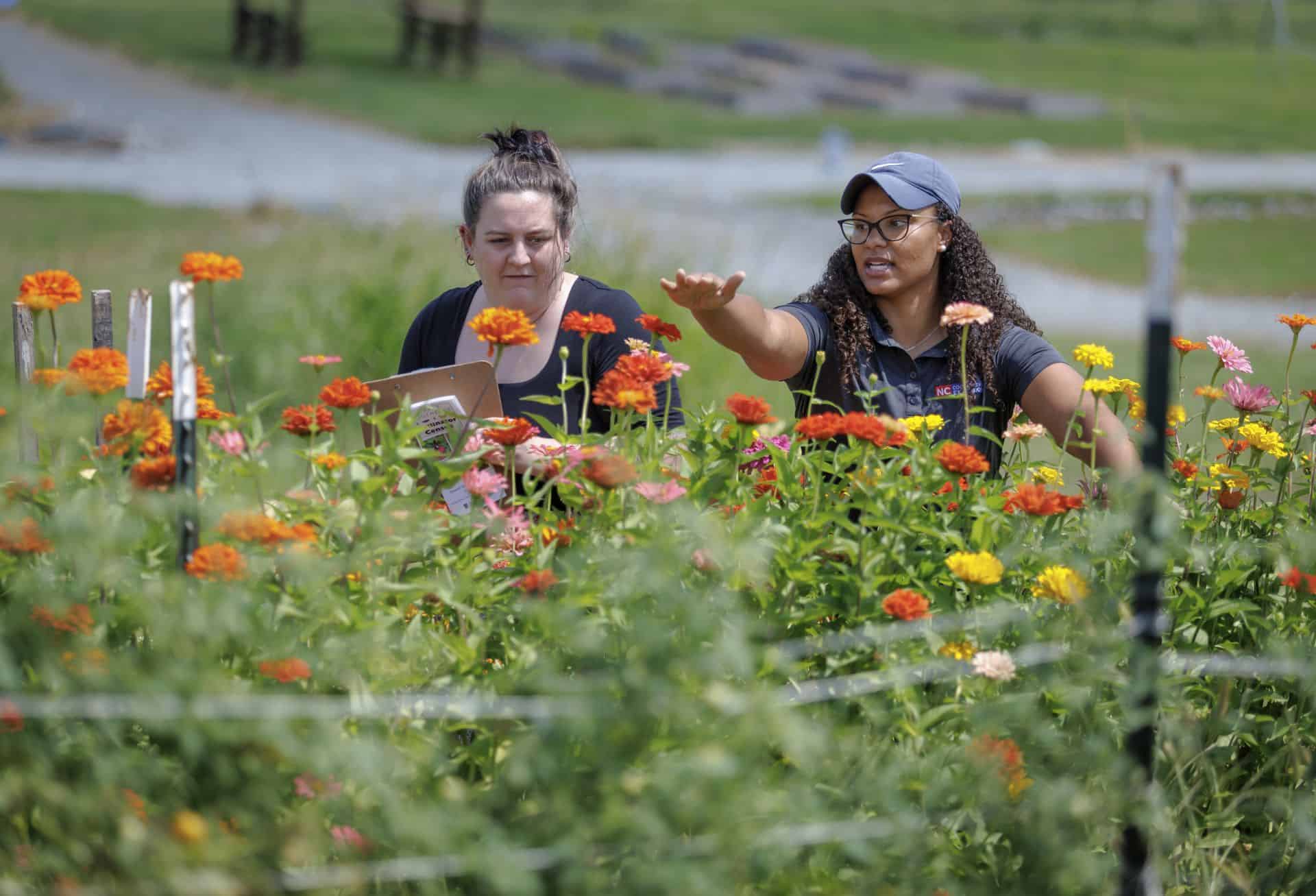
Community members, Aggie students and University Farm staff spent some quality time in the garden this month — but they weren't just relaxing among the flowers. They were counting bees, wasps, flies and other pollinators as the insects went about their work of producing blooms and a bounty of fruits and vegetables.
About 40 people participated in N.C. A&T Extension's portion of the Great Southeast Pollinator Census, an annual community event in which guests spend 15 minutes observing a flowering plant and recording every time a pollinating insect landed. Bees, wasps, flies, butterflies, moths and other insects all count — and were counted — as pollinators, the garden heroes that enable the reproduction of over 75 percent of the world's flowering plants and fertilize one out of every three bites of food people eat.

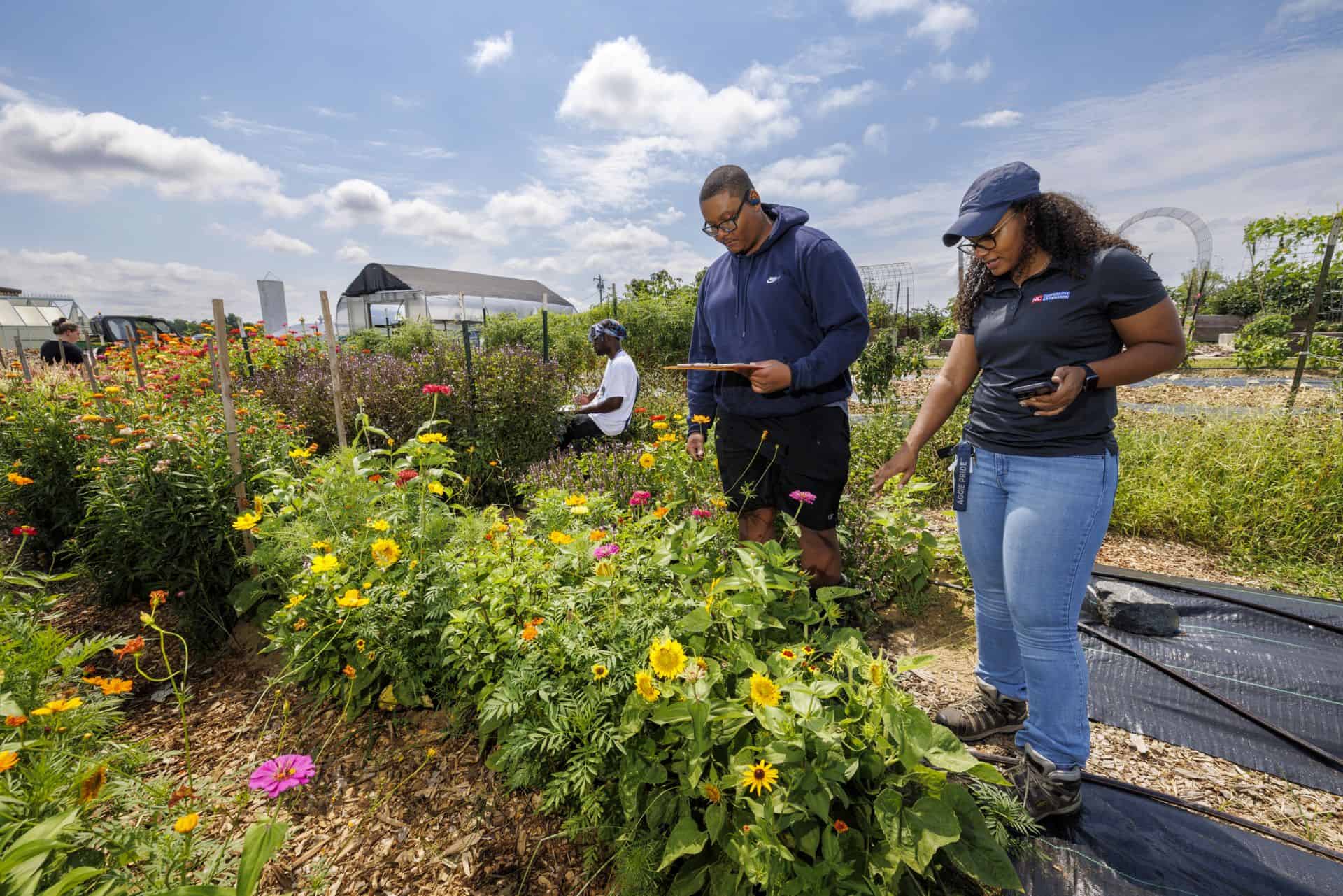
Research student Elijah Atley observes and counts pollinators on marigold plants while participating in the Great Southeast Pollinator Census on Aug. 21.
Extension’s census was hosted Aug. 21 at the community garden at N.C. A&T’s University Farm, with an additional census event hosted Aug. 21 and 22 at the Guilford County Extension Office. This is the first time N.C. A&T Extension has served as an official pollinator census site.

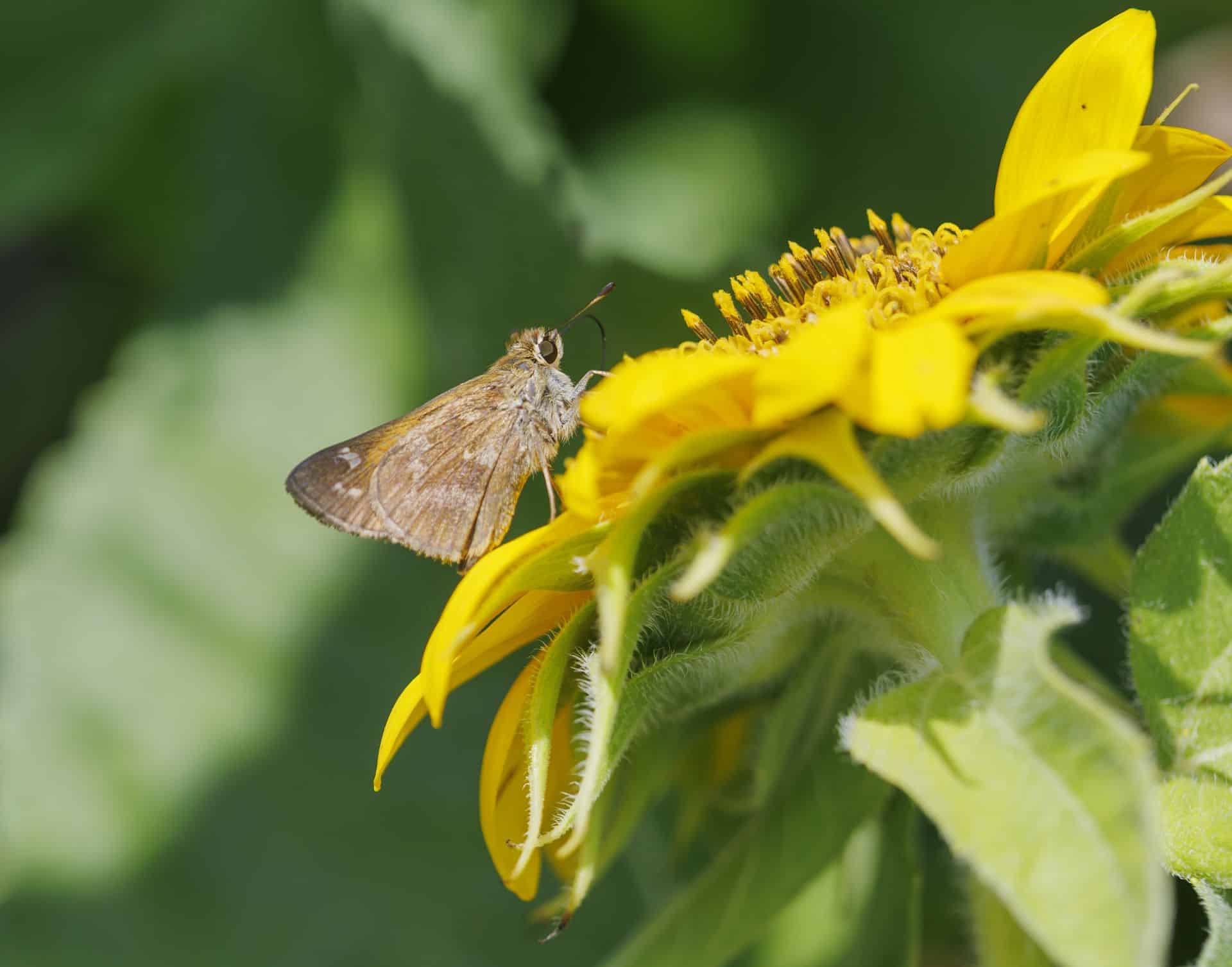
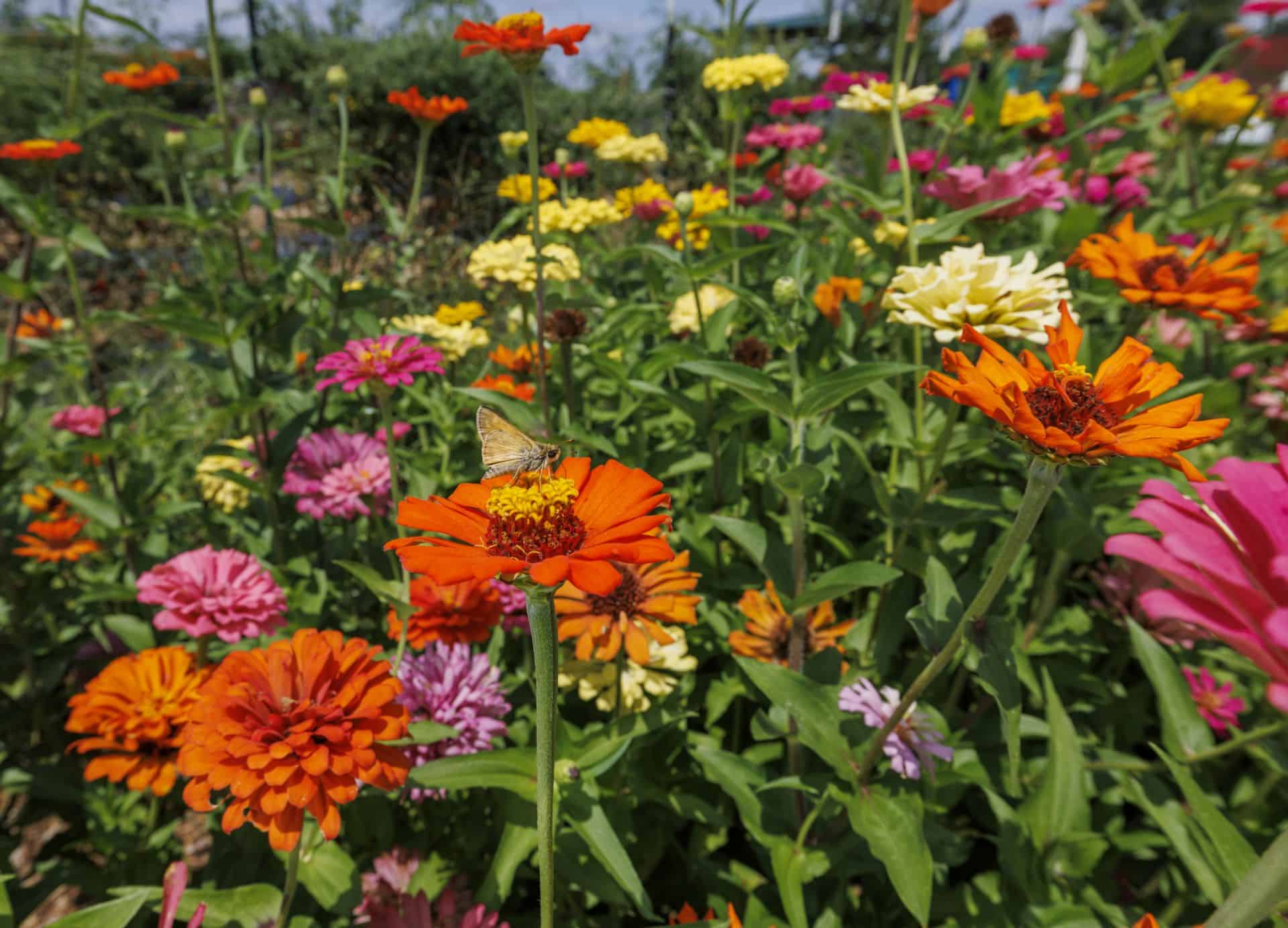
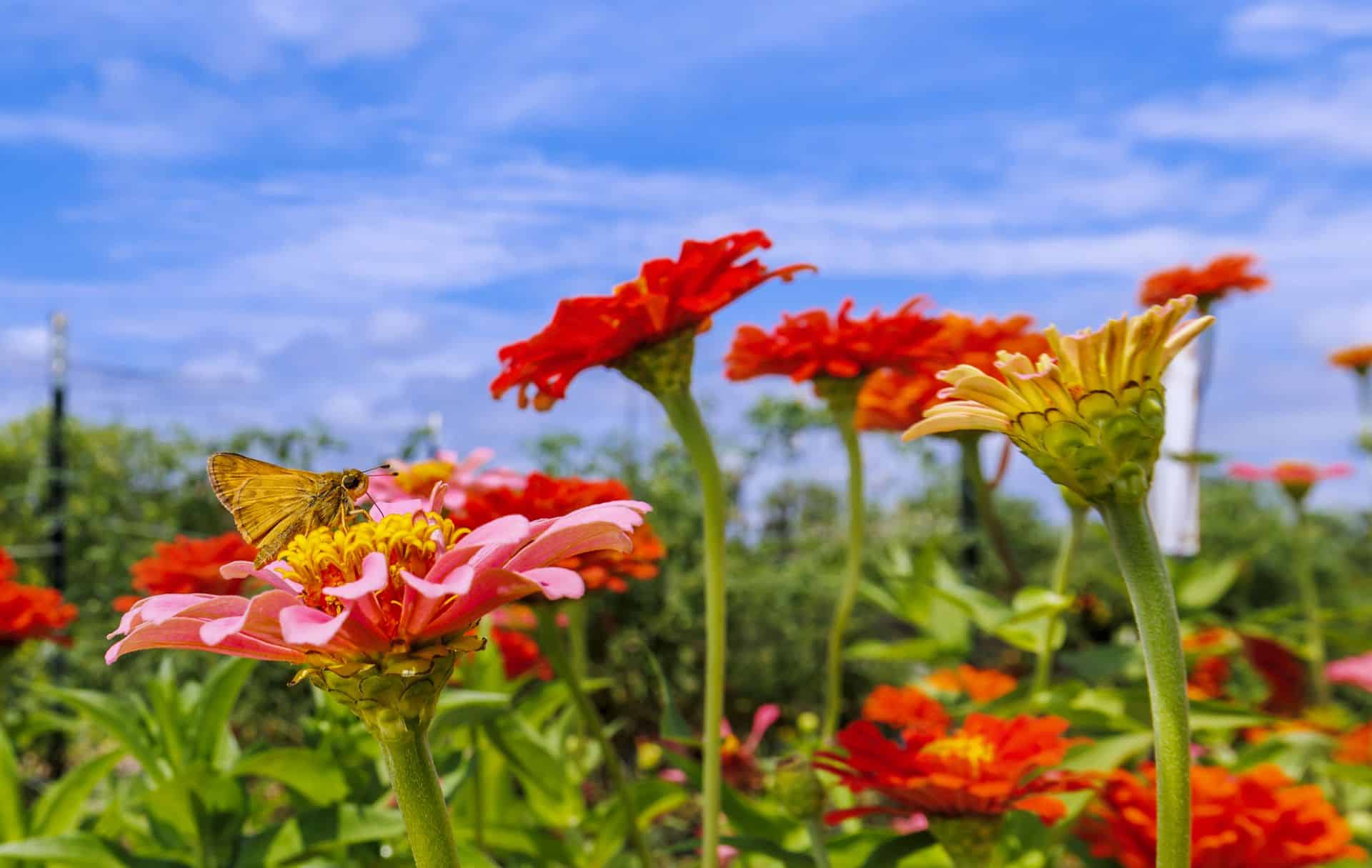
A skipper butterfly rests on a zinnia in the N.C. A&T Community Garden.
“Community involvement is at the heart of the census - we call it Citizen Science,” said Hannah Talton, D.P.M., assistant professor and plant pathology Extension specialist. “By participating, community members contribute valuable observations that help researchers and Extension professionals better understand pollinator populations, their activity, and habitat needs across the Southeast. At the same time, the census provides a hands-on learning experience that helps people recognize the value of pollinators and their role in agriculture and the environment.
Founded by the University of Georgia Extension, the census is a multi-state community science project open to individuals, families and school groups across participating states, including North and South Carolina, Florida, Alabama and Mississippi.
“Our goal is to establish additional N.C. A&T pollinator census locations across North Carolina to expand outreach opportunities, educate the communities we serve and contribute valuable pollinator data to this regional initiative,” Talton said.