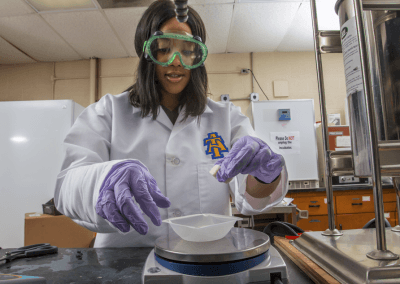
There’s evidence that whole grains can help prevent chronic disease, but there aren’t accurate tools to measure beneficial compounds from whole grains in the body. To better understand the effects of whole grains on health, biomarkers for their exposure and effects are needed.
Shengmin Sang, Ph.D., a food scientist with North Carolina Agricultural and Technical State University, has received a $2.8 million, five-year grant from the U.S. Department of Agriculture’s National Institutes of Food and Agriculture to change that. He will work with his research partners to identify biomarkers for whole grain wheat and oats.
“At the completion of these studies, our expectation is that we will have identified markers to reflect whole grain wheat or oat intake,” said Sang, a professor and lead scientist for functional foods at the university’s Center for Excellence in Post-Harvest Technologies at the North Carolina Research Campus in Kannapolis. “Our findings will establish the basis for future studies of the role whole grains play in health and eventually lead to more individualized nutrition.”
This project could help answer a host of questions, such as whether obesity, age and gender affect the body’s response to whole grains. It could help explain the impact of gut microbiota on the metabolism of whole grain phytochemicals and could lead to a more individualized, and more effective, approach to nutrition.
The USDA’s Beltsville Human Nutrition Research Center and the University of North Carolina at Charlotte’s College of Computing and Informatics will collaborate on the research.
Sang submitted this research proposal to the National Institutes of Health in response to the program entitled “Food Specific Molecular Profiles and Biomarkers of Food and Nutrient Intake, and Dietary Exposure (R01),” which is co-sponsored by NIH and the USDA.
Last year Sang received N.C. A&T’s Intellectual Property Award for his research investigating the potential of bioactive components from functional foods and herbal medicines to prevent chronic diseases. He has patented compounds comprising aspirin and ginger derivatives that have shown promise for preventing and treating cancer, and he studies bioactive compounds in tea, apples, rosemary and other foods.
A national media outlet recently sought out Sang for his knowledge about whole grains. The website of Time magazine quoted him extensively in an Aug. 15 story about the health benefits of oatmeal.
“Based on the existing evidence, eating whole grain oats is definitely good for our health,” Sang told the magazine. “Eating whole grain oats can prevent diabetes and lower cholesterol levels, which could prevent cardiovascular disease.”
Many of these health benefits are related to fiber, but there are other benefits too. “There’s now increasing evidence showing that whole grain oats contain many phytochemicals, meaning plant-made small molecule compounds, that may have antioxidant and anti-inflammatory effects,” he said.
The Center for Excellence in Post-Harvest Technologies is administered by the College of Agriculture and Environmental Sciences at A&T. The university is an 1890 land-grant doctoral research institution dedicated to learning, discovery and community engagement.