Everyone knows that whole grains are good for you. But how exactly can they prevent heart disease, obesity and diabetes?
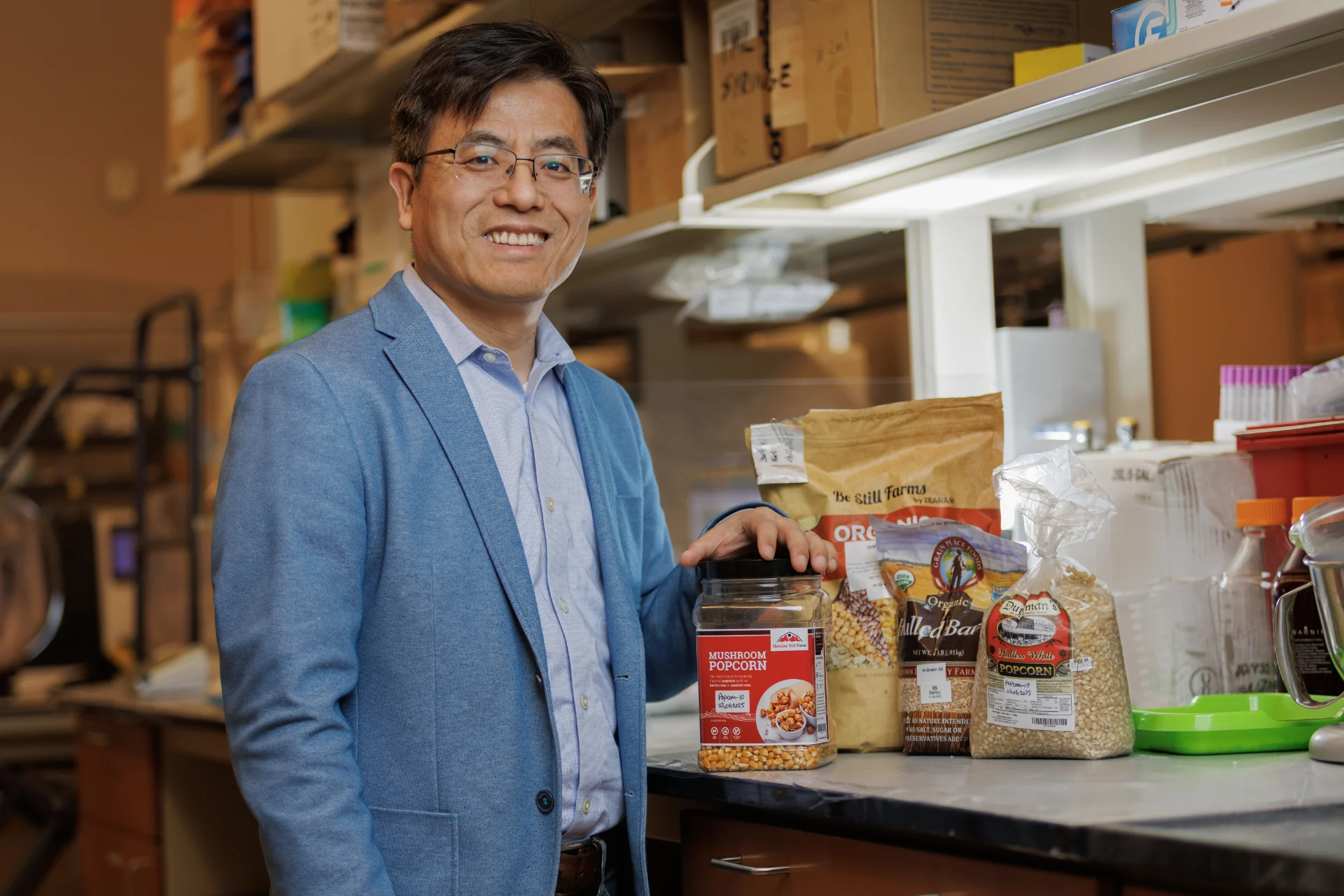
Shengmin Sang, Ph.D., a food scientist at North Carolina A&T State University, is looking to solve that mystery. The National Institutes of Health recently awarded him a prestigious R01 grant to fund his next research project, which will attempt to identify unique bioactive compounds within specific whole grains and correlate these biomarkers to risk factors for cardiometabolic disease.
“Not all whole grains are the same. They do share certain compounds, but they all contain a specific unique compound as their major components,” said Sang, the Distinguished Professor of Functional Foods in N.C. A&T’s College of Agriculture and Environmental Sciences. “If we can use these compounds as biomarkers, we can study metabolic variations between individuals and find more accurate links between whole grain intake and human health.”
Sang was awarded a five-year, $3.67 million grant from the NIH’s Diabetes, Digestive, and Kidney Diseases Extramural Research Program. This is Sang’s sixth career R01 grant, the NIH’s most competitive award for biomedical research.
Sang leads the Laboratory for Functional Foods and Human Health at the Center for Excellence in Post-Harvest Technologies, which is based at the North Carolina Research Campus in Kannapolis. For much of his career Sang has conducted research under a “food as medicine” umbrella that investigates functional foods and herbal medicines to uncover nutrition-based approaches that can combat and prevent chronic diseases. For this new whole grains project, he’ll collaborate with Qi Sun, Ph.D., an epidemiologist at Harvard University who serves as director of the Nutritional Biomarker Laboratory at Harvard’s T.H. Chan School of Public Health.
This project — a continuation of a study Sang began in 2018 — has two aims. The first is to use a precision nutrition approach to identify unique biomarkers in barley, corn and brown rice so scientists can more accurately measure whole grain intake. (In his 2018 study, Sang identified biological compounds unique to oats and whole wheat.) Traditional nutritional studies typically ask participants to record what they eat. But participants’ food diaries are often inaccurate and fail to account for differences in types of grains and how they’re processed and prepared. By identifying these phytochemicals, Sang believes researchers will be able to more precisely measure how much whole grain food an individual actually consumes and how their body responds to these compounds.
Pinpointing these signature biomarkers for different whole grains leads to the project’s second aim: using epidemiological research to discover potential inter-individual relationships between these biomarkers and the risk of heart disease. If food scientists better understand the mechanism by which whole grains work, Sang said they’ll be able to use food as medicine to prevent and manage metabolic diseases.
Sang hopes his research findings will give people more options for improving their health and help food manufacturers develop healthier food.
“My long-term goal is to develop a dietary formula that helps people decide what foods to eat based on their genetic background and gut microbiome,” Sang said. “Whole grains are an important part of our daily diet. If we can find the links between whole grains and the prevention of heart disease and other diseases, we can provide clearer nutritional recommendations to the general public and help people live healthier, better lives.”