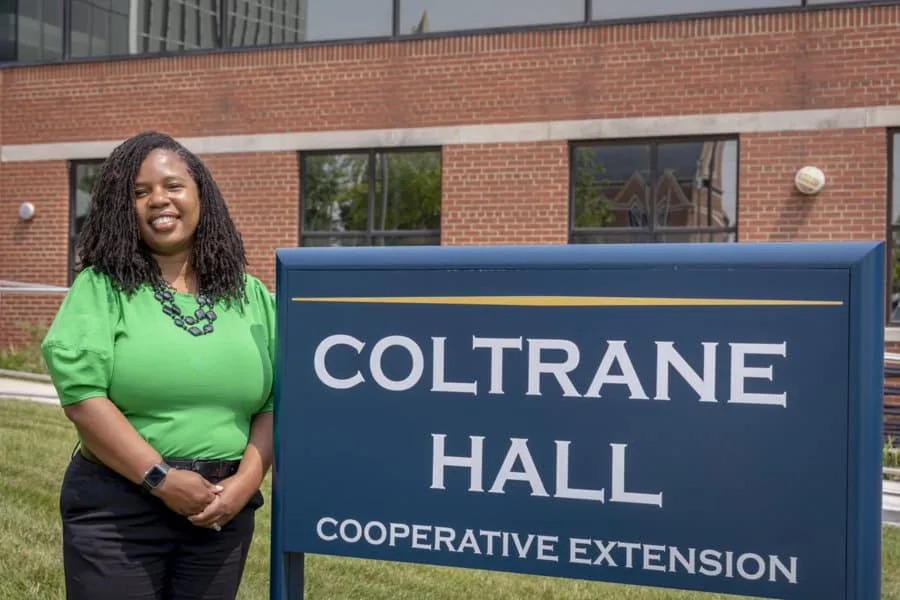
A 4-H STEM specialist in Cooperative Extension at N.C. A&T has received nearly $8 million as part of a nationwide investment by the U.S. Department of Agriculture to teach youth about agricultural career opportunities.
Misty Blue-Terry, Ph.D., is one of five national recipients of USDA-NIFA’s Youth Innovators Engaging across America, or YEA, award.
“This is a major accomplishment for the 4-H programs in the 1890 region,” said Blue-Terry. “The outcomes and impacts of this project have the potential to change and enhance the national 4-H program in so many ways.”
Projects awarded through the YEA program, part of the agency’s Agriculture and Food Research Initiative, are designed to prepare young people for careers in agriculture and food sciences, and to support youth programs such as 4-H.
As the project lead, Blue-Terry will collaborate with a team of youth development specialists from such land-grant universities as Fort Valley State University, Prairie-View A&M University, Kentucky State University, Alcorn State University and Lincoln University. Together, they will develop programming to provide expanded opportunities for African American, Hispanic, and Native American middle and high school students to participate in 4-H programs that offer college readiness and career exploration opportunities, and progress through the phases of STEM career pathways.
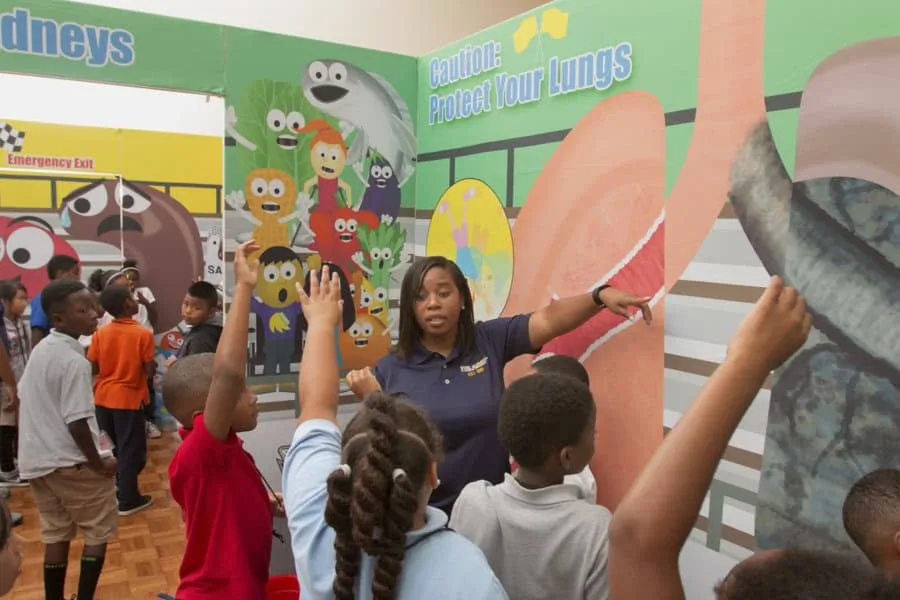
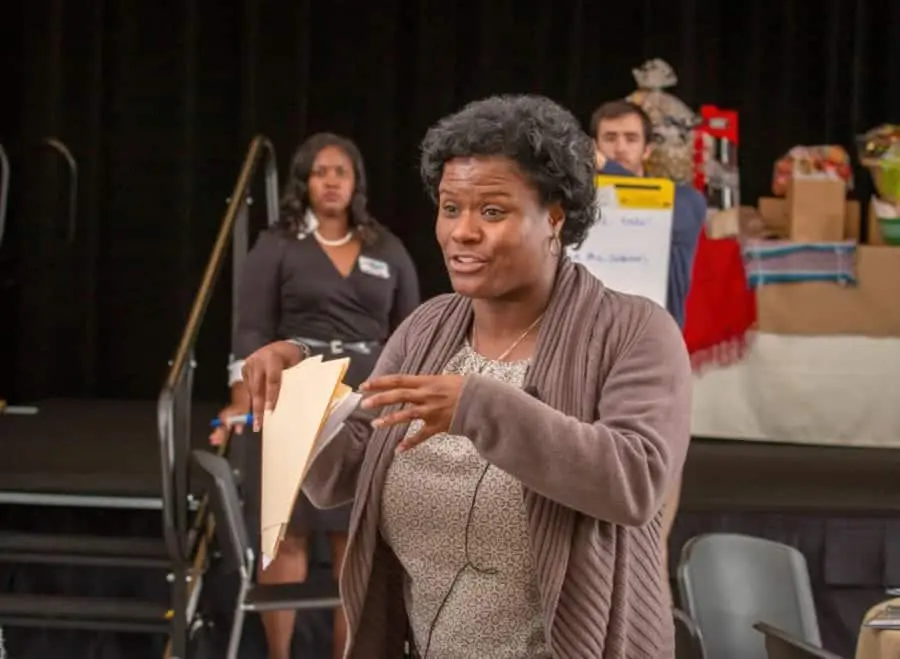
Terry works with elementary school-age students on a 4-H health program.
“As an innovative approach to the USDA’s priority areas of racial justice, equity and opportunity, youth of color will have the opportunity to be exposed to 1890 campuses and the research that happens there as a tool to develop the next generation of the agricultural workforce,” said Blue-Terry.
Students selected for the program will have opportunities in five main areas, according to Blue-Terry. They will have the opportunity to serve on a national advisory board to support the development of culturally relevant, experiential learning programs for youth of color; they will receive mentoring for skills including leadership, mental health, critical thinking, problem solving, teamwork and civic engagement; they will attend leadership institutes, hold internships and be involved with 4-H STEM engagement; and they will receive professional development opportunities.
Sixty students from across North Carolina will be recruited each year for the program, Blue-Terry said. The program is expected to start in late fall; over the course of the five-year cycle, the program will have a projected direct impact on 3,485 youth and 2,140 adults.
“The impact on children, youth and families will be significant,” said Blue-Terry, “but lessons, strategies, and partnerships developed will also strengthen the YEA program and the 4-H programs in the 1890 region, improving evaluation, curricula, and training.”
“Young people will lead the future of food and agriculture. Youth development programs, like those supported through YEA, provide tremendous opportunities for young people that foster healthy relationships and build on their leadership strengths,” said USDA NIFA Director Manjit Misra, Ph.D. “These projects exemplify NIFA’s goals to strengthen and promote healthy youth development and give young people the tools they need to be catalysts for deep and lasting change in their communities.”